
FinCEN's World Cup Trafficking Notice Signals Liability Risk
- Authority
- Financial Crimes Enforcement Network (FinCEN)
- Rule type
- regulation
- Jurisdiction scope
- US federal
- Effective date
- May 11, 2026
- Source text
- Read primary rule text ↗
Report trafficking suspicions as soon as possible regardless of threshold, using SAR tag FIN-2026-HTWORLDCUP
Start with the tag: FIN-2026-HTWORLDCUP. FinCEN’s May 11, 2026 news release says its World Cup human-trafficking Notice instructs financial institutions to reference that tag in relevant suspicious activity reports and to report human-trafficking-related suspicious activity “as soon as possible, regardless of threshold.” That is the small compliance artifact with the large legal consequence: it gives SAR teams, payments counsel, vendor-risk managers, and later litigants a dated phrase to point to when asking what a business knew, when it knew it, and what it did next. [1]
This is a Regulation & Ethics obligations-tracker piece, not legal advice. It is also not a general account of World Cup anti-trafficking operation results and law-enforcement implications. For the enforcement-output record, including ICE’s reported 905 World Cup trafficking arrests, use How to read ICE’s 905 World Cup trafficking arrests. Arrest numbers are operation results; they are not incidence data. This article is about what FinCEN’s Notice did to reporting expectations and to later arguments about foreseeability.
Verification note before anyone quotes this in a client memo, board packet, SAR procedure, complaint, or motion: the primary Notice PDF should be rechecked directly before quoting the tag string or the “as soon as possible, regardless of threshold” language. Because the PDF was not machine-crawled for this review, the operative wording should be verified against the PDF itself, not only against secondary summaries or this article. [2]

What FinCEN put on the compliance desk
The Notice’s practical effect is clearest if separated by audience. For SAR-filing financial institutions, the instruction is direct: identify suspicious activity connected to human trafficking during the 2026 FIFA World Cup and use the dedicated SAR reference tag. For other World Cup-adjacent businesses, the Notice matters through payments, vendors, lodging, transportation, online platforms, referrals, and later notice arguments. A hotel, rideshare platform, contractor, payment processor, or security provider may not sit in the same Bank Secrecy Act posture as a bank, but it can still generate, receive, ignore, or preserve the facts that make a SAR meaningful.
FinCEN also tied the Notice to law-enforcement purpose rather than to public-awareness messaging. Its release quotes Director Andrea Gacki as saying that timely reporting “regardless of threshold” is crucial to aiding victims and prosecuting traffickers. The sentence matters because it tells compliance teams what the agency thinks timing is for: not a quarterly risk-register entry, not a campaign poster, and not a vague escalation to someone else, but actionable information while law enforcement and victim-assistance channels can still use it. [1]
The Notice’s provenance is short but not ornamental. FinCEN described it as tied to Executive Order 14159, the White House Task Force on the FIFA World Cup 2026, and prior FinCEN human-trafficking advisory lineage, including FIN-2014-A008 and FIN-2020-A008. That history should not be overread as proof that trafficking increased because of the World Cup. It does show that FinCEN treated the event as a foreseeable convergence point for existing trafficking typologies, financial flows, and reporting channels. [1]
The red flags are the audit file
A notice like this becomes useful only when a compliance team can map it to actual alerts. The typologies in the Notice do that work. They turn “human trafficking risk” into transactions, records, descriptors, and vendor patterns a reviewer can test. [2]
| Typology area | Indicators to check | Why it matters operationally |
|---|---|---|
| Sex-trafficking indicators | Structured cash, unusual travel patterns, peer-to-peer transfers with coded descriptors, prepaid cards, and transactions linked to online commercial-sex advertisements | These indicators may appear across payments, account activity, travel-linked spending, platform records, and ad-related transaction flows. |
| Labor-trafficking indicators | Irregular payroll and subcontracting patterns | These indicators may sit in vendor files, contractor rosters, payroll review, staffing arrangements, and event-service supply chains. |
The table is not a substitute for the Notice, and it is not a finding that every listed fact is suspicious in isolation. Cash structuring has its own Bank Secrecy Act meaning. Travel can be innocent. Peer-to-peer descriptors are often sloppy. Prepaid cards are widely used for ordinary reasons. Payroll irregularities can be caused by poor administration rather than coercion. The point is not to treat each item as a conclusion; it is to stop discarding them as unrelated noise when they appear together around lodging, transportation, ads, contractors, or event services.
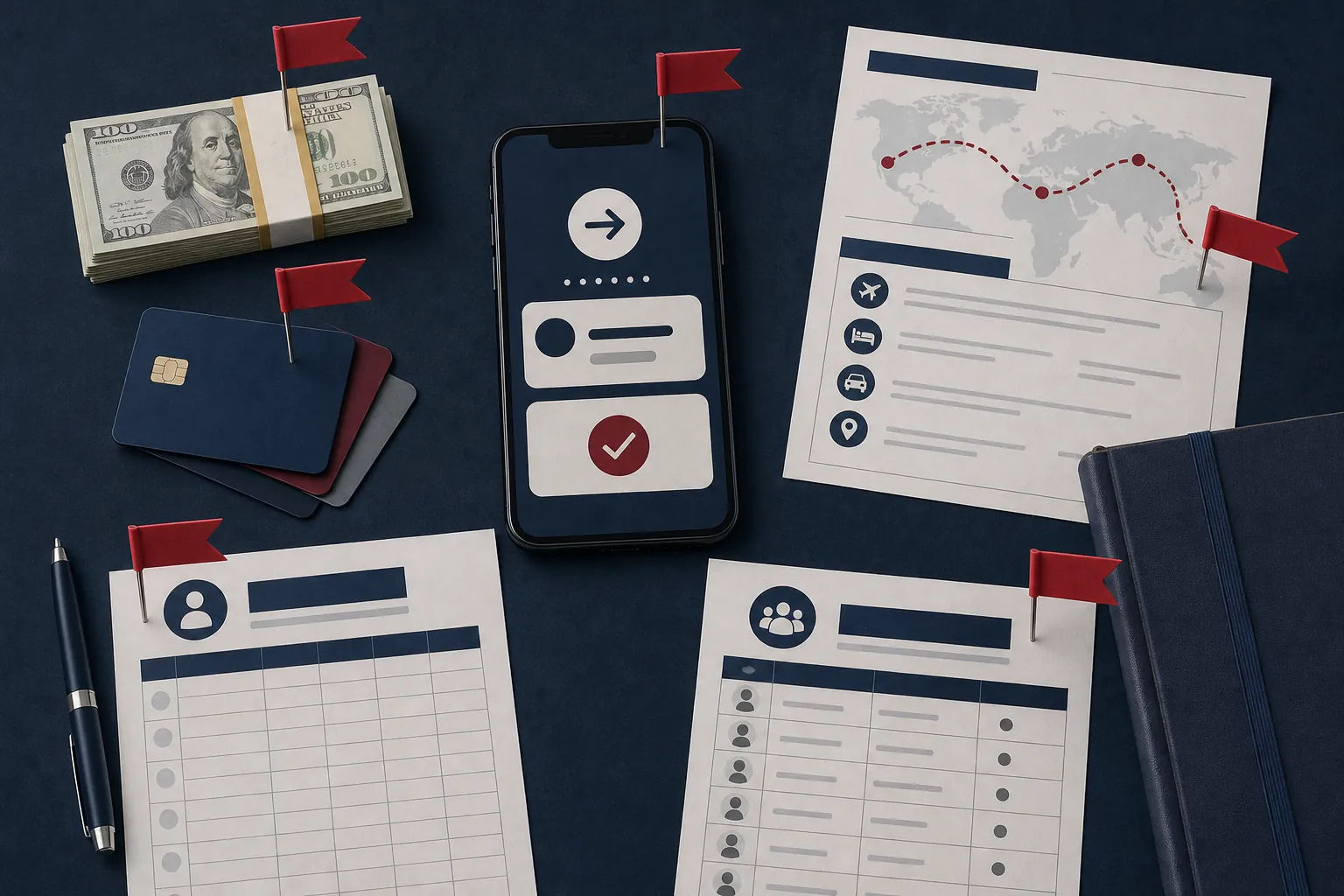
For a covered financial institution, the immediate question is whether the alert queue, SAR narrative process, and quality-control review can actually capture the tag. If an analyst recognizes a pattern but the case-management system has no field, keyword control, or supervisory review point for FIN-2026-HTWORLDCUP, the Notice has not been operationalized. If a reviewer waits for an ordinary dollar threshold when the trafficking suspicion is otherwise ready for escalation, the “regardless of threshold” language becomes the sentence a regulator or plaintiff can quote back later. [1]
For a platform, hotel group, staffing company, transportation provider, or event contractor, the operational question is slightly different. The Notice does not turn every nonfinancial business into a SAR filer. It does, however, give counsel a concrete way to ask whether payment partners, vendors, safety teams, trust-and-safety reviewers, and security contractors know what facts must be preserved and escalated when trafficking indicators appear. Those facts may be the difference between a timely report and a post-event reconstruction.
Hotline and information-sharing references belong in the procedure, not the poster
The Notice references the National Human Trafficking Hotline notification channel and voluntary information-sharing mechanisms. Those references should be read as routing instructions for a live matter. If a front-desk team, payments reviewer, trust-and-safety moderator, driver-safety team, or vendor manager sees a trafficking indicator, the first defect to look for is usually not awareness. It is whether anyone knows who receives the escalation at 9 a.m., who decides whether the facts support a SAR or other report, who contacts law enforcement or the Hotline when appropriate, and who preserves records without exposing a potential victim to additional harm. [2]
That is also where trauma-informed subject-matter review has a practical role. A specialist can help distinguish weak signals from coercion indicators without turning the procedure into improvisation. The Notice does not require every business to build a new human-trafficking unit. It does give counsel a reason to test whether the existing escalation design can handle the indicators FinCEN named.
Civil exposure: notice matters, but it is not liability already established
Morgan Lewis’s LawFlash reads the FinCEN Notice as more than an AML filing prompt. In the firm’s attorney analysis, the Notice may give plaintiffs’ firms a citable document for arguing that trafficking risks around the World Cup were foreseeable and that businesses in the event ecosystem had a standard-of-care reason to prepare. The industries Morgan Lewis identifies include banks, fintechs, hospitality companies, transportation and rideshare services, online platforms, event operators, and security providers. [3]

The theories are familiar enough to be dangerous when handled loosely: negligence, premises liability, aiding-and-abetting, and statutory trafficking theories. The Notice could be cited to argue that a company was on notice of risk, that its controls were thin, that it missed red flags, or that its vendors and platforms facilitated activity it should have detected. That is a litigation-risk argument, not a regulatory holding. [3]
The guardrails matter. FinCEN guidance itself creates no private cause of action. A Notice is not a jury verdict, and it is not a finding that any particular hotel, bank, app, venue, platform, contractor, driver, advertiser, or security provider violated trafficking law. No reported World Cup-period case identified in the available record has yet tested the Morgan Lewis theory. A plaintiff can cite the Notice for foreseeability; the plaintiff still has to plead and prove the elements of the chosen claim.
That distinction should shape internal advice. A legal team does not need to tell business units that liability has been established. It does need to tell them that a dated federal notice naming event-specific trafficking risk, specific financial typologies, and a dedicated reporting tag is exactly the sort of document that later appears in a complaint, expert report, regulator inquiry, or deposition outline.
Where the arrest numbers fit
The ICE arrest record belongs in the file, but in the right folder. Agency-reported arrests describe enforcement output: who was arrested, under what operation, and how the agency presented the results. They do not measure the true prevalence of trafficking during the World Cup, and they do not prove that the FinCEN Notice caused an increase or decrease in trafficking activity. The safer use is contextual: law enforcement was active, trafficking indicators were operationally salient, and reporting channels had a real audience.
For the broader statutory landscape in which trafficking and money-laundering authorities intersect, see How Abolishing ICE Would Redistribute 400 Federal Statutes. That background is useful because SARs do not float in a vacuum. They land in a law-enforcement environment where immigration authorities, trafficking statutes, money-laundering tools, and victim-assistance channels may all be implicated.
What counsel can check without overstating the Notice
The following checks are practice guidance, not a list of new requirements imposed by the Notice on every business. They are the sensible places to look once FinCEN has put a dated, event-specific trafficking document into the record.
- Risk assessment: confirm whether the 2026 World Cup, host-city exposure, lodging, transportation, online ads, event staffing, payment flows, or contractor networks were considered in trafficking and AML risk reviews.
- SAR workflow: for covered institutions, verify whether analysts know when and how to use FIN-2026-HTWORLDCUP, and whether quality control can catch missing or miscoded references.
- Threshold handling: check whether procedures address trafficking-related escalation even when ordinary monetary thresholds do not drive the decision.
- Vendor diligence: review hotels, staffing vendors, transportation partners, security contractors, payment vendors, and platform-service providers for escalation duties, record retention, and cooperation clauses.
- Training: move beyond awareness slides and test whether front-line teams can identify the specific red flags FinCEN named.
- Information routing: identify who decides whether to notify law enforcement, use the National Human Trafficking Hotline channel, share information through voluntary mechanisms, or preserve facts for a SAR-supporting institution.
- Subject-matter review: consider trauma-informed human-trafficking expertise for close calls, especially where a rushed escalation could increase risk to a potential victim.
- Litigation record: preserve the reason decisions were made. A later dispute will ask not only whether a company had a policy, but whether the policy reached the people who saw the relevant facts.
The 2026 World Cup is over, but FinCEN’s May 11, 2026 Notice remains a dated, citable regulatory artifact. For compliance teams, it shapes SAR expectations. For plaintiffs and defense counsel, it shapes the argument over what event-adjacent businesses should have foreseen.
References
- FinCEN Issues Notice on the Threat of Human Trafficking During the 2026 FIFA World Cup, Financial Crimes Enforcement Network, May 11, 2026
- FinCEN-WCHT-Notice.pdf, Financial Crimes Enforcement Network, May 2026
- Red Cards and Red Flags: FinCEN's FIFA World Cup Human Trafficking Notice Signals Expanding Risks for Businesses, Morgan Lewis, May 2026
Operationalizing workflow
No workflow has been explicitly linked to this obligation yet. See Workflows generally.
Illustrative cases
No illustrative case is currently tracked for this obligation. See Risk Digest for documented incidents generally.
← Back to RegulationReport a correction or tip
Spotted an outdated figure, a misstated fact, or a ruling this regulation entry should reflect? Public comments are disabled for this content given the professional cost of a misreported case outcome, penalty amount, or rule text — use the structured correction channel instead.
Report a correction or tip for this record →