
What H-1B Employers Must Do About the 60-Day Grace Period Proposal
- Authority
- U.S. Department of Homeland Security (DHS)
- Rule type
- regulation
- Jurisdiction scope
- US federal
- Effective date
- Jan 1, 2017
- Source text
- Read primary rule text ↗
Notify USCIS after H-1B employment ends, pay return transportation for qualifying dismissals, and administer the 60-day grace period against the I-94 end date.
Last verified: Aug. 26, 2026. This article is general information for employer-side immigration administration and is not legal advice.
The proposed H-1B 60-day grace-period rule change is not in effect. DHS’s RIN 1615-AD22, titled “Eliminating the Discretionary 60-day Grace Period,” is still at OIRA review at the proposed-rule stage; it was submitted on Aug. 6, 2026, and there is no public proposed-rule text, Federal Register publication, comment deadline, final rule, or effective date listed on the OIRA record as of this verification date.[1] The existing regulation at 8 CFR 214.1(l)(2) remains in force.[2]
That status is the operational answer for employers today: do not rewrite H-1B offboarding practice as if the 60-day period has already disappeared. If the only question is whether the proposal is effective, use the companion status tracker for the DHS H-1B grace-period proposal. This record is for the harder employer-side question: what has to be executed cleanly now, and what should be tightened before the rulemaking moves.

The employer duties that already exist
The proposal matters because it would make sloppy offboarding harder to absorb. It does not create a reason to improvise today. Three existing duties deserve the most attention: USCIS notification or withdrawal after H-1B employment ends, the employer’s return-transportation obligation in certain dismissals, and correct administration of the current grace-period window against the worker’s I-94.
USCIS notification should not depend on someone remembering later
When H-1B employment ends, the petitioner must notify USCIS; practitioner guidance describes that notice as effectively withdrawing the approval and notes that this notification trail is one reason H-1B workers have become visible in post-termination enforcement contexts.[3] For the employer, the immediate compliance question is not whether the employee is anxious or whether the layoff was high profile. It is who sends the notice, what event triggers it, and where proof of the submission is stored.
A defensible process needs a named owner. In some organizations that is outside immigration counsel; in others it is a mobility manager or HR immigration specialist working from counsel-approved templates. What does not work is a termination checklist that says “immigration to handle” without identifying the person, address, deadline convention, and document-retention location. If the 60-day window were later removed or narrowed, late notification would not become less important; it would become easier to notice because the worker would have less buffer around the separation.
The notice step also has to be separated from internal employment categories. Payroll may show severance. Finance may show a release-payment date. A manager may call the person “inactive.” Immigration administration needs the actual end of H-1B employment, because that date drives both the petition withdrawal workflow and the current grace-period calculation.
Return transportation is a regulation, not a courtesy line
The return-transportation obligation is already in the H-1B regulation. Under 8 CFR 214.2(h)(4)(iii)(E), if the H-1B worker is dismissed from employment before the end of the period of authorized admission, the employer is liable for the reasonable costs of return transportation abroad.[2]
That obligation is easy to mishandle because it sits between HR, finance, and immigration counsel. HR may prepare the separation packet. Finance may control reimbursement. Counsel may be the only person who notices that the regulatory condition has been met. The file should show, at minimum, whether the separation was an employer dismissal before the authorized period ended, how the return-transportation obligation was communicated, and how the payment or reimbursement path was handled.
Employers should not bury this language in a generic severance template and assume it has been addressed. Severance and return transportation are different things. One is a negotiated or policy-based employment payment; the other is an H-1B regulatory obligation triggered by a qualifying dismissal. Mixing them together is how a clean termination file turns into a reconstruction exercise months later.
The 60-day window is shorter than many HR calendars imply
Today’s grace period is not a guaranteed 60 days in every case. The regulation allows up to 60 consecutive days after cessation of employment, once during each authorized validity period, or until the end of the authorized validity period, whichever is shorter.[2] The I-94 end date can cut the window down. So can a prior use of the grace period during the same authorized validity period.
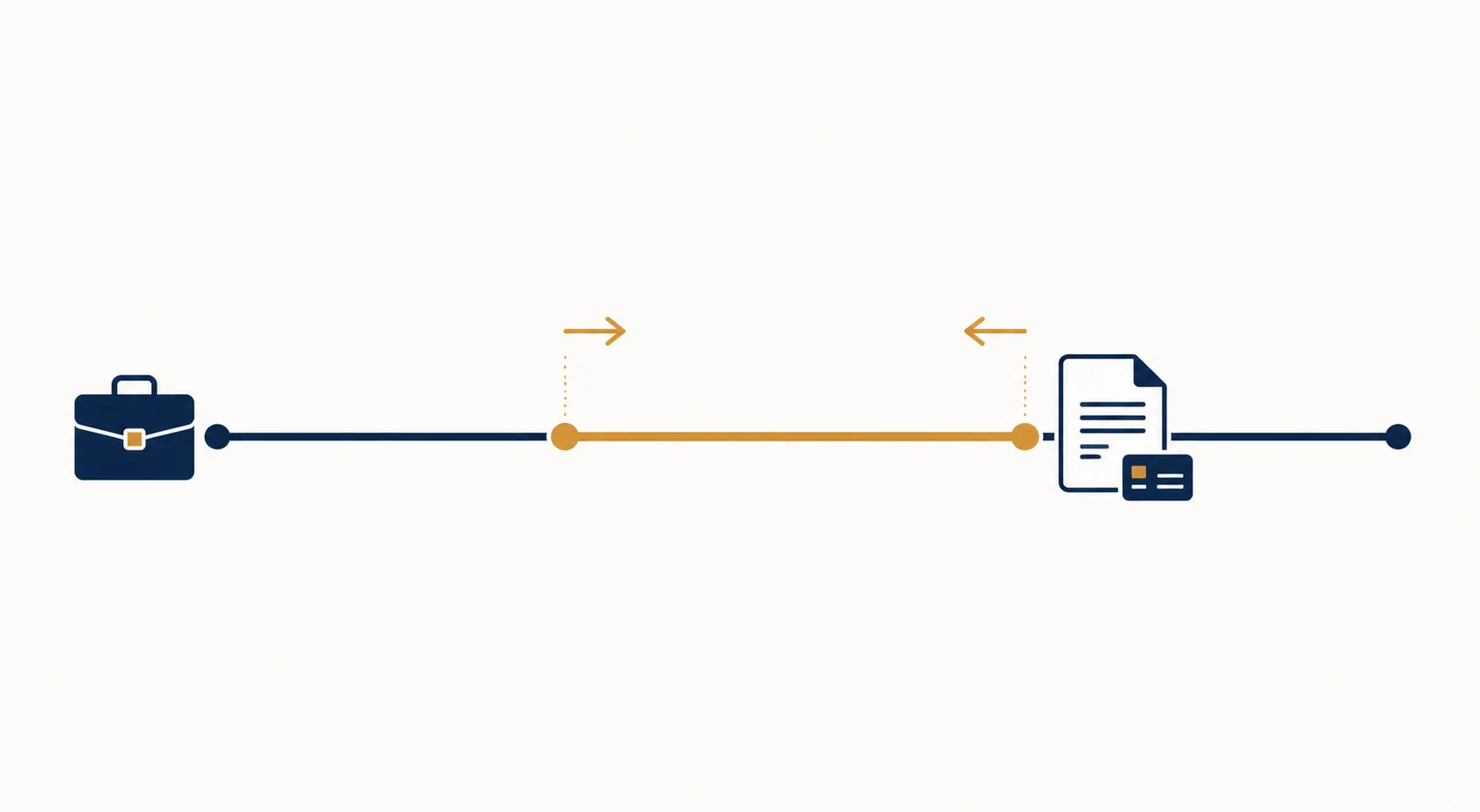
The start date also has to be handled carefully. Practitioner guidance treats the window as starting from the last day of work, not from a severance end date or a later internal payroll label such as garden leave.[4] That is the point most likely to be distorted in a rushed Slack exchange: someone sees “paid through October” and turns it into “status through October.” Those are not the same administrative fact.
| Item to verify | Why it matters |
|---|---|
| Last day of H-1B employment | Starts the current grace-period analysis and the offboarding workflow; do not substitute severance or payroll continuation without counsel review. |
| I-94 end date | The grace period lasts only until the earlier of 60 consecutive days or the authorized-validity end date. |
| Prior grace-period use in the same authorized validity period | The regulation allows the period once during each authorized validity period. |
| USCIS notification owner | The petitioner’s notice or withdrawal should have a named sender and retained proof. |
| Return-transportation handling | A qualifying dismissal before the authorized period ends triggers a separate regulatory cost obligation. |
What a finalized elimination would likely compress
Because the proposed text has not been published, nobody outside the rulemaking process can responsibly describe the final mechanics. The only public label is the OIRA title. From that title and the existing framework, immigration practitioners have described the likely effect as an immediate-departure default after job loss, unless another basis to remain is available.[5][6]
For employers, the compressed area would be the period between a job ending and a new filing becoming possible. A laid-off H-1B worker who finds a new sponsor today may still need the new employer to clear internal approvals, obtain a certified Labor Condition Application, assemble the H-1B change-of-employer filing, and file it before the worker’s available window closes. Higher Ed Dive quoted immigration attorney Maxine Bayley stating that the DOL LCA currently “takes upward of a week.”[7] That week matters a great deal if the regulatory cushion is removed.
The same timing pressure would affect change-of-status planning. A worker-side bridge-filing strategy is not the center of this employer record; the companion worker guide to H-1B grace-period elimination covers those options in more detail. The employer-side point is simpler: if there is no post-termination grace period, a termination date that was once operationally survivable may become the date that determines whether any filing can be prepared in time.
There is a short history note worth keeping in the file. The current grace-period structure comes from the high-skilled-worker final rule published on Nov. 18, 2016, which became effective in January 2017.[8] That history explains why many employer checklists now assume a 60-day offboarding window. It does not change the current status: the regulation remains operative unless and until a later final rule with an effective date changes it.
Do not merge this rulemaking with the separate $103,265 H-1B fee proposal, recent H-1B modernization rules, registration changes, or congressional proposals to extend the grace period. They may appear in the same inbox, but they do not create the same employer obligation, use the same procedural posture, or answer the same offboarding question.
What employers should audit before the notice publishes
The useful response now is an audit, not a policy freeze or a premature rewrite. A Federal Register notice will eventually supply the text, the agency’s rationale, and the comment instructions if the rule clears review. Until then, the work is to make sure the existing offboarding machine can run without guesswork.
- Confirm the termination-date convention. The checklist should distinguish last day of H-1B employment, notice date, payroll end date, severance period, garden leave, and benefits end date.
- Require an I-94 check before giving any grace-period estimate. A “60-day” answer without the I-94 end date is incomplete under the existing rule.
- Name the USCIS notification owner. The file should show who sends the withdrawal or notice, when it is sent, and where proof is retained.
- Separate return transportation from severance. The template should identify when the regulatory obligation is triggered and how the payment or reimbursement route works.
- Build a rapid escalation path for reductions in force. Immigration counsel should know about affected H-1B employees before notices go out, not after HR asks whether the grace period still exists.
Advance planning is especially important in a RIF. Goeschl Law recommends contacting counsel before a reduction in force and considering advance notice of termination as a mitigation step, while treating that as planning guidance rather than a new legal requirement created by the pending proposal.[9] The distinction matters: an employer can choose to give advance notice for governance reasons, but it should not tell managers that DHS has already imposed a new offboarding rule.
Employers that expect to comment should start gathering operational facts now. Useful comments are not built from adjectives. They explain, for example, how long internal hiring approvals take, how LCA timing interacts with layoffs and rehires, what systems determine the termination date, and how a no-grace-period rule would affect orderly USCIS notification, return-transportation processing, and transition planning. Practitioner alerts have described the future comment period as the employer’s lever once the proposed rule is published, commonly expected to run 30 to 60 days when opened.[6][10]
The decision rule is straightforward. Do not tell HR, managers, or sponsored employees that the 60-day grace period has been eliminated. Do tighten the existing H-1B offboarding controls now: notification, return transportation, I-94-based grace-period calculation, and counsel review before large separations. When the Federal Register notice appears, read the actual text, calendar the comment deadline, and revise procedures only against a published rule and effective date.
References
- Eliminating the Discretionary 60-day Grace Period, Office of Information and Regulatory Affairs, Aug. 6, 2026.
- 8 CFR Part 214, eCFR.
- Navigating the 60-Day Grace Period: Why H-1B Visa Holders Are Suddenly Receiving Notices to Appear, Garfinkel Immigration, Aug. 4, 2025.
- H-1B Grace Period Rules and Risks Explained, Manifest Law.
- DHS Proposes Rule to Eliminate 60-Day Grace Period for Certain Nonimmigrants, Ogletree Deakins, Aug. 11, 2026.
- GA Client Alert: DHS Proposes Elimination of the 60-Day Nonimmigrant Grace Period — What You Need to Know, Goel & Anderson, Aug. 10, 2026.
- DHS to propose end of 60-day grace period for H-1B visa holders, Higher Ed Dive, Aug. 17, 2026.
- Retention of EB-1, EB-2, and EB-3 Immigrant Workers and Program Improvements Affecting High-Skilled Nonimmigrant Workers, Federal Register, Nov. 18, 2016.
- DHS Proposes to Eliminate the 60-Day Grace Period for Nonimmigrant Workers, Goeschl Law, Aug. 14, 2026.
- DHS to Propose Elimination of 60-Day Nonimmigrant Grace Period, Fragomen, Aug. 7, 2026.
Operationalizing workflow
No workflow has been explicitly linked to this obligation yet. See Workflows generally.
Illustrative cases
No illustrative case is currently tracked for this obligation. See Risk Digest for documented incidents generally.
← Back to RegulationReport a correction or tip
Spotted an outdated figure, a misstated fact, or a ruling this regulation entry should reflect? Public comments are disabled for this content given the professional cost of a misreported case outcome, penalty amount, or rule text — use the structured correction channel instead.
Report a correction or tip for this record →