
Haiti TPS Is Terminated. What That Means for Work Permits
- Authority
- U.S. Citizenship and Immigration Services (USCIS)
- Rule type
- regulation
- Jurisdiction scope
- US federal
- Effective date
- Jul 27, 2026
- Source text
- Read primary rule text ↗
Treat Haiti TPS-based A12 and C19 employment authorization documents as invalid for work authorization and verify any independent basis.
Last verified: Aug. 25, 2026, 14:00 UTC. Legal-background review: Elena Varga, J.D. This record is for status tracking and legal-risk orientation only; it is not legal advice for any employer, attorney, TPS holder, or agency user.
Current status: Haiti TPS is terminated effective July 27, 2026. No stay currently blocks implementation after Judge Ana C. Reyes’ Aug. 5, 2026 order in Miot v. Trump confirmed that the earlier stay is no longer in effect. USCIS I-9 Central, SAVE, and E-Verify guidance released July 29, 2026 treats Haiti TPS-based A12 and C19 employment authorization documents as invalid for work-authorization purposes.[1][2][3]
The remaining live litigation point is narrower than the status question. The equal-protection claim in Miot remains pending, but it is not presently staying the termination. The 540-day automatic-extension rule is also in active litigation, so no blanket EAD extension date should be assumed from this Haiti TPS record.

The operative answer depends on the latest order, not the oldest date still circulating
The question behind many searches about Haiti TPS expiration, work permits, and legal options is not whether there was once an extension, a stay, or an automatic document-extension theory. There was. The question is whether any of those items still controls the record in late August 2026.
On the current record, they do not. The live sequence runs through the Supreme Court’s June 25, 2026 decision in Mullin v. Doe and the district court’s Aug. 5, 2026 stay-lift. The Supreme Court slip opinion is cited directly here, with its holding cross-checked against contemporaneous SCOTUSblog reporting because direct retrieval of the PDF was not available during verification.[4][5]
That distinction matters for employers and counsel because the same case history produced multiple once-true working dates. A Form I-9 file or client memo built around one of those dates may have been defensible when written and wrong now.
Status flags as of Aug. 25, 2026
| Issue | Current record |
|---|---|
| Haiti TPS designation | Terminated effective July 27, 2026 |
| Stay blocking termination | No current stay after Judge Ana C. Reyes’ Aug. 5, 2026 order |
| A12/C19 EADs based on Haiti TPS | Invalid under USCIS I-9 Central, SAVE, and E-Verify guidance released July 29, 2026 |
| Miot equal-protection claim | Pending, but not staying the termination |
| 540-day automatic extension | Do not assume a blanket extension; the rule remains in active litigation |
| Use of this record | Status tracker only; individualized immigration counsel is required for personal options |
The ruling chain that changed the answer
The cleanest way to read the Haiti TPS status is as a chain of superseding legal events. A single sentence saying “TPS was extended” or “TPS ended” loses the controlling fact: which document came later and whether a court order still prevented the agency from acting.

| Date | Event | What changed |
|---|---|---|
| July 1, 2024 | DHS announced an 18-month extension of Haiti TPS | The designation was extended before the later termination litigation changed the operative posture. |
| Feb. 24, 2025 | Federal Register partial vacatur, 90 Fed. Reg. 10511 | The prior extension position was partially unwound. |
| July 1, 2025 | Termination notice, 90 Fed. Reg. 28760 | DHS moved to terminate the Haiti TPS designation. |
| July 15, 2025 | Haitian Evangelical Clergy Ass’n v. Trump final judgment in the Eastern District of New York | That litigation affected the first termination path. |
| Nov. 28, 2025 | Re-issued termination notice, 90 Fed. Reg. 54733 | DHS again terminated Haiti TPS, this time with an effective date of Feb. 3, 2026.[6] |
| Feb. 2, 2026 | Judge Ana C. Reyes stayed the termination in Miot v. Trump | The Feb. 3, 2026 termination date could not operate while the stay remained in force. |
| Mar. 6, 2026 | D.C. Circuit denied emergency relief | The district-court stay posture remained the key barrier to implementation. |
| Mar. 16, 2026 | Certiorari before judgment | The dispute moved to the Supreme Court before final appellate review. |
| June 25, 2026 | Mullin v. Doe | The Supreme Court held that INA § 244(b)(5)(A) barred review of the Secretary’s termination determinations on non-constitutional grounds and ordered the terminations effective July 27, 2026, with remand.[4][5] |
| Aug. 5, 2026 | Judge Reyes confirmed the stay was no longer in effect | The remaining equal-protection claim did not keep the termination from operating. |
The November 2025 Federal Register notice is useful for scale and for the agency’s re-issued termination position, but it is not the end of the record. It estimated approximately 352,959 Haitian TPS holders at that time and set a Feb. 3, 2026 effective date.[6] That number should be read as a DHS estimate from that notice, not as a current census of every Haitian national potentially affected by immigration enforcement, employment, or collateral status questions.
The February 2026 stay is the reason older employer advisories and client alerts cannot be checked by looking only at the November 2025 notice. Morgan Lewis, writing on Mar. 19, 2026, accurately described the stay as then remaining in effect while the case moved to the Supreme Court.[7] That statement was a live-status answer in March. It is not the live-status answer in late August.
What Mullin v. Doe decided, and what it did not decide
Mullin v. Doe is the hinge. The Supreme Court held that INA § 244(b)(5)(A), codified at 8 U.S.C. § 1254a(b)(5)(A), bars judicial review of the Secretary’s TPS termination determinations on non-constitutional grounds. The bar included challenges framed around subsidiary procedural steps, such as interagency consultation.[4][5]
That holding matters because a termination challenge can contain more than one kind of claim. The non-constitutional challenges could not keep the termination from going forward after the Supreme Court’s ruling. The equal-protection claim stood on different footing. The Court described that claim as likely to fail, but the claim was not extinguished by that sentence.[4][5]
The separate writings underscore the point without changing the status result. Justice Thomas would have gone further on whether noncitizens may sue the federal government for equal-protection violations; Justice Kagan dissented, joined by Justices Sotomayor and Jackson.[4][5] For present purposes, the controlling operational fact is narrower: the termination is in effect, and the pending constitutional claim is not presently a stay.
The work-permit consequence: A12 and C19 EADs are treated as invalid
The agency guidance released July 29, 2026 is the bridge from court status to workplace consequence. USCIS I-9 Central states that Haiti TPS has terminated and that EADs in categories A12 or C19 based on Haiti TPS are no longer valid for employment authorization.[1]
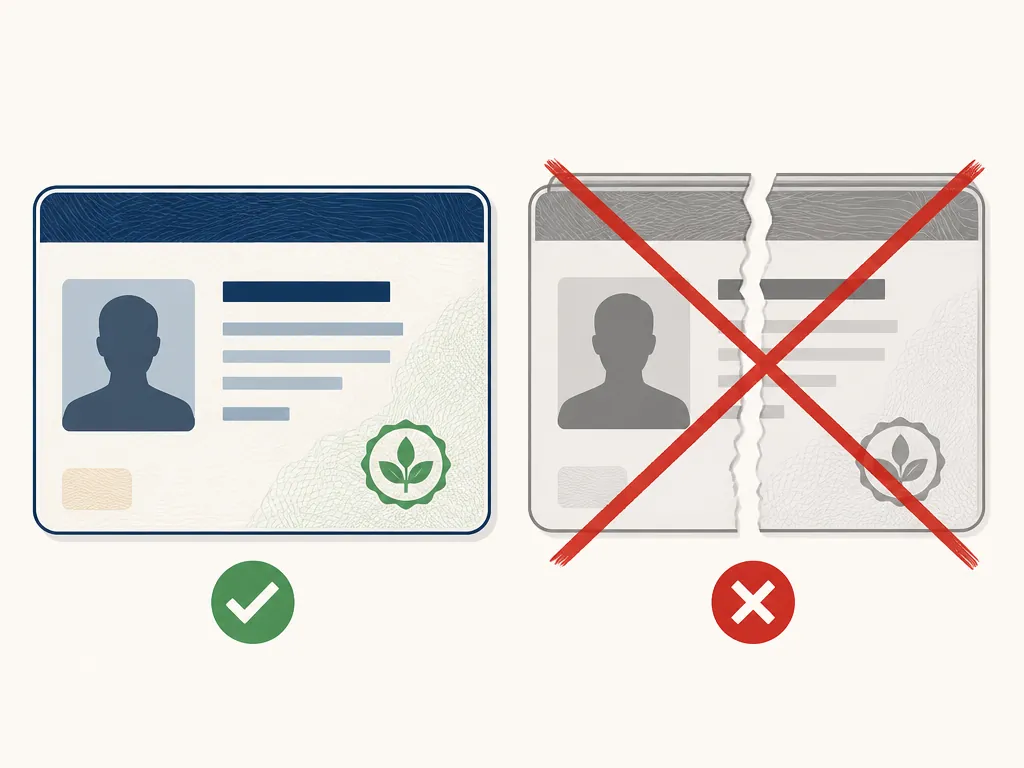
SAVE issued a matching July 29, 2026 alert for user agencies.[2] E-Verify also posted a July 29, 2026 update addressing the Haiti TPS termination.[3] Those three pages do not merely repeat a policy preference. They give employers, agencies, and counsel dated implementation guidance after the Supreme Court decision and before the Aug. 5 district-court confirmation that the stay no longer blocked termination.
For an employer reviewing an A12 or C19 EAD that was tied to Haiti TPS, the practical consequence is not “check whether an older auto-extension page once covered this card.” The current USCIS employment-authorization guidance treats those Haiti TPS-based documents as invalid. If a specific worker has another basis for employment authorization, that is a separate document-and-status analysis, not a survival of Haiti TPS itself.
Why the expiration ladder became unreliable
The Haiti TPS record produced several effective-date and placeholder-date layers: the re-issued termination notice pointed to Feb. 3, 2026; litigation then produced stayed and interim assumptions; later placeholder dates circulated around March, July 1, July 10, July 17, July 22, July 24, and finally July 27, 2026. The exact problem is that each date belonged to a posture. Once the posture changed, the date could no longer be treated as a general answer.
The USCIS archived Haiti TPS page is still useful as a record of prior agency treatment and historical country-page updates.[8] It is not a substitute for the July 29, 2026 I-9 Central, SAVE, and E-Verify pages when the question is whether Haiti TPS-based A12/C19 employment authorization is valid now.[1][2][3]
Legal options remain individualized, not a blanket extension
Affected people need individualized immigration counsel. That is not a polite add-on; it is the boundary of what this record can responsibly say. A person may have facts unrelated to Haiti TPS: a pending application, another status, a separate EAD category, a removal-defense issue, family-based eligibility, humanitarian relief facts, or no immediately available alternative. None of those possibilities turns the Haiti TPS designation back on.
The pending equal-protection claim in Miot also should not be overstated. It remains live, but it is not currently preventing the termination from operating. If a later order changes that, the answer changes only from that later dated order forward.
The same caution applies to the 540-day automatic-extension rule. The rule is in active litigation, including litigation over the Oct. 30, 2025 Interim Final Rule and the Aug. 5, 2026 proceedings in Venezuelan Ass’n of Massachusetts v. USCIS. On this record, it would be unsafe to tell employers or TPS holders that a universal 540-day extension saves Haiti TPS-based A12/C19 EADs after the July 29 USCIS guidance.
Scale, without mixing populations
The DHS estimate in the November 2025 termination notice was approximately 352,959 Haitian TPS holders.[6] Other public numbers use different dates and inclusion rules, including estimates that exclude people who have become lawful permanent residents or U.S. citizens. Those figures may be useful in a demographics article. They should not be blended into this status record as if they count the same thing.
For adjacent status-tracker practice, the same caution shows up in other obligations records: a stale official page can be just as risky as an unofficial summary if the controlling date has moved. That is the recurring lesson in records such as the AI-hallucinated immigration brief sanctions tracker and the Georgia gas-tax suspension status record.
Where the record stops
As of Aug. 25, 2026, Haiti TPS is terminated effective July 27, 2026; no stay currently blocks that termination; USCIS implementation guidance treats Haiti TPS-based A12/C19 work permits as invalid; and the Miot equal-protection claim remains pending without staying the termination. Any different answer requires a new dated primary-source update, not reuse of an older placeholder expiration date.
References
- Update on Termination of Temporary Protected Status for Haiti (Release: July 29, 2026), USCIS I-9 Central, July 29, 2026
- Termination of Temporary Protected Status for Haiti (Release: July 29, 2026), USCIS SAVE, July 29, 2026
- Update on Termination of Temporary Protected Status for Haiti (Release: July 29, 2026), E-Verify, July 29, 2026
- Mullin v. Doe, Supreme Court of the United States, June 25, 2026
- Court allows Trump administration to end removal protections for Syrian and Haitian nationals, SCOTUSblog, June 2026
- Termination of the Designation of Haiti for Temporary Protected Status, Federal Register, Nov. 28, 2025
- Federal Court Stay of Haiti TPS Termination Remains in Effect; Case Now Before the US Supreme Court, Morgan Lewis, Mar. 19, 2026
- Temporary Protected Status Designated Country: Haiti, USCIS archived Haiti TPS page
Operationalizing workflow
No workflow has been explicitly linked to this obligation yet. See Workflows generally.
Illustrative cases
No illustrative case is currently tracked for this obligation. See Risk Digest for documented incidents generally.
← Back to RegulationReport a correction or tip
Spotted an outdated figure, a misstated fact, or a ruling this regulation entry should reflect? Public comments are disabled for this content given the professional cost of a misreported case outcome, penalty amount, or rule text — use the structured correction channel instead.
Report a correction or tip for this record →