
Is a refund for recalled Maple Leaf bacon guaranteed?
- Authority
- FSIS
- Rule type
- recall notice
- Jurisdiction scope
- US state (Idaho, Oregon, Washington)
- Effective date
- Jul 24, 2026
- Source text
- Read primary rule text ↗
Do not consume; return recalled bacon to place of purchase or discard.
Last verified: 2026-08-03. This record is limited to purchasers in Idaho, Oregon, and Washington who bought the Maple Leaf Foods not-ready-to-eat bacon covered by FSIS Recall 011-2026. It is consumer-rights information, not legal advice. The two controlling source documents for the recall status are the FSIS recall notice and FSIS’s own explanation of how meat and poultry recalls work.[1][2]
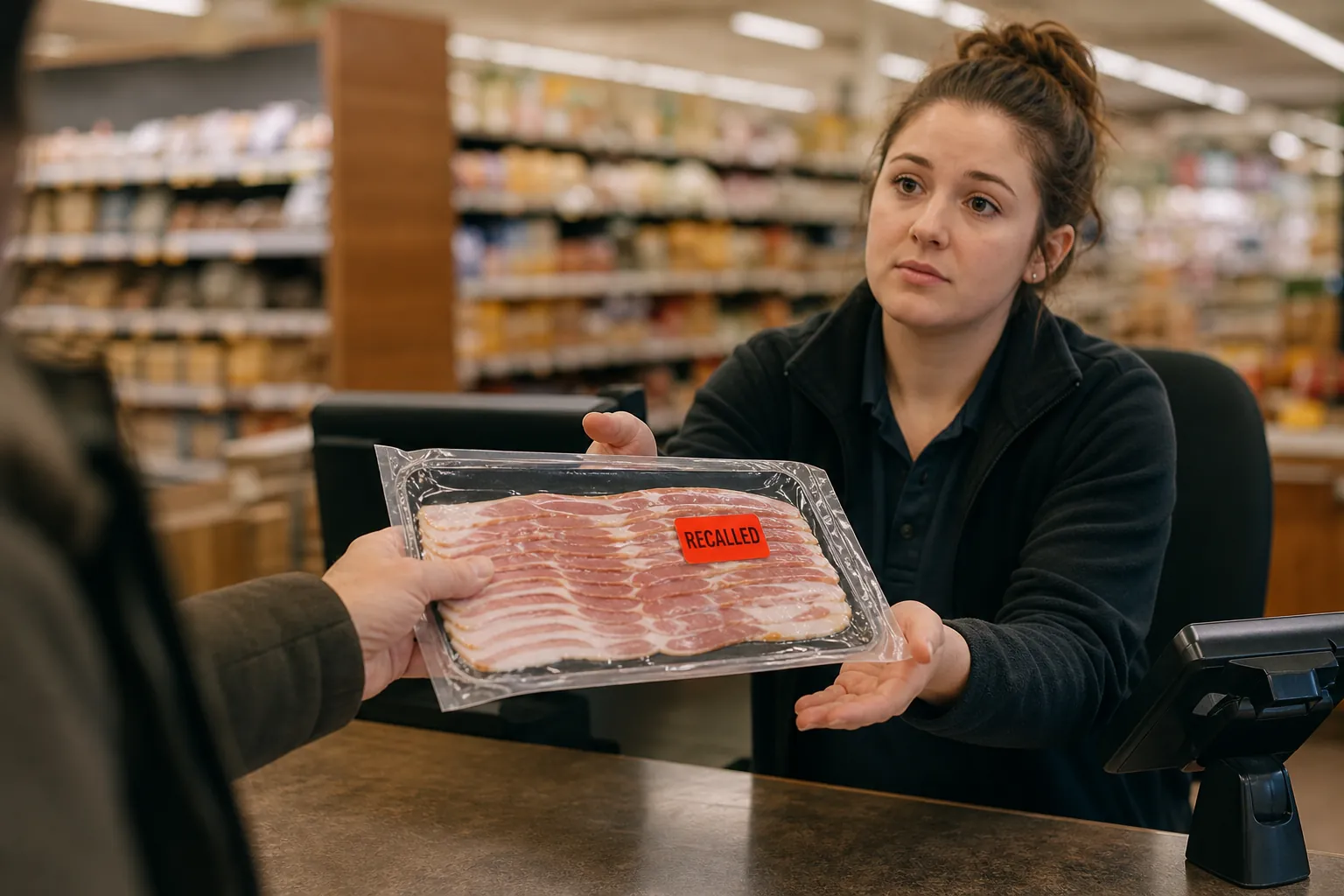
The short answer: the FSIS line saying the recalled Maple Leaf bacon “should be thrown away or returned to the place of purchase” is the practical starting point for getting money back, not a federal refund guarantee. It gives a cashier, store manager, card issuer, or complaint reviewer a strong reason to treat the sale as defective. It does not, by itself, create a federal statutory right to a refund.
What the FSIS recall notice actually says
FSIS announced Recall 011-2026 on July 24, 2026. The notice identifies the event as a Class I, high-risk recall for an import violation involving approximately 12,036 pounds of Maple Leaf Foods not-ready-to-eat bacon product imported from Canada without FSIS import reinspection. The product was distributed to Grocery Outlet distributors and retailers in Idaho, Oregon, and Washington, and FSIS reported no confirmed adverse reactions as of the notice.[1]
That combination matters. This is not a vague quality complaint, and it is not ordinary buyer’s remorse. A Class I recall is FSIS’s highest health-risk category. The product also moved through a specific retail channel in three states, which makes the refund request concrete: the buyer is not asking the store to make an exception because the bacon was unwanted; the buyer is pointing to a federal food-safety recall covering the product sold through that channel.[1]
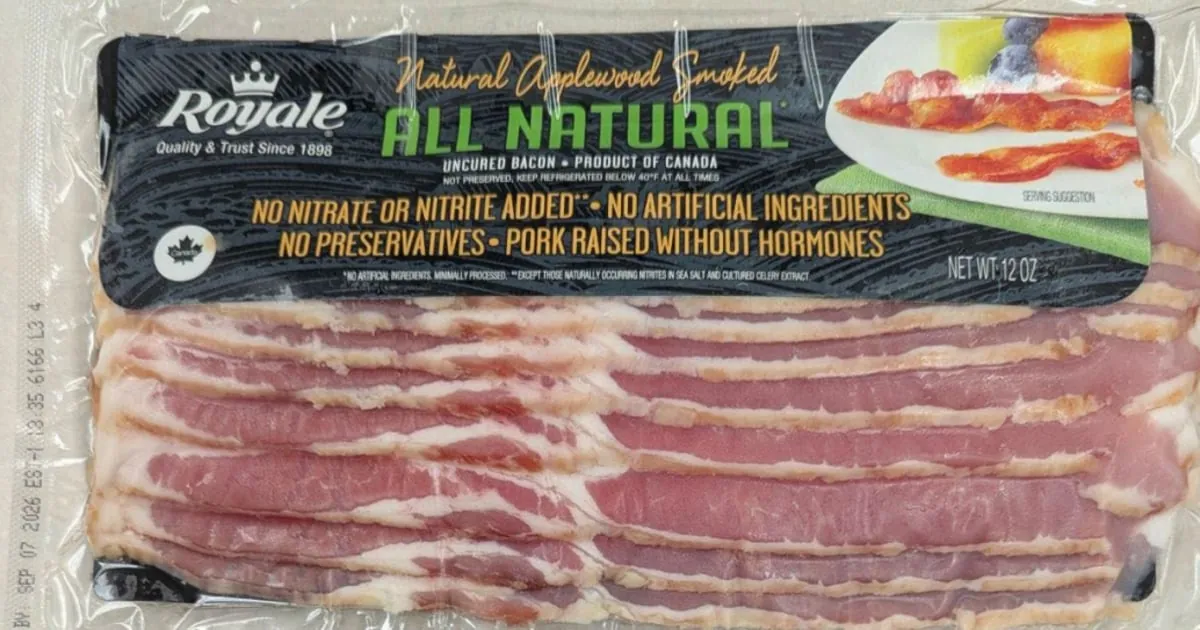
As of the verification date for this article, FSIS listed the recall as active and had not posted a retail consignee list for Recall 011-2026. Buyers should re-check the FSIS recall page before relying on store-specific coverage, especially if they bought the product from a Grocery Outlet location and the manager asks whether that store was on the list.[1]
Why “return to the place of purchase” is not the same as “federally entitled to a refund”
FSIS recall notices often sound more decisive than the legal machinery behind them. FSIS explains that recalls are voluntary actions by companies to remove adulterated or misbranded products from commerce. If a company refuses, FSIS can detain product and ask the Department of Justice to seek seizure, but FSIS says it does not have statutory authority to order a recall.[2]
That is the key consumer-rights distinction. FSIS can identify the affected product, classify the public-health risk, tell consumers not to eat it, and tell them to discard it or return it. But the recall notice is not a refund statute. It does not say which store employee must approve a return, how proof of purchase must be handled, whether a receipt is required, or what remedy applies if the store refuses.
FDA and FoodSafety.gov use similar consumer-facing language for recalled foods: FDA says recalled products “may be returned to the store where they were purchased for a full refund,” and FoodSafety.gov tells consumers not to eat recalled food and to return it for a refund or dispose of it safely.[3][4] Those pages confirm the standard safety practice. They still do not turn the FSIS sentence into a standalone federal refund right.
What fills the legal gap
When a refund is refused, the pressure usually comes from ordinary consumer and sales law, not from FSIS. The most practical theories are simple: the product sold for food use was later identified as unsafe to eat or outside the lawful import-inspection process; a consumer who cannot safely use the food for its ordinary purpose should not be treated like someone trying to return a disliked item.
That point lines up with the implied warranty of merchantability, a sales-law concept under which goods must be fit for their ordinary purposes. For food, the ordinary purpose is eating it. A recall does not automatically prove every possible claim a consumer might bring, but it is powerful evidence that the product should not be consumed and that an ordinary “no returns” answer is the wrong frame.
Washington’s attorney general gives a useful public-facing example of the difference. Its refund guidance says a store does not have to give refunds or exchanges in every case, but that rule changes when merchandise is defective or misrepresented.[5] The Maple Leaf bacon recall fits much closer to the defective-merchandise side than to buyer’s remorse.
That does not mean Idaho, Oregon, and Washington have identical procedures or remedies. It means the consumer’s enforceable argument is state-law and transaction-based: the retailer sold food that the federal food-safety agency later told consumers not to eat. FindLaw’s state-by-state refund overview also notes the broader baseline: there is no general federal law requiring retailers to provide refunds for all returns.[6]
Start with the store, but bring the recall record
The cleanest route is still the least dramatic one: take the product, receipt, loyalty-account record, card statement, order history, or a photo of the package to the Grocery Outlet store where it was purchased and ask for a refund under FSIS Recall 011-2026. If the product has already been thrown away because of the recall, say that plainly and bring whatever proof remains.
| If you still have | What to show | Why it helps |
|---|---|---|
| Unopened package | Package label, establishment or lot details if visible, and the FSIS recall notice | Connects the item directly to the recall |
| Opened package | Remaining packaging, photos, receipt, or card record | Shows both product identity and purchase history |
| No package | Receipt, loyalty account, card statement, store date, and a screenshot or printout of the FSIS notice | Explains why the product was discarded and anchors the request in the recall |
| No receipt | Card statement, digital wallet record, store account history, or approximate purchase date | Gives the store a way to verify the transaction |
Grocery Outlet’s return-policy baseline needs caution. The cited help-center result describes a 30-day return policy with receipt, but the underlying help page could not be crawled when this record was checked and should be re-verified before treating it as the final policy.[7] In any event, a safety recall is not the same as a normal return. If a clerk says “30 days” or “receipt only,” the next request should be for a manager to review the FSIS notice rather than for the cashier to interpret food-recall law at the register.
Consumer-safety lawyers often advise that a recalled product may be refundable even when the buyer no longer has the physical item, because the safety instruction itself may require disposal.[8] That is not a magic phrase that forces a refund. It is a practical point to make if the store penalizes a buyer for doing what food-safety guidance told them to do.
If the refund is refused
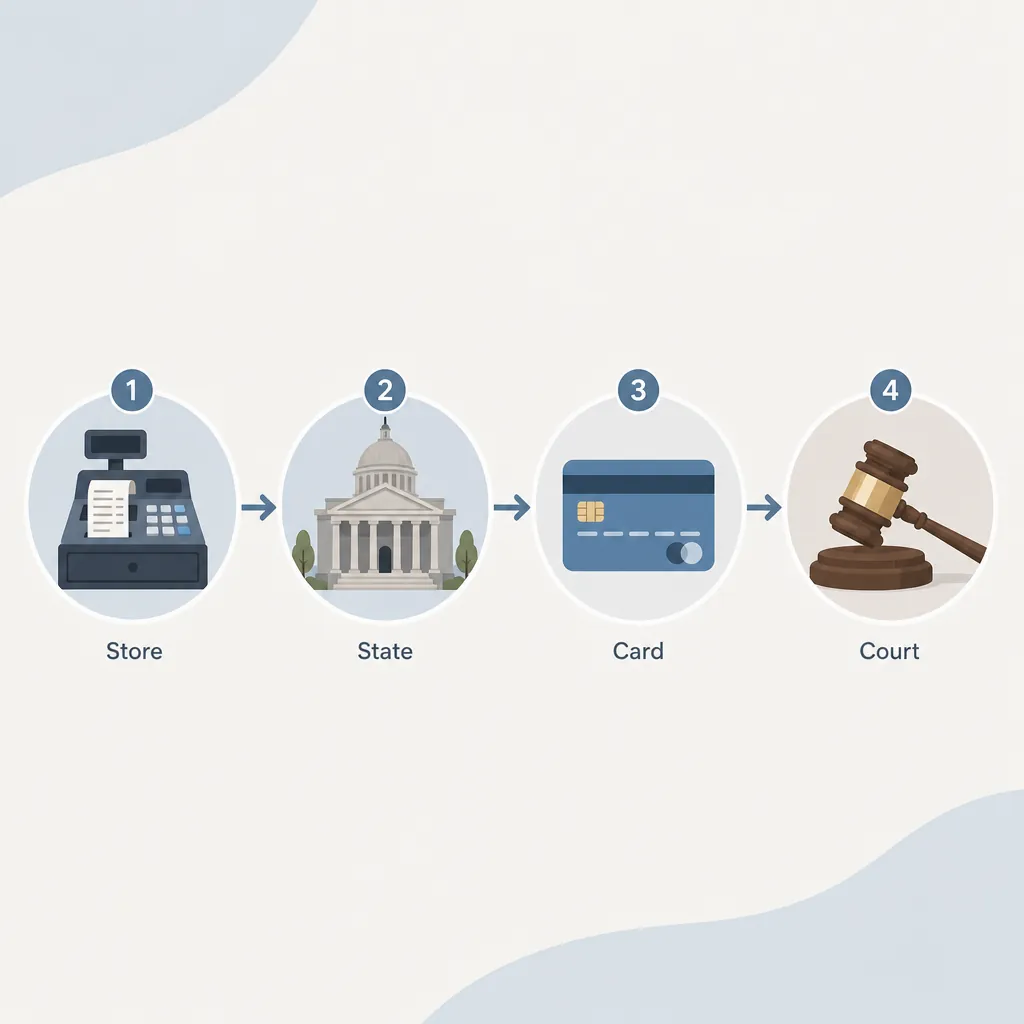
A refused refund should be treated as a documentation problem before it becomes a legal fight. Ask for the reason in writing or note the date, store, employee or manager name if available, and the exact explanation given. Keep the receipt record, package photos, recall screenshot, and any store messages together. The person reviewing the complaint later should not have to reconstruct the story from memory.
- Ask the store manager to process the return under FSIS Recall 011-2026, not under ordinary buyer’s-remorse rules.
- If the store refuses, contact Grocery Outlet customer service or the local operator with the receipt record, product details, and FSIS recall link.
- File a consumer complaint with the Idaho, Oregon, or Washington attorney general’s office if the store still will not address the recalled-food refund.
- Consider a card dispute if the purchase was made by credit card or debit card and the issuer’s deadline has not passed.
- Use small claims only if the amount, time, filing fee, and proof make the effort rational.
State attorney general complaints are especially useful when the dispute is not just one refund but a store practice: refusing all recall returns, requiring impossible proof after consumers were told to discard food, or giving inconsistent answers across locations. The AG complaint may not recover money as quickly as a manager override, but it creates a record with the agency that handles unfair or deceptive business-practice complaints in that state.
A card dispute is a separate track. It does not ask FSIS to enforce anything. It asks the card issuer or payment network to review whether the charge should stand when the purchased food was later recalled and could not safely be used. That works best with a clear purchase record and a short written timeline.
Refund is not injury compensation
For this recall, FSIS reported no confirmed adverse reactions in the recall notice.[1] That keeps the ordinary consumer-remedy question narrow: the immediate issue is a refund or replacement value for food that should not be eaten. Injury claims, medical bills, lost wages, and product-liability damages are different questions with different proof.
That distinction is easy to lose in recall coverage. A refund for an uninjured purchaser is usually a transaction remedy. Compensation for illness is a harm remedy. The same split appears in other food-recall records, including the analysis of the Pillsbury glass recall, where uninjured buyers and injured consumers face different practical paths.
The realistic answer for Idaho, Oregon, and Washington buyers
A refund for recalled Maple Leaf bacon is highly supportable. The product was covered by an active FSIS Class I recall, distributed through Grocery Outlet channels in the relevant states, and specifically identified by FSIS as something consumers should not eat.[1] That is more than enough to start at the store counter and ask for money back.
But the word “guaranteed” needs discipline. FSIS’s return language helps the buyer prove the product should not be used. The enforceable pressure, if the store refuses, comes from state consumer-protection law, implied-warranty principles, the sales transaction, retailer policy, card-network processes, complaints, and small claims. The recall notice is the document to carry into the conversation. It is not the refund law itself.
References
- Maple Leaf Foods Inc. Recalls Not-Ready-To-Eat (NRTE) Bacon Product Imported Without Benefit of Import Reinspection, FSIS, July 24, 2026.
- Understanding FSIS Food Recalls, FSIS.
- Food Recalls: What You Need to Know, FDA.
- What Do You Do If You Have a Recalled Product?, FoodSafety.gov.
- Store Refunds & Exchanges, Washington State Office of the Attorney General.
- Customer Returns and Refund Laws by State, FindLaw.
- What is your return policy, Grocery Outlet Help Center.
- What Are My Consumer Rights After a Product Recall?, Clayton, Frugé & Ward.
Operationalizing workflow
No workflow has been explicitly linked to this obligation yet. See Workflows generally.
Illustrative cases
No illustrative case is currently tracked for this obligation. See Risk Digest for documented incidents generally.
← Back to RegulationReport a correction or tip
Spotted an outdated figure, a misstated fact, or a ruling this regulation entry should reflect? Public comments are disabled for this content given the professional cost of a misreported case outcome, penalty amount, or rule text — use the structured correction channel instead.
Report a correction or tip for this record →