
Can the Pillsbury glass recall generate product liability?
Primary-source record of the July 2026 Pillsbury roll-dough glass recall (FDA Event 99293) mapped to civil liability: which claims the recall can support, for whom, under what theories, and with what damages. Verified recall facts anchor the judgment that exposure is narrow but real — injured consumers and food-service buyers can claim, while uninjured purchasers are largely limited to refunds.
- Jurisdiction
- United States
- Court
- No court proceeding
- AI tool named
- No AI tool named
- Ruling date
- Jul 13, 2026
- Source document
- View primary court order ↗
- Last verified
- Aug 3, 2026
Lex Machina Review is an independent risk-tracking and reference resource. Nothing on this site is legal advice, and using it does not create an attorney-client relationship. Every record is reviewed against primary sources but may not reflect the most current status of a matter — always verify directly against the cited court order, rule text, or a licensed attorney before relying on it.
Companion explanation — secondary to the source document above
Risk Digest record, category slug: risk-digest. Legal-background review: the site’s named-reviewer convention applies; this body is legal-risk analysis, not legal advice. Last verified for this record: August 3, 2026 UTC. The primary record is FDA Enforcement Report Event 99293, covering recall numbers H-1154-2026 and H-1155-2026; because the FDA link resolves through the agency’s iRES search portal, the event page, status, lot codes, and case counts should be rechecked live before relying on the record in a filing or client memorandum.[1]
The short answer on pillsbury glass recall product liability is narrow but not empty: the recall can support injured-consumer claims and commercial buyer disputes, but it does not turn every fresh-roll purchase into a tort case. FDA Class II classification means the agency sees a situation in which use of or exposure to the product may cause temporary or medically reversible adverse health consequences, or where the probability of serious adverse health consequences is remote; it is not a civil-liability score.[2]
Verified recall frame
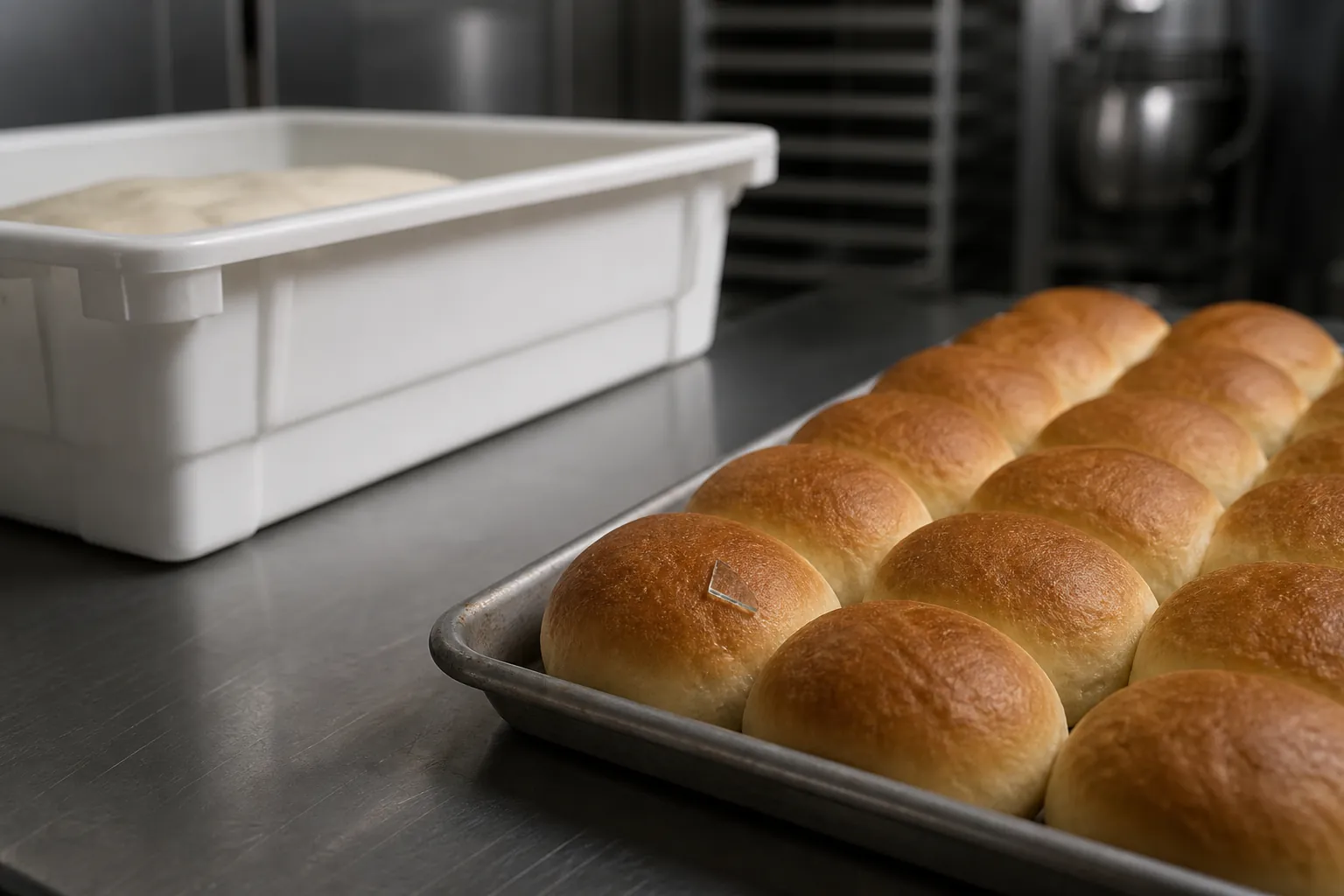
General Mills initiated the Pillsbury frozen roll-dough recall on June 19, 2026, and the FDA enforcement report was posted on July 13, 2026. The FDA listing classified the event as Class II and listed the status as ongoing as of this record’s verification date.[1][2] Public reports available for this record stated that no injuries had been reported; that statement should be treated as time-limited, not permanent, because the recall remained ongoing when checked.[3]
| FDA recall number | Product | UPC / lot identifier | FDA-derived quantity |
|---|---|---|---|
| H-1154-2026 | Pillsbury Hard Roll Dough | UPC 721582-13283 4; lots 11JUN6JL and 12JUN6JL | 3,080 cases × 180 units = 554,400 rolls |
| H-1155-2026 | Pillsbury Kaiser Roll Dough | UPC 7 21582-13288 9; lot 12JUN6JL | 1,260 cases × 144 units = 181,440 rolls |
| Combined | Commercial frozen roll dough | Bulk bakery case identifiers | 735,840 rolls |
That last point controls much of the liability analysis. The recalled goods were commercial frozen dough cases supplied for Walmart in-store bakeries, then baked and sold as fresh rolls. The UPCs and lot codes that matter most for proof were not printed on a consumer’s typical take-home can of dough; they were tied to the bulk bakery cases and bakery handling records.[1][3]
Most coverage reported distribution in 19 states: Arkansas, California, Florida, Georgia, Indiana, Louisiana, Maine, Missouri, New Mexico, New York, Ohio, Oklahoma, Pennsylvania, South Carolina, Tennessee, Texas, Virginia, Washington, and Wyoming.[3][4][5] USA Today reported a 20-state version that included North Carolina, so North Carolina should be treated as a reported discrepancy unless and until the live FDA record or company statement resolves it.[6]
General Mills’ consumer line for the recall was reported as 1-800-230-8103.[3][6] That is a refund and information channel, not a substitute for preserving medical records, physical product evidence, bakery logs, or seller communications where an actual injury or commercial loss is alleged.
The commercial bakery channel is the liability hinge
A recall of consumer-packaged canned dough would leave a fairly ordinary evidence trail: consumer buys package, package bears lot code, consumer keeps product or receipt, manufacturer and retailer are visible. This recall is different. General Mills/Pillsbury sits at the manufacturing point; Walmart’s in-store bakery is both commercial buyer and retail food-service interface; the consumer likely encountered a fresh baked roll, not a branded case with the recalled UPC in hand.
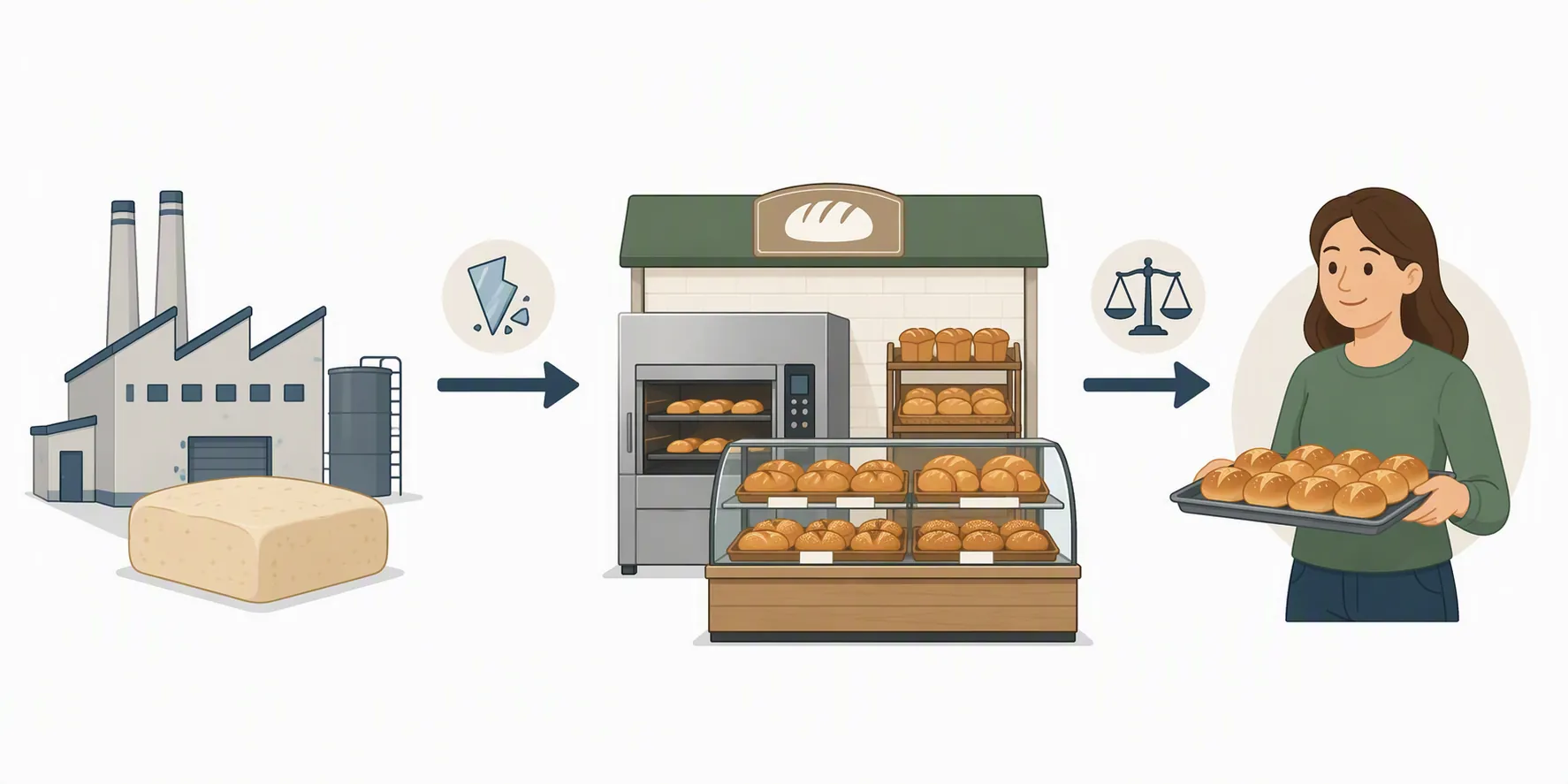
That channel separates defendants, proof, and damages. A claimant alleging injury from glass in a fresh roll must connect the roll to a Walmart bakery that received the recalled case, to a baking or sale date consistent with the affected lots, and to the medical event. A food-service buyer dispute turns on different records: invoices, case labels, rejection notices, credits, hold-and-destroy instructions, lost labor, shrink, and any contract terms governing recalls.
The Walmart interface also keeps retailer exposure in view. The existence of a manufacturer recall does not automatically make the seller liable in every state or on every theory, but retailers and food-service sellers can become defendants when contaminated food reaches a consumer through their sale channel. For the same reason, this record belongs beside prior seller-exposure analyses such as the site’s Walmart cyclospora liability record and broader retailer-liability map.
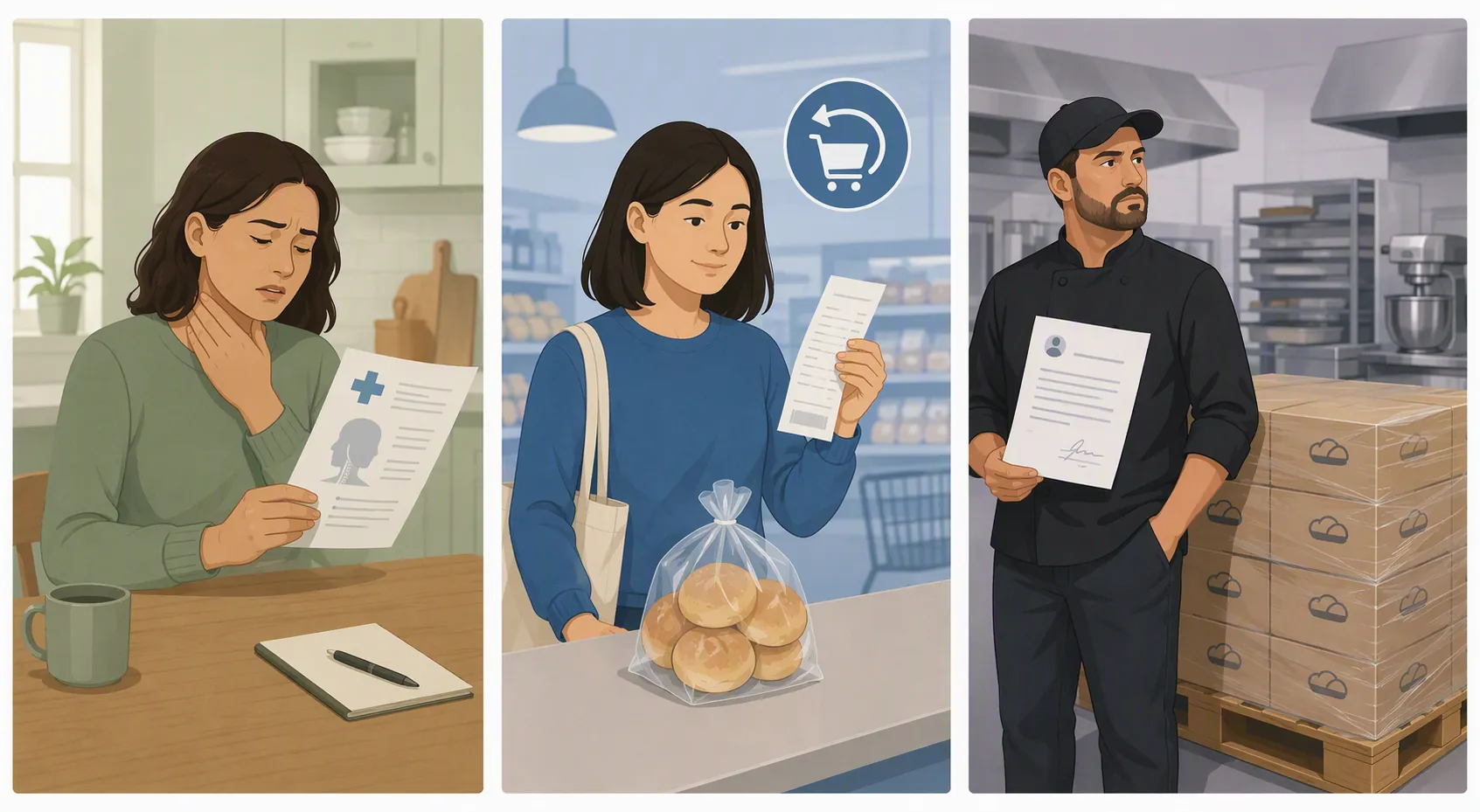
Who has a plausible civil claim
| Potential claimant | Likely civil posture | Practical proof problem |
|---|---|---|
| Consumer who bit into or swallowed glass and suffered injury | Most plausible tort claimant: strict liability, negligence, warranty, and possibly circumstantial proof theories | Must connect the fresh roll to the recalled dough lot and the injury to the glass exposure |
| Consumer who bought fresh rolls but was not injured | Usually refund, replacement, or limited economic remedy; tort damages are unlikely without injury or property damage | Receipt may prove purchase, but not compensable personal injury |
| Walmart / in-store bakery commercial buyer | Potential commercial dispute over recalled inventory, credits, labor, disposal, indemnity, and warranty allocation | Invoices, case labels, hold logs, and supplier communications matter more than consumer packaging |
| Bakery worker or handler | Potential claim depends on actual exposure, injury, and employment-law or workers’ compensation posture | Handling the dough commercially does not itself establish product-liability damages |
The uninjured purchaser category is where recall commentary often drifts. A recall can justify a refund program and can help establish that a product was nonconforming, but personal-injury tort law still asks for injury and causation. A person who bought fresh rolls, discarded them, and suffered no physical harm is usually fighting over purchase price, not pain, medical expense, or punitive damages.
That distinction is consistent with the economic-loss rule: where the alleged loss is only the value of the product itself, tort recovery is commonly blocked or sharply limited, pushing the dispute into refund, warranty, contract, or statutory consumer-remedy territory. The exact rule varies by state and claim, but the damages boundary is real enough that it should be screened before any intake call becomes a lawsuit theory.
The claims that fit the record
A glass-in-food case usually starts with strict product liability for a manufacturing defect: the product was expected to be food, but allegedly contained a foreign object that made it unsafe when it left the relevant control point. The recall’s lot trail can help the claimant identify the affected production run, but it does not by itself prove that a particular roll contained glass or caused a particular injury.
Negligence would ask how glass entered the dough, whether reasonable manufacturing, inspection, supplier, or sanitation controls failed, and whether recall response was timely after the problem was known. A plaintiff does not get those answers from the enforcement report alone. They usually come from production records, complaint logs, foreign-material detection records, supplier files, sanitation logs, and communications between the manufacturer and commercial customer.
Warranty theories may matter for both injured consumers and commercial buyers. For a consumer, the ordinary expectation is that a fresh roll will not contain glass. For a commercial buyer, the warranty analysis may be more paper-heavy: purchase terms, indemnity language, notice requirements, credits, limitations of remedy, and insurance tenders can decide whether the dispute is paid quickly or litigated.
Res ipsa loquitur or similar circumstantial arguments may appear where the facts support an inference that glass does not ordinarily appear in food absent negligence and the relevant defendants had control over the process. The phrase is not a shortcut around causation. In this recall, control may be contested because dough moved from manufacturing to a retail bakery, then through thawing, proofing, baking, display, sale, and home handling. Foreign-object food claims are commonly analyzed under strict liability, negligence, warranty, and reasonable-consumer expectation principles, but state law supplies the working rule.[7][8]
For classification discipline, this is the same basic caution used in the site’s Class II Rohto recall analysis: FDA classification helps describe regulatory risk and recall handling; it is not the damages element, the defect element, or the causation element in a civil case.
Damages depend on injury, not headline roll count
The FDA-derived arithmetic is large: 735,840 rolls.[1] It is still an exposure denominator, not a damages figure. The number tells counsel how many rolls could have moved through the affected commercial channel. It does not tell counsel how many were baked, sold, consumed, contaminated with glass, or linked to injury.
Some public reports also varied on quantities, with Allrecipes reporting 735,440 rolls and USA Today including a passage referring to 3,800 cases while also reporting the 3,080-case figure.[6][9] For liability work, the FDA-derived math should control unless the live FDA record or a primary company correction changes it.
In an actual glass-ingestion claim, compensable damages would usually be built from emergency treatment, imaging, endoscopy or surgery if any, lacerations, scarring, infection risk, lost wages, pain, and future care. A minor scare with no medical confirmation is not valued like a documented gastrointestinal or esophageal injury. The physical object matters too: a preserved shard, photographs, the remaining roll, packaging or bakery label, receipt, and chain-of-custody notes can separate a file from a story.
Reported glass-ingestion outcomes provide only outer reference points. Law.com reported a $867,000 Fulton County, Georgia verdict involving gastrointestinal lacerations and scarring, but the available source is headline-level and paywalled for practical purposes.[10] Meisel Law reports an $800,000 settlement in Taylor v. Tipsy Tap for an esophageal injury, but the public page available for this record provides limited detail.[11] A Tennessee jury awarded $9.4 million against Cracker Barrel in a restaurant case involving a glass filled with a chemical, including $4.3 million in compensatory damages and $5 million in punitive damages, with reporting noting potential state-law caps; that case is a restaurant chemical-ingestion verdict, not a prediction for this dough recall.[12]
Those figures are useful only after the injury file is sorted. They are not a price list for finding glass, seeing a recall notice, or throwing away rolls.
Evidence to preserve before the bakery trail disappears
The most fragile evidence in this recall is not the FDA notice; it is the bridge between a bulk case and a consumer’s fresh roll. Once the in-store bakery bakes, displays, sells, discounts, discards, or cleans up, the ordinary documents that tie a particular sale day to a particular case can become harder to reconstruct.
- For an injured consumer: preserve the remaining roll, any visible glass, photographs, receipt, bakery label, store location, purchase date and time, medical records, imaging reports, discharge papers, and communications with the store or General Mills.
- For Walmart or another commercial holder of the case: preserve case labels, pallets, invoices, receiving logs, thaw/proof/bake logs, hold-and-destroy instructions, customer complaints, supplier emails, credit memos, insurance notices, and disposal records.
- For counsel evaluating intake: ask whether the claimant saw or retained glass, whether a medical provider documented ingestion or laceration, whether the product was a fresh bakery roll rather than canned dough, and whether the store location was in the reported distribution footprint.
- For anyone citing the FDA record: recheck Event 99293 for status, classification, product identifiers, and any update to injury reporting or distribution before quoting the file.
This is also where the site’s FDA recall verification checklist is more useful than a headline summary. Recall number, event number, classification, initiation date, posting date, lot code, UPC, firm statement, status, and distribution geography are separate fields. When one is wrong, the liability map bends.
Limitations periods are a screening issue, not a footnote
Product-liability limitations periods commonly fall in the two-to-four-year range, with state-specific rules tied to injury occurrence, injury discovery, or a separate statute of repose.[13] That range is enough for intake triage, but not enough for advice. A lawyer still has to check the governing state, defendant identity, claim type, tolling facts, and whether the claimant is pursuing personal injury, warranty, consumer protection, or commercial contract remedies.
The commercial channel can complicate venue and governing-law analysis. The dough may have been manufactured in one place, distributed through another, baked in a Walmart store in a reported state, and consumed somewhere else. The limitations clock may be simple in a clear injury case; the defendant and law-selection questions may not be.
What not to import into this recall
This is not a recall of consumer-packaged canned Pillsbury Grands! dough. Chowhound specifically corrected its coverage to state that canned Grands! dough was not part of the 2026 recall.[14] That correction is not cosmetic. If the product is misidentified, the lot-code trail, defendant roles, proof burden, and refund route are all misidentified with it.
Nor should an unverified 2022 Grands! glass-recall claim be repeated as fact without a primary source. The confirmed Pillsbury precedent in the materials is a 2013 recall of cinnamon rolls with icing over possible fragments.[15] It is a context signal, not proof that the 2026 dough was defective in any particular consumer’s roll.
The broader 2026 glass-recall cluster is also context, not causation. FSIS reported an Ajinomoto Foods North America recall expansion involving approximately 37 million pounds of chicken and pork fried rice products and chicken ramen products due to possible foreign-material contamination, and the research file also flags Aldi, Costco, and Dollar General glass-related recall coverage as sector signals.[16] Sector activity may sharpen quality-control questions, but it does not prove defect, injury, or damages in the Pillsbury file.
For no-illness recall structure, the better comparison is not a panic article but a file discipline exercise: the site’s Maple Leaf bacon recall record and Brooklyn Roasting cold brew botulism record both show why absence of confirmed illness narrows the damages analysis without erasing recall obligations.
What the recall can and cannot create
The recall can create a useful evidentiary platform. It identifies the manufacturer, products, recall numbers, UPCs, lots, initiation date, posting date, classification, distribution channel, and affected commercial customer path. For an injured consumer, those fields can support defect, notice, causation investigation, and defendant identification. For a commercial buyer, they can support inventory segregation, credit claims, indemnity tenders, warranty disputes, and insurer notice.
The recall cannot create injury where none occurred. It cannot convert a fresh-roll receipt into a personal-injury claim without medical or physical evidence. It cannot make Class II classification a proxy for civil fault. It cannot prove that a specific roll contained glass unless the claimant can connect product, place, date, lot trail, and harm.
The civil force of this Pillsbury glass recall is the documented lot-and-date trail plus a claimant who can tie that trail to injury, economic loss, or a commercial buyer dispute. The headline roll count and Class II label matter, but they do not carry the case alone.
References
- FDA Enforcement Report Event 99293, FDA
- FDA Recalls Background and Definitions, FDA
- Pillsbury rolls recalled over glass contamination, CBS News
- Pillsbury and General Mills recall frozen bread rolls over glass fragments, The Guardian
- Pillsbury Roll Dough Recalled Over Glass Contamination, AARP
- General Mills recalls Pillsbury rolls sold at Walmart over glass contamination concerns, USA Today
- Can I Sue if There is Glass in My Food at a Restaurant?, Coastal Law
- Maryland Product Liability Lawsuits Based on Foreign Objects in Food or Drinks, Maryland Accident Law Blog
- General Mills’ Pillsbury Dough Recall Over Glass Concerns Affects Walmart Bakeries, Allrecipes
- $867K Verdict, Law.com
- $800,000.00 Award for Swallowed Glass, Meisel Law
- Cracker Barrel ordered to pay $9.4M after Tennessee jury says man was served glass filled with chemical, 6abc
- Time Limits for Filing a Product Liability Claim, Nolo
- Pillsbury Recall: What To Know About The 2026 Recall, Chowhound
- Pillsbury cinnamon rolls with icing recalled over fragments, SupplySide
- Ajinomoto Foods North America Inc. Expands Recall of Chicken and Pork Fried Rice and Ramen Products, FSIS
Related records
Tool profile
How Meta's AI Spending Reshapes Law Firm ProfitabilityGoverning regulation
Browse the obligations tracker →Preventive workflow
Browse verification workflows →
Report a correction or tip
Spotted an outdated figure, a misstated fact, or a ruling this case record should reflect? Public comments are disabled for this content given the professional cost of a misreported case outcome, penalty amount, or rule text — use the structured correction channel instead.
Report a correction or tip for this record →