
How Reliable Were September 2026 Visa Bulletin Predictions?
- Authority
- U.S. Department of State
- Rule type
- regulation
- Jurisdiction scope
- US federal
- Effective date
- Sep 1, 2026
- Source text
- Read primary rule text ↗
Confirm predicted cutoffs with DOS/USCIS; use Final Action Dates for September 2026 employment-based filings.

By the time the September 2026 Visa Bulletin was released, “September 2026 visa bulletin predictions India employment based” had already become a verification problem rather than a forecasting problem. For India employment-based categories, the operational answer was mostly no movement: EB-1 India held at Oct. 15, 2022, EB-2 India remained unavailable, EB-3 India held at Jan. 1, 2014, and EB-5 unreserved remained unavailable. The Department of State is the primary record; Murthy, Fragomen, and BAL summaries aligned on the filing-relevant points.[1][2][3][4]
The separate USCIS filing-chart check did not soften that result. For September 2026, USCIS required employment-based adjustment applicants to use Final Action Dates for all employment-based filings, as reported by Fragomen and BAL; USCIS’s own chart-designation page is the standing place to confirm which chart governs a given month.[3][4][5]
What September 2026 actually said for India employment-based cases
| Category | September 2026 result | Filing consequence |
|---|---|---|
| EB-1 India | Final Action Date remained Oct. 15, 2022, with DOS warning that the category might become unavailable before the end of the fiscal year.[1][2][3][4] | Do not treat a warning as unavailability, but do not ignore it in client timing notes. |
| EB-2 India | Unavailable for a second straight month after the annual limit had been reached for FY2026.[1][2][10] | “U” means no immigrant visa numbers are authorized for issuance in that category at that time.[5] |
| EB-3 India | Final Action Date remained Jan. 1, 2014.[1][2][3][4] | No September advancement to use in an adjustment filing. |
| EB-5 unreserved India | Unavailable.[1][2][3][4] | No numbers authorized while the category is unavailable. |
| All employment-based adjustment filings | USCIS required Final Action Dates, not Dates for Filing, for September employment-based filings.[3][4][5] | A prediction or law-firm summary was not enough; the USCIS chart designation had to be checked. |
That table is the whole reason prediction reliability matters. A cutoff date that looks harmless in a monitoring memo can become a calendar entry, then a client email, then a checklist item. Once it reaches that stage, “we saw a prediction” is not a defensible source note.
The accuracy record: the no-change guess beat the prediction apparatus
The September scorecard from visa-bulletin.us makes the benchmark visible. For September 2026, it scored 18 dates and reported zero average model error—a tie with no-change, not a win over it. It also reported that the model was closer than the naive no-change baseline on 0 of 18 dates. In a month where the key employment-based dates largely held steady, standing still was already the winning forecast.[6]
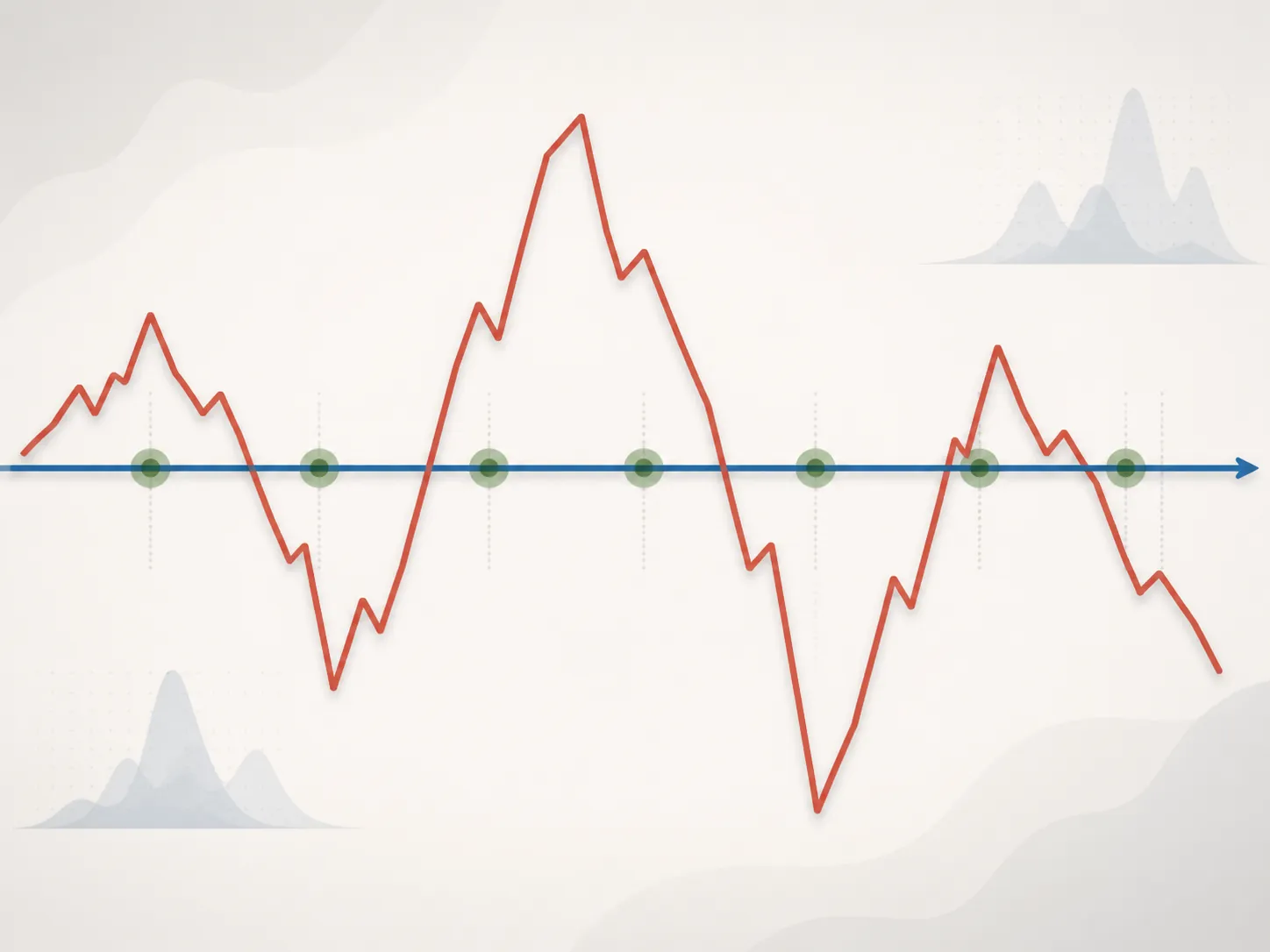
The broader archive is more damaging to reliance than the September snapshot. Across 228 months from July 2006 through September 2026, the scored model averaged 178.7 days of error, compared with 97.7 days for a naive no-change guess. It beat the no-change baseline on only 157 of 2,860 scored dates.[7]
| Scored measure | Reported result | Reliance significance |
|---|---|---|
| Archive window | 228 months, July 2006 through September 2026.[7] | Long enough to evaluate prediction discipline rather than one lucky or unlucky bulletin. |
| Average model error | 178.7 days.[7] | Too large to carry into filing advice without primary-source verification. |
| Average no-change error | 97.7 days.[7] | The cheap baseline performed better than the scored prediction model. |
| Model wins over no-change | 157 of 2,860 scored dates.[7] | A forecast should have to prove it improves on doing nothing. |
| Reported category error | EB-1 ±102 days; EB-2 ±92 days; EB-3 ±108 days; EB-5 ±2,317 days.[7] | Category-level volatility is not uniform; EB-5 is in a different error environment. |
That archive comes from one domain, so it should not be dressed up as an independent industry laboratory. But it is still a dated, scored record with a dumb baseline beside it. That is more useful for legal operations than a confident paragraph that never gets graded.
The pre-release misses were ordinary, not scandalous
Alaz Law’s pre-release discussion anticipated EB-2 India holding at Sept. 1, 2013 or seeing minor retrogression; the actual September result was unavailable. It also anticipated EB-2 rest-of-world retrogression; the actual September bulletin kept EB-2 worldwide current.[1][8]
Shusterman’s September prediction page warned that EB-1 India might become unavailable. The category did not become unavailable in the September bulletin; it held at Oct. 15, 2022, although DOS did carry a live warning that it could become unavailable before fiscal year end.[1][9]
This is not a useful place for a takedown gallery. Immigration commentators were looking at real constraints near the end of the fiscal year. The problem is narrower and more practical: when the official September bulletin arrived, the pre-release forecast layer did not add reliable filing authority. The one notable employment movement, EB-4 advancing two months to Dec. 15, 2022, was not the India employment-based movement most readers were trying to act on.[1][2][3][4]
Why individual cutoff availability is so hard to forecast
The structural reason is not mysterious. Annual limits, per-country limits, demand fluctuations, retrogression, policy changes, derivative beneficiaries, and retained priority dates all affect whether a category can move. Minsky, McCormick & Hallagan puts the point bluntly: it is “actually impossible to predict when an individual’s priority date will become available.”[11]
EB-2 India in September 2026 shows how quickly a forecast can lose its filing value. Fragomen reported on May 22, 2026, that the EB-2 India immigrant visa category had become unavailable through Sept. 30 after reaching the FY2026 annual limit; by September, the official bulletin still showed EB-2 India as unavailable.[1][10]
Even shorthand explanations of “per-country limits” need source discipline. The September DOS bulletin states a FY2026 per-country limit of 28,862. MMHPC describes 25,620 as 7% of a combined 366,000 family- and employment-based total. A FY2027 analysis from i485tracker discusses an employment-only frame around 140,000 numbers, which implies a much smaller 7% figure for employment-based allocation. Those figures should be attributed to their source and denominator, not smoothed into one artificial number.[1][11][12]
The verification workflow before filing or advising
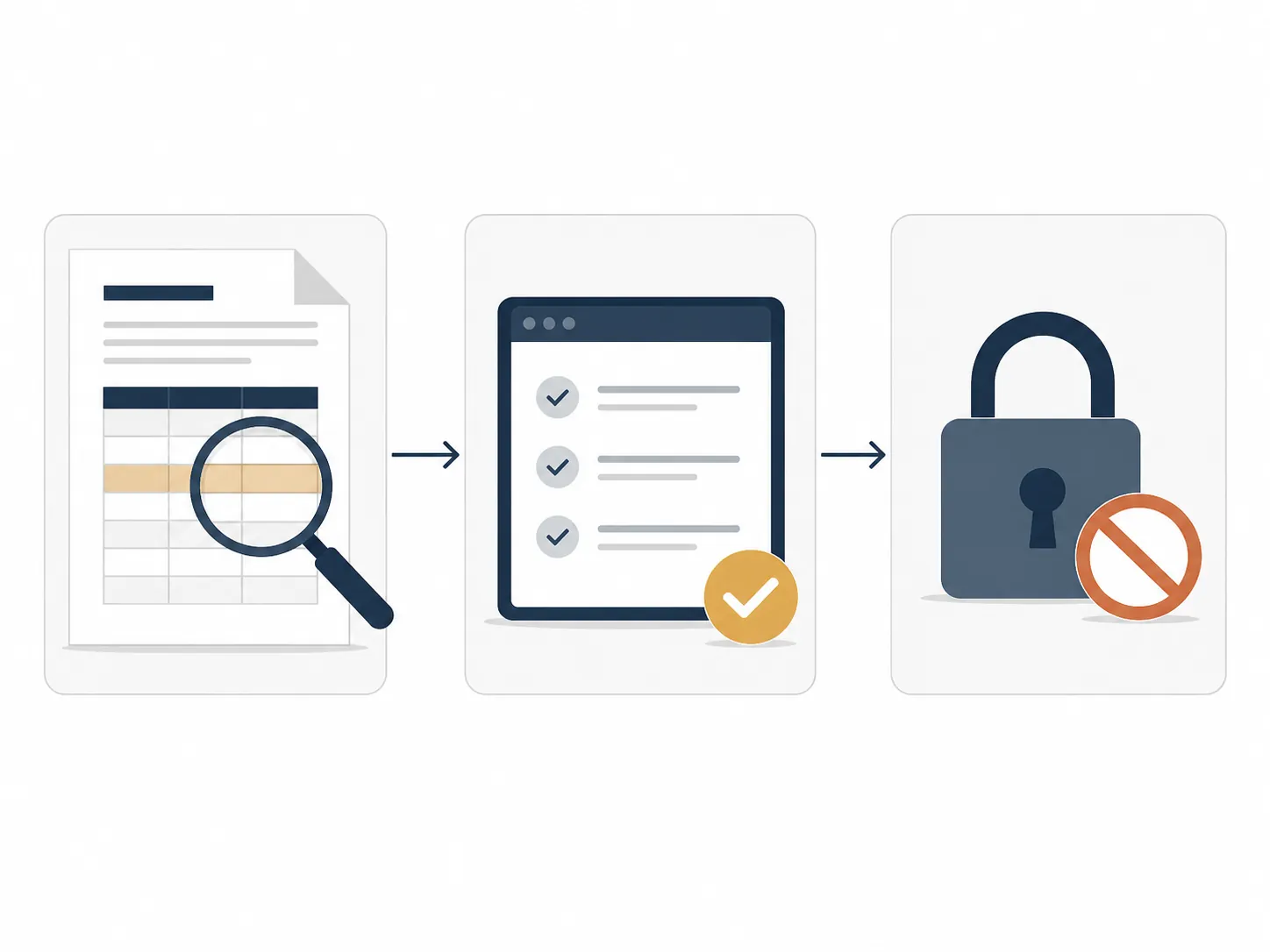
The safe workflow is short. It is also easy to skip when a predicted date confirms what everyone wants to hear.
- Open the Department of State monthly Visa Bulletin and read the exact employment-based category and country row. For September 2026 India employment-based cases, that meant checking EB-1 India, EB-2 India, EB-3 India, and any relevant EB-5 line directly against the bulletin.[1]
- Confirm whether the row is current, has a cutoff date, or is marked “U.” USCIS explains that “U” means unauthorized, or unavailable; no numbers are authorized for issuance in that category at that time.[5]
- Check the USCIS Adjustment of Status Filing Charts page for the month. USCIS decides whether adjustment applicants may use Dates for Filing or must use Final Action Dates; for September 2026 employment-based filings, Fragomen and BAL reported that USCIS required Final Action Dates.[3][4][5]
- Record the verification date, the source link, the chart used, and the exact row checked in the client note, partner briefing, or filing checklist.
- If a prediction is kept in the file, label it as a forecast and compare it to the no-change baseline. Do not let it become the authority for filing eligibility.
A chatbot-generated cutoff date belongs in the same operational bucket as a prediction-site date or a social-post date: it may be a monitoring input, but it is not source authority. The stronger claim—that visa-bulletin chatbot hallucinations have produced a documented sanctions pattern—is not supported by the materials reviewed here. The narrower claim is enough: generated dates are not filing dates until DOS and USCIS confirm them.
The same rule applies across legal AI work: fluent output is not a citation, and citation-looking output is not verification. For a broader tool-reliability frame, see Gemini vs. ChatGPT for legal work.
October 2026 is the next data point, not a filing instruction
The October 2026 forecast from visa-bulletin.us should be read as model output only. It projects EB-1 India unchanged, EB-2 India returning to an Oct. 1 cutoff, and EB-3 India advancing roughly three months to about Apr. 3, 2014.[13]
That may be worth monitoring because October opens the new fiscal year, and other FY2027 commentary has pointed to possible movement once new numbers become available.[12] But the September record gives the reliance rule: no October filing advice should rest on a predicted cutoff until the official DOS bulletin and USCIS chart designation are checked.
Last verified against the cited sources: Aug. 26, 2026. This is a verification and risk-management record, not immigration legal advice.
References
- Visa Bulletin For September 2026 — U.S. Department of State, September 2026
- September 2026 Visa Bulletin — Murthy Law Firm, Aug. 22, 2026
- United States: September 2026 Visa Bulletin: Main Employment-Based Categories Hold Steady; Some Categories May Hit Annual Limits Before End of September; USCIS to Honor Final Action Dates — Fragomen
- United States: September 2026 Visa Bulletin: Final Action Dates Remain Unchanged; Certain Categories May Become Unavailable — BAL
- Adjustment of Status Filing Charts from the Visa Bulletin — USCIS, Aug. 3, 2026
- September 2026 Visa Bulletin Predictions — visa-bulletin.us
- Visa Bulletin Predictions — visa-bulletin.us
- September 2026 Visa Bulletin Predictions: EB-2 NIW & Family Based — Alaz Law
- Visa Bulletin Predictions — Shusterman
- United States: EB-2 India Immigrant Visa Category Unavailable Through September 30 After Reaching Annual Limit for FY 2026 — Fragomen, May 22, 2026
- Understanding the Visa Bulletin: Why We Can’t Predict When You’ll Get a Green Card — Minsky, McCormick & Hallagan
- FY2027 Visa Number Predictions — i485tracker
- October 2026 Visa Bulletin Predictions — visa-bulletin.us
Operationalizing workflow
No workflow has been explicitly linked to this obligation yet. See Workflows generally.
Illustrative cases
No illustrative case is currently tracked for this obligation. See Risk Digest for documented incidents generally.
← Back to RegulationReport a correction or tip
Spotted an outdated figure, a misstated fact, or a ruling this regulation entry should reflect? Public comments are disabled for this content given the professional cost of a misreported case outcome, penalty amount, or rule text — use the structured correction channel instead.
Report a correction or tip for this record →