
How the shutdown led to the first right-to-counsel dismissal
- Authority
- U.S. District Court for the Eastern District of California
- Rule type
- court order
- Jurisdiction scope
- US federal
- Effective date
- Nov 21, 2025
- Source text
- Read primary rule text ↗
Before accepting or continuing CJA appointments, verify CJA payment status, defender-office capacity, district standing orders, and current funding date.
The Ortiz order is the place to start
The verified record begins with U.S. v. Ortiz, E.D. Cal., No. 2:24-cr-00302. On Nov. 13, 2025, Judge John Mendez dismissed the indictment without prejudice on right-to-counsel grounds, delayed the effective date to Nov. 21 to permit an appeal, and did so hours before the shutdown-ending legislation was signed, according to Reuters’ report of the order.[1]
That is the consequential court record for anyone asking about the government shutdown impact on courts and legal services. It is also a record that has to be kept narrow. Ortiz was not a merits dismissal. It was not with prejudice. The cited sources do not confirm what happened after the delayed effective date or whether the appellate posture changed after Nov. 21. Last verified for this article on Aug. 2, 2026, the available record supports treating Ortiz as the first documented shutdown-linked right-to-counsel dismissal in the cited record, not as settled law.
The legal problem did not begin when the courthouse entered shutdown mode. Defender Services funding had already failed. The Administrative Office reported that the Defender Services account ran out on July 3, 2025, causing panel-attorney payments to be suspended and leaving appointed counsel working without pay before the appropriations lapse began.[2]
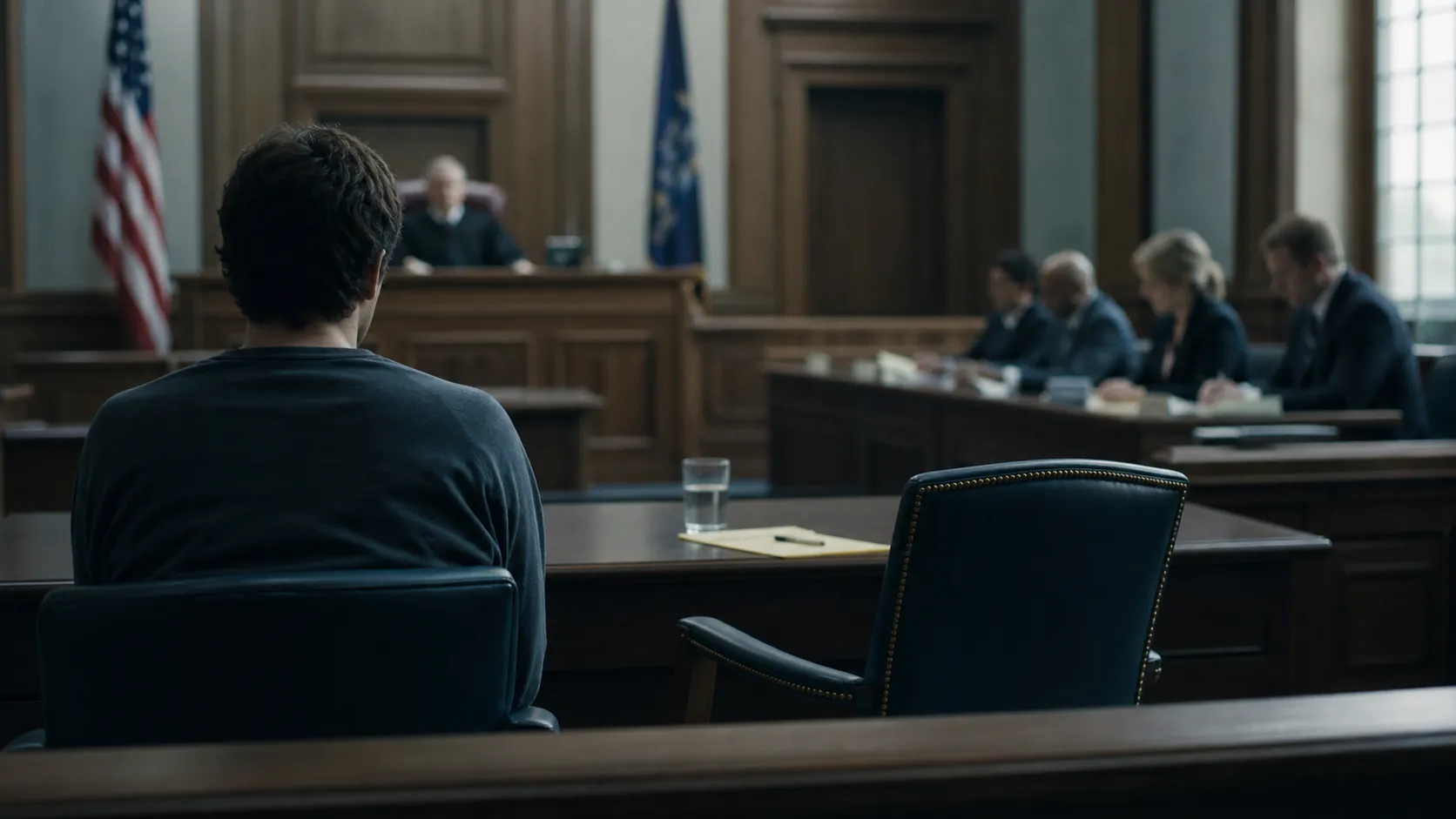
The payment collapse came first
A shutdown story that starts with CM/ECF availability misses the pressure point. The federal judiciary can keep electronic filing and limited operations alive for a time; that does not mean the defense function remains operational in any practical sense. In the CJA system, the people least able to absorb indefinite delay are often the people being asked to carry the constitutional load.
The scale matters. More than 90% of federal criminal defendants rely on court-appointed counsel. Private CJA panel attorneys handle roughly 40% of publicly financed federal criminal cases. The national panel includes about 12,000 private attorneys, and about 85% of them are solo or small-firm lawyers, according to the judiciary’s July 15, 2025 account of the funding crisis.[2]
Those numbers explain why a delayed payment cycle is not a bookkeeping nuisance. A solo or small-firm panel lawyer still has rent, staff, insurance, experts, investigators, interpreters, discovery platforms, travel, and the time demands of detention-heavy criminal practice. When the public defense account stops paying, the burden does not disappear. It is pushed onto counsel, onto defender offices trying to cover gaps, and ultimately onto defendants whose liberty is moving faster than the funding process.
| Date or window | Verified event | Why it matters for the Ortiz record |
|---|---|---|
| July 3, 2025 | Defender Services funding ran out; CJA panel payments were suspended.[2] | The payment collapse preceded the shutdown. |
| July 15, 2025 | The judiciary reported panel-attorney strain, including attorneys declining appointments and judges postponing trials.[2] | Appointment viability was already in doubt before Oct. 1. |
| Oct. 1, 2025 | The shutdown began; the judiciary said it would continue paid operations through Oct. 17 using fee balances and other available funds.[3] | Courts were open, but the CJA problem had not been cured. |
| Oct. 20, 2025 | The judiciary moved to limited operations under Anti-Deficiency Act constraints after funding ran out; CM/ECF and PACER remained operational.[4] | Electronic access did not answer the appointed-counsel problem. |
| Nov. 12–13, 2025 | The 43-day shutdown ended in this window; full paid judiciary operations resumed Nov. 13.[4][5] | The system began reopening at the same moment Ortiz reached a constitutional remedy. |
| Nov. 13, 2025 | Judge Mendez dismissed U.S. v. Ortiz without prejudice, delaying effectiveness to Nov. 21 to permit appeal.[1] | The order documented a right-to-counsel consequence, but left the government a procedural path to challenge it. |
The cleanest description is not “shutdown causes dismissal.” It is that an unpaid CJA system was already losing capacity, and the shutdown period made that capacity problem harder for the courts to manage without reaching constitutional consequences.
What was already visible before the shutdown
The July judiciary report did not describe a theoretical risk. It reported panel attorneys declining appointments, including resignations in the District of North Dakota and New Mexico panel attorneys refusing new cases. It also reported judges postponing trials and flagged Speedy Trial Act concerns for detained defendants.[2]
That is the pre-shutdown evidence that keeps Ortiz from being treated as a bolt from nowhere. When a court-appointed lawyer cannot be paid, the first visible symptom may be administrative: a voucher sits unpaid, a panel coordinator starts calling farther down the list, a defender office absorbs one more case it does not have room for. The constitutional problem appears later, when the detained person still has a trial date, discovery obligations still run, and no viable lawyer is available to do the work the Sixth Amendment requires.
The shutdown then narrowed the judiciary’s room to maneuver. On Oct. 1, the judiciary said it would remain in paid status through Oct. 17 by using court fees and other available balances.[3] On Oct. 17, in a notice later updated Nov. 13, the judiciary said funding had run out and that only limited operations would continue under Anti-Deficiency Act restrictions beginning Oct. 20. The same notice said CM/ECF and PACER would remain operational.[4]
That distinction is not cosmetic. Filing access can preserve the docket while the defense bar’s ability to accept appointments deteriorates. A defendant can still have a case number, a judge, a detention status, and a working docket entry system while the mechanism for providing counsel is failing underneath the docket.

What Ortiz proves, and what it does not
Ortiz proves that at least one federal judge was willing to treat the funding collapse as having crossed from administrative strain into a right-to-counsel violation serious enough to dismiss an indictment. The order’s procedural form matters just as much as the fact of dismissal: without prejudice, delayed effective date, and an express window for appeal.[1]
Without prejudice means the government was not necessarily barred from reprosecution. A delayed effective date means the court did not present the ruling as immediately beyond review. For readers tracking comparable procedural posture, that distinction is the same reason a dismissal-without-prejudice record has to be read differently from a final, prejudice-based termination.
The available record also does not support a broad rule that every unpaid CJA appointment creates a dismissal remedy. Ortiz is important because it is specific: a particular defendant, a particular district, a particular record, a particular funding breakdown, and a particular judge’s remedy on Nov. 13, 2025. It should be cited with that discipline or not cited at all.
There is another timing problem for anyone tempted to overread it. The order issued as the government was reopening. Reuters reported that the continuing resolution included $114 million for Defender Services, against roughly $97 million owed, with those figures tied to the reopening legislation and the judiciary’s funding account at that point.[1] That helped address arrears. It did not establish long-term CJA solvency.
The $114 million fix was not the end of the risk record
A restoration number can sound conclusive until it is put next to the dates. The Defender Services account ran dry on July 3. By the reopening, about $97 million was owed. The continuing resolution supplied $114 million for Defender Services, as Reuters reported, but the separate funding update available in the cited sources states that the continuing resolution funded the judiciary only through Jan. 30, 2026.[1][5]
Those facts support a limited conclusion. The reopening legislation addressed the immediate payment backlog and restored paid judiciary operations, but the available sources do not establish that CJA appointments became reliably financeable beyond the Jan. 30, 2026 funding date. As of this article’s last verification, the cited record does not provide a later appropriations status that would let counsel treat the problem as permanently resolved.
That is why the relevant practice question is not whether the federal courts are open in a general sense. The sharper question is whether an appointed lawyer can be paid, whether the defender office can absorb the matter if panel capacity fails, and whether the district has changed appointment procedures or standing orders since the last verified funding update.
Verification checks before accepting or continuing a CJA appointment
This section is a risk-verification framework, not legal advice. The point is to separate a live appointment decision from stale reassurance. A panel lawyer deciding whether to accept or continue a matter needs current district-specific facts, not a general memory that the government reopened in November 2025.
- Confirm current CJA payment status. Do not rely only on national reopening coverage. Check whether vouchers are being processed, whether prior vouchers remain unpaid, and whether the local clerk’s office or CJA administrator has issued a current payment notice.
- Ask what has changed since the last verified funding date. In the cited sources, the continuing resolution carried judiciary funding only through Jan. 30, 2026.[5] Any appointment decision after that date requires a fresh funding check.
- Verify federal defender capacity in the district. If the defender office cannot accept conflicts or overflow, panel availability becomes more than a staffing concern; it can affect detention, trial scheduling, and continuity of representation.
- Review district standing orders, CJA plan notices, and appointment conditions. Local orders may change faster than national summaries, especially during funding disruptions.
- Separate electronic docket access from representational capacity. CM/ECF and PACER continuity during limited operations did not mean that CJA counsel were being paid or that appointments were viable.[4]
- Document the date and source of each verification. If the record later matters, “I checked” will be less useful than a dated notice, email, order, or administrator confirmation.
The ethics and risk-management questions are not identical in every case. A lawyer already appointed to a detained defendant faces different duties from a lawyer being asked to join the panel or accept a new matter. For related client-appearance duty issues outside the CJA funding setting, the site’s note on defense counsel ethical duties around client court appearances is a useful comparison point, but CJA payment viability has to be verified in its own record.
Where the evidence stops
Ortiz is the first documented shutdown-linked right-to-counsel dismissal in the cited record. It is also a warning signal, not a portable rule. The Defender Services fund was exhausted on July 3, the shutdown ran after that, the judiciary entered limited operations in October, and Judge Mendez dismissed without prejudice on Nov. 13 with a delayed effective date for appeal.[1][2][4]
For counsel, the lesson is operational before it is theoretical. A court can be open, a docket can be active, and electronic filing can work while the appointed-counsel system is losing the lawyers needed to make the Sixth Amendment real. Ortiz shows what can happen when that failure reaches a criminal case. It does not remove the need to verify payment status, defender capacity, and local orders in the district and funding cycle actually in front of you.
References
- Judge tosses criminal case over funding shortfall tied to US government shutdown, Reuters, Nov. 13, 2025
- Funding Crisis Leaves Defense Lawyers Working Without Pay, uscourts.gov, July 15, 2025
- Judiciary Still Operating as Shutdown Starts, uscourts.gov, Oct. 1, 2025
- Judiciary Funding Runs Out; Only Limited Operations to Continue, uscourts.gov, Oct. 17, 2025, updated Nov. 13, 2025
- Federal funding update — FY2026, Legal Aid of Southeastern PA, updated Jan. 24, 2026
Operationalizing workflow
No workflow has been explicitly linked to this obligation yet. See Workflows generally.
Illustrative cases
No illustrative case is currently tracked for this obligation. See Risk Digest for documented incidents generally.
← Back to RegulationReport a correction or tip
Spotted an outdated figure, a misstated fact, or a ruling this regulation entry should reflect? Public comments are disabled for this content given the professional cost of a misreported case outcome, penalty amount, or rule text — use the structured correction channel instead.
Report a correction or tip for this record →