
AI Election Laws Create a Compliance Maze for Primary Polling in 2026
The hard part of election law and AI in primary polling is not spotting the scary example. It is answering the 11 p.m. clearance question before a primary campaign sends an AI-assisted robocall, drops a synthetic video into a paid media buy, or texts voters with content generated by a vendor tool: which state rule applies, what must the disclaimer say, whether the content is barred outright, and whether the federal overlay changes the answer.
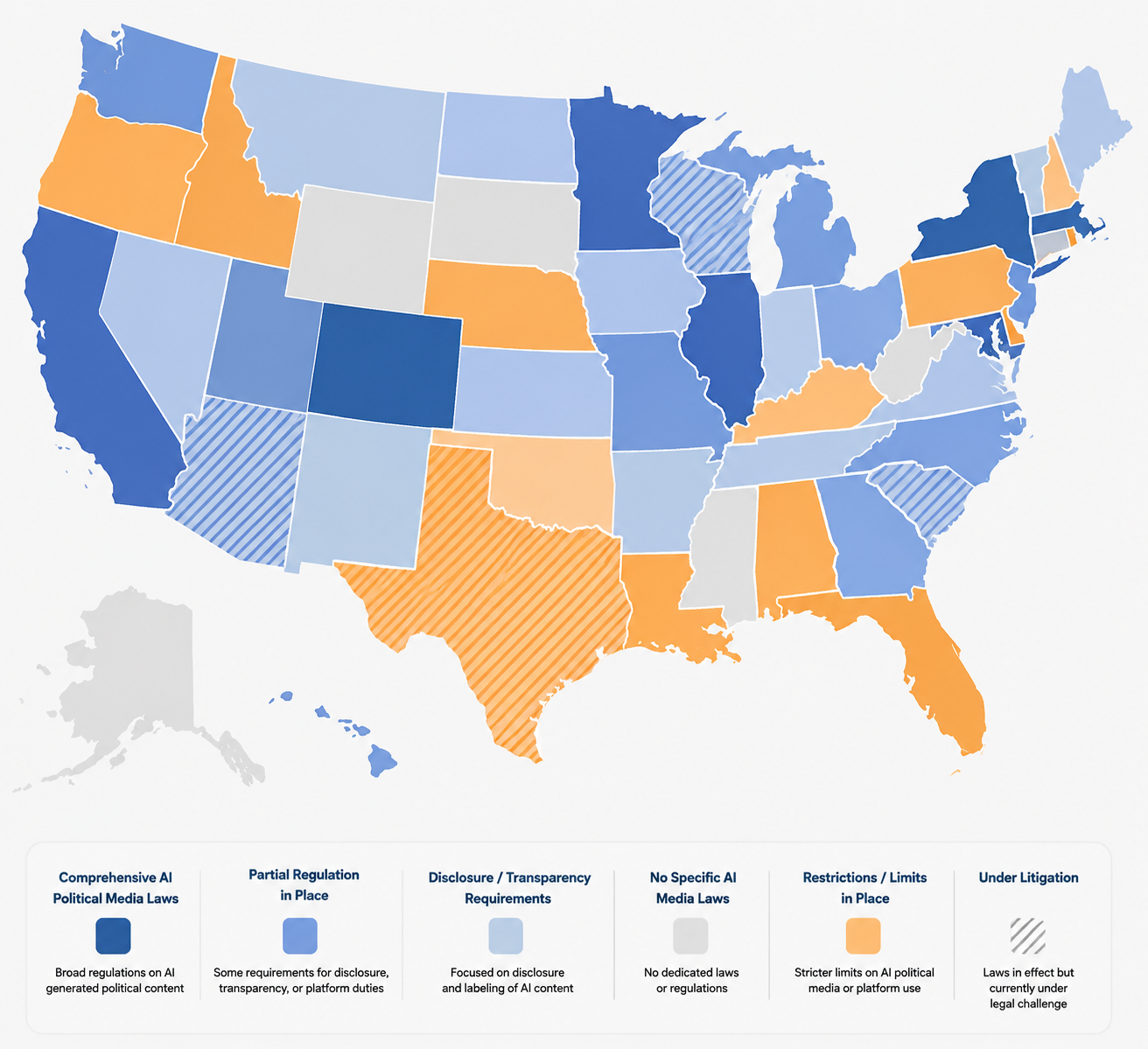
By Q3 2026, that question no longer belongs in a speculative “deepfake future” memo. Wiley Law counted more than 30 states with restrictions on AI-generated political advertising as of June 2026, while R Street Institute reported 26 states as of January 2026.[1][2] The difference is not a rounding problem. It is the operating condition: laws are being enacted, challenged, summarized, and re-summarized fast enough that a stale 50-state chart can become a liability before the next filing deadline.
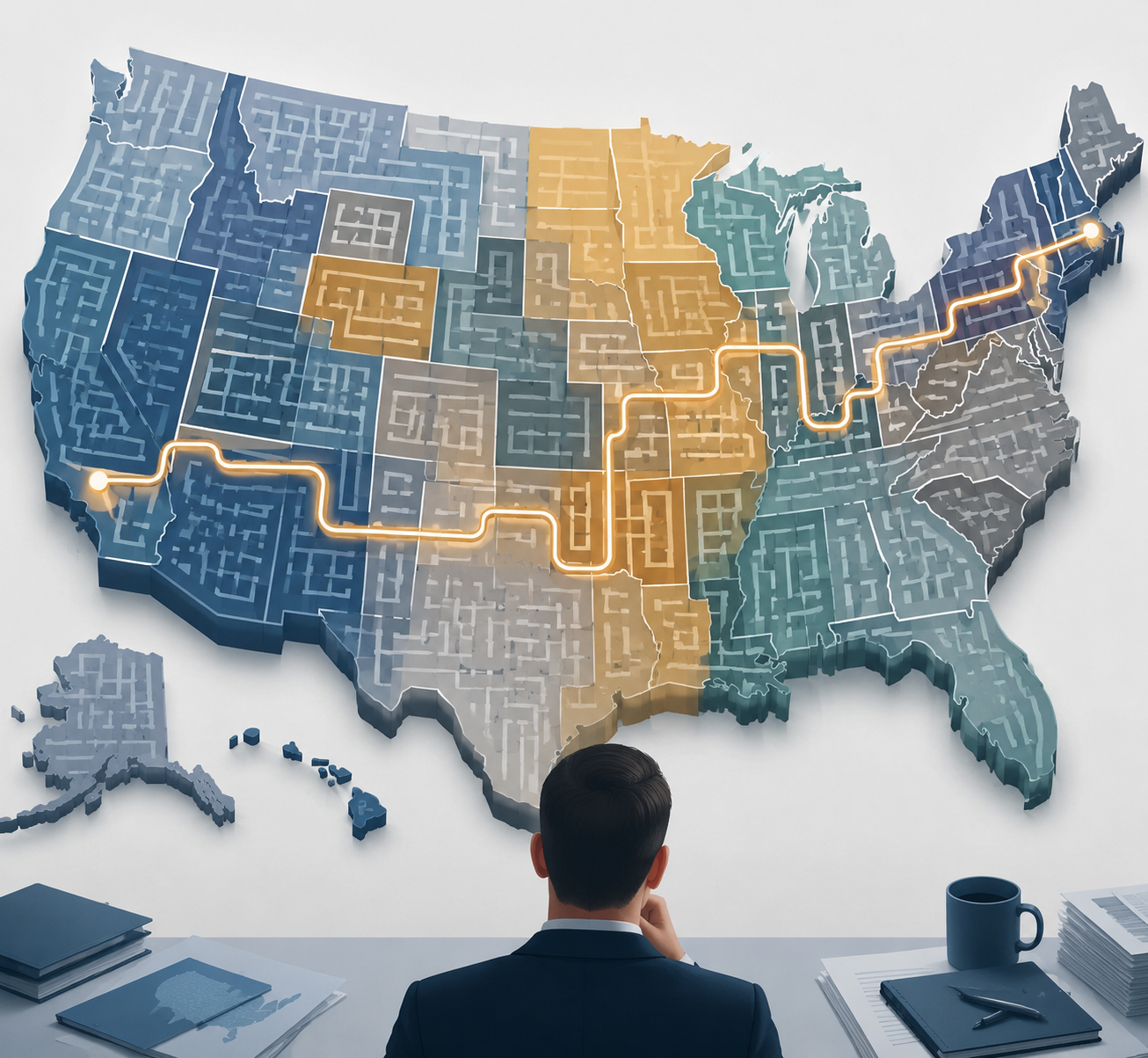
The most useful way to read the map is not as one national “AI disclosure” regime. Wiley’s June 2026 survey separates state approaches into three practical frameworks: disclaimer and labeling rules, outright bans on deceptive synthetic media, and right-of-publicity or quasi-property approaches.[1] That division matters because the same piece of campaign content can move from permitted-with-label to prohibited to privately actionable depending on where it runs and whose likeness, voice, or conduct it depicts.
The Primary-Campaign Clearance Problem
Primary campaigns are a poor fit for slow legal uncertainty. Vendor scripts arrive late. Media buyers want approval windows measured in hours. Field staff ask whether an AI voice tool can scale a message into multiple dialects or whether a synthetic image can be used in a contrast ad. A lawyer cannot clear that by asking only whether the material is “AI.” The useful questions are narrower:
- Is the medium a broadcast ad, online ad, mailer, text, phone call, image, video, or audio file?
- Does the state law reach synthetic media generally, materially deceptive synthetic media, or impersonation of a candidate or official?
- Does the rule require a specific disclaimer, a prominent label, advance consent, takedown, or abstention from distribution?
- Does timing matter because the content runs close to an election?
- Does the content use a real person’s voice, image, or likeness in a way that triggers a right-of-publicity theory?
- Is the enforcement risk coming from an election agency, attorney general, private plaintiff, telecom regulator, prosecutor, platform, or opponent?
Primary elections do not get a separate, settled AI-election-law track in the available materials. The safer working assumption for compliance review is that primary activity must be checked under the same state-law frameworks unless the jurisdiction’s statute, guidance, or enforcement practice says otherwise. That assumption is not a doctrinal conclusion; it is a triage rule for campaigns that cannot wait for litigation to cleanly separate primary and general-election applications.
Why the State Count Should Be Treated as a Date-Stamped Fact
The state count is useful only if it travels with a date and an inclusion rule. R Street’s January 2026 piece put the number at 26 states with AI-election laws or deepfake-election restrictions.[2] Wiley’s June 2026 alert described more than 30 states with restrictions on AI-generated political ads.[1] Both can be true if one survey includes newer enactments, broader advertising rules, or different categories of synthetic-media regulation.
For a compliance officer, the discrepancy is not a footnote to be smoothed over. It is the point. A January survey may be good background and still miss a March enactment. A June alert may capture a broader universe but still require counsel to pull the statute, emergency rule, election-board guidance, or litigation docket before approving copy. A tracker that does not distinguish enacted law from pending bills, guidance, commentary, and challenged provisions invites the very error it is supposed to prevent.
Three State Frameworks, Not One AI Rule
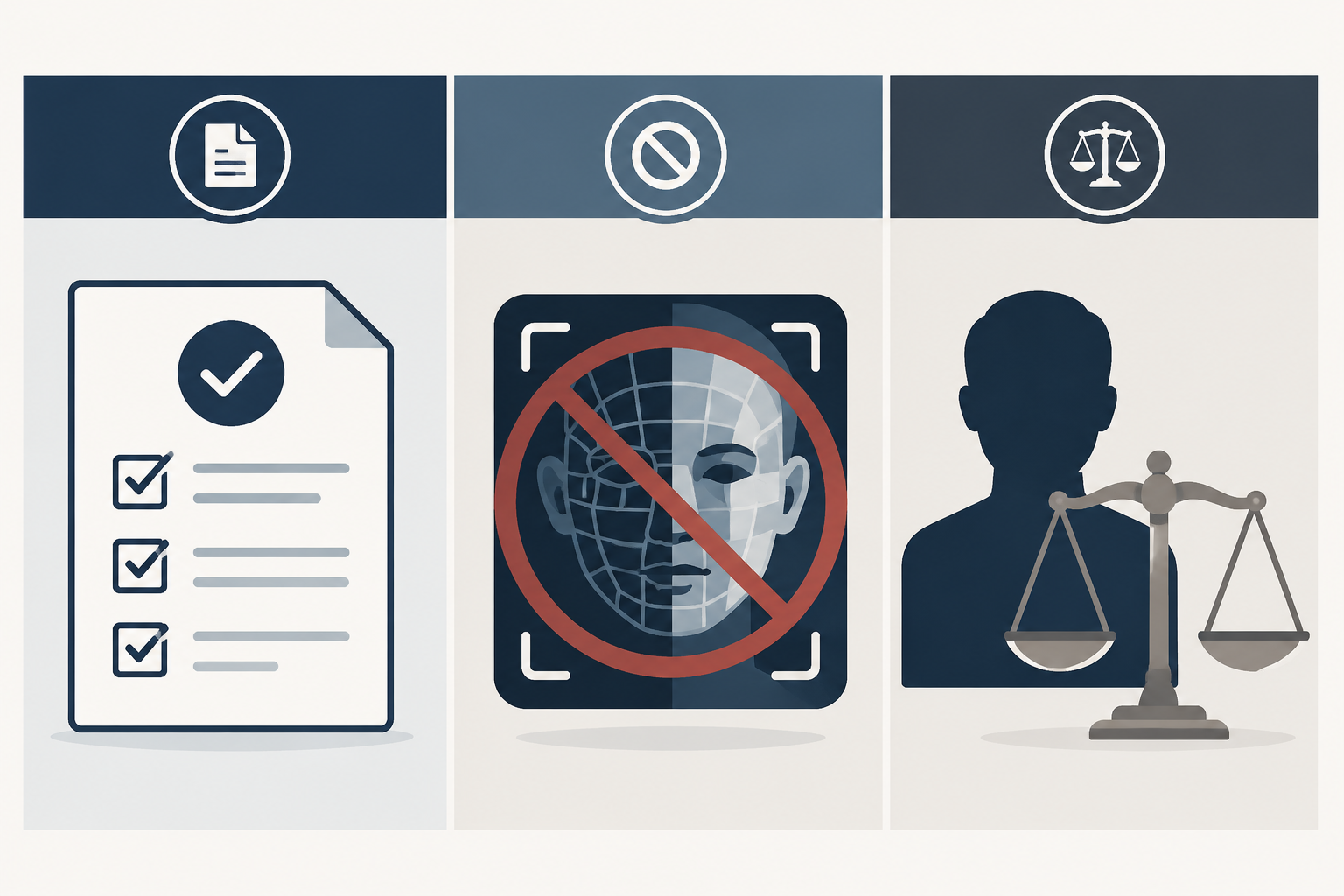
The cleanest operational starting point is Wiley’s three-part framework: disclosure and labeling regimes, outright bans on deceptive synthetic media, and right-of-publicity or quasi-property approaches.[1] The categories are not academic. They change what the campaign must do before distribution.
| Framework | What Counsel Checks | Primary-Campaign Consequence |
|---|---|---|
| Disclaimer or labeling regime | Whether AI-generated or synthetic political media requires a stated disclosure, where the disclosure must appear, and whether format or timing rules apply. | Creative may be usable, but the script, visual frame, audio tag, or paid-media unit may need revision before release. |
| Outright ban on deceptive synthetic media | Whether the content materially misrepresents speech, conduct, identity, or events in a covered election context. | A label may not cure the problem; distribution may need to stop or the concept may need to be rebuilt. |
| Right-of-publicity or quasi-property approach | Whether a person’s voice, image, name, or likeness is being used without consent in a covered political communication. | The issue may sit partly outside classic campaign-finance review and require likeness, consent, or private-right analysis. |
The first category is the easiest to administer when the law is precise. A campaign can add a label, adjust placement, and document approval. The difficulty is that state rules may define covered AI content differently and may not use the same trigger for “synthetic,” “materially deceptive,” or “AI-generated” media. A national disclaimer template can help with approvals, but it cannot substitute for the state-level text.
The second category is harder because it asks whether the content itself crosses a legal line. A deceptive synthetic video of a candidate, an AI-generated audio clip simulating a public official, or a fabricated visual depiction may be beyond repair even if the campaign offers to add a disclosure. These provisions are the ones most likely to collide with parody, satire, and political-attack defenses.
The third category is easy to miss if the review is assigned only to the person who handles paid-for-by lines. Right-of-publicity and quasi-property theories shift the question from “did we disclose AI?” to “did we use a person’s identity or likeness in a legally protected way?” That can matter for synthetic voice, cloned image, and identity-based content even when the communication also looks like ordinary campaign advocacy.
Jurisdictional Tracker: Where the Available Record Points
A live campaign tracker should go deeper than the public record summarized here. The materials support a state-by-state compliance posture in structure, but they do not provide a full statutory digest for every one of the more than 30 states counted by Wiley. The table below therefore identifies jurisdictions and authorities specifically supported by the available sources and shows what further review they require before primary deployment.
| Jurisdiction or Authority | Status in the Available Record | Compliance Use |
|---|---|---|
| More than 30 states | Wiley Law reported more than 30 states restricting AI-generated political ads as of June 2026, grouped into disclaimer, ban, and right-of-publicity frameworks.[1] | Use as the current high-level warning that multi-state AI political media review is now routine, not exceptional. |
| 26 states | R Street Institute reported 26 states as of January 2026, reflecting an earlier measurement date and possibly different inclusion criteria.[2] | Use as a reminder that any state survey must be date-stamped and checked against enactments after publication. |
| California | Wiley identifies First Amendment vulnerability after a California deepfake prohibition was struck down, with inadequate satire or parody protection noted in the available account.[1] | Do not treat a California-style prohibition as automatically stable; review current litigation status, injunction scope, and any revised statutory language. |
| Hawaii | R Street identifies Hawaii’s law as overturned, again tied in the available materials to inadequate satire or parody protection.[2] | Flag as a jurisdiction where anti-deepfake objectives must be separated from enforceable text after litigation. |
| Maine | Duane Morris Government Strategies identifies Maine LD 517 as signed in March 2026.[7] | Treat as an example of early-2026 acceleration; pull the enacted text before clearing any covered primary communication. |
| Nevada | Duane Morris Government Strategies identifies Nevada AB 73 as effective January 2026.[7] | Treat as a current-cycle obligation, not a future bill; verify scope, media coverage, and required language. |
| New Hampshire | The Kramer prosecution arose from an AI voice-clone robocall connected to New Hampshire primary voters; the defendant was acquitted of state voter-suppression charges in June 2025.[6] | Use as an enforcement caution: old voter-suppression statutes may not fit generative-AI conduct cleanly. |
| Federal Election Commission | The FEC declined rulemaking in September 2024 and approved an interpretive rule treating existing fraudulent-misrepresentation prohibitions as technology neutral.[5] | Do not expect a comprehensive federal AI-ad clearance rule; analyze whether the facts fit existing misrepresentation law. |
| Federal Communications Commission | The FCC classified AI-generated voices in robocalls as artificial under the TCPA in February 2024, while political landline-call issues remain important in the available analysis.[4] | For calls, check telecom law separately from election-law disclosure rules. |
The most important states in a primary review are not always the states with the loudest press coverage. They are the states where the campaign will actually communicate, where the content depicts a real person, where the election calendar makes timing provisions active, and where the medium triggers a separate regulator. A synthetic video in one state, a voice-clone call in another, and AI-assisted texting in a third may not belong on the same approval line.
Maine and Nevada are useful current-cycle examples because they show why a January chart cannot be the last word. Duane Morris Government Strategies described Nevada AB 73 as effective in January 2026 and Maine LD 517 as signed in March 2026.[7] That is the pace campaign lawyers have to assume through the midterms: a state that looked like a gap state during winter planning may become a regulated state before the primary spend lands.
Robocalls Are Their Own Clearance Track
The voice-clone robocall example is no longer hypothetical. Reporting and policy analysis described an AI-generated robocall that cost about $150, took roughly 20 minutes to create, and reached an estimated 5,000 to 25,000 primary voters.[3][4] That cost-to-scale ratio is why state legislatures and federal regulators moved quickly. It is also why a campaign’s call program cannot be reviewed only as ordinary persuasion.
The FCC’s February 2024 declaratory ruling classified AI-generated voices in robocalls as “artificial” under the Telephone Consumer Protection Act, a move PBS described as exposing violators to penalties up to $23,000 per call.[4] Brennan Center analysis emphasized the remaining landline-exemption problem for political calls, which matters because older voters are more likely to be reachable through landlines.[3] The result is not a clean federal ban on every political AI voice call. It is a call-specific legal layer that campaigns must check alongside state election-law rules.
That distinction is easy to lose in a clearance meeting. A robocall may be lawful under one state’s AI-labeling rule and still raise TCPA consent, artificial-voice, or enforcement issues. Conversely, a telecom-law answer does not resolve whether the content is a deceptive synthetic communication under state election law. The medium controls part of the risk.
The FEC Has Not Built a Comprehensive AI Rulebook
At the federal campaign-finance level, the FEC’s September 2024 action is important precisely because it is limited. The Commission approved a Notification of Disposition and an Interpretive Rule on artificial intelligence in campaign ads, stating that the existing fraudulent-misrepresentation prohibition at 52 U.S.C. § 30124 is technology neutral.[5] It did not create a broad federal AI-disclaimer regime for political ads.
For primary campaigns, that means the federal question is not “did we use AI?” in the abstract. It is whether the communication fits an existing federal prohibition, including fraudulent misrepresentation, while state law supplies much of the AI-specific labeling or synthetic-media architecture. A federal interpretive rule can matter in a close impersonation case, but it does not preempt the daily state-law checklist.
The Kramer Acquittal Shows the Fit Problem
The New Hampshire robocall prosecution is the case campaigns should study before assuming older election statutes will neatly absorb generative AI. AP reported in June 2025 that political consultant Steve Kramer was acquitted of voter-suppression charges connected to an AI-generated robocall that mimicked President Joe Biden and told voters not to participate in the New Hampshire primary.[6] The acquittal does not make AI voter suppression lawful. It shows that a statute drafted before cheap voice cloning may fail to map cleanly onto the conduct prosecutors want to punish.
That is a different kind of risk from a civil disclaimer violation. In one file, the question is whether a label was missing. In another, it is whether a prosecutor can prove the elements of a voter-suppression statute when the instrument is synthetic audio. A primary campaign that relies on the absence of a perfect enforcement theory is taking a different bet than a campaign that documents compliance with a clear labeling rule.
First Amendment Challenges Are Not a Side Issue
State deepfake laws sit in the middle of political speech, and courts have already made that more than a theoretical concern. Wiley’s June 2026 alert points to a California deepfake prohibition being struck down, and R Street’s January 2026 analysis discusses Hawaii’s law being overturned; the available summaries connect both outcomes to inadequate protection for satire or parody.[1][2] Those rulings should not be inflated into a nationwide answer, but neither can they be ignored when a statute regulates campaign speech close to an election.
Satire and parody exemptions are not magic words. A carveout that is too narrow may leave a statute vulnerable. A carveout that is too broad may leave voters exposed to realistic synthetic media that campaigns describe as humor after the damage is done. The compliance task is not to decide the final First Amendment boundary for the country. It is to identify whether the jurisdiction’s current rule is enforceable, enjoined, amended, or uncertain at the moment the campaign wants to publish.
Texts, Bots, and AI-Assisted Voter Contact
Not every 2026 AI campaign issue looks like a fake candidate video. NPR reported in July 2026 that political campaigns are turning to AI tools to text and engage voters.[8] That kind of use may not trigger a deepfake statute if the message does not depict or impersonate anyone, but it can still require review under ordinary campaign, privacy, telecom, platform, and vendor controls.
For primary operations, the practical line is often between AI used to assist campaign work and AI used to create a synthetic representation presented to voters. Drafting message variants, sorting reply queues, or helping staff manage volume raises different issues from cloning a candidate’s opponent or simulating an election official. The first set of uses may be a vendor-governance problem. The second belongs immediately in the state synthetic-media and impersonation review.
Readers who need a broader AI-law baseline can cross-check general concepts against the site’s artificial intelligence and law overview, but election clearance should stay attached to the actual medium and jurisdiction. General AI governance language rarely answers whether a specific primary communication needs a specific election-law disclosure.
What a 2026 Primary AI Review Should Separate
The documents in the review file should separate questions that campaign staff often collapse. A useful clearance note does not say only “AI ad approved.” It should show what was checked and what was not.
- Enacted law versus pending bill: a proposed federal or state AI bill is a status signal, not an obligation unless enacted.
- Disclosure versus prohibition: some content can be labeled; some content should not run.
- Synthetic depiction versus AI-assisted campaign work: the legal trigger may depend on what voters see or hear, not how staff drafted the message.
- Election-law risk versus telecom risk: calls and texts need separate review even when the message content is cleared.
- Current enforcement posture versus final constitutional validity: a challenged law may still affect campaign decisions before appellate clarity arrives.
- Primary applicability versus assumption: where sources do not distinguish primaries, document that the campaign evaluated the primary communication under the general state framework.
For firms maintaining AI compliance materials across sectors, election-specific rules should be treated as a distinct overlay on state AI compliance programs. The site’s law firm AI compliance tracker is the more natural place to organize non-election state AI obligations; primary campaign review needs the additional election calendar, medium, candidate-likeness, and voter-contact layers.
Pending Federal Bills Are Signals, Not Clearance Rules
Congress is not absent from the field, but pending legislation should not be treated as current law. Congress.gov identifies S.1213 in the 119th Congress as the Protect Elections from Deceptive AI Act.[9] The research record also flags S.2346, the Preparing Election Administrators for AI Act, as pending federal activity. Those bills may shape later compliance architecture, but a 2026 primary campaign still has to clear today’s communication under enacted state law, existing federal campaign law, and applicable telecom rules.
Voluntary platform or model-provider safeguards occupy the same limited place. They may reduce risk, affect vendor diligence, or shape what tools are available, but they do not replace statutory review. A vendor representation that a tool has election safeguards is not the same as a state-law conclusion that a synthetic ad is labeled correctly or lawful to distribute.
Where the Law Remains Unsettled in Q3 2026
Four uncertainties should stay visible in any mid-2026 tracker. First, the state count remains source-dependent. Wiley’s more-than-30 figure and R Street’s 26-state figure are both useful only with their publication dates and inclusion criteria.[1][2] Second, the materials do not establish a separate body of primary-election AI doctrine. Primary use should be reviewed under the applicable state framework unless a jurisdiction provides a narrower or broader rule.
Third, enforcement theories are layered. The FCC can address artificial-voice robocalls under the TCPA, the FEC can apply technology-neutral fraudulent-misrepresentation law, states can impose AI-election disclosures or bans, prosecutors may test older voter-suppression statutes, and private parties may raise likeness-based claims.[4][5][6][1] No single clearance answer covers all of those lanes.
Fourth, First Amendment boundaries are active, not settled. California and Hawaii show that anti-deepfake laws can fail when exemptions and tailoring do not survive review, but those outcomes do not erase the voter-confusion problem or decide every state’s statute.[1][2] A campaign that wants to use synthetic political media in a primary has to treat constitutional uncertainty as part of the risk file, not as a shortcut around it.
That is the working condition for 2026 primary polling: active, overlapping, source-dependent regulation. The compliance answer depends on the state, the medium, the content, the timing, the person depicted, the enforcement theory, and the current status of any challenge to the law. This is a regulatory-tracker reference, not legal advice and not a prediction of where courts will ultimately draw the First Amendment line.
References
- AI Restrictions in Political Ads: What to Know About 'Deepfake' Disclaimers and Bans, Wiley Law
- AI and Elections: What to Watch for in 2026, R Street Institute
- States Take the Lead in Regulating AI in Elections — Within Limits, Brennan Center
- FCC bans AI-generated voices in robocalls that can deceive voters, PBS News
- Commission approves Notification of Disposition, Interpretive Rule on artificial intelligence in campaign ads, Federal Election Commission
- Consultant acquitted of AI robocall voter suppression charges, AP News, June 2025
- AI in Political Advertising: State and Federal Regulations in Focus, Duane Morris Government Strategies, July 2026
- Political campaigns turn to AI tools to text, engage voters, NPR, July 2026
- S.1213, Congress.gov
Operationalizing workflow
No workflow has been explicitly linked to this obligation yet. See Workflows generally.
Illustrative cases
No illustrative case is currently tracked for this obligation. See Risk Digest for documented incidents generally.
← Back to RegulationReport a correction or tip
Spotted an outdated figure, a misstated fact, or a ruling this regulation entry should reflect? Public comments are disabled for this content given the professional cost of a misreported case outcome, penalty amount, or rule text — use the structured correction channel instead.
Report a correction or tip for this record →