
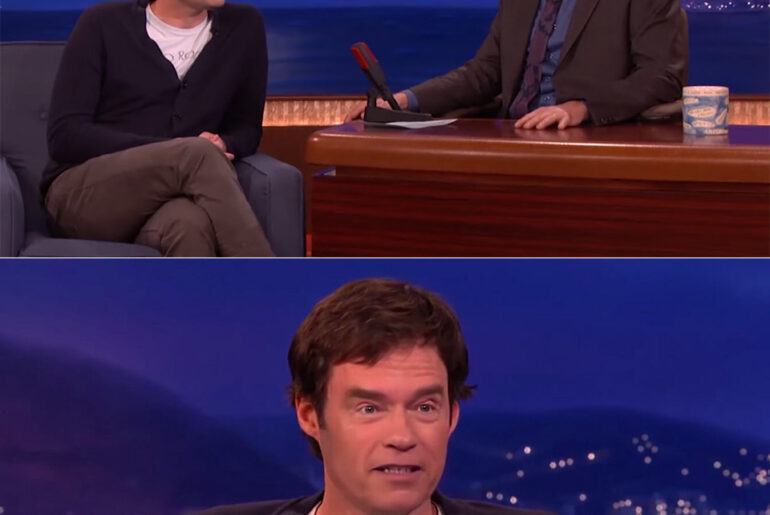
The legal problem becomes visible in the clip. A performer does an Al Pacino impression. An AI tool pushes the face closer to Pacino’s. A synthetic voice tool could do the same with the sound: the rasp, the timing, the sudden rise into sermon-like force. Viewers may understand the result as a joke, a tribute, a technical stunt, a satire of movie masculinity, or simply a way to make famous-person energy do the work of holding attention.
That instability is why the legal and ethical concerns around an Al Pacino AI parody speech cannot be answered by saying “parody” and moving on. The most documented Al Pacino deepfake example is not a filed lawsuit over a viral “AI Pacino speech,” but the 2019 Ctrl Shift Face video in which Bill Hader, while doing impressions on a talk show, appears to morph into Al Pacino and Arnold Schwarzenegger.[1] Pacino is best treated here as a representative example: an iconic actor with a highly recognizable voice and performance style, not as the plaintiff in a known AI parody case.
The legal question changes depending on what the work is doing. If the joke is about Pacino’s own persona, acting style, or public image, the First Amendment argument is stronger. If the work uses a Pacino-like voice to sell a product, narrate unrelated content, or make a generic motivational speech more valuable because it sounds like him, the right-of-publicity risk rises quickly. The same file can also move through different legal weather systems as it crosses state lines.
The Claim Most Likely To Matter Is Publicity, Not Copyright
For celebrity voice and likeness imitation, right of publicity does much of the practical work. Copyright may protect a recording, a screenplay, a film clip, or a musical composition, but it does not neatly protect “Al Pacino’s voice” as such. Trademark and false endorsement theories may appear in the complaint, especially if the use suggests sponsorship or affiliation, but they usually require some theory of consumer confusion or endorsement. Publicity law asks a different question: did someone use a person’s identity, voice, likeness, or persona for advantage without permission?
That point was concrete long before generative AI. In Midler v. Ford Motor Co., the Ninth Circuit allowed Bette Midler’s voice-imitation claim to proceed where an advertiser used a sound-alike singer after Midler declined to participate in a commercial. The court treated a distinctive voice as part of identity when it is deliberately imitated for commercial advantage.[2] Midler is not an AI case, but it is still one of the cleanest reminders that “we did not copy the actual recording” is not the same as “we did not appropriate the performer’s identity.”
AI voice cloning makes the old point sharper. A model can reproduce the commercially valuable part of a celebrity performance without sampling a particular sound recording in a way that copyright law can easily see. The output may not be a literal copy of a Pacino film scene, yet the economic reason to use it is precisely that listeners recognize the voice, cadence, and dramatic temperature as Pacino-like.
The most useful current AI voice decision in this lane is Lehrman & Sage v. Lovo, Inc., a 2025 Southern District of New York ruling involving voice actors who alleged that an AI voice platform used cloned voices beyond the scope of the original permissions. The court allowed New York Civil Rights Law publicity claims to survive even as copyright and Lanham Act theories faltered, and it treated ongoing model use as relevant to limitations analysis.[3] It is a district court decision, not a national rule. Still, for counsel evaluating AI voice risk, it shows why the publicity claim often remains standing after federal IP theories are narrowed.
“Parody” Helps Only After Asking What The Parody Targets
The word parody is doing too much work in most casual AI discussions. A recognizable celebrity voice saying something funny is not automatically parody in the legal sense. The harder question is whether the work comments on the celebrity or the celebrity performance being invoked, or whether it borrows that identity as a high-value delivery mechanism for some other joke.
Cardtoons v. MLBPA supplies the useful distinction. The Tenth Circuit protected trading cards that caricatured major league baseball players, emphasizing that parody and criticism of celebrities are core expressive uses. FIRE’s discussion of parody and satire frames the same line: parody is strongest when it targets the person or work being imitated, while broader satire that merely uses a celebrity image as raw material may receive less protection.[4]
Apply that distinction to the Hader/Pacino morph and the analysis gets interesting. The object of attention is not just Pacino. It is also Hader’s virtuosity as an impressionist, the audience’s pleasure in watching recognition happen, and the deepfake tool’s ability to literalize what an impression has always suggested. A court could see the work as commentary on celebrity performance and mediated identity. But it also uses Pacino’s likeness to intensify the effect. That mixed target is what makes the clip a better teaching object than a cleaner hypothetical.
Now change the facts slightly, without pretending they are a real case. Suppose a creator generates an “Any Given Sunday”-style motivational speech in a Pacino-like voice. If the point is to comment on Pacino’s famous locker-room mode, sports-film masculinity, or the cultural afterlife of that performance style, the parody argument has something to attach to. If the point is simply that a Pacino-like voice makes ordinary motivational copy more clickable, the use begins to look less like commentary and more like substitution of identity as a market asset.
The distinction is not moral hair-splitting. It decides who bears the expressive burden. A parody defense asks a court to protect speech because the imitation has critical or comic force aimed at the thing being imitated. A commercial voice clone asks the performer to tolerate having a recognizable identity deployed in someone else’s market. Courts may protect both in some circumstances, but they are not the same argument.
The State-Law Map Is Where The Answer Starts To Split
There is no general federal digital replica right in force as of July 2026. That leaves state publicity statutes, state common law, state deepfake laws, contract rights, platform rules, and ordinary IP claims doing overlapping work. For an AI Al Pacino parody speech, the governing analysis may shift based on where the plaintiff resides, where the defendant acts, where the content is distributed, and which state’s law a court applies.
New York is a natural first stop because many entertainment disputes pass through it and because its publicity law has recently become more important for digital replicas. Commentary on New York’s expanded postmortem digital replica regime notes an exemption for “parody, satire, commentary, or criticism” without the additional public-interest qualifier that appears in the pending federal NO FAKES Act.[5] That matters because a creator’s defense may look different under a state exemption that names parody directly than under a federal proposal that conditions certain protected uses on a public-interest standard.
Tennessee points in another direction. The ELVIS Act, enacted in 2024, is described as the first state law explicitly protecting voice as a right-of-publicity attribute against AI cloning.[6] For music and voice-driven markets, that is not a cosmetic amendment. It signals that a legislature can treat vocal identity itself as the protected object, not merely as evidence of a broader likeness appropriation.
The wider map is even less tidy. MultiState reported that 47 states had deepfake legislation as of June 2026, and that 30 states had political deepfake laws as of May 2026.[7] Those numbers do not mean 47 states have identical celebrity AI parody rules. Many deepfake statutes focus on election deception, sexual imagery, fraud, disclosure, or platform obligations rather than entertainment parody. But the count does show why a platform cannot safely treat AI likeness law as a single national compliance category.
| Framework | What It Tends To Ask | Why It Matters For A Pacino-Like AI Parody |
|---|---|---|
| Right of publicity | Was identity, voice, likeness, or persona used without permission, especially for advantage? | Often the central claim when the recognizable value is the performer’s voice or image rather than a copied recording. |
| First Amendment parody defense | Does the work comment on the celebrity or performance being imitated, or merely use identity as raw material? | A direct Pacino-performance joke is in a stronger position than a generic speech delivered in a Pacino-like voice. |
| Copyright | Was protected expression copied from a recording, film, script, or other work? | May matter if source material is copied, but it does not clearly protect the celebrity voice itself. |
| Lanham Act / false endorsement | Are consumers likely to believe the celebrity sponsored or endorsed the use? | Useful where the content implies affiliation; weaker where confusion or endorsement is not plausible. |
| State deepfake laws | Does the statute cover the specific content type, disclosure failure, election context, sexual content, fraud, or replica use? | The same upload can trigger different obligations depending on the state and statutory category. |
The Pending Federal Bill Would Not End The Hard Questions
The NO FAKES Act is important, but it is not enacted law as of this writing. Politico reported that S.4591 advanced unanimously out of the Senate Judiciary Committee on June 18, 2026.[8] Commentary on the bill describes it as creating a federal digital replication right with a 70-year postmortem term.[9] If enacted in a form close to the current proposal, it would change the baseline for AI voice and likeness licensing.
It would not, however, make the parody problem disappear. FIRE has criticized the bill’s parody and satire exception because it requires certain uses to be “consistent with the public interest,” a formulation FIRE argues is vaguer and more restrictive than some existing state protections.[10] That criticism is not a performer-rights answer; it is a speech-architecture concern. A federal digital replica right can create uniformity and still leave creators guessing about whether a court will treat their use as public-interest expression or unauthorized exploitation.
For an Al Pacino-style AI parody, the federal bill’s significance is therefore conditional. It may supply a national cause of action where the current system depends heavily on state law. But unless the enacted text draws a clearer boundary for parody, satire, commentary, news, and commercial substitution, the most contested cases will still turn on what the work is actually doing.
Commercial Use Changes The Temperature
Commerciality is not a simple on-off switch. A monetized video can still be expressive. A non-monetized upload can still cause reputational or market harm. But courts and claimants tend to look differently at a parody posted as commentary than at a voice clone used in advertising, product promotion, paid narration, app marketing, or synthetic content libraries.
Midler remains instructive because the defendant wanted the value of a famous voice in a commercial after failing to obtain the performer herself.[2] Lehrman & Sage is instructive for a different reason: the challenged conduct involved an AI voice business, and the surviving publicity claims were tied to the alleged use of voices in that commercial system.[3] Neither case says every humorous AI voice imitation is unlawful. They show why “the output is funny” does not answer a claim that the voice is doing paid market work.
A platform reviewing a Pacino-like AI upload would therefore ask different questions depending on distribution. Is the content labeled as synthetic? Is it posted as criticism or comedy about Pacino, an identifiable role, or acting tropes? Is it attached to sponsorship, lead generation, subscription access, or product sales? Does it imply Pacino approved the message? Is the audio usable as a substitute for licensed voice talent? None of those questions alone decides liability, but together they describe the risk profile more accurately than the word parody does.
Federal IP Claims May Travel With The Case, But They May Not Carry It
Copyright and trademark should not be ignored. If an AI parody copies a film clip, samples protected audio, reproduces dialogue, or uses studio-owned footage, copyright analysis can become central. If the upload is packaged to imply that Pacino endorsed a product or participated in a campaign, Lanham Act false endorsement may matter. The point is narrower: when the injury is “this sounds like me” or “this trades on my persona,” federal IP law may not be the cleanest fit.
Lehrman & Sage illustrates that separation. The court’s treatment allowed state publicity claims to continue even as copyright and Lanham Act claims faced obstacles.[3] For lawyers, that procedural posture is more useful than a broad prediction about who wins at trial. It means a complaint built around AI voice cloning may survive by way of publicity law even when better-known federal IP theories do not do the same work.
Recent celebrity disputes also keep pressure on the legal system even before appellate doctrine fully develops. Morgan Freeman publicly criticized unauthorized AI voice use, and The Hollywood Reporter quoted him as saying his lawyers are “very busy.”[11] That is not a holding and not a measure of claim frequency. It is a signal that performers with highly recognizable voices are not treating synthetic imitation as a harmless novelty when it circulates without permission.
A Practical Risk Map For AI Pacino-Style Parody
For legal review, the first cut should not be “AI or not AI.” It should be what the audience is being asked to recognize and why. A human impressionist, a face-swap video, and a cloned-voice speech can all invoke the same celebrity identity, but they place different weight on performance, image, sound, disclosure, market substitution, and technical replication.
- Stronger speech position: the work comments on Pacino, a Pacino performance, celebrity acting style, or the artificiality of screen persona.
- Higher publicity risk: the work uses a Pacino-like voice or likeness to attract attention to unrelated content, products, services, or paid media.
- Higher endorsement risk: the presentation suggests Pacino authorized, sponsored, narrated, or approved the message.
- Higher copyright risk: the creator copies protected film footage, dialogue, music, or sound recordings rather than only imitating style.
- Higher jurisdictional uncertainty: the content is distributed nationally, involves a performer with connections to multiple states, or falls within a state digital replica or deepfake statute.
The Cardtoons distinction remains the most disciplined way to keep the parody analysis from collapsing. If the AI voice is aimed back at Pacino’s public image or a performance associated with him, the creator has a clearer First Amendment story. If the AI voice is merely the wrapper around a sports betting ad, a productivity app, a meme account’s unrelated joke, or a paid motivational product, the parody label starts to look decorative.
The ethical analysis runs beside the legal one, not in place of it. Disclosure, consent, compensation, and audience confusion matter even where a creator has a plausible defense. A transparent parody that visibly comments on a celebrity performance poses a different ethical problem from a synthetic voice that lets a listener believe the actor actually delivered the message. The law may tolerate some unauthorized imitation because expression needs breathing room. That does not make every technically impressive clone a fair way to borrow a performer’s labor, reputation, or recognizability.
As of Q3 2026, an AI Al Pacino parody speech cannot be labeled broadly lawful or unlawful in the abstract. The more directly it comments on Pacino or the performance being invoked, the stronger the First Amendment argument becomes. The more it uses his recognizable voice or likeness as a marketable asset, especially in commercial settings, the more right-of-publicity exposure rises. The answer changes with jurisdiction, with the speech test a court applies, and with the specific way the synthetic performance is packaged and distributed. This is an analytical framework for legal professionals, not legal advice for any specific project.
References
- Bill Hader’s Al Pacino impression gets even more real and creepy with the help of deepfakes, Fast Company, 2019
- Midler v. Ford Motor Co., Justia
- New York Court Tackles the Legality of AI Voice Cloning, Skadden, July 2025
- Satire, parody, and the First Amendment, FIRE
- Synthetic Media, Voice Cloning, and the New Right of Publicity Risk Map for 2026, Holon Law
- Artificial Intelligence and Copyrights: Tennessee’s ELVIS Act Becomes Law, Armstrong Teasdale, 2024
- How AI-Generated Content Laws Are Changing Across the Country, MultiState, 2026
- Anti-deep fake bill advances to Senate floor, Politico, June 18, 2026
- The NO FAKES Act Moves Forward: How AI Voice and Likeness Rights Could Reshape Entertainment Deals, Kaufman & Canoles
- The NO FAKES Act is a real threat to free expression, FIRE
- Morgan Freeman Slams Unauthorized AI Voice Use, Says Lawyers Are ‘Very Busy’, The Hollywood Reporter
Comments
Join the discussion with an anonymous comment.