
Which AI deepfake laws has Congress passed so far?
Congress has enacted exactly one federal deepfake law, with the rest of the docket at different procedural stages. This verified status map shows what the TAKE IT DOWN Act now requires, where the Senate-passed DEFIANCE Act and committee-reported NO FAKES Act stand, and where the federal campaign-deepfake gap remains — every entry linked to a primary source and stamped with its last-verified date.
- Jurisdiction
- US Federal
- Court
- U.S. Congress
- AI tool named
- AI deepfake generator
- Ruling date
- May 19, 2026
- Source document
- View primary court order ↗
- Last verified
- Aug 4, 2026
Lex Machina Review is an independent risk-tracking and reference resource. Nothing on this site is legal advice, and using it does not create an attorney-client relationship. Every record is reviewed against primary sources but may not reflect the most current status of a matter — always verify directly against the cited court order, rule text, or a licensed attorney before relying on it.
Companion explanation — secondary to the source document above
Status map — last verified August 4, 2026
The short answer to “which AI deepfake laws has Congress passed so far?” is still narrower than the headlines suggest: Congress has enacted one federal deepfake statute, the TAKE IT DOWN Act. The rest of the federal docket sits at lower rungs of legal force. Senate-passed is not enacted. Ordered reported is not enacted. Introduced and referred is not enacted.
| Measure or gap | Verified federal status | What can be treated as binding now? | Source note |
|---|---|---|---|
| TAKE IT DOWN Act, S.146 / P.L. 119-12 | Enacted. The Senate passed S.146 by unanimous consent on February 13, 2025; the House passed it 409-2 on April 28, 2025; the President signed it on May 19, 2025 as Public Law 119-12. [1][2] | Yes. Platform obligations became effective May 19, 2026, and the FTC announced that enforcement began that day. [3] | Primary enacted-law record plus CRS overview and FTC enforcement notice. |
| DEFIANCE Act | Senate-passed. The Senate passed the measure by unanimous consent on January 13, 2026, and it was awaiting House action in the cited coverage. [4][5] | No federal obligation yet. Its private civil remedy would matter only if it clears the House and is enacted. | Cross-verified through legislative coverage; current bill text should be rechecked before quoting remedy amounts. |
| NO FAKES Act of 2026, S.4591 / H.R.8915 | Committee tier. S.4591 was introduced May 20, 2026; Senate Judiciary considered it on June 11 and ordered it reported on June 18, 2026. The House companion is H.R.8915. [6][7][8][9] | No federal obligation yet. Its removal duties, counter-notice process, penalties, and preemption terms are proposed bill text, not current law. | Congress.gov, GovTrack, Senate release, and committee-coverage cross-check. |
| Deepfake Liability Act, H.R.6334 | Introduced and referred. H.R.6334 was introduced December 1, 2025 and referred to the House Energy and Commerce Committee. [10] | No. It is a proposal to amend existing federal law, including Section 230 and the TAKE IT DOWN Act, not an enacted rule. | Congress.gov bill record. |
| Federal campaign-deepfake rule | No federal statute or FEC rule fills this gap. The FEC declined an AI-in-campaign-ads rulemaking on September 19, 2024 while approving an interpretive rule on AI in campaign ads. [11] | No federal campaign-deepfake statute or FEC deepfake rule can be cited as binding from this docket. State laws must be checked separately. | FEC disposition plus state-law tracker context; STACK counted 30 states with political-deepfake disclosure laws as of May 2026. [12] |
The enacted statute: TAKE IT DOWN is the rule counsel can cite today
TAKE IT DOWN is the center of the current federal risk analysis because it has crossed every procedural line that matters: passage in both chambers, presidential signature, public-law status, effective platform obligations, and FTC enforcement. The passage path is not decorative. It is what separates this statute from the much larger pile of deepfake bills that may matter later.
The Act targets nonconsensual intimate imagery, including AI-generated intimate images, and imposes notice-and-removal obligations on covered online platforms. The FTC’s May 19, 2026 notice stated that covered platforms must provide a process for individuals to request removal and must remove covered intimate visual depictions within 48 hours after receiving a valid request, along with taking reasonable steps to remove known identical copies. [3]
For a legal department, that means the immediate questions are not abstract questions about “AI ethics.” They are operational questions: whether the service is a covered platform, who receives removal requests, how quickly intake is reviewed, what makes a request valid, how copies are identified, how takedown decisions are logged, and who signs off when a reported image is not removed. Those are the questions that can become FTC questions now.
The effective date is the practical hinge. The statute was signed on May 19, 2025, but the platform obligations and FTC enforcement date identified in the FTC notice are May 19, 2026. [1][3] A partner briefing should not collapse those dates into one line saying only that the law “passed in 2025.” The legal-risk answer depends on whether the question is about enactment history, current compliance duties, or enforcement exposure.
Pending bills: three different procedural rungs, three different risk answers
The pending docket is useful, but only if it is kept in its proper boxes. DEFIANCE, NO FAKES, and the Deepfake Liability Act are not three versions of the same thing waiting in a single queue. They sit at different stages and would regulate different conduct if enacted.
DEFIANCE: Senate-passed, not enacted
DEFIANCE has moved further than an introduced bill because the Senate passed it by unanimous consent on January 13, 2026. It had not, in the cited status coverage, cleared the House. [4][5] That makes it a live federal bill to monitor, not a current federal cause of action to plead as enacted law.
If enacted in the form described by the cited coverage, DEFIANCE would create a civil cause of action for victims of nonconsensual sexually explicit deepfakes. The reported remedy structure includes $150,000 in liquidated damages, $250,000 for aggravated violations, and a 10-year limitations period measured from discovery or from age 18. [4][5] Those figures should be rechecked against current bill text before they appear in a complaint, memo, or board deck; the enforceable fact today is still the Senate-passed status, not an enacted remedy.
NO FAKES: ordered reported, with large proposed platform numbers
NO FAKES is a different procedural animal. S.4591 was introduced on May 20, 2026 with bipartisan sponsorship, and Senate Judiciary ordered it reported on June 18, 2026. [6][8][9] That is meaningful committee movement. It is not enactment.
The bill is aimed at digital replicas and the unauthorized use of an individual’s voice or visual likeness. The numbers attached to it are large enough to distort the status analysis if they are put first. Roll Call reported a proposed $750,000 per-embodiment platform penalty for failure to remove qualifying material in good faith. [8] Law-firm analyses of the 2026 version also describe a $25,000 penalty for a knowingly false counter-notification, a DMCA-style 14-day restoration window, and preemption that would be limited to future state laws while preserving certain earlier state laws through a January 2, 2025 grandfathering approach. [13][14]
Those proposed duties matter for monitoring rights-of-publicity, entertainment, creator-platform, and digital-replica risk. They should not be written as current federal obligations. A company can prepare for the possibility of a federal notice-and-takedown regime for replicas; it cannot be told that NO FAKES already requires that regime unless Congress enacts it.
For comparison with non-U.S. voice-rights monitoring, the site’s separate Japan AI voice-rights obligations tracker is a better place to follow that jurisdictional thread. The U.S. federal question here is simpler and stricter: NO FAKES is pending.
Deepfake Liability Act: introduced tier
The Deepfake Liability Act is one rung lower. H.R.6334 was introduced on December 1, 2025 and referred to the House Energy and Commerce Committee. [10] The bill would amend Section 230 and the TAKE IT DOWN Act, but introduced-and-referred status does not give counsel an operative federal rule. It gives counsel a monitoring item.
Campaign deepfakes remain a federal gap
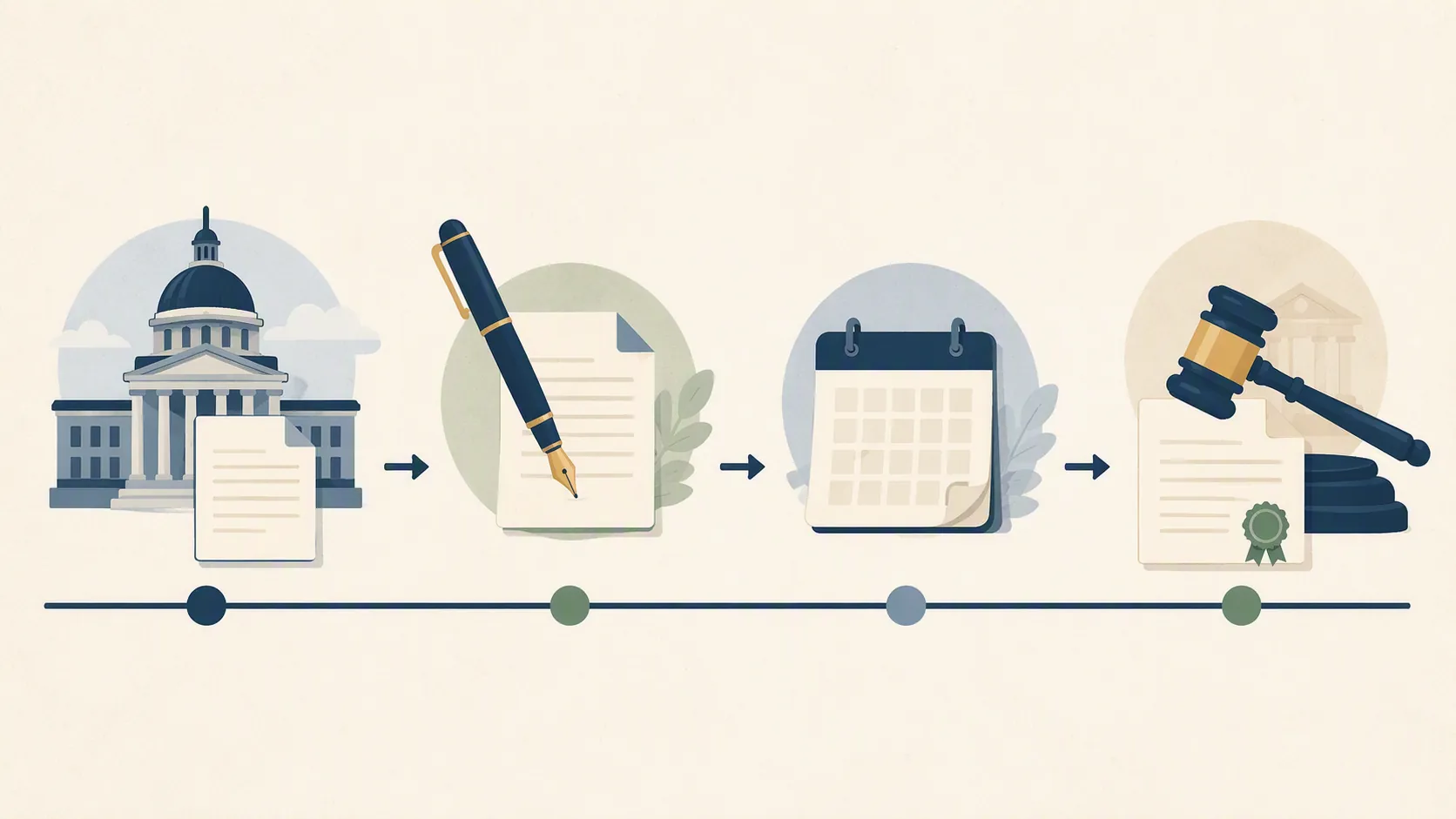
The campaign-deepfake answer is narrow. The FEC declined to proceed with an AI-in-campaign-ads rulemaking on September 19, 2024 while approving an interpretive rule on artificial intelligence in campaign ads. [11] As of this verification date, that leaves no federal statute or FEC deepfake rule that generally fills the campaign-deepfake gap.
State law has moved more quickly. STACK counted 30 states with political-deepfake disclosure laws as of May 2026, identifying Maryland as the 30th. [12] That state-law expansion is important for election advertisers, platforms, campaigns, and vendors, but it does not convert into a federal rule. A federal campaign-deepfake answer still has to say: check the relevant states, and do not cite an FEC deepfake rule that does not exist.
Verification cautions before relying on this docket
Legislative status can change without waiting for an article to catch up. Before using this record in a client alert, litigation memo, board update, or partner briefing, recheck the Congress.gov bill page, the public-law record where applicable, and the relevant committee or agency notice. The safest briefing language is procedural: enacted, signed, effective, Senate-passed, ordered reported, introduced, referred, declined rulemaking.
Penalty figures also need their status label attached. TAKE IT DOWN’s platform obligations and FTC enforcement are current-law items. DEFIANCE damages figures and NO FAKES platform penalties are proposed-bill items unless and until enacted. State political-deepfake counts are tracker items that should be checked by jurisdiction and date.
As of August 4, 2026, the federal deepfake answer is therefore operational rather than dramatic: assess TAKE IT DOWN for present obligations, monitor DEFIANCE and NO FAKES for movement, treat introduced bills as nonbinding proposals, and re-verify every status and effective date against primary sources before reliance.
References
- S.146 - TAKE IT DOWN Act, Congress.gov.
- The TAKE IT DOWN Act: A Brief Overview, Congressional Research Service.
- FTC Begins Enforcing TAKE IT DOWN Act, Federal Trade Commission, May 19, 2026.
- Senate passes DEFIANCE Act targeting nonconsensual deepfake images, The 19th, January 2026.
- Web Exclusive: Federal DEFIANCE Act passes through Senate, awaits House approval, The Indiana Lawyer.
- S.4591 - NO FAKES Act of 2026, Congress.gov.
- S. 4591: NO FAKES Act of 2026, GovTrack.
- AI deepfakes bill advanced by Senate Judiciary Committee, Roll Call, June 18, 2026.
- Blackburn, Coons, Salazar, Dean, Colleagues Introduce Revised Version of NO FAKES Act, Office of Senator Marsha Blackburn, May 2026.
- H.R.6334 - Deepfake Liability Act, Congress.gov.
- Commission approves notification of disposition, interpretive rule on artificial intelligence in campaign ads, Federal Election Commission, September 19, 2024.
- AI Deepfake Laws, STACK.
- Senate Judiciary Committee Advances Legislation to Protect Name, Image and Likeness Rights in AI-Generated Content, Holland & Knight, June 2026.
- Congress Reintroduces the NO FAKES Act: What’s New in the 2026 Bill, Manatt.
Related records
Tool profile
How Meta's AI Spending Reshapes Law Firm ProfitabilityGoverning regulation
Browse the obligations tracker →Preventive workflow
Browse verification workflows →
Report a correction or tip
Spotted an outdated figure, a misstated fact, or a ruling this case record should reflect? Public comments are disabled for this content given the professional cost of a misreported case outcome, penalty amount, or rule text — use the structured correction channel instead.
Report a correction or tip for this record →