
The Legal Difference Between AMBER and Silver Alerts
AMBER Alerts rest on a federally coordinated framework with a dedicated Wireless Emergency Alerts class, while Silver Alerts are a state-law patchwork with no national standard. The distinction drives different, largely state-dependent legal exposure — false-report charges, HIPAA and age-discrimination concerns, and delivery-device liability — so the statute that applies, not the broadcast mechanism, sets the risk.
- Jurisdiction
- US Federal
- Court
- N.D. Cal.
- AI tool named
- No AI tool named
- Ruling date
- Apr 28, 2025
- Source document
- View primary court order ↗
- Last verified
- Aug 3, 2026
Lex Machina Review is an independent risk-tracking and reference resource. Nothing on this site is legal advice, and using it does not create an attorney-client relationship. Every record is reviewed against primary sources but may not reflect the most current status of a matter — always verify directly against the cited court order, rule text, or a licensed attorney before relying on it.
Companion explanation — secondary to the source document above
Last verified: August 3, 2026. This is a legal-risk comparison, not legal advice. The practical mistake in many AMBER-versus-Silver Alert discussions is treating the phone buzz, highway sign, or broadcaster crawl as the source of authority. It is not. AMBER Alerts have DOJ-recommended activation criteria, federal coordination tied to the PROTECT Act framework, and a dedicated Wireless Emergency Alerts classification for child abduction emergencies under 47 CFR Part 10; Silver Alerts remain state-law systems with no enacted national Silver Alert standard and materially different eligibility tests from state to state.[1][2][3][4]
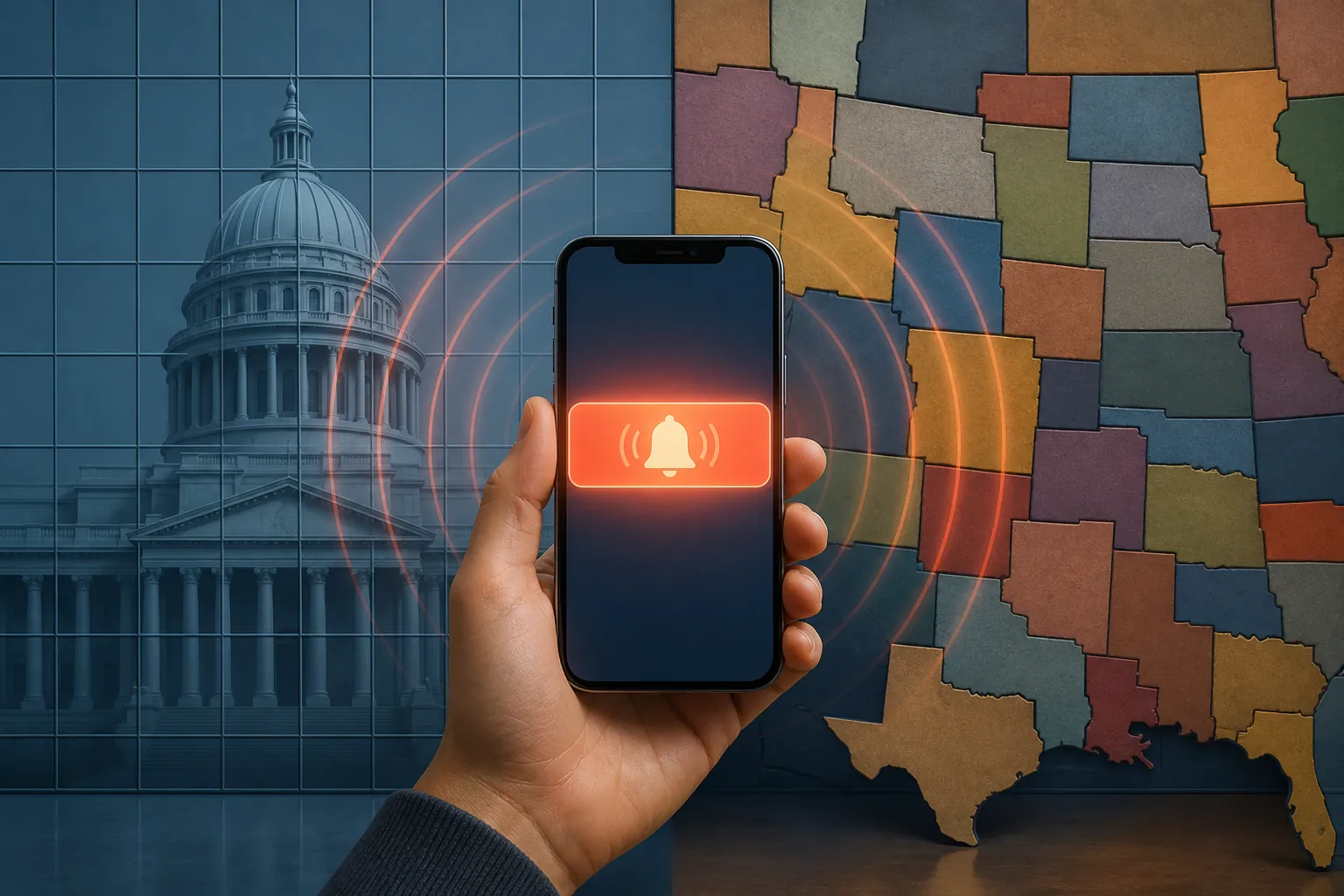
That is the shortest useful answer to “silver alert vs amber alert difference explained”: AMBER is a federally coordinated child-abduction alert model; Silver Alert is a label applied through state programs for missing adults, usually older adults or people with cognitive impairment. The two may share infrastructure. They do not share the same legal foundation.
| Question for counsel or risk staff | AMBER Alert | Silver Alert |
|---|---|---|
| What legal framework supplies the baseline? | DOJ-recommended national criteria, federal coordination through the AMBER Alert program, and a dedicated WEA class for child abduction emergencies.[1][2][3] | State statutes and agency rules. No enacted National Silver Alert Act or single national eligibility baseline.[4] |
| Who is the missing person? | A child age 17 or younger, where law enforcement believes an abduction occurred and the child faces imminent danger, among other DOJ criteria.[1] | Depends on the state: some laws use age thresholds, some require a specified mental-health condition, and some require cognitive impairment for adults 18 or older.[4] |
| Does WEA status answer the legal question? | No, but AMBER has a dedicated WEA category under federal rules.[3] | No. Silver Alerts have no standalone WEA class, though some missing-adult alerts may use other pathways depending on state practice and federal alert-code implementation.[3][5] |
| Where does exposure usually begin? | False-report charges, agency compliance with activation criteria, and delivery-device disputes. | State-law eligibility, privacy disclosures, age or disability classifications, and whether the alert was routed under the correct authority. |
AMBER has a clearer national baseline because the criteria are narrower
DOJ’s AMBER guidance recommends five activation criteria: law enforcement must have a reasonable belief that an abduction occurred; the child must be 17 or younger; the agency must believe the child is in imminent danger of serious bodily injury or death; enough descriptive information must exist to help the public assist; and the child’s name and critical data must be entered into NCIC.[1]
Those criteria do not make every state AMBER decision legally simple. They do, however, give counsel a defined baseline to test against. If the report was false, the first questions are whether the reporting party knowingly supplied false information, whether law enforcement reasonably treated the facts as an abduction, whether the child met the age requirement, and whether the alert used the federal child-abduction emergency pathway. The dispute can still be hard, but the frame is recognizable.
The PROTECT Act background matters here because AMBER is not merely a brand name adopted independently by states. Federal law and DOJ coordination helped build a national program around child-abduction alerts, while federal communications rules separately identify AMBER Alerts within WEA architecture.[2][3]

Silver Alert law is the harder comparison
“Silver Alerts are AMBER Alerts for seniors” is serviceable shorthand for a dispatcher-facing conversation. It is a poor legal description. A 2013 JAAPL review classified state Silver Alert eligibility models into three groups: nine states that used senior-only thresholds such as 60 or 65 and older; ten states that applied to adults 18 or older with a specified mental-health condition; and eighteen states that applied to adults 18 or older with a non-specified cognitive impairment.[4]
That classification explains why a Silver Alert analysis often starts with venue before it starts with facts. A missing 66-year-old may qualify in an age-threshold state without the same showing required in a state that demands evidence of cognitive impairment. A missing 40-year-old with dementia, traumatic brain injury, or another qualifying condition may fall inside one state’s program and outside another’s. California, Florida, and Connecticut appeared in the JAAPL discussion as examples of materially different state approaches, not as interchangeable versions of one national rule.[4]
Congress has considered national Silver Alert legislation, and House passage occurred in earlier sessions, but a National Silver Alert Act was not enacted. The result is not a federal vacuum in emergency communications generally; it is the absence of a single federal Silver Alert eligibility statute that preempts or standardizes the state programs.[4]
This is the point at which legal exposure starts to diverge. AMBER asks whether a child-abduction alert met a relatively narrow public-safety trigger. Silver Alert statutes often ask agencies to classify an adult by age, diagnosis, impairment, vulnerability, or some combination of those facts. Those classifications are precisely where privacy, disability, and age-discrimination concerns enter the record.
The delivery route matters, but it does not supply the authority
Federal WEA rules identify AMBER Alerts as a dedicated alert class for child abduction emergencies. Silver Alerts do not have their own standalone WEA class in the same way.[3]
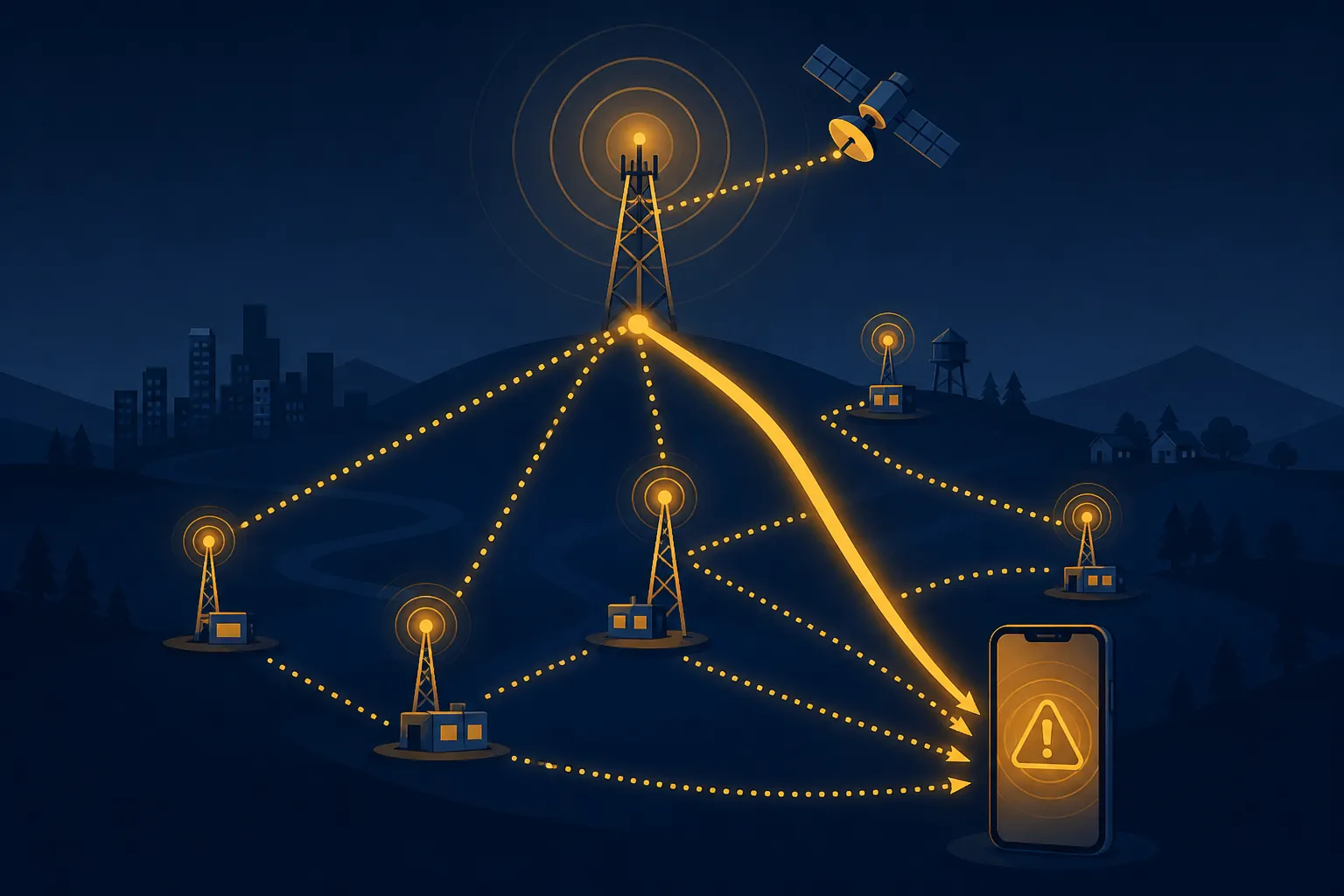
That does not mean a missing-adult alert can never reach a phone. Some jurisdictions have used other alert routes, including Imminent Threat classifications or EAS-only mechanisms, depending on state implementation and the facts presented. The legally safer sentence is therefore not “Silver Alerts cannot use WEA.” It is: Silver Alerts historically lacked a dedicated federal WEA class, so counsel must identify which alert class was actually used and which state rule authorized the request.
The FCC’s 2024 Missing and Endangered Persons code is the current federal attempt to reduce that mismatch. FCC 24-83 adopted a new EAS event code for missing and endangered persons 18 or older who do not meet AMBER criteria, a category described as covering alert systems such as Silver, Ashanti, and Feather Alerts, with a 12-month phase-in after the rule’s effective date.[5]
As of this article’s verification date, the implementation status of any particular missing-adult alert should still be checked against the rule’s effective date, state adoption, carrier practice, and agency procedure. FCC 24-83 is a significant regulatory marker. It is not proof that every Silver Alert is now governed by one national Silver Alert statute.
False-report liability is not theoretical
The March 2026 St. Louis hoax shows why “an alert went out” is an incomplete legal endpoint. Authorities reported that an AMBER Alert was issued for a 5-year-old said to have been inside a stolen vehicle, but police later said the child did not exist. Two women were charged, and police reported approximately $16,000 in costs tied to the response; the report identified Missouri RSMo 210.1012 as the relevant false-report provision and described the offense as a class A misdemeanor.[6]
The posture matters. Charged is not convicted. Reported cost is not a civil judgment. But the case is still useful because it isolates the legal consequence that public-facing alert descriptions often blur: a knowingly false report can trigger criminal exposure independent of whether the alert infrastructure performed exactly as designed.
For an AMBER matter, that means preserving the report intake record, the agency’s basis for believing an abduction occurred, the descriptive information available at activation, the NCIC timing, and the communications chain between the reporting party and law enforcement. For a Silver Alert matter, the same preservation discipline should be paired with the state-specific eligibility showing: age, impairment evidence, diagnosis language if any, last-known location, endangered-status criteria, and who had statutory authority to request or approve dissemination.
Silver Alert privacy risk sits inside the eligibility test
Silver Alerts often need the public to know why an adult is endangered. That may require saying more than “missing person.” It may mean disclosing dementia, Alzheimer’s disease, developmental disability, mental illness, or another cognitive condition. The JAAPL analysis flagged the tension between public-broadcast goals and individual-rights concerns, including HIPAA minimum-necessary questions and Age Discrimination Act concerns when statutes rely on age or diagnosis classifications.[4]
That does not convert every Silver Alert into a HIPAA violation. Police departments and broadcasters are not automatically HIPAA covered entities merely because they repeat health-related information. The sharper issue is upstream and statutory: who supplied the medical or cognitive-impairment information, whether that person or entity was permitted to disclose it, whether the alert broadcast more than the state rule required, and whether an age-based program can justify the classification it uses.
The privacy problem is therefore not a reason to slow-walk missing-adult emergencies. It is a reason to draft and apply eligibility rules with discipline. If the state statute requires cognitive impairment, the record should show the basis for that conclusion. If the public message can locate the person without naming a diagnosis, the minimum-necessary principle is not just a compliance phrase; it is a drafting constraint.
Delivery-device claims belong in a separate bucket
A delivery failure or alleged over-delivery can create a different kind of case. In Gordoa v. Apple, a product-liability suit alleged that AMBER Alert audio delivered through AirPods caused hearing injury. The Northern District of California granted summary judgment for Apple on April 28, 2025, with reporting noting evidence that AirPods Pro could not exceed 113.5 dB, below a 130-plus dB acoustic-trauma threshold identified in the case; plaintiff’s counsel said an appeal was pending.[7]
Gordoa does not establish that device manufacturers are liable for emergency-alert delivery. The disposition went the other way at summary judgment. Its relevance is narrower and more practical: emergency alerts are not only issuer-side risk. Phones, earbuds, operating systems, carrier networks, and alert gateways may become part of the evidence record when the alleged injury is caused by how an alert was delivered rather than why it was issued.
That distinction is useful in document preservation. The agency file answers authority and eligibility questions. Device logs, software behavior, volume settings, carrier records, and standards evidence answer delivery questions. Mixing those records too early can obscure which defendant, rule, or technical system is actually under scrutiny.
Q3 2026 markers: MEP implementation and Michigan SB 456
Two current markers are worth tracking without overstating either. First, the FCC’s Missing and Endangered Persons code is designed to give missing-adult alerts a clearer EAS/WEA-compatible identity for people 18 or older who do not meet AMBER criteria.[5]
Second, Michigan SB 456 passed the Michigan Senate on July 3, 2026, and was reported as headed to the governor. The bill would require Michigan State Police to transmit Silver Alerts through Wireless Emergency Alerts.[8]
Those developments point toward more structured missing-adult alert delivery. They do not erase state-law variance. A Michigan reform, if enacted and implemented, would answer a Michigan routing question. FCC 24-83 answers a federal alert-code question. Neither supplies a comprehensive national Silver Alert eligibility statute.
Alert-type proliferation is part of the same pressure. A 2025 Warn Room/Cain et al. account counted more than 40 named missing-person alert types, a number that depends on counting conventions but captures a real operational concern: public desensitization and agency confusion increase when every urgent missing-person category is branded separately.[9]
That concern should not be used as a shortcut to collapse the legal analysis. Confusion in the public message is one risk. Noncompliance with the statute authorizing that message is another. They may appear in the same incident file, but they are not the same defect.
The working rule
The safest risk question is not “Was this an AMBER-looking alert or a Silver-looking alert?” It is “Which legal authority governed this alert?” Start with the applicable state statute or federal rule, identify the issuing agency, confirm the eligibility criteria, and then identify the communications class actually used.
For AMBER Alerts, test the record against the DOJ criteria, the child-abduction classification, and any state false-report or implementation rule. For Silver Alerts, begin with the state program: age threshold, impairment requirement, diagnosis language, who can request activation, who approves it, and what information may be broadcast.
Separate charged conduct from resolved liability. Separate issuer authority from delivery-device claims. Treat privacy, false-report, and intermediary exposure as jurisdiction-specific until the MEP code, state reforms, and carrier implementation are actually verified in the relevant matter.
References
- Guidelines for Issuing AMBER Alerts, Office of Justice Programs.
- AMBER Alerts, FindLaw.
- 47 CFR Part 10 — Wireless Emergency Alerts, Electronic Code of Federal Regulations.
- For Whom the Bell Tolls: Silver Alerts Raise Concerns Regarding Individual Rights and Governmental Interests, Journal of the American Academy of Psychiatry and the Law, 2013.
- FCC Adopts New Alert Code for Missing and Endangered Persons, Federal Communications Commission, August 7, 2024.
- AMBER Alert issued for 5-year-old who was inside stolen vehicle, authorities say, KFYR/KMOV, March 30, 2026.
- Apple prevails in suit over claims its AirPods caused hearing damage, Courthouse News.
- McMorrow Passes Bill to Implement Wireless Emergency Alerts for Missing Seniors, Vulnerable Adults, Michigan Senate Democrats, July 3, 2026.
- Missing Person Alert Types: 40 and Counting, The Warn Room, 2025.
Related records
Tool profile
How Meta's AI Spending Reshapes Law Firm ProfitabilityGoverning regulation
Browse the obligations tracker →Preventive workflow
Browse verification workflows →
Report a correction or tip
Spotted an outdated figure, a misstated fact, or a ruling this case record should reflect? Public comments are disabled for this content given the professional cost of a misreported case outcome, penalty amount, or rule text — use the structured correction channel instead.
Report a correction or tip for this record →