
Why Apple's 2026 AI Stock Growth Matters to Law Firm Risk
Apple's record Q3 2026 revenue and the fall launch of Siri AI with personal-context access signal that consumer-grade generative AI is migrating into law firm workflows faster than governance. This article identifies the specific ABA Rule 1.1 and 1.6 obligations triggered and provides the diligence steps firms must take before the feature ships.
- Jurisdiction
- United States
- Court
- Multiple U.S. courts
- AI tool named
- Siri AI
- Ruling date
- Aug 1, 2026
- Source document
- View primary court order ↗
- Last verified
- Aug 3, 2026
Lex Machina Review is an independent risk-tracking and reference resource. Nothing on this site is legal advice, and using it does not create an attorney-client relationship. Every record is reviewed against primary sources but may not reflect the most current status of a matter — always verify directly against the cited court order, rule text, or a licensed attorney before relying on it.
Companion explanation — secondary to the source document above
Non-advice notice: This record is for legal-professional risk context only. It is not legal advice, investment advice, or a recommendation to buy, sell, use, disable, or permit any Apple product or AI service. Reviewed for legal-professional risk framing by Elena Marquez, JD, licensed counsel. Last verified: August 3, 2026, UTC.
The law-firm question behind Apple’s 2026 AI stock growth is not whether Apple’s share price deserves the attention it is getting. The question is whether the same growth cycle that makes Apple’s AI rollout commercially unavoidable also changes the risk profile of the devices already sitting in lawyers’ hands, bags, desks, and homes.
Apple’s dated market event is straightforward enough. On July 30, 2026, Apple reported record June-quarter revenue of $109.4 billion, up 16% year over year, and diluted EPS of $2.02, up 29%; it also guided September-quarter revenue growth to 9% to 11% year over year.[1] By the July 31, 2026 market close, StockAnalysis.com recorded Apple at $308.91, down 7.35%, with a 46-analyst average price target of $323.28 and a stated range of $215 to $400.[2]
Those figures belong in this record only because they explain distribution pressure. A product that is tied to a record quarter, a volatile earnings cycle, and a fall launch window is not going to remain a niche experiment inside a legal innovation committee. It is going to arrive as a device feature, through interfaces lawyers already treat as ordinary.
The risk event is the fall Siri AI launch, not the stock chart
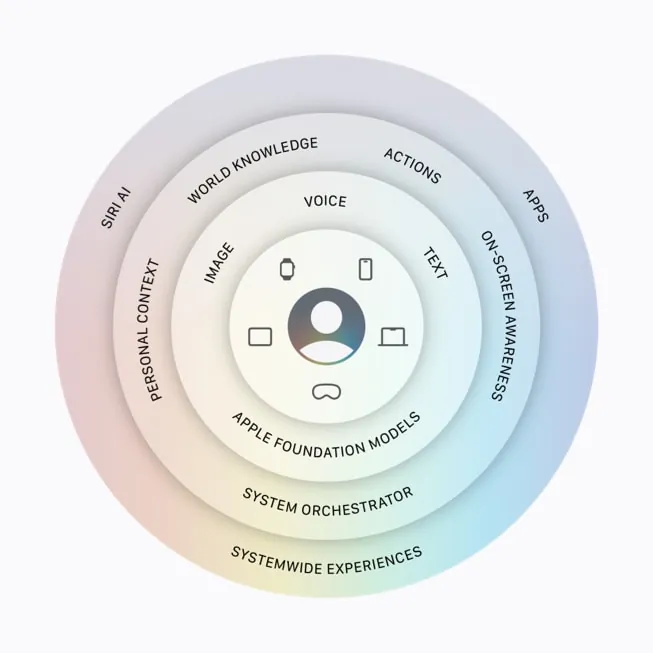
Apple’s WWDC26 release is the better starting point for a law-firm memo. Apple announced Siri AI on June 8, 2026, describing a fall 2026 launch and personal-context capabilities across data sources including Mail, Messages, and Photos; the release also described a dedicated Siri app via iCloud, support on iPhone 16 and later, iPhone 15 Pro models, and Macs with M1 or later, while noting geographic staging, including unavailability in China and unresolved availability for iPhone and iPad in the European Union.[3]
That is the part that belongs on the partner’s desk. Many firms have spent the last two years asking whether lawyers may use a legal AI research tool, a contract-review platform, or a chatbot in a browser. Siri AI shifts the question to the device layer: what happens when the assistant embedded in ordinary Apple workflows can reason over personal context from the same communications, images, calendars, documents, and drafting surfaces that may contain client material?
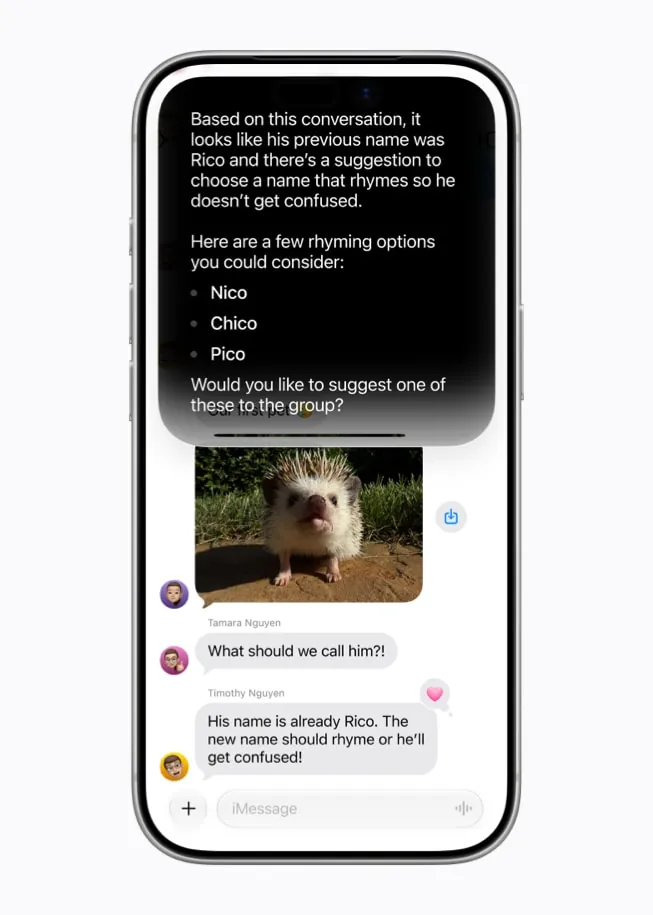
The uncomfortable feature is familiarity. Mail, Messages, Photos, Writing Tools, and Siri requests do not feel like a new vendor intake. They feel like the operating environment. That is exactly why defaults deserve more scrutiny, not less. A lawyer who would never paste a privileged memo into a random web chatbot may still ask a device assistant to summarize, find, rewrite, attach, identify, or suggest, without pausing to ask which information was exposed to which system.
The data paths are the diligence surface
Apple’s Apple Intelligence privacy materials, updated December 12, 2025, identify three processing paths that matter for confidentiality review: on-device processing, Private Cloud Compute, and third-party extension use, including the ChatGPT extension; Apple also describes transparency logging for Private Cloud Compute.[4] Those are not marketing distinctions for law-firm purposes. They are the beginning of the Rule 1.6 analysis.
| Apple processing route | What the firm must decide before use in client workflows |
|---|---|
| On-device processing | Which client-work categories may be processed locally, and whether device management, account separation, retention, and audit controls are adequate for the sensitivity of the work. |
| Private Cloud Compute | Whether the firm has reviewed Apple’s stated cloud-processing design, transparency materials, and limits closely enough to document a confidentiality judgment rather than rely on a general privacy impression. |
| Third-party AI extensions | Whether extensions such as ChatGPT or Gemini are permitted, disabled, limited by matter type, or subject to separate client consent, because a request may move beyond Apple’s own processing environment. |
For a firm, “on device” is not a magic phrase. It narrows one set of concerns, but it does not answer whether the device is firm-managed, whether the relevant account is personal or enterprise-controlled, whether client material is co-mingled with personal data, whether the lawyer is using iCloud services, or whether the feature can be logged, restricted, or explained after an incident.
Private Cloud Compute raises a different question. The issue is not whether cloud processing is forbidden as a category. Lawyers and firms already use cloud services. The issue is whether someone responsible has read the governing materials, understood when requests leave the device, compared that route to the firm’s confidentiality obligations, and documented the decision for the kinds of client information likely to be involved.
Extensions deserve their own line in the policy. If a lawyer’s request can be routed to a third-party AI service, the firm’s review cannot stop at Apple’s privacy page. It must decide whether the extension is allowed at all, whether it is allowed only for non-client or low-sensitivity work, whether client consent is required in some matters, and whether the extension’s provider can see inputs or use interactions in ways that affect other users.
Formal Opinion 512 turns this into a competence and confidentiality problem
ABA Formal Opinion 512, issued July 29, 2024, is the controlling ethics frame for this kind of firm memo even though it does not name Apple. The opinion ties generative AI use to the lawyer’s duty of competence under Model Rule 1.1 and confidentiality under Model Rule 1.6, and it requires a reasonable understanding of the tool’s capabilities and limitations before use.[5]
A reasonable understanding of Siri AI is not satisfied by saying that Apple is privacy-oriented or that the feature is built into the phone. For legal work, the reasonable-understanding inquiry has to reach the actual workflow: what information the assistant can access, what the user is asking it to do, whether the prompt includes client confidential information, whether processing leaves the device, whether a third-party extension is invoked, and whether the output will be used in advice, drafting, research, filing, or client communication.
DC Bar Ethics Opinion 388, issued in April 2024, gives the diligence question a cleaner operational form. For third-party generative AI providers, it identifies two questions lawyers should ask: whether information submitted to the provider is visible to the provider, and whether the lawyer’s interactions will affect answers supplied to other users; it also treats third-party AI providers as “other” persons for Rule 1.6(f) purposes.[6]
Those two questions are almost perfectly matched to the extension problem. If Siri AI remains on device for a task, one branch of the analysis may close. If a request goes to Private Cloud Compute, a second branch opens. If a lawyer invokes a third-party extension, the firm needs provider-specific answers, not a device-level assumption. The same user gesture can carry different confidentiality consequences depending on the route.
The court-facing harm is already documented
The point is not that Apple’s 2026 systems will reproduce older benchmarks. The responsible way to use the hallucination research is narrower. In May 2024, Stanford HAI and RegLab reported that general-purpose chatbots hallucinated on 58% to 82% of legal queries in their benchmark, while legal retrieval-augmented generation tools still produced hallucinations above 17% for Lexis+ AI and Ask Practical Law AI and above 34% for Westlaw AI-Assisted Research.[7] That study predates 2026 model generations, but it remains useful for the proposition that legal users cannot treat AI output as self-verifying.
The litigation record is less abstract. Thomson Reuters Institute’s survey of generative-AI hallucinations in legal filings identified 22 cases involving fabricated citations in a June 30 to August 1 window; the examples included Powhatan County School Board v. Skinger, where the filing contained 42 nonexistent citations, and Kaur v. Desso, where the court imposed a $1,000 fine and mandated continuing legal education.[8]
Deghani v. Castro supplies the line every verification policy should quote back to a drafter: an “empty head and a pure heart” does not excuse the failure to verify.[8][5] That principle is not limited to specialized legal AI. If an ordinary device assistant suggests a case name, drafts a proposition, summarizes a thread, or rewrites an argument, the lawyer still owns the filing, the certification, the communication, and the consequences.
The adoption gap is the part firms cannot explain away
The 2026 8am Legal Industry Report, discussed through ABA Law Practice Magazine, reported 69% personal generative-AI use, up from 31% in 2025, while also reporting that 54% of respondents had no responsible-use training and 43% had no AI policy.[9] Those are survey figures from a commercially interested legal-technology source, so they should be cited that way. They are still useful because they describe the precise mismatch risk officers are seeing: individual use moving faster than institutional controls.
Apple’s rollout sharpens that mismatch. A firm may have a policy for ChatGPT in a browser and still have no usable answer for Siri AI in Mail. It may have approved a legal research product and still have no review of Writing Tools on a personal iPhone. It may train lawyers not to paste client facts into public tools and still fail to address an assistant that can find, summarize, and act across the user’s own device context.
This is where the record becomes uncomfortable for firms that rely on informal norms. If more lawyers are personally using generative AI than have received training, and if a material share of firms lack a policy, then fall 2026 is not a distant technology-planning issue. It is a competence and confidentiality control gap with a launch window.
What should be done before the fall launch
The defensible response is not a blanket panic memo. It is a dated diligence record that shows the firm understood the feature surface before client information moved through it. The work should be assigned before release notes begin circulating informally among lawyers who already use Apple devices for client work.
| Pre-launch workstream | Minimum defensible output |
|---|---|
| Inventory Apple-device use in client workflows | Identify where lawyers use iPhone, iPad, Mac, Mail, Messages, Photos, Siri, iCloud, and Writing Tools for client communications, evidence handling, drafting, research, or matter administration. |
| Map data paths | Create a short internal record distinguishing on-device processing, Private Cloud Compute, and third-party extension routes, with citations to Apple’s dated materials. |
| Decide extension treatment | State whether third-party AI extensions are disabled, permitted, matter-limited, consent-dependent, or subject to separate vendor review. |
| Update training | Train lawyers and staff on prompts, client-confidential information, personal-context access, verification duties, and the difference between consumer convenience and professional use. |
| Update policy | Amend AI, confidentiality, mobile-device, cloud, and litigation-support policies so Apple Intelligence and Siri AI are covered expressly rather than by implication. |
| Document ethics diligence | Tie the review to Rule 1.1 competence, Rule 1.6 confidentiality, ABA Formal Opinion 512, and the DC Bar Opinion 388 provider-visibility and future-answer questions. |
| Strengthen verification workflows | Require independent verification before any AI-assisted legal proposition, citation, quotation, factual summary, or filing language is used externally. |
| Escalate unresolved issues | Route open questions into Regulation & Ethics, Verification Workflows, and Risk Digest records as those records are created, especially for sanctions examples and client-consent questions. |
A firm does not need to predict Apple’s stock price to make this decision. It needs to recognize that a consumer-grade assistant with personal-context access is being introduced into devices already used for legal work, in a window where many firms still lack training and policy. That is enough to trigger pre-launch diligence.
The practical verdict is narrow: treat Siri AI and related Apple Intelligence features as governed legal-work technology before they are used with client information. Until the firm has mapped the data paths, addressed extensions, trained users, updated policy, and documented Rule 1.1 and Rule 1.6 reasoning, familiar device defaults should not be treated as harmless.
References
- Apple reports third quarter results, Apple Newsroom, July 30, 2026
- StockAnalysis.com AAPL forecast page, StockAnalysis.com, data as of July 31, 2026
- Apple unveils next generation of Apple Intelligence, Siri AI, and more, Apple Newsroom, June 8, 2026
- Apple Intelligence & Privacy, Apple, updated December 12, 2025
- Formal Opinion 512, American Bar Association, July 29, 2024
- Ethics Opinion 388, DC Bar, April 2024
- AI on Trial: Legal Models Hallucinate in 1 out of 6 (or More) Benchmarking Queries, Stanford HAI, May 2024
- GenAI hallucinations are still pervasive in legal filings, Thomson Reuters Institute
- 8am Legal Industry Report, ABA Law Practice Magazine, 2026
Related records
Tool profile
How Meta's AI Spending Reshapes Law Firm ProfitabilityGoverning regulation
Browse the obligations tracker →Preventive workflow
Browse verification workflows →
Report a correction or tip
Spotted an outdated figure, a misstated fact, or a ruling this case record should reflect? Public comments are disabled for this content given the professional cost of a misreported case outcome, penalty amount, or rule text — use the structured correction channel instead.
Report a correction or tip for this record →