
Mapping Risk in Asheville Power Outage Compensation Claims
A risk map for litigators assessing Asheville power outage claims against Duke Energy: the filed-rate doctrine caps tariff-based liability, and North Carolina federal courts' hardening posture on AI hallucinations turns citation errors into career-ending sanctions. The compound risk requires verification workflows that start with the tariff and independently validate every citation.
- Jurisdiction
- US-Federal (Eastern District of North Carolina)
- Court
- United States District Court for the Eastern District of North Carolina
- Judge
- Robert T. Numbers II
- AI tool named
- Generative AI tool
- Ruling date
- Apr 28, 2026
- Source document
- View primary court order ↗
- Last verified
- Jul 29, 2026
Lex Machina Review is an independent risk-tracking and reference resource. Nothing on this site is legal advice, and using it does not create an attorney-client relationship. Every record is reviewed against primary sources but may not reflect the most current status of a matter — always verify directly against the cited court order, rule text, or a licensed attorney before relying on it.
Companion explanation — secondary to the source document above
The June 25, 2026 downtown Asheville outage is the kind of event that creates pressure before it creates a good lawsuit. An underground equipment malfunction affected more than 900 customers, and the restoration risk extended overnight.[1] For a restaurant, a grocer, a landlord, or an insurer staring at spoiled inventory and angry tenants, compensation after an Asheville power outage sounds like a damages question. For counsel, it should first sound like a document-control question.
The first document is not the outage story, the client email, the adjuster’s note, or a draft complaint produced by a research tool. In North Carolina utility-outage claims, the first load-bearing document is the governing tariff approved by the North Carolina Utilities Commission. Butler Weihmuller’s July 2026 discussion of North Carolina outage subrogation issues puts the point bluntly enough: pull the tariff first, because the filed-rate doctrine makes the approved tariff the controlling liability framework.[2]
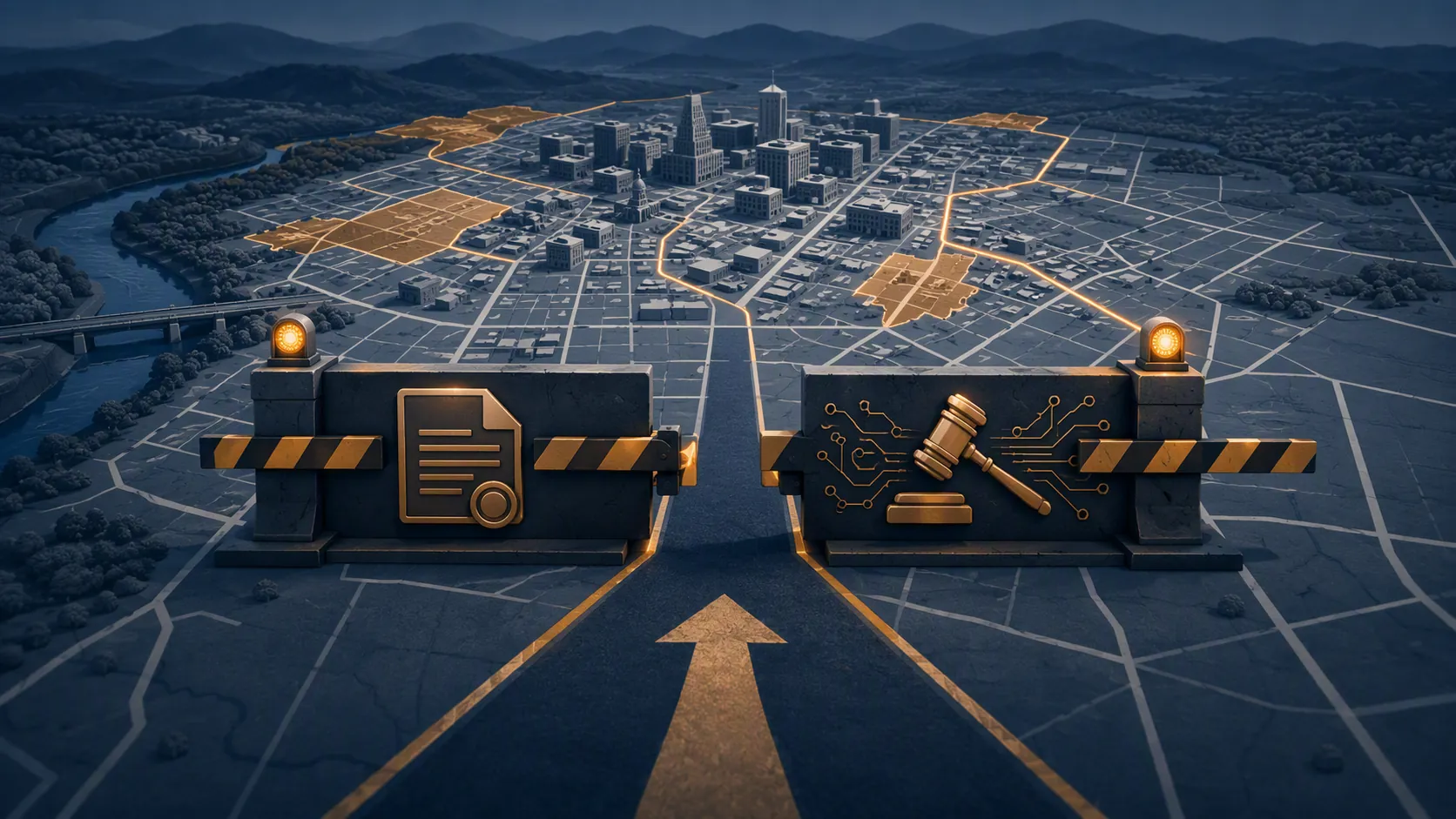
The tariff is the claim screen
A viable outage claim can still exist. That is the point often lost when people turn the filed-rate doctrine into a courthouse-closing slogan. The narrower and more useful rule is that the tariff changes the order of analysis. Counsel does not begin by asking whether the outage was disruptive, costly, or avoidable in some ordinary negligence sense. Counsel begins by asking what the filed tariff allows the customer to recover, what it excludes, and what factual showing is needed to fit the claimed loss into an allowed category.
On the Butler Weihmuller account, physical property damage is generally in a different posture from lost profits: property damage may be recoverable, while lost profits are generally unrecoverable under the tariff framework it describes.[2] That distinction matters immediately in an Asheville outage file. Spoiled food, damaged equipment, and physical harm to business property are not the same pleading problem as missed reservations, lost sales, reduced foot traffic, or a projected revenue dip during the outage window.
| Pre-filing question | Why it matters |
|---|---|
| What tariff governed service at the affected location? | The NCUC-approved tariff may control liability before common-law damages theories do. |
| Is the claimed loss physical property damage or economic loss? | Property damage may be treated differently from lost profits under the tariff framework. |
| Was a storm the sole cause, or only part of the chain? | An act-of-God defense depends on sole causation, not the mere presence of bad weather. |
| Can every cited authority be verified from a primary source? | In North Carolina federal practice, citation errors now create sanctions risk separate from claim weakness. |
The table is intentionally short because the work is not finished by naming the category. The tariff language has to be read against the actual service relationship and the pleaded damages. If the client describes “losses” in a single number, counsel has to separate the number into components before drafting: inventory that physically spoiled, equipment allegedly damaged by a surge or interruption, cleanup costs, employee time, lost profits, business interruption, contractual penalties, and reputational harm. The tariff may not treat those items alike.
The same discipline applies to causation. Butler Weihmuller describes the act-of-God defense as available only where the storm was the sole cause, not merely a contributing factor.[2] That is not a plaintiff-side magic phrase, and it is not a defense-side escape hatch. If the record shows an underground equipment malfunction, counsel still has to know whether weather, maintenance history, protective-device operation, inspection records, or third-party damage entered the chain. The legal consequence turns on the tariff and the cause proof, not on whether the outage happened during a stressful weather period.
Why AI-assisted drafting can make this claim harder
A small property-damage claim against a regulated utility is exactly the kind of matter where a lawyer may be tempted to ask a generative AI tool for “North Carolina power outage compensation cases” and move quickly. The economics invite shortcuts. The client wants an answer. The partner may not want six hours spent on a claim worth hundreds or a few thousand dollars. The danger is that utility tariffs and filed-rate doctrine are citation-sensitive areas. A fake case that sounds right can make a marginal but legitimate property-damage claim look unserious before the court reaches the facts.
Renfer v. U.S. Department of Defense is the warning signal North Carolina lawyers should not file away as another generic AI-hallucination story. Law360 reported that the Eastern District of North Carolina publicly reprimanded a former federal prosecutor after an AI-drafted brief filed in December 2025 contained fabricated authority; at a March 10, 2026 show-cause hearing, the lawyer admitted AI use only under direct questioning, was fired from the U.S. Attorney’s Office the next day, and was publicly reprimanded in an April 28, 2026 order.[3]
The reported language from Magistrate Judge Robert T. Numbers II changes the temperature around the usual “it was unintentional” explanation. Law360 quoted the order as stating that “it is, at this time, foreseeable that generative AI tools will provide fabricated legal authority when asked to engage in legal analysis,” and as rejecting the unintentional-error defense because “an actor is responsible for the natural and foreseeable consequences of his acts.”[3] That is not a mere etiquette point about proofreading. It frames hallucinated legal authority as a foreseeable risk of the chosen research method.
The sanction did not turn only on the existence of false citations. Law360’s account emphasizes lack of candor: the lawyer did not disclose AI use in the initial written response or sworn hearing statement, and admitted it only when pressed.[3] In a tariff-heavy outage case, that distinction matters. A bad citation may damage the argument. A bad citation plus an evasive explanation can damage the lawyer.
Asheville filings add a Western District problem
Asheville sits in the Western District of North Carolina. The primary text of the relevant WDNC standing order was not available in the materials reviewed for this article, so the point should be stated with that limitation. Two legal publications, FordHarrison and Law Firm Carolinas, consistently report that all seven WDNC district judges prohibit AI for legal research and require citation-verification certification from all filers, including attorneys and pro se litigants.[4][5]
That reported order is more directly important to an Asheville utility claim than broad national commentary about AI in law. If a complaint or brief lands in WDNC, the filing environment itself may forbid the research method a lawyer casually used to find the cases. Even if the substantive property-damage theory survives the tariff, the filing can still fail professionally if the research path violates a court directive or if counsel cannot certify citation verification.
There is no identified North Carolina sanctions case in the provided materials involving AI-hallucinated citations in a power-outage compensation claim against a utility. The risk map is built from overlapping pressures instead: an Asheville venue reportedly hostile to AI legal research, an EDNC order treating AI hallucination as foreseeable, and a utility-liability framework where false or imprecise authority can distort the filed-rate analysis.
The scale data belongs in the background, not in the driver’s seat. Damien Charlotin’s AI Hallucination Cases Database, updated July 29, 2026, listed 1,811 AI hallucination cases globally and 1,252 in the United States, with pro se litigants accounting for 1,060 of the U.S. total.[6] Renfer is notable in that database context because it involved a government or prosecutor party, a much smaller category, rather than the more common pro se pattern.[6] The lesson for a represented Asheville utility case is not that every AI-assisted filing will be sanctioned. It is that courts have seen enough fabricated authority to stop treating it as surprising.
Small claims can be real, but collection and proof stay separate
The existence of tariff limits should not be confused with the nonexistence of claims. ABC11 reported in February 2026 that Durham customer Iris Egan won a $575 small-claims judgment against Duke Energy, although she later struggled to collect it.[7] Alamance News reported in July 2026 that a Burlington couple sued Duke Energy for more than $100,000 in damages allegedly caused by power surges the prior summer.[8] Those examples show that customers do pursue these claims, including in small-dollar and larger-damage settings. They do not establish that an Asheville outage claim will clear the tariff.
That distinction is worth preserving because otherwise both sides talk past the actual risk. A customer may have real physical loss. A lawyer may have a plausible negligence instinct. An insurer may have a subrogation file that deserves review. But the filed tariff may narrow the claim, and the court’s citation-verification expectations may narrow the drafting method. Those are separate gates. Clearing one does not clear the other.
The pre-filing screen

The screen should start before anyone drafts allegations. It is not a polishing exercise at the end of a complaint. By then, the pleading may already have adopted the wrong damages theory, leaned on the wrong causation frame, or embedded unverified authority that no one wants to own.
- Pull the governing NCUC-approved tariff for the customer, service type, and utility before evaluating liability.
- Mark the damages categories separately: physical property damage, spoiled inventory, equipment damage, lost profits, business interruption, and consequential losses.
- Match each damages category to the tariff language instead of assuming all outage-related losses travel together.
- Build the causation timeline from primary materials: outage notices, repair records if available, weather evidence, customer records, photos, invoices, and expert input where the amount justifies it.
- Validate every legal authority from a primary source before it enters a filed document.
- Document the verification method in the file so the signer can explain, if asked, how each citation was checked.
The AI step, if there is one, should be treated as a risk event rather than a convenience. A tool may help generate issue lists, search terms, or a first-pass checklist, subject to any applicable court order and firm policy. It should not be the source of record for the law. In a WDNC filing, counsel also has to confront the reported prohibition on AI for legal research, not merely promise to double-check the output after using it.[4][5]
The verification file does not need to be theatrical. It needs to be boring and complete: tariff version pulled, source location, date accessed, damages classification notes, cases checked against official or primary databases, statutes and rules checked against current sources, and any AI involvement disclosed internally for risk review. If the lawyer cannot reconstruct the path from tariff to allegation to authority, the document is not ready.
Where the claim should stop, and where it can proceed
Some Asheville outage matters should stop after tariff review because the claimed loss is almost entirely unrecoverable economic loss under the governing framework. Some should be narrowed because the client’s largest number is lost profits, but a smaller physical-property component is better supported. Some may proceed because the tariff leaves room for property damage and the causation record does not support a complete act-of-God defense. The lawyer’s job is not to turn every outage into a lawsuit or every tariff into a denial letter. It is to keep the filing aligned with the document that controls liability.
The professional-risk point is just as practical. A weak outage claim and a hallucinated-citation problem can each sink a filing independently. Together, they create a larger failure: the client’s potentially recoverable property-damage claim becomes the vehicle for a sanctions inquiry. That is avoidable only if the pre-filing screen starts with the tariff, classifies damages honestly, verifies authority from primary sources, and treats AI-assisted research as something to be controlled rather than trusted.
References
- Underground equipment malfunction causes outage for 100s in downtown Asheville, 828 News NOW, Jun. 25, 2026.
- Short Circuit: Subrogation Challenges in North Carolina Utility Outage Claims, Butler Weihmuller, Jul. 16, 2026.
- Judge Publicly Scolds 'Disgraced' Ex-Prosecutor For AI Errors, Law360, Apr. 28, 2026.
- Hey Claude, Write Me A Lawsuit: The Alarming Rise Of Pro Se Plaintiffs Using AI Chatbots In Employment Law Claims, FordHarrison, Jun. 25, 2026.
- Using AI as Pro Se, Law Firm Carolinas, Jun. 2026.
- AI Hallucination Cases Database, Damien Charlotin, updated Jul. 29, 2026.
- Durham woman wins in small claims court, struggles to collect judgment from Duke Energy, ABC11, Feb. 14, 2026.
- Burlington couple suing Duke Energy for more than $100K in damages, Alamance News, Jul. 9, 2026.
Related records
Tool profile
How Meta's AI Spending Reshapes Law Firm ProfitabilityGoverning regulation
Browse the obligations tracker →Preventive workflow
Browse verification workflows →
Report a correction or tip
Spotted an outdated figure, a misstated fact, or a ruling this case record should reflect? Public comments are disabled for this content given the professional cost of a misreported case outcome, penalty amount, or rule text — use the structured correction channel instead.
Report a correction or tip for this record →