
Belfast AI art copyright controversy is a legal misreading
The Belfast AI art dispute has been reported as a copyright controversy, but no copyright claim has been filed or tested in court — the “AI steals” charges are assertions by critics, not findings. Under current UK law the disputed images likely qualify as computer-generated works under s.9(3) CDPA, a protection the government’s March 2026 report proposes to abolish.
- Jurisdiction
- United Kingdom (Northern Ireland)
- Court
- No court proceeding identified
- AI tool named
- Unspecified AI image generator
- Source document
- View primary court order ↗
- Last verified
- Aug 4, 2026
Lex Machina Review is an independent risk-tracking and reference resource. Nothing on this site is legal advice, and using it does not create an attorney-client relationship. Every record is reviewed against primary sources but may not reflect the most current status of a matter — always verify directly against the cited court order, rule text, or a licensed attorney before relying on it.
Companion explanation — secondary to the source document above
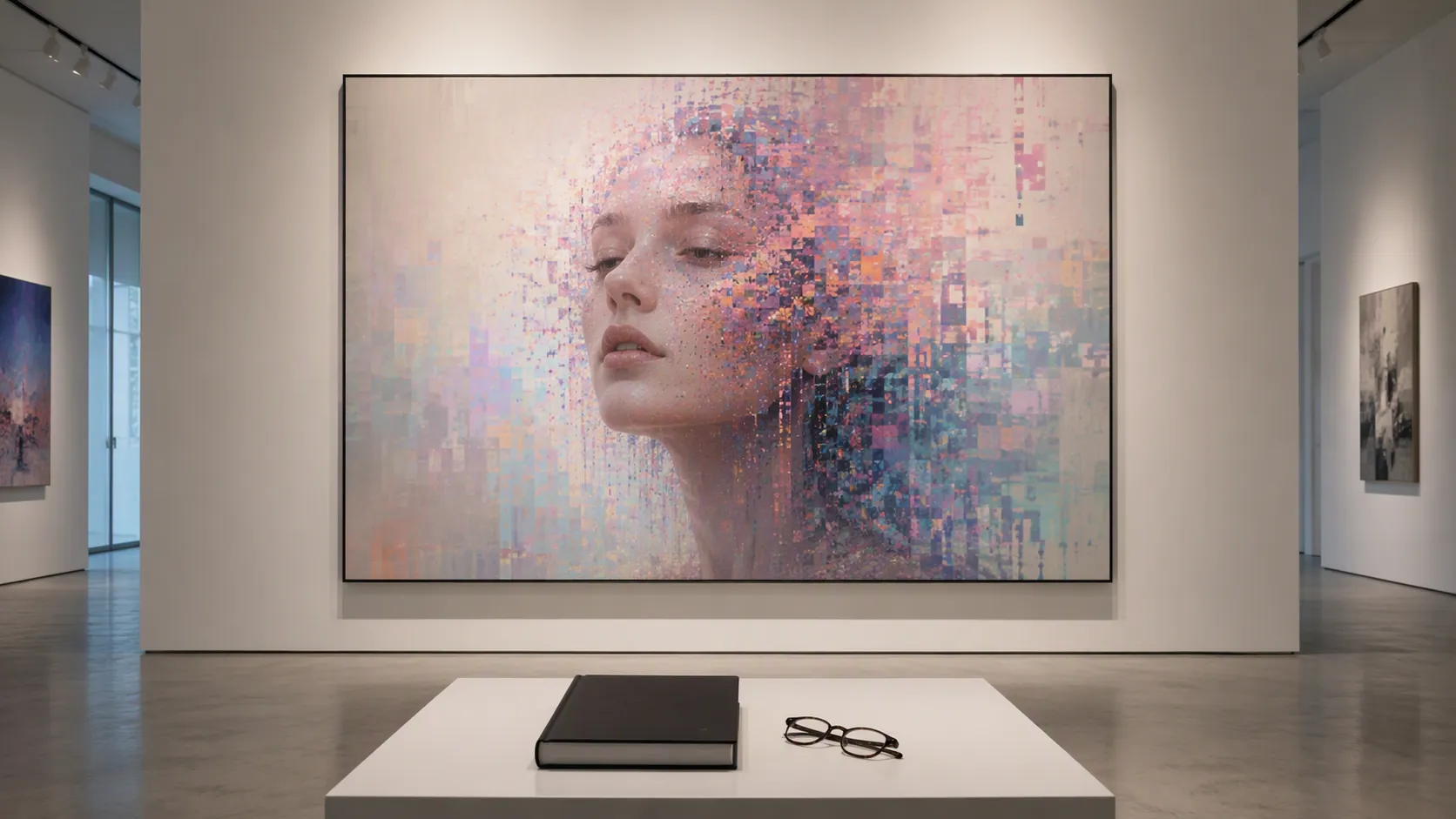
Last verified: August 4, 2026. The Belfast gallery AI art copyright controversy has a legal absence at its center: no copyright lawsuit has been identified, and no court has decided that Belfast Exposed, Jonny Sheridan, or any AI system infringed anyone’s copyright. The public dispute is real. The legal result being implied in some coverage is not.
This is a UK copyright and cultural-institution risk analysis, not legal advice. The factual record also has avoidable rough edges: exhibition dates conflict across public materials, the AI panel date is not reported consistently, and Sheridan’s first name appears in variant forms in secondary coverage. Where those conflicts matter, the safer source hierarchy is primary gallery record first, then direct news reporting, then arts-media commentary.
| Record point | Current verification posture |
|---|---|
| Jurisdiction | Northern Ireland facts; UK copyright law. |
| Core provisions | Copyright, Designs and Patents Act 1988, including s.9(3) computer-generated works. |
| Proceeding status | No filed Belfast copyright claim or court finding identified as of August 4, 2026. |
| Legal-background review | GOV.UK March 2026 copyright-and-AI report; UK computer-generated works position; Getty Images v Stability AI training-data litigation context. |
What the Belfast record actually shows
Belfast Exposed’s own exhibition page for “Beneath the Surface” lists the show as running from June 4 to August 22, 2026, although other listing material has been described as giving a June 4 to July 25 window. The exhibition page is the primary record to prefer, but the conflict is worth keeping visible because it is exactly the kind of detail that later gets flattened into confident institutional lore.[1]
The public controversy centered on the inclusion of AI-generated imagery in a photography institution’s exhibition program, including Sheridan’s “Galatea.” BBC News NI reported on July 24, 2026 that Belfast Exposed defended the decision to use AI images in the exhibition, following criticism from photographers and artists who objected to the work’s presence in that setting.[2]
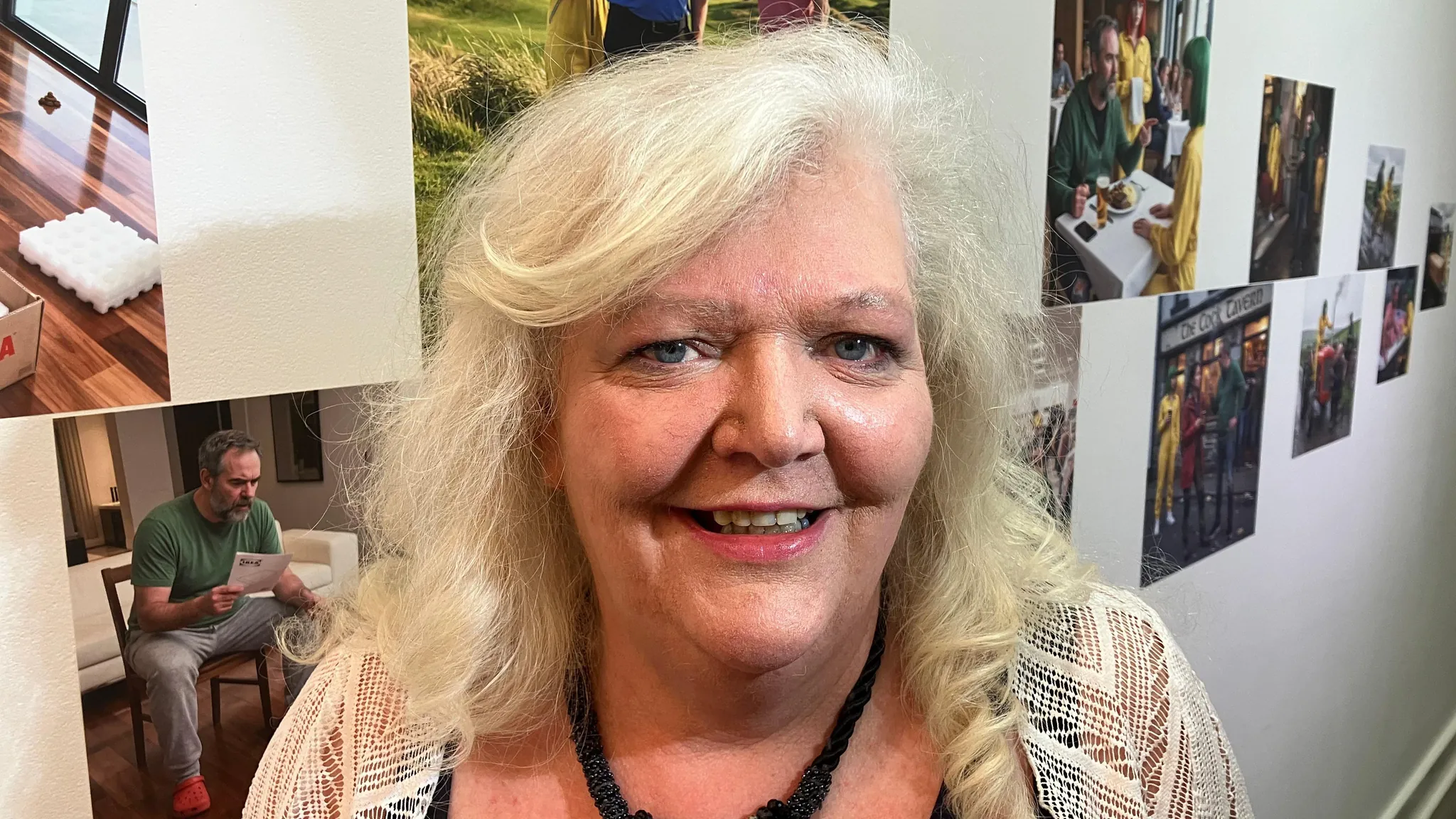
Belfast Exposed also scheduled a public discussion, “AI, Art & Society,” which its event page dates to July 30, 2026 and lists as involving Deirdre Robb, MLAs Kate Nicholl and Sian Mulholland, Professor Donovan Wylie, and chair Dr Katy Radford MBE.[3] Creative Bloq’s account implies a July 24 date for the panel, so the public record should not silently harmonize the timeline.[4]
The criticism should not be minimized just because the copyright label is loose. Photographers were objecting inside a sector where exhibition access, institutional validation, commissioning routes, and rights clearance norms already feel fragile. A photography gallery showing AI-generated images is not the same cultural act as a software company publishing a demo. It asks working image-makers to accept a shifted boundary in a space many of them understood as built for photographic labor.
But the legal question is narrower. A Belfast Telegraph headline carried the charge “AI steals without permission,” and PetaPixel later described the decision to exhibit the AI images as sparking anger.[5][6] Those are accounts of objection and allegation. They are not pleadings, findings, or admissions. A gallery board that reads the Belfast story as “AI images have been found to infringe copyright” would be taking the wrong lesson from the public record.
The copyright question starts with the output, not the slogan
For this to be a copyright infringement controversy in the usual legal sense, someone would need to identify a copyright work, identify a restricted act, connect the disputed output or its production to that work, and bring or threaten a claim capable of being tested. The Belfast record, as presently available, does not contain that sequence. It contains objections to AI image-making, claims about unpermitted taking, and an institutional dispute over whether such work belongs in a photography exhibition.
The more counterintuitive point is that current UK law likely points toward protection of the disputed AI-generated images themselves. Section 9(3) of the Copyright, Designs and Patents Act treats the author of a computer-generated literary, dramatic, musical or artistic work as “the person by whom the arrangements necessary for the creation of the work are undertaken.” The UK government’s March 2026 copyright-and-AI report states that, for a general-purpose AI system, the s.9(3) author “will usually be the person who inputted the prompt.”[7]

Applied to the Belfast facts at the level presently known, that analysis points toward Sheridan as the likely author of the AI-generated output, assuming he made the relevant prompt and production arrangements. That is not a moral endorsement of the exhibition decision. It is a description of where the statutory authorship rule currently appears to land.
Computer-generated works protection is also a thinner and stranger right than ordinary authorial copyright. The government report describes a 50-year term for such works and no moral rights protection.[7] Those details matter in counseling because they change the practical clearance discussion: the likely right is not a lifetime-plus term attached to a human author’s full moral-rights package, but neither is it necessarily no right at all.
That “likely” is doing real work. The March 2026 report itself flags tension between s.9(3) and the originality standard requiring an author’s own intellectual creation, including in light of modern UK case law on originality.[7] Prompt-generated images have not yet been tested by UK courts in a way that settles how far s.9(3) can carry them. A responsible note to a gallery or publisher would therefore avoid both extremes: it should not say AI outputs are plainly unprotected, and it should not say every prompt output is securely protected beyond challenge.
Training data is a different claim
Most public uses of “AI steals” do not really mean “this final image is a copy of my specific photograph.” They often mean that the system was trained on artists’ or photographers’ work without permission. That is a serious rights-holder complaint, but it is not the same legal issue as ownership of Sheridan’s output. It asks different questions: what was copied during training, where the copying occurred, what exceptions applied, and whether any later model or output embodies protected expression.
The UK position is not especially generous to commercial AI training. The March 2026 government report notes the absence of a broad commercial text-and-data-mining exception, and that absence is part of why UK training disputes remain legally live.[7] But that regulatory background does not convert the Belfast exhibition into a decided training-data infringement case.
The most relevant litigation context is Getty Images v Stability AI, not Belfast. In November 2025, the High Court rejected the theory that model weights were themselves infringing copies of Getty works, while leaving a much larger dispute around training and outputs to be understood carefully and within its facts.[8] The case is also not final: leave to appeal was granted on December 16, 2025, with a Court of Appeal hearing expected in 2026.[9]
That first-instance ruling should not be overread in either direction. It does not give cultural institutions a blanket clearance rule for AI systems. It also does not support the public shorthand that every AI-generated image is legally stolen. Belfast is a poor proxy for the whole training-data debate because no claimant has put a pleaded training theory before a court in that dispute.
Transparency is an ethics question before it is a labeling law
There is no general UK obligation requiring AI-generated content to be labeled as such.[7] That matters because some institutional criticism can sound as though a legal disclosure rule has already been breached. On the present record, the stronger criticism is curatorial and ethical: whether a photography institution owed its audience, participating artists, funders, or sector community clearer advance notice about the use of generative AI.
A gallery can comply with copyright law and still damage trust. It can clear the legal minimum and still misjudge how artists understand the venue’s mission. It can defend experimentation and still need better labeling, selection criteria, panel timing, and artist consultation. Those are not soft issues merely because they are not court findings; in cultural institutions, they often decide whether a program is governable.
The reverse is also true. Artist anger does not, by itself, establish infringement. A curator’s statement does not become a judicial determination because it is published under pressure. A headline does not turn an ethics dispute into a copyright precedent.
The reform proposal is the copyright development to watch
The more important copyright development is not the Belfast row itself. It is the UK government’s March 2026 proposal to remove copyright protection for computer-generated works. The same report says 78% of online consultation respondents opposed maintaining that protection.[7]
If that reform is enacted, future disputes over prompt-generated exhibition works may start from a different place. The present s.9(3) route to authorship could disappear, and the argument over AI outputs would move more sharply toward human originality, contractual control, passing off or consumer presentation, platform terms, and whatever training-data rules Parliament eventually settles.
For now, the Belfast answer is narrower. The controversy is serious as an ethics, labor, transparency, and institutional-trust dispute. It is not, on the public record available by August 4, 2026, a copyright infringement controversy in the sense of a filed and tested legal claim. Current UK law likely protects the disputed AI images as computer-generated works, with authorship usually pointing to the prompt inputter, while leaving unresolved questions about originality and AI training. The proposed abolition of computer-generated-works protection is the regulatory change to track.
References
- Beneath the Surface, Belfast Exposed.
- Belfast Exposed: Decision to use AI images in exhibition defended, BBC News NI, July 24, 2026.
- AI, Art & Society: A Public Conversation, Belfast Exposed.
- Everyone in this AI art row has a point, Creative Bloq.
- Belfast photo gallery slammed over use of AI images: AI steals without permission, Belfast Telegraph.
- Photography Gallery's Decision to Exhibit AI Images Sparks Anger, PetaPixel, August 3, 2026.
- Report on Copyright and Artificial Intelligence, GOV.UK, March 2026.
- Getty Images v Stability AI: What the High Court's Decision Means for Rights-Holders and AI Developers, Mayer Brown, November 2025.
- Getty v. Stability AI, AI Lawsuit Tracker, May 2026.
Related records
Tool profile
How Meta's AI Spending Reshapes Law Firm ProfitabilityGoverning regulation
Browse the obligations tracker →Preventive workflow
Browse verification workflows →
Report a correction or tip
Spotted an outdated figure, a misstated fact, or a ruling this case record should reflect? Public comments are disabled for this content given the professional cost of a misreported case outcome, penalty amount, or rule text — use the structured correction channel instead.
Report a correction or tip for this record →