
Which Key Senators Decide Todd Blanche's DOJ Nomination?
Todd Blanche's Attorney General confirmation now rests on two Senate Judiciary holdouts. A member-by-member vote map explains the committee arithmetic that makes John Cornyn and Thom Tillis decisive, why the July markup stalled, and the conditions that could still move the nomination forward.
- Jurisdiction
- US-Federal
- Court
- U.S. District Court
- Judge
- Kathleen M. Williams
- AI tool named
- No AI tool implicated
- Ruling date
- Jul 13, 2026
- Source document
- View primary court order ↗
- Last verified
- Aug 1, 2026
Lex Machina Review is an independent risk-tracking and reference resource. Nothing on this site is legal advice, and using it does not create an attorney-client relationship. Every record is reviewed against primary sources but may not reflect the most current status of a matter — always verify directly against the cited court order, rule text, or a licensed attorney before relying on it.
Companion explanation — secondary to the source document above
Last verified: Aug. 1, 2026. This is a procedural tracker, not legal advice.
The live Todd Blanche DOJ nomination is the 2026 Attorney General nomination, not his already-completed Deputy Attorney General confirmation. Blanche was confirmed as Deputy Attorney General by a 52-46 Senate vote on March 5, 2025; that roll call is closed history, not the pending fight now before the Senate Judiciary Committee.[1] The current nomination was submitted June 8, 2026, followed by a July 15 hearing and a July 29-30 postponement of the committee vote; as of Aug. 1, no rescheduled markup date had been announced in the materials reviewed.[2]
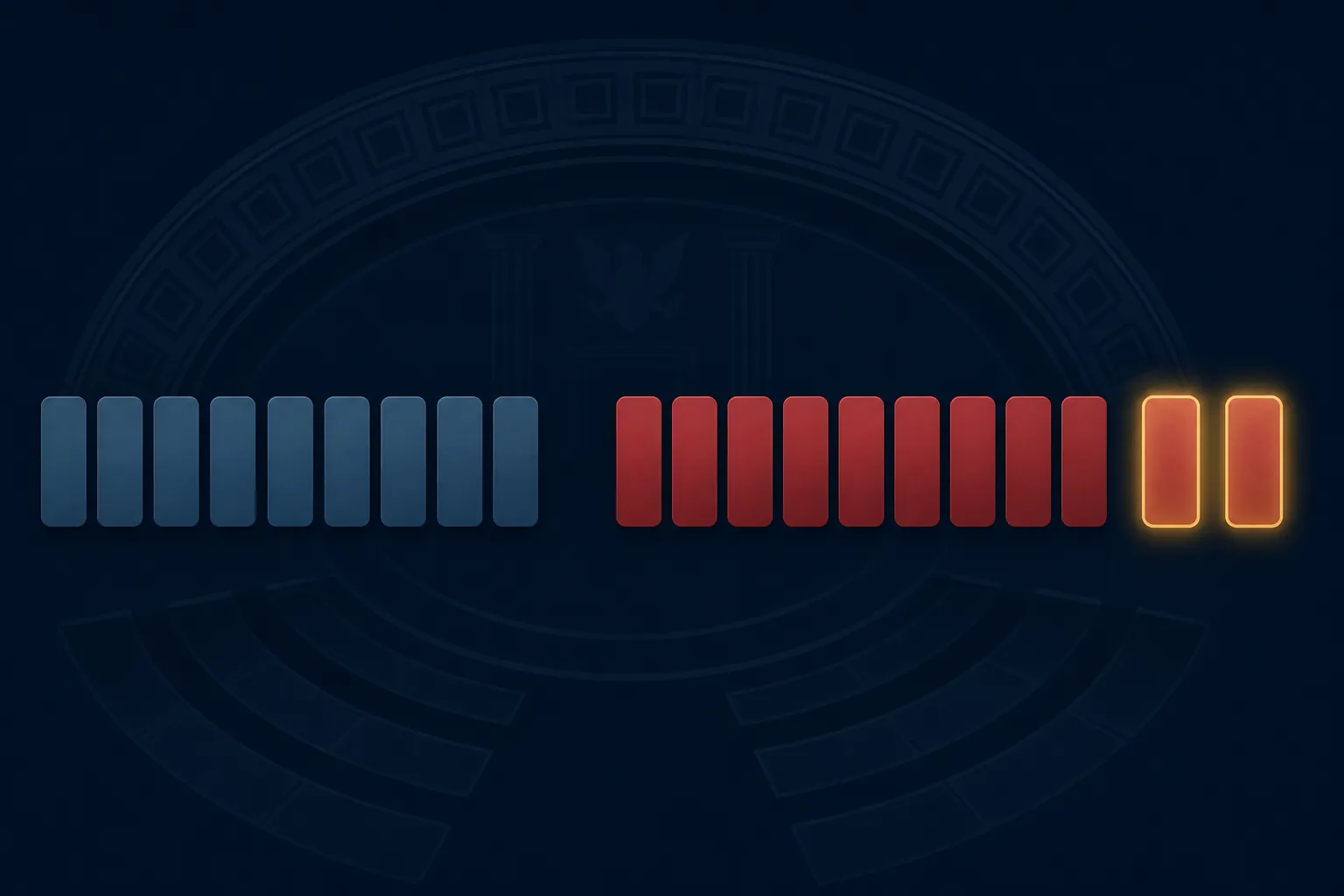
The deciding arena is the committee count. Judiciary stands at 12 Republicans and 10 Democrats.[3] With all ten Democrats expected to oppose the nomination, Blanche can lose at most one Republican under the current working map. Two Republican no votes would leave the nomination blocked in committee. That is why the meaningful question is not whether Blanche faces Senate criticism in general; it is whether John Cornyn and Thom Tillis can both be brought inside the Republican margin.
The vote map that controls the nomination
The table below is a committee-vote map, not a prediction of a later floor vote. “Expected no” for Democrats reflects the committee arithmetic reported in the July coverage and the absence, in the reviewed sources, of a Democratic yes path. “No cited holdout” for Republicans is narrower: it means the member is not identified in the cited July reporting as one of the Republican votes withholding support. It should not be inflated into a separate public endorsement unless the senator has said so on the record.
| Senator | Party/state | Working status as of Aug. 1 | Why the vote matters |
|---|---|---|---|
| Chuck Grassley | R-IA | Chair; managing the nomination | Postponed the markup while work continued “to secure sufficient support,” making the missing Republican votes the operative fact.[2] |
| Darline Graham | R-SC | No cited holdout | Her July 23 addition restored the Republican side of the committee to 12 seats after Lindsey Graham’s July 12 death.[4] |
| John Cornyn | R-TX | Holdout | Not prepared to vote yes without written assurances and red-line language on the Trump v. IRS settlement issues.[2] |
| Mike Lee | R-UT | No cited holdout | Counted among the Republicans not identified in the July reports as withholding support.[3] |
| Ted Cruz | R-TX | No cited holdout | Counted among the Republicans not identified in the July reports as withholding support.[3] |
| Josh Hawley | R-MO | No cited holdout | Counted among the Republicans not identified in the July reports as withholding support.[3] |
| Tom Cotton | R-AR | No cited holdout | Counted among the Republicans not identified in the July reports as withholding support.[3] |
| John Kennedy | R-LA | No cited holdout | Counted among the Republicans not identified in the July reports as withholding support.[3] |
| Thom Tillis | R-NC | Holdout whose stated condition had moved | Initially withheld support, then publicly approved Blanche’s July 16 meeting with Epstein accusers.[2] |
| Marsha Blackburn | R-TN | No cited holdout | Counted among the Republicans not identified in the July reports as withholding support.[3] |
| Eric Schmitt | R-MO | No cited holdout | Counted among the Republicans not identified in the July reports as withholding support.[3] |
| Katie Britt | R-AL | No cited holdout | Counted among the Republicans not identified in the July reports as withholding support.[3] |
| Dick Durbin | D-IL | Expected no | Part of the ten-member Democratic bloc treated as opposed for committee-count purposes.[3] |
| Sheldon Whitehouse | D-RI | Expected no | Part of the ten-member Democratic bloc treated as opposed for committee-count purposes.[3] |
| Amy Klobuchar | D-MN | Expected no | Part of the ten-member Democratic bloc treated as opposed for committee-count purposes.[3] |
| Chris Coons | D-DE | Expected no | Part of the ten-member Democratic bloc treated as opposed for committee-count purposes.[3] |
| Richard Blumenthal | D-CT | Expected no | Part of the ten-member Democratic bloc treated as opposed for committee-count purposes.[3] |
| Mazie Hirono | D-HI | Expected no | Part of the ten-member Democratic bloc treated as opposed for committee-count purposes.[3] |
| Cory Booker | D-NJ | Expected no | Part of the ten-member Democratic bloc treated as opposed for committee-count purposes.[3] |
| Alex Padilla | D-CA | Expected no | Part of the ten-member Democratic bloc treated as opposed for committee-count purposes.[3] |
| Peter Welch | D-VT | Expected no | Part of the ten-member Democratic bloc treated as opposed for committee-count purposes.[3] |
| Adam Schiff | D-CA | Expected no | Part of the ten-member Democratic bloc treated as opposed for committee-count purposes.[3] |
Why the July dates changed the margin
The arithmetic was briefly harsher than it is now. After Lindsey Graham’s July 12 death, the committee stood at 11 Republicans and 10 Democrats. In that configuration, Blanche had no Republican margin for error if Democrats stayed unified. Darline Graham joined the committee on July 23, returning the panel to 12 Republicans and 10 Democrats and changing the practical question from “can Blanche keep every Republican?” to “can Blanche avoid losing two?”[4]
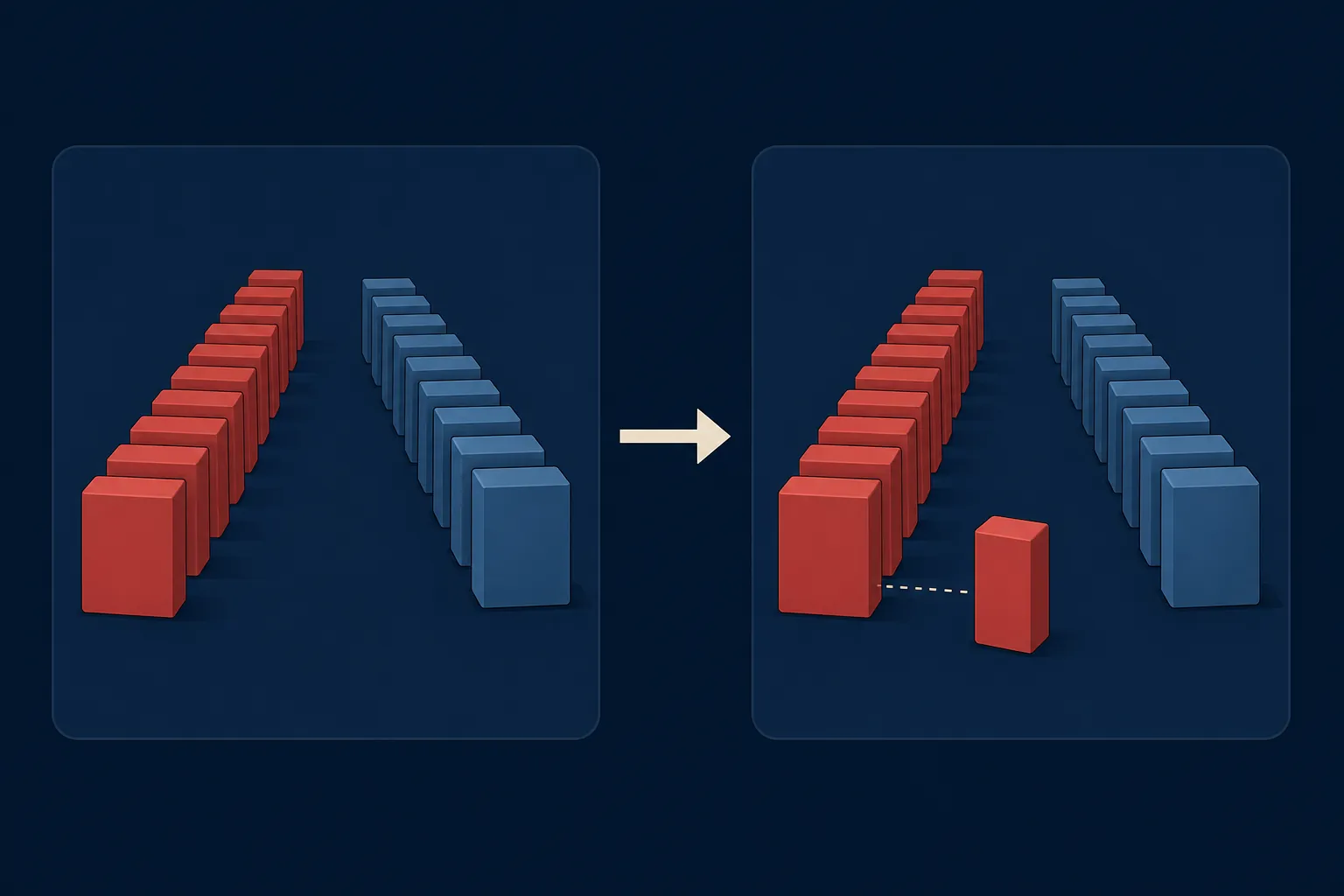
That shift explains why broad labels such as “nomination in trouble” are too imprecise. Under the current 12-10 map, Cornyn alone can slow the nomination, and Tillis alone can create a serious problem, but Cornyn plus Tillis is the fatal combination. The chair’s postponement should be read against that narrow margin.
Cornyn’s holdout is about written limits
Cornyn is the more procedurally revealing holdout because his position has moved beyond a demand for comfort language. Reporting described him as “not prepared to vote yes,” seeking written assurances, and offering DOJ a red-line strikeout document rather than accepting oral assurances about what the government would or would not do next.[2][5]
The disputed assurances concern the Trump v. IRS settlement. Public reporting described the May 2026 settlement as involving a $1.776 billion Anti-Weaponization Fund and language that raised concerns about IRS audit immunity; the conditions attributed to Cornyn sought confirmation that the fund was dead and that any audit-immunity clause covered only existing audits.[5][6]
The underlying settlement is not the center of the confirmation fight, but it explains why Cornyn’s demand is documentary. Democracy Docket reported that Judge Kathleen M. Williams’ July 13, 2026 ruling used the terms “bad faith,” “collusion,” and “fraud on the court” and referred Blanche to state bar authorities; other reporting described a federal judge in Virginia as having blocked the fund indefinitely.[6][7] Once that is the backdrop, a senator asking for a red-lined document is not merely asking for a press statement. He is asking for language that can be held against the department later.
The canceled meetings matter for the same reason. Courthouse News reported that Cornyn had canceled meetings with Blanche twice during the standoff.[5] In ordinary nomination coverage, a canceled meeting can look like atmospherics. Here it has vote-count significance: without Cornyn, the committee margin is reduced to its last usable Republican vote; without Cornyn and Tillis, the nomination fails under the present map.
Tillis’s condition moved through the Epstein accusers meeting
Tillis’s posture is different. Reporting captured his earlier resistance with the phrase “stick a fork in this turkey,” but the condition tied to his vote was more concrete: he wanted Blanche to meet with Epstein accusers.[2] That meeting occurred July 16, and Tillis publicly approved of it afterward, according to PBS/AP coverage.[8]
That does not make Tillis irrelevant. It makes his vote conditionally less opaque than Cornyn’s. If Tillis remains satisfied with the July 16 meeting and Cornyn’s written-assurance issue is resolved, the Republican side can plausibly return to a manageable count. If Tillis reopens his objection while Cornyn remains outside the yes column, the 12-10 map no longer protects Blanche.
Grassley’s postponement was a count problem
Grassley’s July postponement statement is important because it connects the individual holdouts back to committee arithmetic. He said work continued “to secure sufficient support” for the nomination.[2] That is not the language of a chair who has merely chosen to let members talk longer. It is the language of a chair who does not yet have the votes he needs at the markup.
Nor is the postponement best understood as a Democratic leverage story. Democrats may sharpen the record, slow the hearing environment, and frame the institutional stakes, but the reported vote bottleneck sits inside the Republican conference on the committee. The decisive question is whether the two named Republican holdouts become one, or zero, before the next markup is noticed.
What can happen next
There are three realistic paths on the record as of Aug. 1. First, Cornyn receives written assurances that satisfy his red-line concerns, Tillis remains satisfied after the Epstein accusers meeting, and Grassley brings the nomination back for committee consideration. Cornyn himself framed a resolved deal as something that could allow a committee vote the following week, according to July 30 reporting.[2]
Second, Cornyn and Tillis both vote no. Under the present 12-10 committee map, with Democrats expected to oppose Blanche, that is the blocking scenario. It is the only arithmetic that matters if the nomination remains in committee.
Third, no deal is reached and the nomination is not killed but simply remains off the markup calendar. Cornyn’s own framing allowed for delay into September or later if the assurance dispute was not resolved.[2] Trump also floated withdrawing and resubmitting the nomination after January 2027, a separate political maneuver that does not change the committee count as it stood on Aug. 1.[9]
The live procedural state is therefore narrow: Blanche’s Attorney General nomination is stalled, not finally defeated; the markup has been postponed, not rescheduled; and the controlling votes are not a generalized bloc of Senate skeptics but two Republican Judiciary members whose conditions sit inside a one-defection margin.
References
- Roll Call Vote 105, 119th Congress, 1st Session — Senate.gov — March 5, 2025
- Vote on Blanche's nomination delayed as key Republicans withhold support — NPR — July 30, 2026
- Members — U.S. Senate Committee on the Judiciary
- U.S. Senate Judiciary holds over vote on Blanche nomination for AG; Grassley slams Dems — States Newsroom — July 23, 2026
- Republican holdouts locked in DOJ staredown over Todd Blanche nomination — Courthouse News — July 29, 2026
- Blanche nomination at risk of delay as Sen. Cornyn seeks assurances on Trump IRS settlement — PBS NewsHour/AP — July 29, 2026
- Trump Improper IRS Lawsuit: Judge Refers Blanche to State Bar — Democracy Docket
- Blanche meets with Epstein accusers after demand from Republican senator crucial to confirmation — PBS NewsHour/AP — July 17, 2026
- Trump floats pulling Blanche nomination — The Hill — July 30, 2026
Related records
Tool profile
How Meta's AI Spending Reshapes Law Firm ProfitabilityGoverning regulation
Browse the obligations tracker →Preventive workflow
Browse verification workflows →
Report a correction or tip
Spotted an outdated figure, a misstated fact, or a ruling this case record should reflect? Public comments are disabled for this content given the professional cost of a misreported case outcome, penalty amount, or rule text — use the structured correction channel instead.
Report a correction or tip for this record →