
Boeing Ruling Shows Limits of AI in Securities Class Risk
The Fourth Circuit's reversal of class certification in the Boeing securities case imposes a damages-methodology requirement that current AI litigation prediction models do not capture, creating a measurable risk gap for litigators and in-house counsel assessing securities litigation exposure.
- Jurisdiction
- US - Fourth Circuit
- Court
- United States Court of Appeals for the Fourth Circuit
- Judge
- A. Marvin Quattlebaum Jr.
- AI tool named
- Generic AI tool
- Ruling date
- Jul 20, 2026
- Source document
- View primary court order ↗
- Last verified
- Jul 29, 2026
Lex Machina Review is an independent risk-tracking and reference resource. Nothing on this site is legal advice, and using it does not create an attorney-client relationship. Every record is reviewed against primary sources but may not reflect the most current status of a matter — always verify directly against the cited court order, rule text, or a licensed attorney before relying on it.
Companion explanation — secondary to the source document above
Boeing gave investors two pieces of news in eight days that did not point in the same direction. On July 20, 2026, the Fourth Circuit reversed class certification in a securities fraud case against the company. On July 28, Boeing reported a second-quarter net loss of $428 million, including another $280 million charge tied to the fixed-price Air Force One program. The stock rose 4.9% the next trading day, after both the appellate ruling and the earnings report were in the market.[1]
That price move should not be overread. It followed an earnings release as well as a litigation ruling, so it does not prove that the class-certification reversal caused the rally. But for anyone assessing Boeing’s legal exposure from Air Force One contract losses and the related stock impact, the sequence matters. The market saw fresh operating pain from the Air Force One contract and still marked the stock higher. One plausible input was that a securities case that looked serious on the facts had just lost the procedural posture plaintiffs needed to proceed as a certified class.

The Bad Facts Were Easy To See
The Air Force One program supplied the kind of factual pressure that makes a securities case look dangerous to a screening model. The relevant loss was financial: Boeing did not lose the Air Force One contract. It continued to hold a fixed-price contract that kept producing charges.
Reuters reported that Boeing’s Q2 2026 loss included a $280 million charge on the Air Force One program and that the company posted a $428 million quarterly net loss.[1] Forbes reported that cumulative losses on the presidential aircraft program had exceeded $3.1 billion and quoted former CEO Dave Calhoun as saying Boeing “probably shouldn’t have taken” the fixed-price contract.[2]
Those facts can make a risk dashboard light up for sensible reasons. A large issuer, repeated program charges, securities-fraud allegations, and stock-market sensitivity are not trivial inputs. The problem is that they describe severity pressure, not the procedural gate that controls whether alleged market-wide damages can be litigated on a class basis.
What The Fourth Circuit Actually Changed
The Fourth Circuit’s July 20 decision in In re Boeing Company, No. 25-1492, was not a ruling that Boeing had clean facts. It was a class-certification ruling about whether plaintiffs had satisfied Comcast’s damages-methodology requirement in a securities case. For the precise holding language discussed here, the available account relies on Sullivan & Cromwell, Debevoise & Plimpton, and Bloomberg Law summaries of the opinion, rather than direct quotation from the appellate page.[3][4][5]
According to Sullivan & Cromwell’s summary, Judge A. Marvin Quattlebaum Jr. wrote for a unanimous panel and articulated five requirements for satisfying Comcast at class certification in this setting. Plaintiffs must identify a specific damages methodology; tie that methodology to the liability theory; show that the methodology can measure only damages attributable to that theory; prove that it can be applied classwide; and commit to one methodology rather than preserve a “menu of options.”[3]
That last point is the one many risk tools are least likely to notice. A complaint, event study, market capitalization, and adverse price movement can suggest exposure. But class certification asks a narrower question: can the plaintiffs’ damages model isolate the price inflation caused by the specific alleged misstatement or omission, using a method the court can evaluate before certification?
Bloomberg Law reported that the court rejected a damages showing that leaned on generic out-of-pocket language, with the court viewing that formulation as one that “would apply to any securities fraud case.”[5] Debevoise likewise described the ruling as requiring securities plaintiffs to do more at class certification than invoke standard damages concepts and defer the concrete model until later.[4]
The practical effect is not that plaintiffs in securities cases can never certify classes in the Fourth Circuit. It is that they must make the damages model specific earlier, and they must make it fit the asserted theory of liability. For defendants and risk assessors, that changes the expected value of a case before merits discovery, settlement leverage, or trial risk ever becomes the central question.
Why A High-Risk Label Can Still Be Wrong
An AI litigation-risk tool could look at Boeing and reasonably identify major litigation pressure. The company is prominent, the alleged disclosures concerned consequential aircraft programs, the stock had moved in response to company news, and the Air Force One overruns were real. None of that tells the user whether plaintiffs can satisfy the Fourth Circuit’s version of Comcast.
| Risk Layer | Question A Tool Must Separate |
|---|---|
| Merits risk | Do the alleged statements, omissions, scienter evidence, and loss-causation theory create substantive exposure? |
| Damages methodology risk | Has the plaintiff committed to a specific model tied to the liability theory? |
| Class-certification risk | Can that model be applied classwide under the governing circuit’s Comcast standard? |
| Market-impact risk | Will investors treat a procedural win or loss as material to expected liability, settlement leverage, or case duration? |
Those layers move at different times. The Air Force One charge belongs mainly to operating and merits context. The Fourth Circuit ruling belongs to class-certification risk. The 4.9% stock rise after the ruling and Q2 earnings belongs to market-impact observation, with the caveat that the earnings report and litigation news arrived together.[1]
The false positive is therefore not “AI said Boeing had litigation risk.” Boeing did have litigation risk. The false positive is a more specific failure: a tool that rated litigation impact as high without modeling the Comcast gate would have missed why a securities case with ugly underlying facts could become less threatening once class certification was reversed.
That distinction matters for in-house counsel and litigation-finance, insurance, or portfolio-risk teams. A model that collapses all bad facts into one exposure score may be directionally useful for triage. It is not reliable enough for a client call, reserve discussion, or settlement-position memo unless it can show how class certification changes the path from alleged fraud to aggregated damages.
The Circuit Split Makes The Feature Set Venue-Sensitive
The Fourth Circuit’s approach also makes venue harder to treat as a background variable. Sullivan & Cromwell described the decision as diverging from the Second Circuit’s approach in Waggoner and aligning more closely with the Sixth Circuit’s direction in FirstEnergy.[3] Debevoise similarly treated the Boeing ruling as an important securities class-certification decision that deepens disagreement over how demanding Comcast should be at the certification stage.[4]
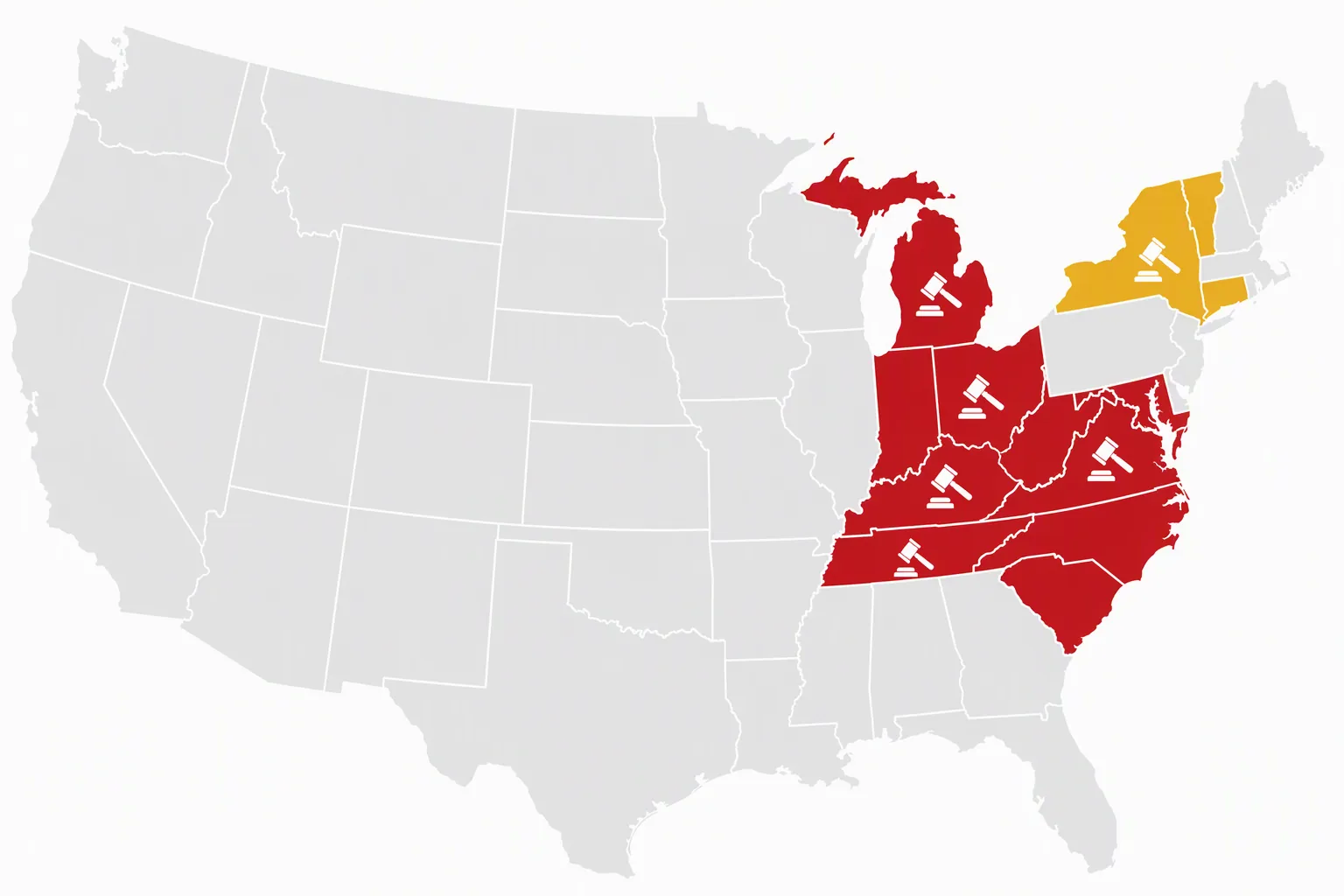
For legal analytics, that is not a footnote. If the Second Circuit is more forgiving and the Fourth and Sixth Circuits are more demanding, then a national securities-risk score that does not expose its circuit-specific assumptions can flatten the very variable that may decide certification. A tool buyer does not need a vendor to recite Comcast. The buyer needs to know whether the model treats Comcast compliance as a live procedural feature, and whether that feature changes by circuit.
Public descriptions of litigation-prediction systems often emphasize docket history, judge analytics, motion outcomes, timing, and case similarities. Those inputs can be useful. After Boeing, the benchmark question is sharper: when a securities case is pending in a circuit with a strict damages-methodology rule, does the model reduce class-certification probability if plaintiffs have not committed to a single damages methodology tied to the liability theory?
What The Boeing Stock Move Can And Cannot Prove
The 4.9% rise is useful because it makes the procedural point measurable. Investors did not ignore the Air Force One charge; it was in the earnings release. Yet the stock moved higher after the market had both the loss information and the appellate reversal.[1]
What the move cannot prove is single-cause market reaction. Earnings contain many signals: production outlook, cash expectations, margin commentary, delivery trends, management tone, and program charges. A securities-litigation ruling can be one meaningful input among those signals without being the sole reason a stock rises.
That is enough for risk assessment. The question is not whether the court ruling explains every basis point of the move. The question is whether the litigation-risk model would have told a user, before the price reaction, that plaintiffs had just lost a major procedural lever. If the answer is no, the model’s litigation-impact estimate was missing an economically relevant gate.
How Counsel Should Read An AI Score After Boeing
The useful output after Boeing is not a single red, yellow, or green label. A credible assessment in the Fourth Circuit should separate at least four conclusions: the seriousness of the alleged misstatements, the plaintiff’s damages methodology, the likelihood of class certification under Comcast, and the likely market or settlement impact of a certification ruling.
- Ask whether the tool has read the procedural posture correctly: complaint, motion to dismiss, class-certification briefing, certification order, appeal, or remand.
- Ask whether the score distinguishes out-of-pocket damages language from a committed damages model.
- Ask whether the model accounts for the governing circuit’s Comcast rule rather than relying on a national securities-case average.
- Ask whether a stock reaction is being treated as evidence of litigation impact, earnings impact, or both.
- Verify the primary source or a reliable legal summary before relying on quoted holding language in a board, client, or reserve memo.
Boeing is a good test case because the facts did not become benign. The Air Force One fixed-price contract still produced a quarterly charge. The company still reported a net loss. The securities case still arose from allegations serious enough to generate class-certification litigation. What changed was the plaintiffs’ ability to proceed on an aggregated damages theory under the Fourth Circuit’s reading of Comcast.
After this ruling, securities-litigation risk assessment in the Fourth Circuit is not credible if it treats merits risk, damages methodology, class-certification risk, and market-impact risk as one blended score. An AI-generated assessment can help triage the docket, but it should not be relied on for exposure judgment unless it models the procedural gate and the holding has been checked against primary or high-quality legal sources.
References
- Boeing posts larger-than-expected Q2 loss as Air Force One costs rise, Reuters, July 28, 2026
- Boeing Lost Another $280 Million On Air Force One, Forbes, July 28, 2026
- Fourth Circuit Reverses Class Certification in Securities Fraud Case, Sullivan & Cromwell, July 2026
- Fourth Circuit Decision in Boeing Requires Securities Plaintiffs to Prove Damages Methodology at Class Certification, Debevoise & Plimpton, July 2026
- Boeing Case Gives Investors Tougher Task to Show Class Damages, Bloomberg Law
Related records
Tool profile
How Meta's AI Spending Reshapes Law Firm ProfitabilityGoverning regulation
Browse the obligations tracker →Preventive workflow
Browse verification workflows →
Report a correction or tip
Spotted an outdated figure, a misstated fact, or a ruling this case record should reflect? Public comments are disabled for this content given the professional cost of a misreported case outcome, penalty amount, or rule text — use the structured correction channel instead.
Report a correction or tip for this record →