
How criminal charges after the Brooklyn Bridge jump test AI research tools
A fast-moving criminal case from August 2, 2026 — the Brooklyn Bridge jump — reveals how AI legal research and summarization tools can flatten source-attributed discrepancies into a single narrative. This article demonstrates the primary-source verification workflow that catches those gaps, using the same discipline that prevents hallucinated citations in AI-drafted briefs.
- Jurisdiction
- New York, United States
- Court
- New York state court
- AI tool named
- AI legal research and summarization tools
- Ruling date
- Aug 2, 2026
- Source document
- View primary court order ↗
- Last verified
- Aug 4, 2026
Lex Machina Review is an independent risk-tracking and reference resource. Nothing on this site is legal advice, and using it does not create an attorney-client relationship. Every record is reviewed against primary sources but may not reflect the most current status of a matter — always verify directly against the cited court order, rule text, or a licensed attorney before relying on it.
Companion explanation — secondary to the source document above
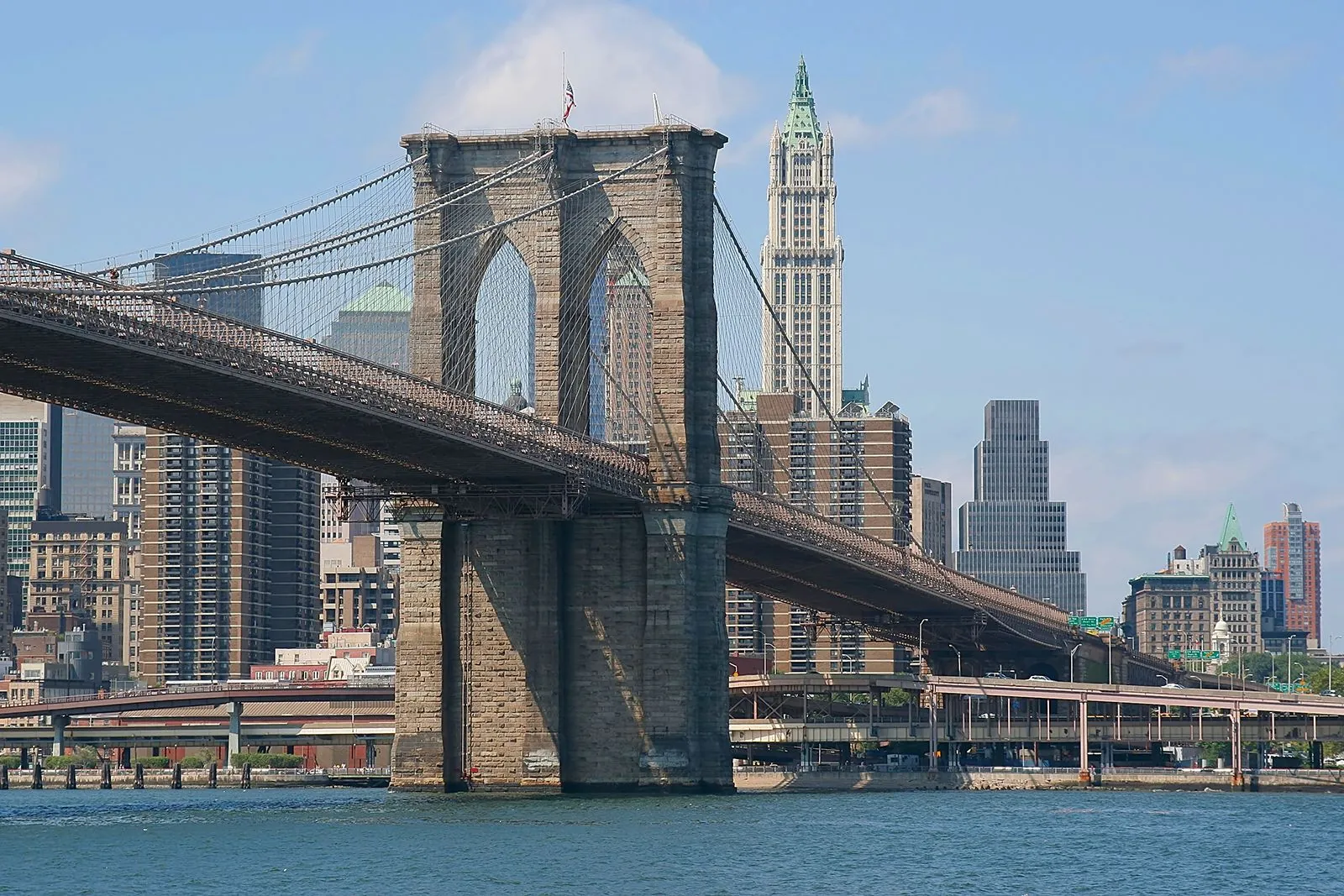
For anyone tracking the criminal charges after the Brooklyn Bridge jump in 2026, the useful starting point is not the height of the fall or the viral strangeness of the video. It is the discrepancy log. The stable core is already fairly clear: Galymzhan Abaildayev, 44, was reported to have climbed the Brooklyn Bridge on August 2, 2026, jumped into the East River, been rescued by the NYPD Harbor Unit, taken to Bellevue Hospital in stable condition, arrested at 5:43 p.m., and charged with reckless endangerment, making graffiti, public lewdness, criminal trespass, and disorderly conduct.[1][2][3][4][5]
That is the part a quick AI summary can probably capture. The trouble begins one sentence later, when the tool is tempted to turn differently sourced details into a smooth narrative: the tower was 272 feet, or 278 feet; the flags were Kazakhstan flags, or the NYPD did not disclose the flags’ contents; the man was “mentally ill,” or that was an unnamed law-enforcement characterization rather than a medical or judicial finding. In a live criminal matter, those are not cosmetic differences. They are the difference between a defensible research note and a paragraph that has quietly laundered attribution into fact.
The verified core is narrow, and that is a feature
The first pass should separate confirmed case facts from color, inference, and source-dependent reporting. NBC News attributed the arrest time and charge list to police, reporting that Abaildayev was arrested at 5:43 p.m. and charged with reckless endangerment, making graffiti, public lewdness, criminal trespass, and disorderly conduct.[1] News 12 Brooklyn and ABC7 also reported the Brooklyn Bridge climb, the East River plunge, the Harbor Unit rescue, Bellevue treatment, and the charge set.[2][3] AMNY and the New York Post carried the same basic identity-and-charge frame, while adding details that need separate labels rather than automatic absorption into the common record.[4][5]
A useful case summary can be brief, but it cannot be source-blind. The cleanest version of the confirmed core would say what the reports agree on and preserve the attribution: police reported that Abaildayev was arrested and charged after the Brooklyn Bridge incident; multiple outlets reported the Harbor Unit rescue and Bellevue treatment; the reported charges were five named offenses. That is enough to orient a lawyer, editor, or knowledge-management team without pretending the rest of the file is equally settled.
| Fact or claim | Current support in the record | How it should appear in a working summary |
|---|---|---|
| Identity: Galymzhan Abaildayev, 44 | Reported across major coverage, including NBC, AMNY, and the New York Post.[1][4][5] | Treat as part of the shared reported core, still subject to docket confirmation. |
| Incident date and sequence | Coverage places the climb and jump on August 2, 2026, with reports of the Harbor Unit rescue and Bellevue treatment.[1][2][3] | State as reported by police/outlets; do not add unreported motive or mental state. |
| Arrest time | NBC reported a 5:43 p.m. arrest time, attributed to police.[1] | Keep the timestamp and attribution together. |
| Five charges | NBC, News 12, ABC7, AMNY, and the Post reported the charge set: reckless endangerment, making graffiti, public lewdness, criminal trespass, and disorderly conduct.[1][2][3][4][5] | Use the named charges, then verify statute text and docket entries separately. |
| Bridge or tower height | NBC cited a restoration firm for an approximately 272-foot tower figure; the Post used a 278-foot figure and published infographic distances.[1][6] | Do not collapse into one measurement. Identify which source measured what. |
| Flags | The Post, citing police sources, reported Kazakhstan flags; NBC reported that NYPD did not disclose the flags’ contents.[1][5] | Write as source-dependent, not as an established police-disclosed fact. |
| Mental-health characterization | AMNY used “mentally ill man” language based on unnamed law-enforcement sources.[4] | Do not convert into a clinical diagnosis, judicial finding, or verified case fact. |
Height is not one fact unless the measurement is the same
The height discrepancy is a useful test because the numbers look close enough to invite carelessness. NBC reported that, according to a restoration firm, the Brooklyn Bridge’s Gothic towers stand about 272 feet above the East River.[1] The New York Post framed the jump around a 278-foot figure and separately published infographic distances in the 276.5-to-278.25-foot range.[6] The research record also identifies the New York City Department of Transportation’s 135-foot center clearance as a different kind of measurement: not the same as tower height, and not interchangeable with a reported jump distance.
An AI system asked for a punchy paragraph may turn those into “he jumped 278 feet from the Brooklyn Bridge” because that is vivid and easy. A verification note should resist that. A tower-height figure attributed to a restoration firm, a newspaper’s reported jump-distance graphic, and a bridge-clearance figure measure different things. The correct move is not to adjudicate physics from a browser window. It is to record the measurement type, source, and wording.

The flag detail is exactly where fluency becomes dangerous
The flags are a small detail, but they expose the whole problem. The New York Post reported, citing police sources, that Abaildayev hung Kazakhstan flags from the bridge.[5] NBC, covering the same incident, reported that NYPD did not disclose what was on the flags.[1] Those two sentences can coexist. What cannot survive review is an unattributed synthesis that says, simply, that police said he hung Kazakhstan flags.
The provenance is the fact. “Post, citing police sources” is materially different from “NYPD disclosed.” If a partner asks where the Kazakhstan detail came from, the answer cannot be “the summary said so.” If a client asks whether the flag content appears in an official statement, the answer cannot be reverse-engineered from a blended news paragraph.
Mental-health language needs a harder stop
AMNY described the jumper as a “mentally ill man,” attributing that characterization to unnamed law-enforcement sources.[4] That is not the same thing as a diagnosis. It is not a competency finding. It is not a court record. It may belong in a claim log as an attributed statement from unnamed law-enforcement sources; it does not belong in a neutral case summary as an established fact.
This is one of the places where automated summarization can do real reputational damage. A model can make the sentence cleaner by deleting the attribution. It can make the person easier to describe by preserving the label and losing the sourcing. That is not summarization in any responsible legal-research sense. It is a change in evidentiary status.
A working verification workflow for this record
The workflow for a fast-moving case like this is not complicated. It is just slower than the tool’s first answer. The reviewer starts with the primary agency statement if available, then checks the statute text for the named charges, then looks for docket records through the appropriate New York court systems, then keeps a timestamped claim log that preserves each source’s wording.
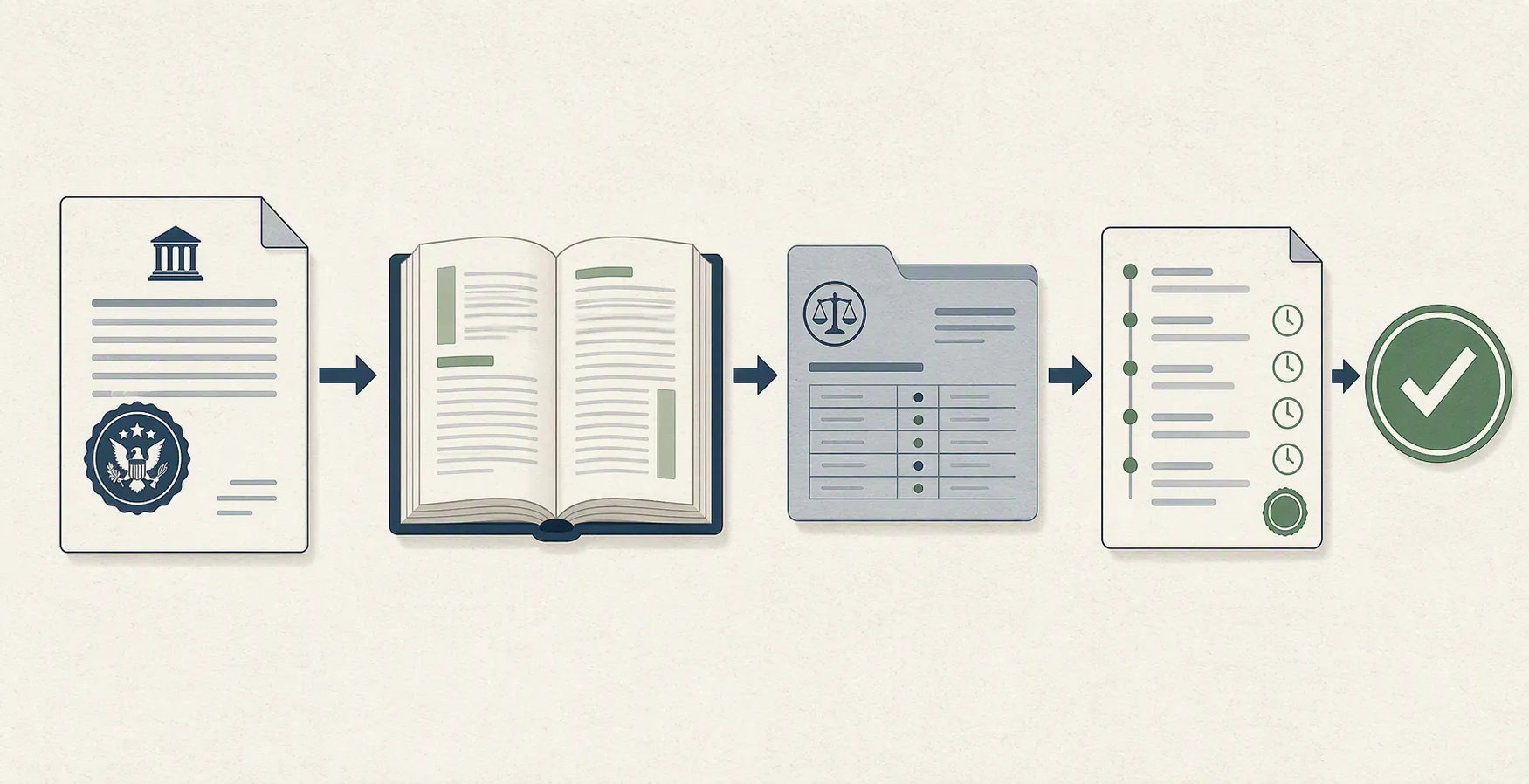
| Step | What the reviewer does | What it catches in this case |
|---|---|---|
| Primary agency statement | Preserve what NYPD or another agency actually disclosed, and what it did not disclose. | Prevents “Post citing police sources” from becoming “NYPD disclosed Kazakhstan flags.” |
| Verbatim statute text | Match reported charge labels to the actual statutory offense names and elements where available. | Prevents “graffiti” from replacing the charge label “making graffiti.” |
| Docket check | Search WebCrims/eCourts for the case record, appearance information, and formal charge entries as they become available. | Keeps the news summary from standing in for the court record. |
| Timestamped claim log | Record each source, publication time if available, exact wording, and attribution level. | Keeps 272 feet, 278 feet, and 135-foot clearance from being treated as one measurement. |
| Human signoff | Review any AI-generated summary against the claim log before sharing it as a case note. | Catches unsupported certainty before it reaches a partner, client, or filing team. |
The docket step matters even when no docket entry is yet being quoted. News coverage can identify reported charges quickly; the court record determines what has actually been filed, amended, dismissed, or scheduled. A summary prepared before that check should say so. “Reported charges” and “charges reflected on the docket” are not interchangeable labels.
Why “graffiti” and “making graffiti” are not the same editorial object
Several reports identified one of the charges as making graffiti, while shorthand references to “graffiti” can easily appear in a summary of the incident.[1][2][3] That shorthand may be harmless in casual conversation. It is not harmless in a legal research note, because “making graffiti” is the statutory charge label. New York Penal Law § 145.60 states that no person shall make graffiti on covered property without the owner’s or operator’s express permission, and identifies making graffiti as a class A misdemeanor.[7]
The same discipline applies to reckless endangerment and disorderly conduct. New York Penal Law § 120.20 defines reckless endangerment in the second degree as recklessly engaging in conduct that creates a substantial risk of serious physical injury to another person.[8] New York Penal Law § 240.20 contains the disorderly conduct provision.[9] Those texts do not prove the allegations. They give the reviewer the correct statutory objects to compare against the reported charge labels and, later, the docket.
This is where AI legal research habits transfer cleanly from briefs to case summaries. The same reviewer who would not trust an AI-drafted motion until every cited case exists and says what the draft claims should not trust an AI-generated criminal case summary until every factual assertion has a source label. Risk Digest sanction records make the enforcement-side lesson familiar: polished legal text is not a substitute for source verification. The Brooklyn Bridge record shows the same problem before it becomes a citation sanction problem, at the level of facts.
A better AI output would be less elegant
The most reliable AI-assisted output for this incident would look a little awkward. It would not read like a magazine recap. It would separate confirmed police-attributed facts from outlet-attributed details, preserve uncertainty around measurements, and flag mental-health language as sourced to unnamed law-enforcement sources rather than to a court or clinician.
A defensible working note might say: multiple outlets reported that Galymzhan Abaildayev, 44, was arrested after climbing the Brooklyn Bridge and jumping into the East River on August 2, 2026; NBC reported, citing police, a 5:43 p.m. arrest and five charges; the New York Post, citing police sources, reported Kazakhstan flags, while NBC reported that NYPD did not disclose the flags’ contents; height and jump-distance figures vary by source and measurement type; AMNY’s mental-health characterization is attributed to unnamed law-enforcement sources.[1][4][5][6]
That paragraph is not pretty. It is, however, reviewable. Every meaningful claim has a handle. A researcher can update it when the docket appears, when an agency statement is published or revised, or when a charge is confirmed by court records. The usefulness comes from the friction.
Where the tool can help
None of this requires pretending that AI tools are useless. A summarizer can still triage five breaking-news links in a few minutes. It can extract names, dates, reported charges, and obvious overlaps. It can build the first draft of a claim table. It can even highlight conflicts if asked to preserve source-by-source attribution rather than produce one clean narrative.
The professional risk begins when that triage artifact is treated as the case summary. In a live criminal matter, the human reviewer has to rebuild the output from primary agency material, statute text, docket records, and explicitly attributed claims. Until then, the smoothest paragraph is often the least trustworthy one.
References
- Naked man who jumped off Brooklyn Bridge is arrested and charged — NBC News
- Brooklyn man arrested for scaling Brooklyn Bridge, plunging into East River — News 12 Brooklyn
- Naked man facing slew of charges after surviving jump from Brooklyn Bridge in NYC — ABC7
- Man jumped from Brooklyn Bridge faces criminal charges — AMNY
- Naked nutjob who leaped from Brooklyn Bridge and miraculously survived identified — New York Post
- The surprising reason why Brooklyn Bridge nutbag may have survived overwhelmingly fatal plunge — New York Post
- New York Penal Law Article 145 — ypdcrime.com
- New York Penal Law § 120.20 Reckless endangerment in the second degree — New York State Senate
- New York Penal Law § 240.20 Disorderly conduct — New York State Senate
Related records
Tool profile
How Meta's AI Spending Reshapes Law Firm ProfitabilityGoverning regulation
Browse the obligations tracker →Preventive workflow
Browse verification workflows →
Report a correction or tip
Spotted an outdated figure, a misstated fact, or a ruling this case record should reflect? Public comments are disabled for this content given the professional cost of a misreported case outcome, penalty amount, or rule text — use the structured correction channel instead.
Report a correction or tip for this record →