
What Spain's Ceuta ruling means for immigration law
Spain's Supreme Court held on June 29, 2026 that the Aliens Act's summary 'hot return' regime does not apply to migrants intercepted while swimming into Ceuta or Melilla: those sea arrivals require an individual due-process procedure, while fence-climbers remain subject to summary return. This verified record sets out that holding, the operative fence–sea boundary for counsel, and why Spanish officials trace the late-July Ceuta surge to the ruling's misreading rather than to the ruling itself.
- Jurisdiction
- Spain
- Court
- Tribunal Supremo
- AI tool named
- No AI tool implicated
- Ruling date
- Jun 29, 2026
- Source document
- View primary court order ↗
- Last verified
- Aug 3, 2026
Lex Machina Review is an independent risk-tracking and reference resource. Nothing on this site is legal advice, and using it does not create an attorney-client relationship. Every record is reviewed against primary sources but may not reflect the most current status of a matter — always verify directly against the cited court order, rule text, or a licensed attorney before relying on it.
Companion explanation — secondary to the source document above
Risk record
| Field | Record |
|---|---|
| Jurisdiction | Spain |
| Court | Tribunal Supremo |
| Ruling date | June 29, 2026 |
| Matter | Government Attorney Office appeal concerning the Aliens Act summary “hot return” regime at Ceuta and Melilla |
| Primary source status | Holding confirmed by the Poder Judicial press note; the STS 814/2026 identifier is reported in legal commentary and should be checked against the official registry before use in a pleading or client alert |
| Last verified for this record | August 3, 2026, 00:00 UTC |
| Use note | This is a public-law risk record, not legal advice |
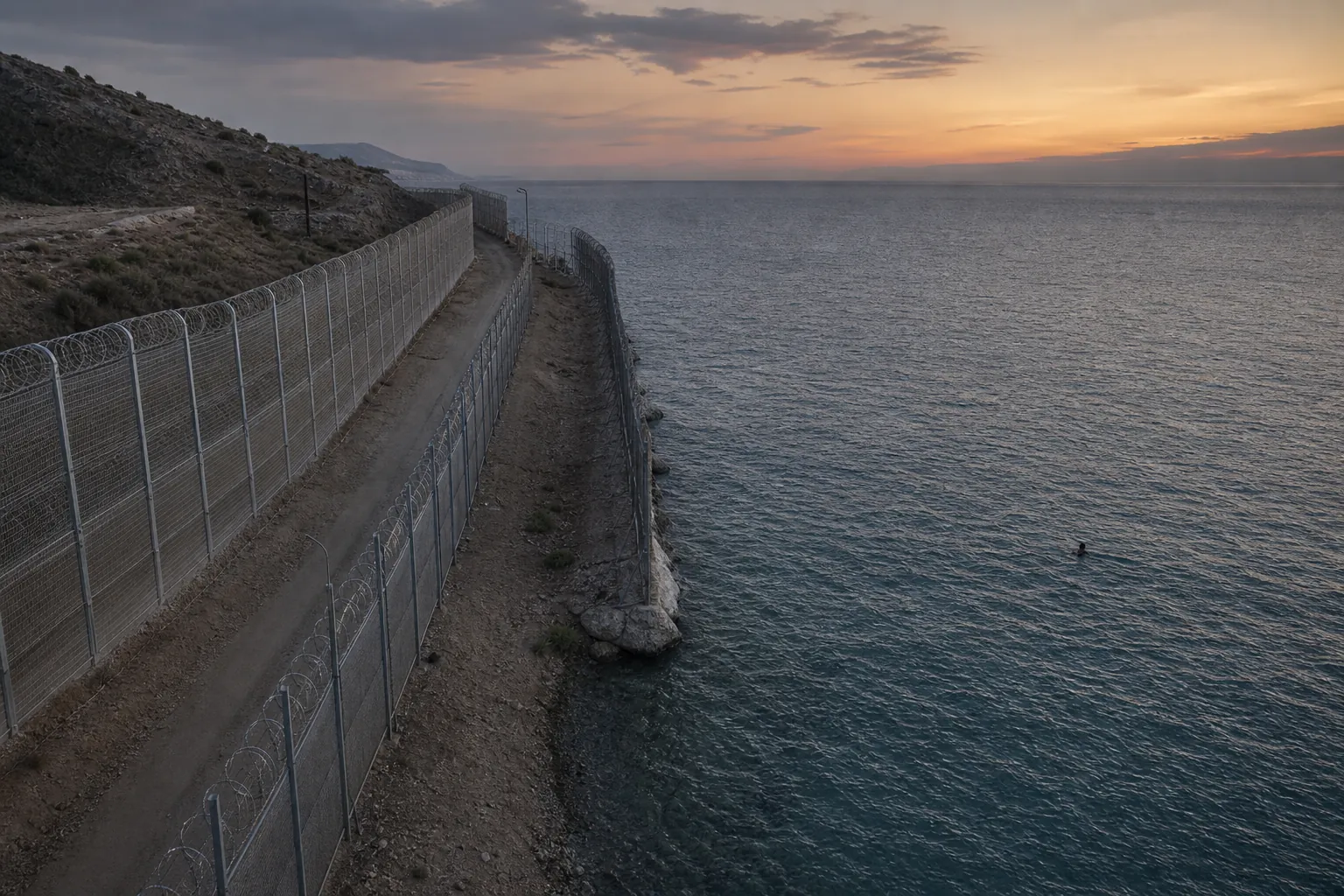
The operative point is narrow. Spain’s Supreme Court confirmed that the Aliens Act does not permit summary “hot returns” of migrants who try to enter Ceuta or Melilla by swimming; those sea-intercepted arrivals require an individual procedure with the due-process safeguards applicable to return decisions. The same press note preserves the summary rejection regime for migrants who cross the land fence, under the Tenth Additional Provision of the Aliens Act, because that provision was built around entry through “border containment elements.” [1]
That is the rule to carry into advice. Swimmers intercepted at sea must be processed individually. Fence-climbers remain within the existing summary “rejection at the border” framework. The judgment does not say that swimmers may remain in Ceuta or Melilla, does not legalize irregular entry, and does not suspend Spain’s border law.
The rule turns on containment, not detection
The Government Attorney Office’s losing argument matters because it is the easiest place to misread the case. The state argued that drones, thermal cameras, and sensors could be treated as border containment elements for swimmers, so that the statutory hot-return regime would apply at sea in the same way it applies at the fence. The Court rejected that move, distinguishing physical containment obstacles from surveillance or early-warning systems, according to Desislava Dimitrova’s EJIL:Talk analysis of the ruling. [2]
That distinction keeps the Tenth Additional Provision alive, but confined. The provision, added by Spain’s 2015 Organic Law on Public Security, authorizes rejection at the border in Ceuta and Melilla where the conditions recognized by Spain’s Constitutional Court are met. The Supreme Court relied on Constitutional Court judgments 172/2020 and 13/2021 for the continued validity of the regime at the physical border, while refusing to stretch the same mechanism to swimmers who do not cross a fence or equivalent containment structure. [1][2]

For counsel, the verbs do the work. A physical barrier may contain. A drone or thermal camera may detect. Detection can prompt interception, but the Court did not let detection become containment. Once that line is lost, the judgment is too easily paraphrased into something it is not: permission to enter, or a general disablement of border rejection. It is neither.
What officers must do differently
The changed operational duty sits on the sea route into Ceuta and Melilla. When a person is intercepted while swimming toward either enclave, the state can no longer rely on the Tenth Additional Provision as if the swimmer had crossed the fence. The person must be placed into an individualized process before return. The available record does not support a broader proposition that every attempted entry by sea produces a right to admission, residence, or non-removal.
| Route or measure | Post-ruling treatment supported by the materials |
|---|---|
| Land fence crossing at Ceuta or Melilla | Still potentially subject to summary rejection under the Tenth Additional Provision, within the limits recognized by the Constitutional Court |
| Swimming entry toward Ceuta or Melilla | Not covered by the existing hot-return provision; requires an individual due-process procedure before return |
| Drones, sensors, thermal cameras | Surveillance or early-warning tools, not “border containment elements” for extending the summary regime |
| Possible physical maritime barriers | Flagged by the Court in obiter as potentially relevant, but legally contested and not settled for all maritime-law purposes |
Gemma Pinyol-Jiménez, quoted by CNN, put the point in the same narrow register: the ruling “doesn’t mean these people can stay in Ceuta.” Daniel Thym, also quoted by CNN, described it as “a very technical ruling” distinguishing fence-crossers from swimmers. Those are expert readings, not additional holdings, but they correctly resist the headline version of the case. [3]
The consequence chain: from judgment to late-July surge
The ruling did not arrive in an empty file. On July 8, 2026, Euronews reported a separate Supreme Court judgment, identified there as STS 868/2026, that struck down parts of Spain’s 2024 Aliens Regulation and strengthened protection duties for unaccompanied foreign minors. That second identifier also needs registry verification before citation in formal legal work, but the reported sequence matters: within less than two weeks, two Supreme Court immigration-law decisions were being read against the Ceuta and Melilla border context. [4]
The surge came later. CNN and Euronews reported roughly 50,000 arrivals into Ceuta around July 30–31, 2026. AP reported about 60,000 arrivals, attributing that figure to local officials and describing it as roughly 70% of Ceuta’s population. The count is not stable across the available record: a Spanish interior-ministry figure of 49,000 arrivals in 24 hours was later removed, so it should not be treated as an official settled number without republication or confirmation. [3][4][5]
The death toll also moved as the event unfolded. Time’s early account reported at least 34 deaths, while CNN and AP later reported at least 57 deaths. Those figures should be attributed rather than blended into a single definitive total unless official records are updated and checked at publication. [6][3][5]
By July 31, CNN reported that about 48,000 people had voluntarily returned to Morocco. That return figure is important for a different reason from the arrival count. It underscores that the ruling was not operating as a right-to-stay instrument in practice; the legal question was what procedure Spain owed before return for the subset intercepted through the sea route. [3]
Spanish officials, including Prime Minister Pedro Sánchez, attributed the surge to a misreading of the Supreme Court’s narrow ruling on Moroccan social media and to exploitation of that misreading by trafficking networks. CNN reported that account, and Euronews similarly framed the episode as a legal dilemma created by the ruling’s public interpretation rather than by a judicial opening of the border. [3][4]
That attribution should be kept in its proper box. It is an official explanation of how the surge was triggered and organized; it is not proof that the Court caused the surge, and it is not a substitute for evidence about each person’s reason for crossing. The legal consequence remains narrower than the political consequence: a procedural obligation at sea became a public signal that could be, and according to officials was, misrepresented.
The next pressure point is the sea barrier
The Court’s own reasoning points toward the next dispute. Dimitrova’s EJIL:Talk analysis notes that the judgment contains an obiter suggestion: if physical containment structures were installed at sea, the summary border-rejection regime might again become available. That observation is not the same as a holding that any particular floating barrier would be lawful, or that all maritime interceptions could be recast as fence crossings. [2]
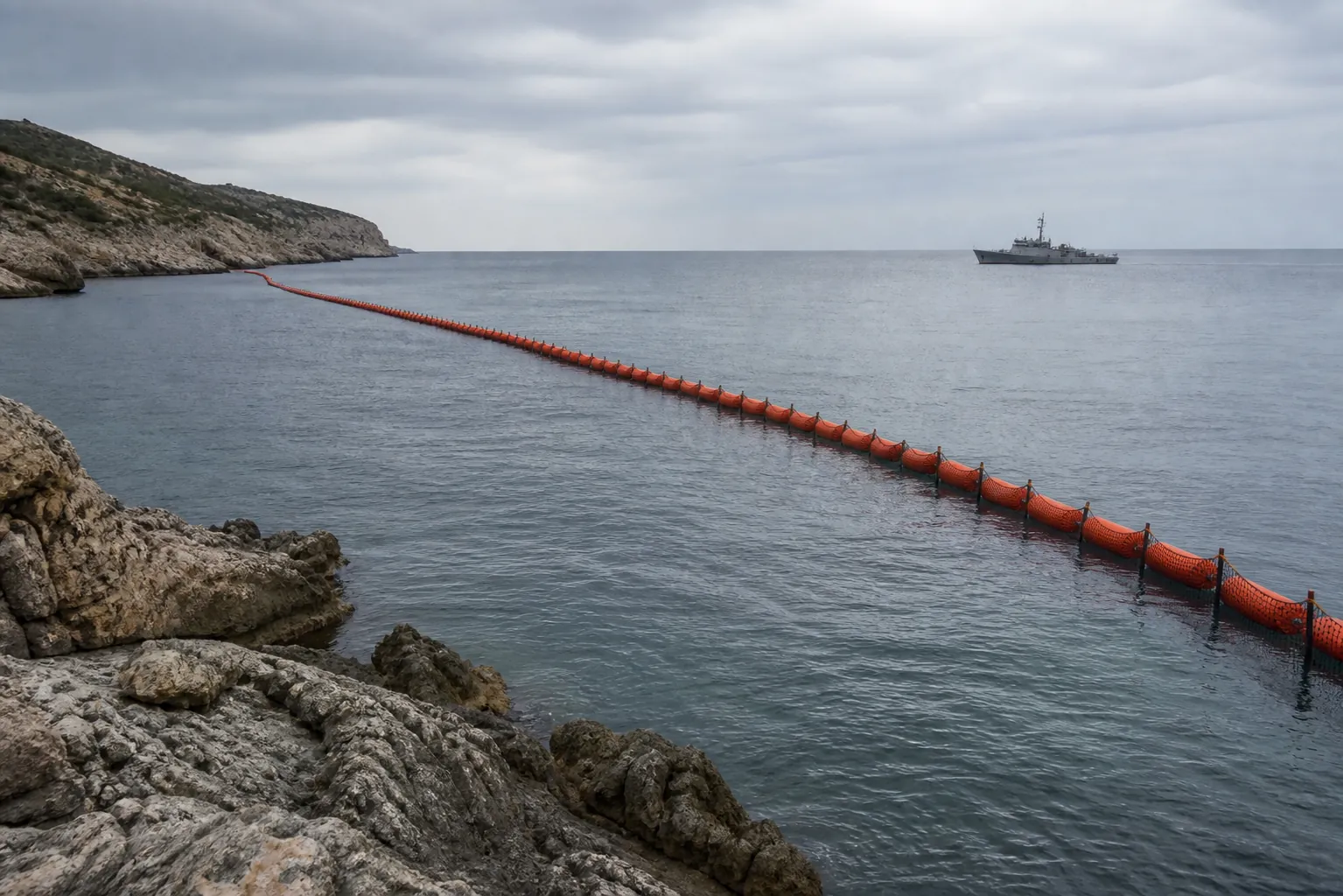
After the surge, Sánchez announced floating barriers, and the Partido Popular advanced a congressional bill to extend rechazo en frontera to sea arrivals. Those moves are best read as attempts to shift the operative boundary after the Court refused to treat surveillance as containment. They also create the next public-law risk: whether a newly physical sea-side barrier can lawfully do the work that cameras and drones could not. [3][4]
The maritime-law problem is not closed by naming an object a barrier. Dimitrova criticizes the judgment’s characterization of the relevant interception zone as “high seas” and argues that the Court left unresolved the interaction with duties under UNCLOS, SOLAS, and search-and-rescue obligations. That critique should be treated as commentary, but it identifies the right unresolved question: at sea, the border-law label does not exhaust the state’s duty to protect life. [2]
This is where the litigation front is likely to sharpen. If Spain builds or deploys a floating maritime containment structure, the state will argue from the Supreme Court’s containment logic. Challengers will argue from maritime jurisdiction, rescue duties, proportionality, access to individualized procedure, and the factual conditions under which interception occurs. The June 29 judgment supplies language for both the state’s design response and the challenge to that response; it does not settle the sea-side regime in advance.
How to brief the ruling without overstating it
A cautious client note should separate four propositions. First, the hot-return regime remains available for fence crossings at Ceuta and Melilla, within the Constitutional Court framework. Second, it does not apply to swimmers intercepted entering by sea under the existing statutory language. Third, sea-intercepted swimmers must receive an individual due-process procedure before return. Fourth, none of that creates a general right to stay or a general prohibition on removal.
The data line needs the same discipline. Use “roughly 50,000” only with CNN or Euronews attribution; use “about 60,000” only with AP’s local-official attribution; do not revive the removed 49,000-in-24-hours ministry figure without a current official source; and do not collapse Time’s earlier death count into the later CNN/AP count. For a live Ceuta immigration-law briefing, the wrong number can be less damaging than the wrong verb, but both travel quickly.
The ruling is therefore a risk event in a precise sense. STS 814/2026, as reported, changes the procedure Spain must use for sea-intercepted swimmers at Ceuta and Melilla. It does not open the border, and it does not abolish the Tenth Additional Provision. The open risk is now offshore: whether Spain can build a physical maritime barrier or legislate a sea-arrival rejection power that survives the same due-process, maritime-law, and rescue-duty questions the June 29 ruling left exposed.
References
- El Tribunal Supremo confirma que la ley no permite las devoluciones en caliente de los migrantes que pretenden entrar a nado en Ceuta y Melilla, Poder Judicial España
- The Spanish Supreme Court on Rejection at the Borders of Ceuta and Melilla: What About Human Rights at Sea?, EJIL: Talk!, July 30, 2026
- The Supreme Court ruling at the center of Spain's Ceuta migrant crisis, CNN
- Spain's legal dilemma behind Ceuta's record migrant arrivals, Euronews
- FACT FOCUS: Migrant crossing in Spain's Ceuta breeds unsubstantiated claims, AP News
- Why Thousands of Moroccan Migrants Crossed Into the Spanish Exclave Ceuta, Time, July 31, 2026
Related records
Tool profile
How Meta's AI Spending Reshapes Law Firm ProfitabilityGoverning regulation
Browse the obligations tracker →Preventive workflow
Browse verification workflows →
Report a correction or tip
Spotted an outdated figure, a misstated fact, or a ruling this case record should reflect? Public comments are disabled for this content given the professional cost of a misreported case outcome, penalty amount, or rule text — use the structured correction channel instead.
Report a correction or tip for this record →