
Legal Implications of China Drone Footage in Philippine Waters
A verified record of the June 2026 encounter between a Seasats USV and a Chinese destroyer in the Philippine EEZ, analyzing three unresolved legal risk fronts: the status of unmanned surface vessels under UNCLOS, China's domestic enforcement instruments, and the absence of agreed rules of engagement.
- Jurisdiction
- Philippines (EEZ)
- Court
- No court proceeding
- AI tool named
- Seasats Lightfish USV
- Ruling date
- Jul 29, 2026
- Source document
- View primary court order ↗
- Last verified
- Aug 3, 2026
Lex Machina Review is an independent risk-tracking and reference resource. Nothing on this site is legal advice, and using it does not create an attorney-client relationship. Every record is reviewed against primary sources but may not reflect the most current status of a matter — always verify directly against the cited court order, rule text, or a licensed attorney before relying on it.
Companion explanation — secondary to the source document above
Record Status
This is an exceptional non-AI Risk Digest entry. It is included because the incident turns on an uncrewed maritime platform, footage authentication, and autonomous-systems classification problems, not because there is a court order, sanctions opinion, or AI-liability ruling behind it. The sourcing model is therefore different from a docket-led record: Reuters-verified reporting, official state statements reported by Reuters, treaty-framework analysis, and Chinese statutory instruments carry the load.
For readers assessing the legal implications of the China drone footage in Philippine waters, the first answer is deliberately narrow: the public record does not show a facial violation of an established rule of international law. The better risk grade is mixed: no demonstrated violation on the face of the verified record, but material unresolved legal risk around USV status, China’s claimed enforcement authorities, and state-warship encounters with private uncrewed systems.
| Field | Current public record |
|---|---|
| Incident window | Reuters dates the footage to June 16, 2026, from original file metadata; TWZ, citing Seasats CEO Mike Flanigan, places the encounter on the evening of June 15, Pacific time. |
| Location | Reuters places the encounter about 105 km, or 65 miles, northwest of Luzon from Seasats platform data; TWZ reports about 73-75 miles northwest of Luzon. |
| Parties | A Seasats Lightfish uncrewed surface vessel and a Chinese Type 052D destroyer identified by Reuters as CNS Baotou. |
| Source basis | Reuters verification of vessel identity, location, date metadata, and released footage; TWZ reporting from the operator; official PRC and Philippine statements reported by Reuters. |
| Publication status | Reuters published the footage record on July 29, 2026. |
| Last verified for this article | August 3, 2026, UTC. |
What the Footage Record Actually Supports
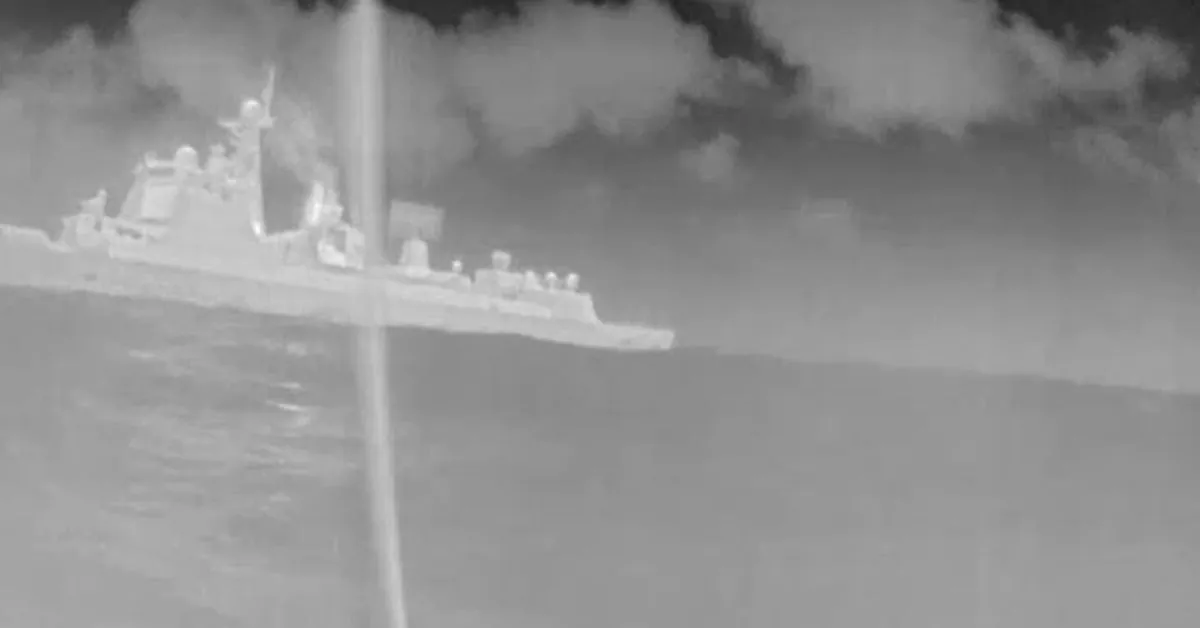
Reuters reported that it verified the Chinese warship as CNS Baotou, a Type 052D destroyer, by matching the vessel’s deck layout, superstructure, crane, and mast against archive imagery. Reuters also reported that the location was derived from Seasats platform data, that the date came from original file metadata, and that the footage was released on July 29, 2026.[1]
That verification chain matters more than the drama of the camera angle. A low vessel-level clip can make a naval encounter look more conclusive than the record permits. Here, the reliable public facts are not “China violated Philippine waters” or “a U.S. drone was hunted.” They are narrower: a private U.S.-linked company’s uncrewed surface vessel filmed a Chinese destroyer in the Philippine exclusive economic zone, with the incident location and timing supported by Reuters’ verification but not perfectly aligned with every public account.
The mismatch should remain visible. Reuters reports June 16 and about 105 km, or 65 miles, northwest of Luzon. TWZ, relying on Seasats CEO Mike Flanigan, reports the encounter occurred on the evening of June 15, Pacific time, about 73-75 miles northwest of Luzon.[1][2] Those differences may be explainable by time zone, measurement method, or platform reporting conventions. They should not be silently reconciled in a legal-risk record.
The official statements also do less work than their phrasing suggests. Reuters reported that the Philippine embassy said there was “no legal basis” for Chinese vessels “trespassing” in Philippine waters, while PRC Foreign Ministry spokesperson Mao Ning warned against close approaches that could cause “accidental incidents at sea or in the air.”[1] The Philippine statement captures a political and operational objection. It does not, by itself, collapse the legal distinction between territorial sea sovereignty and exclusive economic zone rights. The PRC warning is not a legal trump card either, but it is useful evidence of how Beijing wants the incident framed: as a safety and encounter-management problem, rather than as one about Chinese naval presence in a Philippine EEZ.
The Legal Question Is Narrower Than the Map
The useful question is not who “owns” the water. The reported location places the encounter in the Philippine EEZ, not in a territorial sea on the current public record. In an EEZ, the coastal state has sovereign rights for specified resource and jurisdictional purposes. Other states retain navigation and related high-seas freedoms, subject to due regard. That is why a foreign warship’s presence in another state’s EEZ is not automatically unlawful under the UNCLOS framework discussed in the 2016 Bowditch UUV analyses.[3][4]
Articles 58 and 87 do the baseline work: they support the proposition that navigation freedoms continue in the EEZ. That baseline does not answer every question in this incident. It does not tell us whether the Seasats craft should be treated as a ship, a device, a survey platform, a private vessel, or something else for every UNCLOS purpose. It does not tell us whether either platform maneuvered dangerously. It does not give a complete encounter protocol for a state destroyer and a private uncrewed vessel.
The marine-scientific-research lane should also be handled carefully. If an EEZ activity is properly characterized as marine scientific research, UNCLOS Article 246 is the relevant consent provision. Some commentary around the 2016 UUV dispute discussed the consent issue but created article-numbering confusion; Article 40 is not the EEZ marine-scientific-research consent rule.[4] On the public record for the June 2026 incident, there is no verified basis to reclassify the Lightfish’s activity as marine scientific research requiring coastal-state consent.
Why Bowditch Helps, and Where It Stops
The closest public analogy is the December 2016 seizure of a U.S. Navy underwater drone associated with USNS Bowditch in the South China Sea. Lawfare’s James Kraska and Raul Pedrozo argued at the time that China’s capture of the UUV violated the law of the sea, including EEZ freedoms and sovereign immunity principles.[3] Pace International Law Review’s discussion framed the same episode through competing U.S. and Chinese legal positions over sovereign immunity, marine scientific research, and EEZ rights.[4]
The analogy is useful because it shows how quickly unmanned maritime systems expose legal categories that were not built with them in mind. It is not a controlling precedent for the Seasats encounter. Bowditch involved a U.S. naval survey ship and an underwater drone that Chinese forces physically seized. The June 2026 record involves a private uncrewed surface vessel filming a Chinese destroyer, with no public report of seizure, collision, disabling, detention, or boarding.
That difference is why the legal conclusion has to stay modest. The record can support concern about escalation and classification. It cannot support a confident claim that the encounter itself violated international law.
Risk Front One: The USV Does Not Fit Cleanly Into the Existing Boxes
The hardest legal problem is not the destroyer. UNCLOS Article 29 defines a warship by reference to, among other things, command by a commissioned officer and a crew under regular armed-forces discipline. An uncrewed private Lightfish does not satisfy that test on the public record. That does not automatically make it legally irrelevant. It means the more familiar sovereign-immunity and warship rules do not transfer cleanly.
Article 94, which concerns flag-state duties over ships, raises the mirror problem. If the USV is a ship or vessel for some purposes, then flag-state jurisdiction, safety regulation, equipment rules, and operator accountability become central. If it is treated instead as equipment, cargo, a drone, or a sensor platform, different regulatory assumptions follow. RSIS’s 2024 analysis put the problem bluntly: maritime drones do not fit neatly within current legal tests for ships, warships, or weapons.[5]
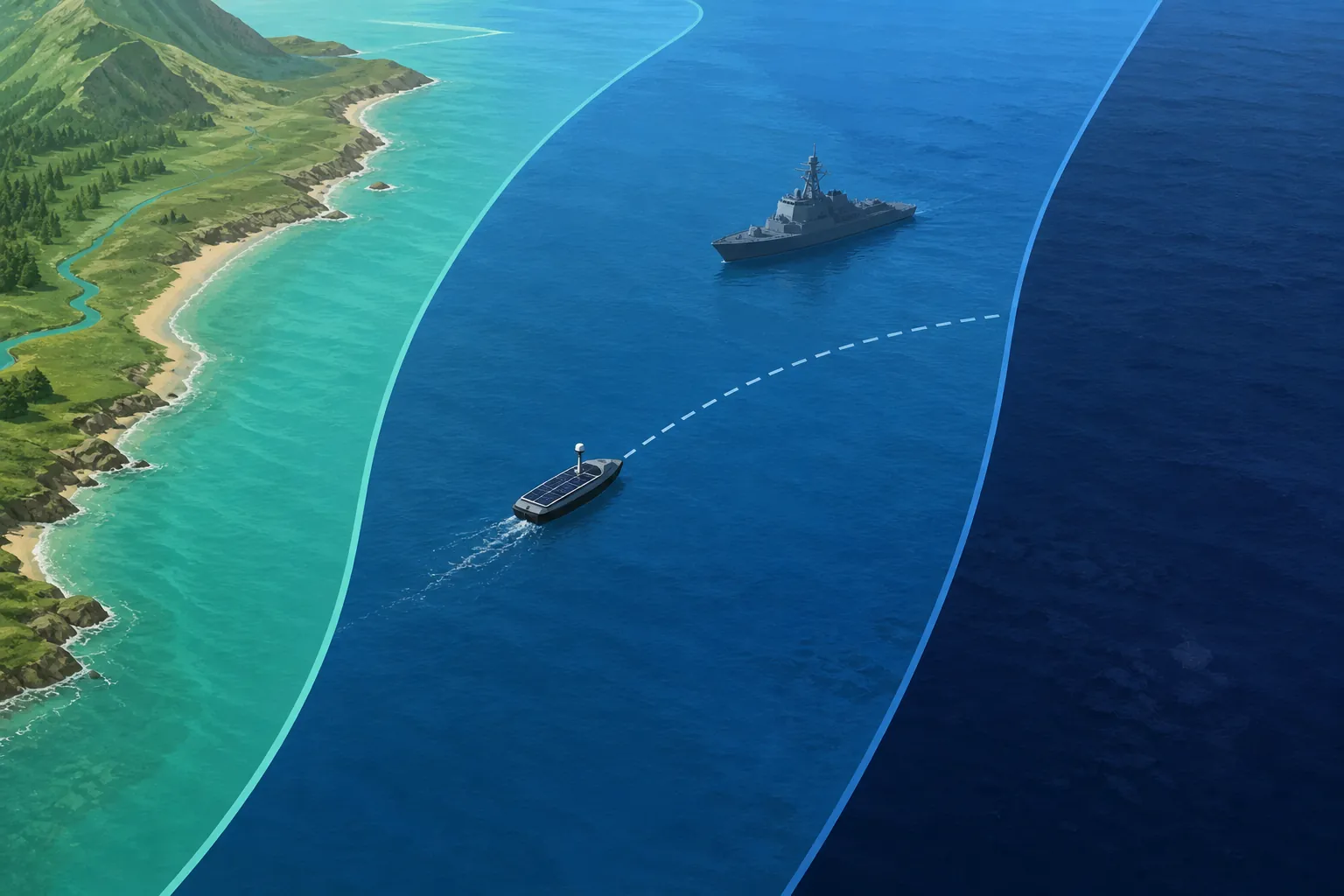
For operators and insurers, that uncertainty is not academic. Classification affects who must maintain watch, whether AIS behavior is treated as ordinary compliance or risk signaling, how collision-avoidance duties are allocated, and whether a state actor is likely to characterize the platform as a vessel, device, intelligence collector, or hazard. Seasats’ product claims about cost, endurance, range, or operational profile are relevant only to the extent they affect those exposure points, and the public figures reported so far are company-stated rather than independently audited.
A private owner cannot make the problem disappear by pointing to size or absence of crew. A small uncrewed craft can still create a navigational, intelligence, evidentiary, or diplomatic event. At the same time, a coastal or claimant state cannot simply treat every uncrewed platform as presumptively unlawful because it dislikes being filmed.
Risk Front Two: China’s Domestic Enforcement Overlay
China’s domestic enforcement instruments do not settle UNCLOS rights. They do, however, matter to anyone pricing operational risk in waters Beijing claims. The PRC Coast Guard Law took effect on February 1, 2021. CSIS AMTI highlighted Article 3’s application to “waters under the jurisdiction of China” and the law’s authorization for the Coast Guard to use “all necessary means” in specified circumstances.[6]
That language is not a magic phrase that converts contested waters into Chinese jurisdiction as a matter of international law. Its practical significance is different: it gives Chinese maritime forces a domestic-law vocabulary for enforcement behavior in areas where other states reject Beijing’s claims. Operators do not need to concede the legal validity of that vocabulary to be exposed to it.
The same point applies to CCG Regulation No. 3, reported in the PACOM legal briefing as effective June 15, 2024, with authorities relevant to detention and administrative enforcement.[7] This source should be secondarily verified before publication because the accessible material is a surfaced PDF briefing rather than a fully crawled statutory database. Even with that caveat, it belongs in the risk record because it shows the enforcement architecture into which a future USV seizure, detention, or investigation could be placed.
The June 2026 footage does not show the Coast Guard applying those instruments. It shows a PLA Navy destroyer encounter with a private uncrewed surface vessel. The domestic-law overlay still matters because an operator planning similar activity in contested waters has to model more than the single platform on screen. It has to model who may arrive next, what domestic authority they may cite, and whether equipment could be seized or detained before lawyers can argue about UNCLOS.
Risk Front Three: No Shared Encounter Protocol for This Pairing
The cleanest version of this incident would have involved two state vessels operating under known naval communication channels. That is not the record here. One side was a Chinese warship. The other was a private uncrewed surface vessel whose owner, mission profile, control mode, sensor behavior, and communications practices may matter legally but are not all independently established in the public account.
Mao Ning’s warning about close approaches and “accidental incidents at sea or in the air” should not be treated as a finding that the USV acted unlawfully.[1] It is more useful as a risk signal. China is likely to frame close-in USV operations as safety-threatening, surveillance-adjacent, or destabilizing, especially when the platform is filming a military vessel in a contested maritime area.
The absence of an agreed encounter protocol leaves several questions exposed. Who is expected to answer a bridge-to-bridge call when the nearby platform is uncrewed? What counts as a safe passing distance when one vessel is small, low-profile, and potentially remotely operated? If a warship maneuvers to inspect, shadow, or block it, when does that become interference? If the USV continues recording, does the state actor treat that as ordinary observation, intelligence collection, or provocation?
Those are not questions the public footage resolves. They are the questions the footage makes harder to ignore.
What Counsel Should Not Overclaim
The Philippine embassy’s “trespassing” language should not be turned into a simple territorial-sovereignty conclusion. In an EEZ, the coastal state has important rights, but not the same rights it has in the territorial sea. If the encounter occurred where Reuters places it, the legal analysis starts with EEZ freedoms and due regard, not with a presumption that the Chinese destroyer was unlawfully present.
The PRC safety framing should not be accepted as dispositive either. A warning about accidental incidents may be reasonable in operational terms and self-serving in legal terms at the same time. The relevant question is what conduct occurred: approach distance, maneuvering, communications, interference, seizure, collision risk, and the USV’s own navigational behavior. The public record does not yet supply enough detail to grade those facts confidently.
Nor should the Seasats platform be treated as legally frictionless because it is private and uncrewed. Private ownership may reduce some sovereign-immunity arguments and sharpen others about commercial operation, insurance, flag, product design, and remote-control responsibilities. If an operator sends a persistent sensor platform into contested waters, it should expect the legal record to be built from metadata, platform logs, AIS decisions, mission instructions, communications attempts, and video provenance, not only from the most shareable clip.
This is also why this record sits beside, rather than inside, the site’s ordinary AI-law lane. The better internal comparison is an exceptional international-risk record such as the Besikcioglu detention entry, not a sanctions order or model-output dispute. Readers following autonomous-systems accountability may also want the adjacent classification threads in drone attacks on Suez shipping and AI drone-strike accountability, but the evidentiary posture here remains maritime-law first.
Current Legal-Risk Grade
On the public record available as of August 3, 2026, the encounter does not establish that China, the Philippines, Seasats, or the USV operator violated an established rule of international law. The reported location points to an EEZ setting where foreign navigation freedoms remain significant. The footage does not publicly show seizure, collision, disabling, boarding, weapons use, or a verified dangerous maneuver.
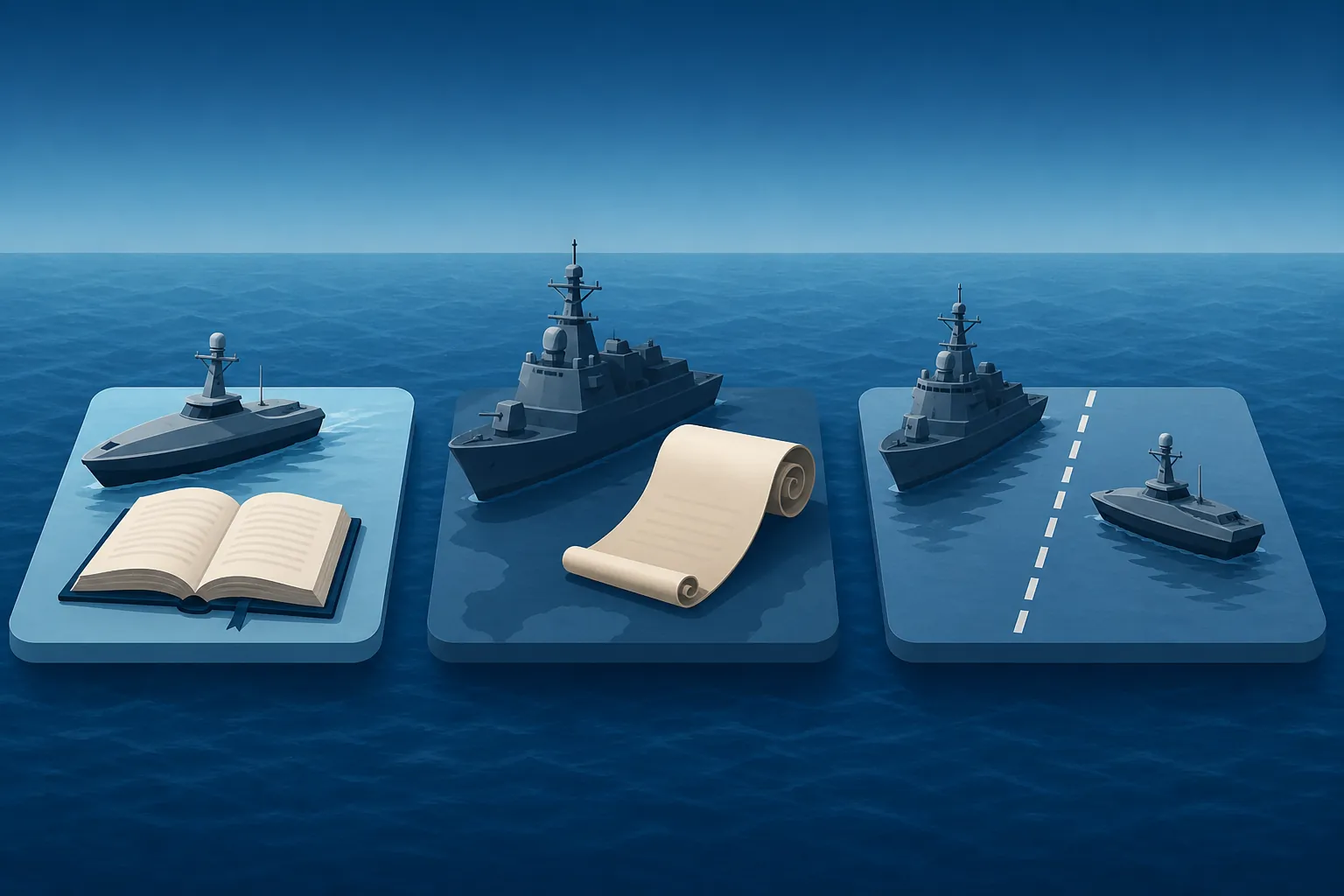
The unresolved risk grade is still material. First, USVs remain poorly classified under the existing UNCLOS vocabulary. Second, China has domestic enforcement instruments it may invoke in waters it claims, even when other states reject those claims. Third, no settled encounter protocol governs the practical meeting of a state warship and a private uncrewed surface vessel in a contested EEZ.
Those three fronts are enough to make similar deployments non-routine for operators, insurers, and states. They are not enough to convert a verified video into a legal finding the record cannot yet carry.
References
- Commercial sea drone captures footage of Chinese warship in Philippine waters, Reuters, July 29, 2026.
- Chinese Destroyer’s Encounter With U.S. Drone Boat Highlights Future Rules Of Engagement Issues, TWZ.
- China’s Capture of U.S. Underwater Drone Violates Law of the Sea, Lawfare.
- U.S. v. China: Who Violated the Law of the Sea?, Pace International Law Review, February 4, 2017.
- The Unresolved Legal Status of Maritime Drones: Warships or Weapons?, RSIS, November 2024.
- How China’s Coast Guard Law Has Changed the Regional Security Structure, CSIS Asia Maritime Transparency Initiative.
- J06 TACAID - CCG Regulation 3 (FINAL) - VER 2, U.S. Indo-Pacific Command.
Related records
Tool profile
Browse tool evaluations →Governing regulation
Browse the obligations tracker →Preventive workflow
Browse verification workflows →
Report a correction or tip
Spotted an outdated figure, a misstated fact, or a ruling this case record should reflect? Public comments are disabled for this content given the professional cost of a misreported case outcome, penalty amount, or rule text — use the structured correction channel instead.
Report a correction or tip for this record →