
The Legal Risk in Chris Anne Affleck's Obituary Error
This article examines how the 2026 Boston Globe obituary of Chris Anne Affleck repeated a biographical inaccuracy she corrected in 2015, illustrating how obituaries become persistent legal records and how their errors propagate into AI training data and background checks. The case establishes that primary-source verification protocols should apply to obituary-derived data just as they do to court filings.
- Jurisdiction
- United States
- Court
- General public records
- AI tool named
- General AI models
- Ruling date
- Jul 24, 2026
- Source document
- View primary court order ↗
- Last verified
- Jul 25, 2026
Lex Machina Review is an independent risk-tracking and reference resource. Nothing on this site is legal advice, and using it does not create an attorney-client relationship. Every record is reviewed against primary sources but may not reflect the most current status of a matter — always verify directly against the cited court order, rule text, or a licensed attorney before relying on it.
Companion explanation — secondary to the source document above
The legal problem in the Chris Anne Affleck civil rights activist obituary is not that an obituary contained a flattering mistake. It is that a 2026 memorial record repeated a civil-rights claim that Affleck herself had publicly narrowed eleven years earlier, and that the cleaner version of the story appears to have traveled better than the correction.
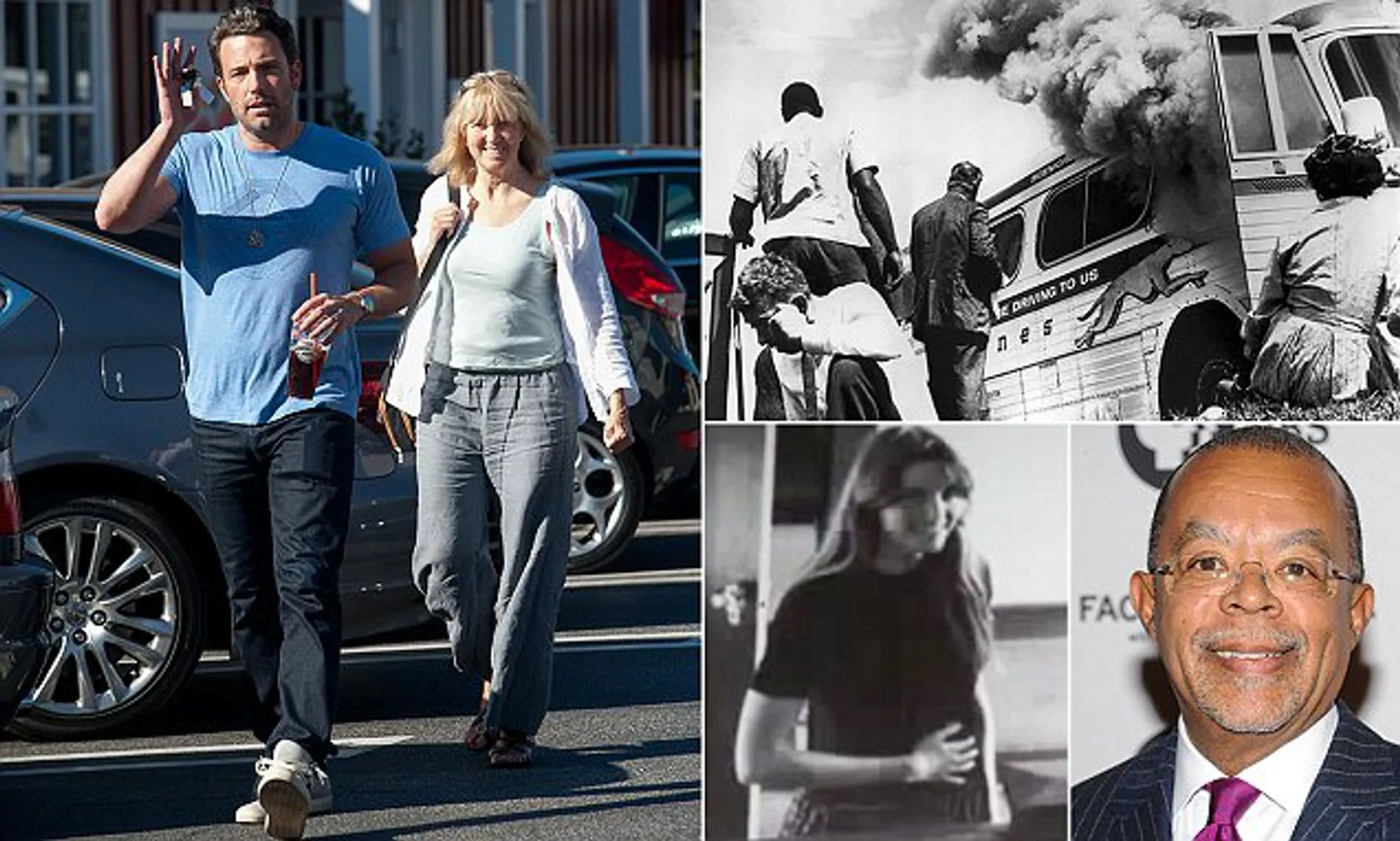
Boston.com’s republication of the Boston Globe obituary stated that Christopher Anne Affleck “taught literacy classes in Mississippi during Freedom Summer.” The same obituary identified her as the mother of Ben Affleck and Casey Affleck and used “Christopher Anne” in the headline and body record.[1] In a 2015 Daily Mail interview, however, Chris Anne Affleck addressed the same civil-rights attribution directly: “I wasn't as good as they were. I wasn't a Freedom Rider and I wasn't there for Freedom Summer. I went in 1965 and supported Tougaloo College.” She also said she was “embarrassed” by the misattribution after PBS’s Finding Your Roots connected her to Freedom Summer and the Freedom Rides.[2]
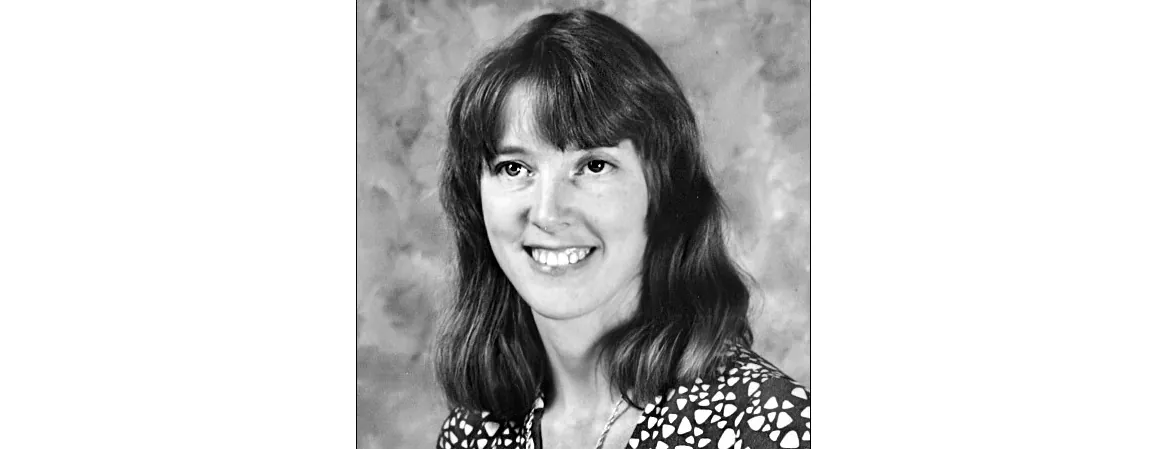
That distinction is not clerical fussing. Freedom Summer was a 1964 campaign centered on voter registration, Freedom Schools, and organizing in Mississippi.[3] Affleck’s correction placed her activity in 1965 and described it as support for Tougaloo College, not participation in Freedom Summer or the Freedom Rides.[2] The difference changes chronology, affiliation, and the nature of the claim.
The correction was narrower than the obituary
A useful correction usually does two things: it rejects the inaccurate label and supplies a more limited replacement. Affleck’s 2015 statement did both. She did not claim a larger civil-rights role. She did not turn a documentary error into borrowed honor. She drew a boundary around her own biography: not a Freedom Rider, not present for Freedom Summer, in Mississippi in 1965, supporting Tougaloo College.[2]
That is why the 2026 obituary matters as a record. An obituary is allowed to be affectionate. It is often written from family memory, institutional files, prior profiles, and compressed life summaries. But once published by a reputable outlet, it can stop functioning only as a remembrance. It becomes a biographical source other systems ingest, summarize, index, quote, and treat as stable.
The birth-name discrepancy shows the same record problem in smaller form. Some sources use Christine Anne Boldt, while the Boston.com obituary uses Christopher Anne Boldt.[1] That discrepancy is worth flagging, but it is not the center of the legal-risk analysis here. The Freedom Summer claim is the more material error because the subject herself corrected it, and because the later obituary reintroduced the older attribution after that correction already existed.
How a corrected error becomes stronger than the correction
The source chain is short enough to see. PBS’s Finding Your Roots supplied an earlier public version connecting Affleck to Freedom Summer and the Freedom Rides; Affleck corrected that version in 2015; the 2026 obituary then restored the Freedom Summer language; other news and entertainment outlets repeated the obituary framing quickly afterward. The point is not that each later outlet made an independent factual judgment. The point is that later repetition can make a copied claim look corroborated.
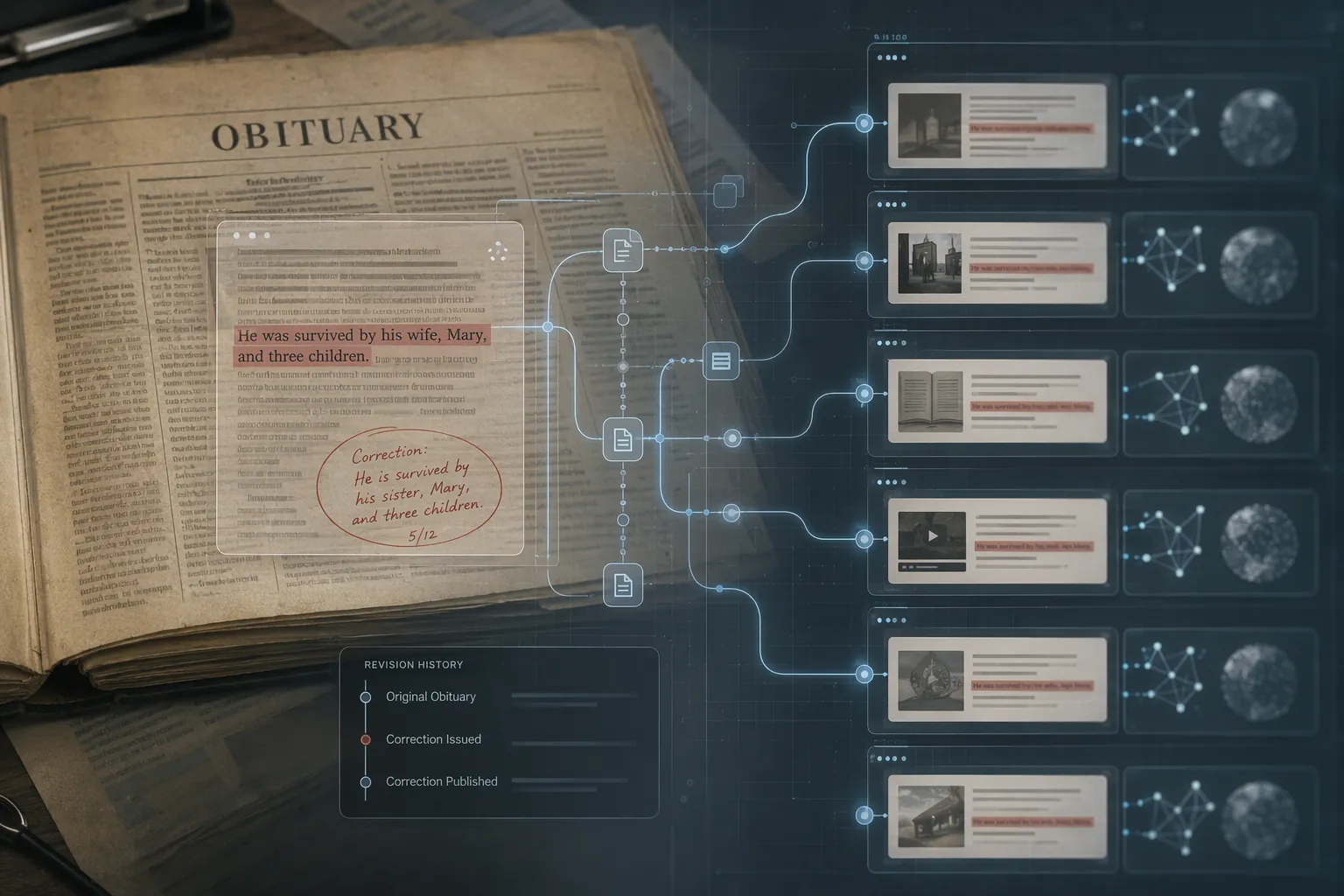
That is a familiar records failure. A polished statement enters a trusted-looking corpus. Secondary sources repeat it. Search results begin to return several versions of the same assertion. A database or AI answer later sees multiple matching statements and treats them as mutual support, although they may all descend from one unreconciled error. The subject-authored correction is older, less frequently repeated, and less neatly phrased, so it becomes harder for automated systems and rushed human reviewers to locate.
Legal AI hallucinations persist by a similar mechanism. Once an invented or misdescribed proposition appears in a legal-looking environment, later tools and users may encounter it as if it had survived review. The obituary context is quieter, but the structure is the same: repetition is mistaken for verification, and source lineage disappears.
| Record stage | What happens to the Affleck claim | Why it matters |
|---|---|---|
| Earlier public account | Finding Your Roots connected Affleck to Freedom Summer and the Freedom Rides, according to the 2015 correction context. | The claim entered a public biographical narrative. |
| Subject correction | Affleck said she was not a Freedom Rider, was not there for Freedom Summer, went in 1965, and supported Tougaloo College. | The person with direct knowledge narrowed the record. |
| Posthumous obituary | The 2026 Boston.com republication stated that she taught literacy classes in Mississippi during Freedom Summer. | A memorial source reasserted the broader claim after the correction existed. |
| Downstream reuse | Other summaries and databases can copy the obituary language without preserving the correction history. | The error begins to look independently confirmed. |
Why obituary text enters legal workflows
Obituaries are not court filings, but they routinely sit near legal work. Estate lawyers read them for family structure, survivorship, funeral-home information, residence history, prior marriages, aliases, and sometimes the existence of omitted relatives. Trust administrators may use them to start a beneficiary search. Litigation teams use them to understand a witness, party, decedent, or family business background. Background-check vendors and people-search databases absorb them because they contain identity facts in compact form.
Most obituary-derived facts are mundane until they are not. A name variant can affect a database match. A residence history can steer a probate venue inquiry. A survivor list can shape the first pass at a next-of-kin chain. A public-service biography can appear in litigation background, reputational diligence, nonprofit board review, donor history, or media due diligence. None of that means the Affleck obituary has caused any estate dispute or background-check injury. The available material does not support that claim.
It does support a narrower and more useful conclusion: obituary facts are often treated as reusable identity data even though they may be compiled from memory, prior press, institutional biography, and unverified public narratives. Once the obituary is syndicated or scraped, later users may no longer see whether a contested fact came from family recollection, a newspaper archive, a television genealogy segment, or the subject’s own words.
The harmless-looking claim is still a records problem
The emotional asymmetry in this case is obvious. Saying someone taught literacy classes in Mississippi during Freedom Summer sounds honorable. It does not accuse her of misconduct. It does not create an obvious financial entitlement. Many readers would reasonably ask why anyone should object to a complimentary civil-rights association.
The answer is that legal records do not measure only insult. They measure identity, chronology, affiliation, capacity, notice, relationship, and source reliability. A flattering mistake can still be a false biographical attribute. A false biographical attribute can still be copied into a database. A copied database field can still be returned to a lawyer, clerk, investigator, compliance reviewer, journalist, or AI user as though it were settled fact.
Affleck’s own correction makes that especially clear. She did not ask for a harsher record. She asked for a more accurate one. The corrected version preserves a civil-rights-adjacent activity, but removes two historically specific labels: Freedom Rider and Freedom Summer participant.[2] That is exactly the kind of distinction that can disappear when a life is compressed into a few memorial paragraphs.
What a verification standard should require
The practical standard is not complicated. When obituary-derived facts enter a legal workflow, the reviewer should ask whether the fact is being used as color or as a record. If it affects identity, kinship, chronology, residence, status, affiliation, capacity, reputation, or investigative direction, it should not be treated as self-verifying.
- Check whether the subject corrected the fact while alive, especially in interviews, sworn filings, institutional biographies, or archived correspondence.
- Separate original reporting from republication, syndication, scraping, and rewritten summaries.
- Treat multiple matching search results as one source until their lineage is known.
- Preserve contradiction notes in matter files and vendor records instead of overwriting the weaker field silently.
- Require AI and background-check vendors to disclose whether obituary data is used, how corrections are captured, and whether source dates remain visible.
For estate administration, that means an obituary can start a checklist but should not end one. For litigation research, it can point to a person’s public narrative but should not become a citation for contested biography. For AI procurement, the Affleck case is a useful test question: if a model or database returns the Freedom Summer claim, can it also surface the 2015 correction and explain the conflict?
The narrow lesson
This case does not prove that one obituary error has caused litigation harm. It does not resolve every label ever attached to Chris Anne Affleck’s civil-rights activity. It proves something narrower and more operational: a corrected biographical error can outlive the person who corrected it when later memorial records, news summaries, databases, and AI systems prefer the repeated version over the source chain.
Obituary-derived biographical data deserves the same verification discipline applied to court filings when it enters legal work, background checks, estate records, or AI outputs. A reputable memorial source is still a source. Repetition is still not authentication. The correction belongs in the record beside the obituary, not buried behind it.
References
- Local obituary: Christopher Affleck, mother to Ben and Casey, dies at 83, Boston.com, July 24, 2026
- Now Ben Affleck's MOM reveals mistakes in documentary censored by star on family's slave-owning past, says she did NOT do Freedom Summer or Freedom Rides, Daily Mail, April 2015
- Freedom Summer, Wikipedia
Related records
Tool profile
How Meta's AI Spending Reshapes Law Firm ProfitabilityGoverning regulation
Browse the obligations tracker →Preventive workflow
Browse verification workflows →
Report a correction or tip
Spotted an outdated figure, a misstated fact, or a ruling this case record should reflect? Public comments are disabled for this content given the professional cost of a misreported case outcome, penalty amount, or rule text — use the structured correction channel instead.
Report a correction or tip for this record →