
What the Clancy Duxbury jury tour reveals about view law
Using the July 31, 2026 jury tour of Lindsay Clancy's Duxbury home as a live case study, this explainer separates Massachusetts' view rules under Guide to Evidence § 1109 and G.L. c. 234A § 69A from the reported facts of the tour. It gives litigators a brief-ready checklist covering judge discretion, defendant presence, conduct limits, and the changed-conditions objections that control appellate risk.
- Jurisdiction
- Massachusetts
- Court
- Plymouth County Superior Court
- AI tool named
- No AI tool named
- Ruling date
- Jul 31, 2026
- Source document
- View primary court order ↗
- Last verified
- Aug 4, 2026
Lex Machina Review is an independent risk-tracking and reference resource. Nothing on this site is legal advice, and using it does not create an attorney-client relationship. Every record is reviewed against primary sources but may not reflect the most current status of a matter — always verify directly against the cited court order, rule text, or a licensed attorney before relying on it.
Companion explanation — secondary to the source document above
The reported tour at 47 Summer St.
The Lindsay Clancy trial jury tour of the Duxbury home is easiest to misread if it is treated as a dramatic scene first and a court procedure second. The available public account is not a written view order or a complete docket entry. It is a set of reported logistics: on July 31, 2026, jurors were taken to 47 Summer St. in Duxbury during the second week of trial, with the visit conducted under restrictions set by the trial judge. AP reported that the jury went to the family home and noted that Clancy did not attend the visit by her own choice. [1]
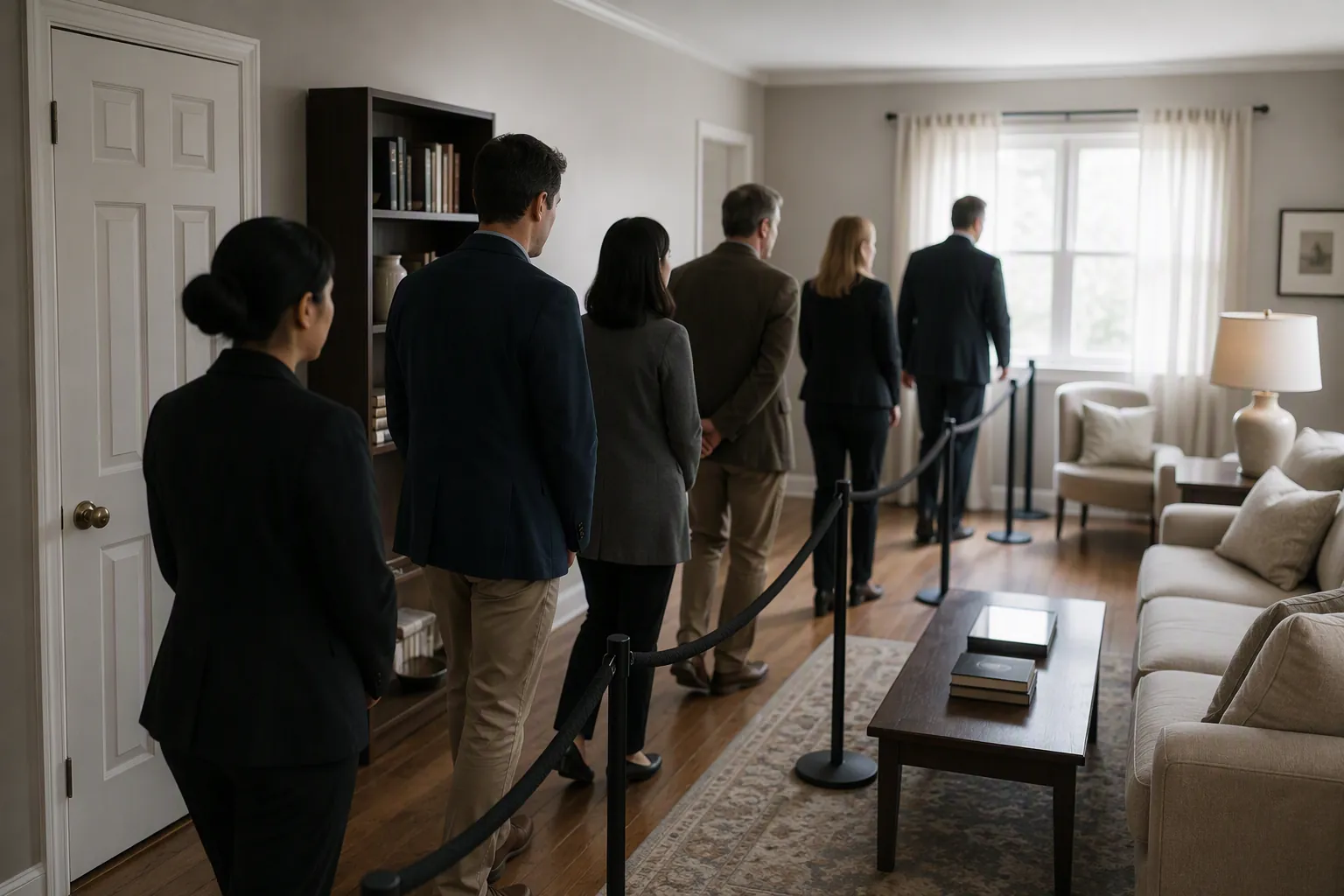
News coverage described a carefully bounded movement rather than an open-ended inspection. CBS Boston reported that jurors were brought through the home in groups of six, that they were not allowed to ask questions, and that the visit included limits on what they could touch or open. [2] The Patriot Ledger reported route details, including travel past ThreeV restaurant, about 5.5 miles from the home, and a Kingston CVS, about one mile away. [3] WMTW similarly reported that the jury viewed parts of the home, including the basement and yard, and that the time inside was about 40 minutes. [4]
Those details matter because a jury view is procedural down to the hinge. The difference between a closet door left closed and a closet door opened is not atmospheric; it can define what jurors were permitted to observe. The reported restrictions also included limits on who could enter the home, with access confined to jurors, lawyers, the judge, and court staff, and no witness testimony taken during the view. [2][4]
There is also a small source-status problem worth naming before it becomes larger than it is. AP, CBS Boston, and WMTW place the proceedings in Plymouth, while a Northeastern University News Q&A refers to the trial as being in Brockton. [1][2][4][5] That discrepancy does not change the view-law analysis, but it is a reminder that public reporting should not be silently laundered into the status of a court order.
What Massachusetts calls this act
Massachusetts does not treat a view as a field trip, and it does not treat it as ordinary evidence. Mass. Guide to Evidence § 1109 states that a court may permit a view by the jury, and it frames the procedure as a matter committed to the judge’s discretion. The same section explains the controlling distinction: what jurors observe during a view may be used by them in deliberations, but the view itself is not evidence in the strict sense. [6]
The statutory authority sits in G.L. c. 234A § 69A, which authorizes a court to order jurors to view a place, person, object, or other subject matter when the court determines that doing so would be proper. [7] The evidentiary guide then supplies the working discipline: the judge decides whether the view will help, how it will occur, who attends, and what boundaries keep observation from becoming investigation. [6]
That distinction is not a technicality for appellate clerks to admire after the fact. It is what keeps a jury from gathering unsworn proof. Commonwealth v. Curry, cited in § 1109, treats a view as something jurors may use to better understand the evidence, while still maintaining that the view is not itself evidence. [6] A juror may better understand the layout of a stairway, the relation between a yard and a basement, or the practical meaning of a distance. A juror may not convert the visit into a private experiment.
That is why the reported Clancy restrictions are not decorative. Groups of six, no questions, no touching, no witness testimony, and limited access all serve the same purpose: the jurors observe what the court has allowed them to observe, in the manner the court has prescribed. [2][4] If a lawyer later challenges what happened, the issue should not be whether the visit felt solemn or intrusive. The issue should be what the order allowed, what the jurors actually saw, and whether the record can show that the procedure stayed inside those limits.
Defendant presence is controlled by the judge, not by instinct
Clancy’s absence from the Duxbury view drew understandable attention because the case is being tried around events in a family home. But Massachusetts law does not make defendant attendance at a view automatic. Commonwealth v. Corliss, as summarized in Mass. Guide to Evidence § 1109, treats the defendant’s presence at a view as a matter within the judge’s discretion. [6] In this case, AP reported that Clancy chose not to attend. [1]
For counsel, the preservation question is not merely whether the defendant was there. It is whether the record shows who requested attendance or nonattendance, what the judge decided, what waiver or objection was made, and whether any security, fairness, confrontation, or prejudice concern was actually presented before the jury moved. A silent record is not made more careful by the fact that the tour itself looked orderly.
Observation is not investigation
A properly controlled view asks jurors to do something narrower than what ordinary people do when they enter a house. They are not there to satisfy curiosity. They are not there to test a theory by opening doors, comparing objects, reenacting movements, or asking the nearest court officer how something worked. They are there to observe what the judge has authorized them to observe.
That distinction explains why the reported limits on the Duxbury home visit deserve more attention than the fact of the visit itself. CBS Boston and WMTW reported restrictions including no juror questions, no touching of items, and no opening of closet doors. [2][4] The point is not politeness toward the premises. It is control of the evidentiary boundary. A closed closet is not a neutral detail if one party later argues that the closet’s contents, size, accessibility, or location would have affected how the jurors understood the home.
A useful way to brief the problem is to separate three categories before the order issues. First, there are permitted observations: layout, distances, sightlines, access points, stairs, doors, rooms, and exterior areas identified by the judge. Second, there are prohibited acts: questions, touching, measuring, testing, opening, searching, or hearing testimony on site unless the court has specifically authorized some carefully controlled procedure. Third, there are ambiguous acts: pausing longer at one location, seeing an item that was not discussed in testimony, or encountering a changed condition that no one described on the record. The third category is where trial lawyers earn their keep.
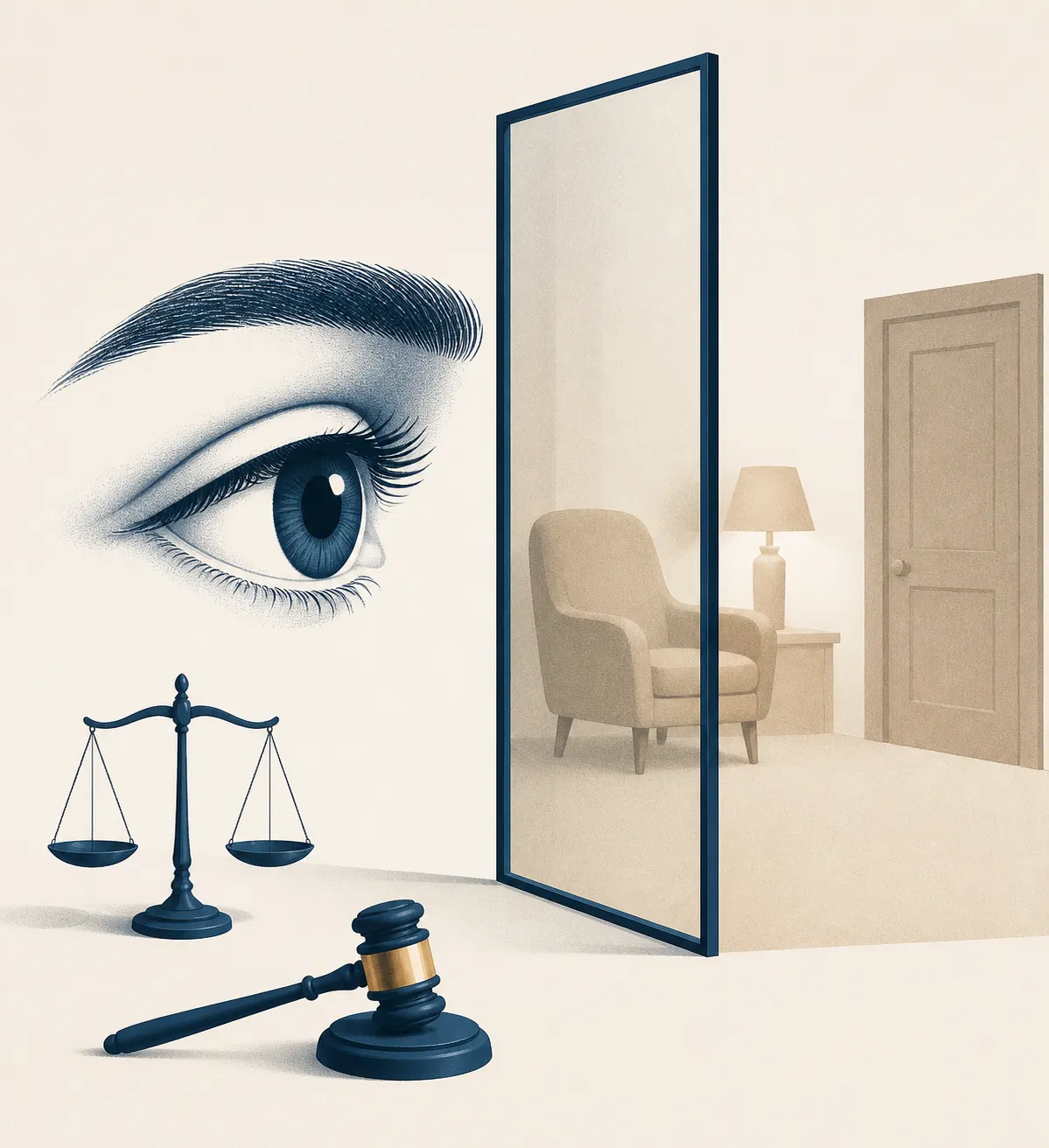
Massachusetts’ “not evidence” doctrine does not mean a view is harmless. Jurors are human, and physical space can make testimony feel more or less plausible. What the doctrine does is force a cleaner question: did the view assist jurors in understanding evidence admitted at trial, or did it expose them to something materially different, untested, or unfairly suggestive?
Changed conditions are the appellate-risk layer
The most serious view fights usually do not turn on the bus ride. They turn on whether the place being viewed is materially the same place the evidence describes. Commonwealth v. Cataldo, as treated in § 1109, is the changed-conditions warning: a view may be improper where changes to the location risk misleading the jury or creating unfair prejudice. [6] If the premises are no longer meaningfully comparable to the relevant time, counsel cannot wait until the jurors return to complain that the house, room, lighting, objects, or access points looked different.
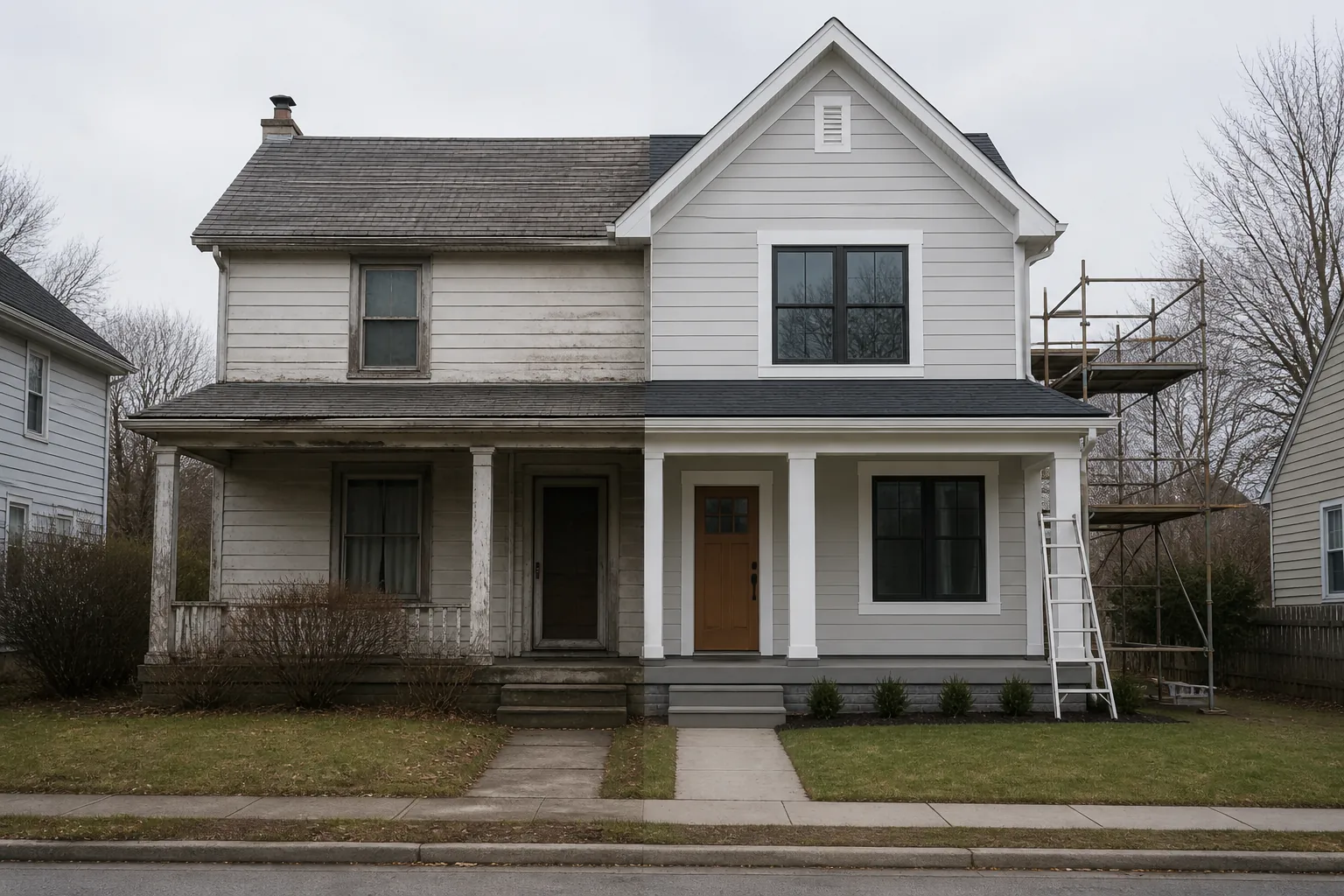
The rule is not a crude “any change defeats the view” rule. Commonwealth v. Welansky, also reflected in § 1109, supplies the other side of the line: altered premises may still be viewed when the altered condition is helpful rather than misleading. [6] That is a practical doctrine. Buildings change. Furniture moves. Doors are replaced. Rooms are cleaned, emptied, painted, staged, secured, or partially inaccessible. The legal question is whether the current condition helps the jury understand the evidence or invites them to decide from a materially false scene.
The Clancy home raises the changed-conditions issue in its most concrete form. Public reporting describes a home visit years after the events at issue, with restrictions on what jurors could access and touch. [2][4] That does not make the view improper. It does make the pre-view record important. If rooms were changed, if furniture was absent, if a basement area looked different, if the yard had been modified, or if closed doors concealed conditions one side thought mattered, the lawyer’s task was to put that difference before the judge before the jury entered.
The clean record should do more than say “changed conditions.” It should identify the change, connect it to a disputed fact, explain why a limiting instruction or route restriction would or would not cure the problem, and state whether the altered condition helps or distorts the jury’s understanding. A judge cannot meaningfully exercise discretion over a vague objection to a house being “different now.” Nor can an appellate court easily assess prejudice from a record that never described what difference counsel meant.
The one comparison worth making
High-profile jury excursions are not unique to this trial. AP’s coverage placed the Clancy visit alongside prior site visits in widely watched cases, including the Murdaugh trial in 2023, the Parkland sentencing proceeding in 2022, the Aaron Hernandez trial in 2015, and the O.J. Simpson trial in 1995. [1] The comparison is useful only up to a point. It reminds readers that a jury view is a known courtroom tool, not an improvisation created for a notorious case. It does not answer the Massachusetts question.
The Massachusetts question is narrower and more exacting: did the judge authorize a view under the governing statute and § 1109; were jurors restricted to observation; was defendant presence handled within the court’s discretion; and did counsel preserve objections about changed or altered conditions while the order could still be shaped?
What counsel should preserve before jurors leave the courthouse
A view motion should not be briefed as a request to “let the jury see the place.” That is too imprecise for trial management and too thin for appellate review. By the time the judge signs or states the order, the record should already answer the operational questions.
- Source the authority. Identify Mass. Guide to Evidence § 1109 and G.L. c. 234A § 69A as the governing framework, then state whether the party is moving for the view, opposing it, or requesting conditions.
- Define the purpose of the view. The motion should say what evidence the view will help jurors understand: layout, distances, lighting, sightlines, access, stairs, basement location, yard relation, or another concrete feature.
- State who may attend. The order should specify whether jurors, alternates, judge, counsel, court officers, staff, defendant, security personnel, property representatives, or media may be present, and where each person may stand.
- Control juror conduct. The order should state whether jurors may ask questions, touch objects, open doors, enter closets, take notes, measure, use phones, linger, or communicate with anyone during transit or on site.
- Preserve defendant-presence decisions. If the defendant will attend, not attend, or attend only under conditions, the record should reflect request, waiver, objection, security concerns, and the judge’s ruling.
- Document changed conditions. Counsel should identify what has changed since the relevant events, why the change matters, and whether the present condition is misleading, curable by instruction, or affirmatively helpful.
- Request a route and access map. In a home-view case, the order should specify entry points, rooms, basement or exterior access, closed areas, and any items or doors that may not be touched.
- Make the prejudice record. The objection should connect the view to a disputed issue and explain why the jury will be assisted or misled. A general objection to emotional impact will rarely do the same work as a concrete objection to an altered room, a blocked sightline, or an inaccessible area.
For knowledge-management and risk teams, the useful artifact is a pre-view template, not a post-view memo. The questions that matter most are asked before transport is arranged: What will the jurors see? What will they not see? What has changed? Who is present? What is closed? What is off limits? What objection or waiver is being preserved?
The Duxbury tour, as reported, shows a controlled Massachusetts view rather than a free-form evidence-gathering event. The procedural risk for counsel lies less in the fact that jurors traveled to the home than in the record made before they ever stepped inside.
References
- Jurors in Lindsay Clancy's trial visit the home where she killed her children — AP News
- Watch live: Lindsay Clancy trial resumes after jury views home — CBS Boston
- Lindsay Clancy murder trial Recap: Jury visits Duxbury home — The Patriot Ledger
- Lindsay Clancy trial: Jury tours home where her 3 children were killed — WMTW
- Daniel Medwed Lindsay Clancy trial — Northeastern University News
- Section 1109. View — Mass.gov
- G.L. c. 234A § 69A — Massachusetts Legislature
Related records
Tool profile
How Meta's AI Spending Reshapes Law Firm ProfitabilityGoverning regulation
Browse the obligations tracker →Preventive workflow
Browse verification workflows →
Report a correction or tip
Spotted an outdated figure, a misstated fact, or a ruling this case record should reflect? Public comments are disabled for this content given the professional cost of a misreported case outcome, penalty amount, or rule text — use the structured correction channel instead.
Report a correction or tip for this record →