
What Clancy trial openings reveal about AI evidence authentication
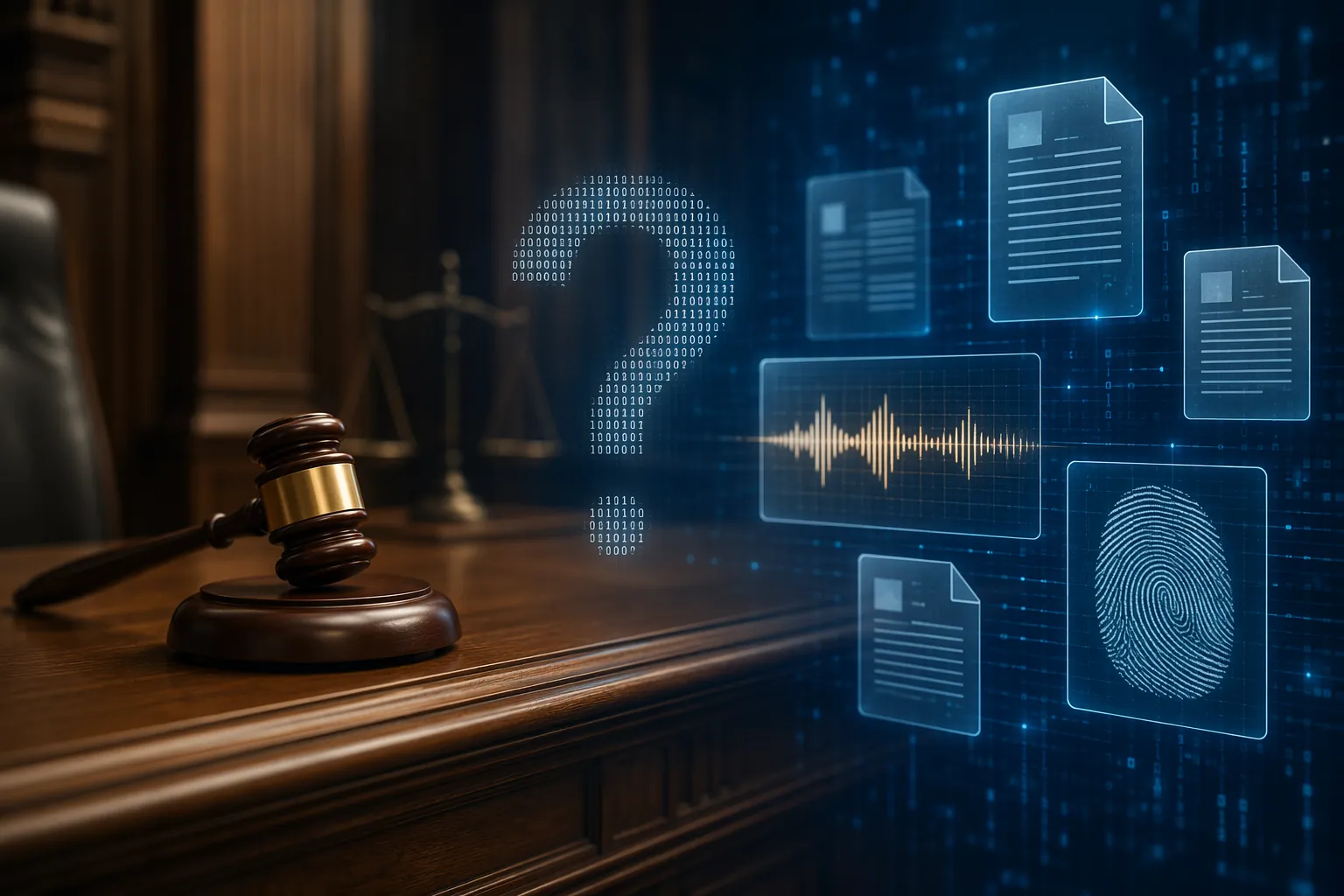
The first day of the Lindsay Clancy trial produced three evidentiary flashpoints — a 911 recording admitted without a metadata chain, autopsy photos entered without provenance verification, and a defense challenge to forensic methodology. Each flashpoint maps to a known authentication gap that Massachusetts evidence rules do not address, creating conditions where AI-generated or deepfake evidence could enter proceedings without detection.
- Jurisdiction
- Massachusetts, United States
- Court
- Massachusetts Superior Court
- AI tool named
- Primitive AI tool
- Ruling date
- Jul 27, 2026
- Source document
- View primary court order ↗
- Last verified
- Jul 27, 2026
Lex Machina Review is an independent risk-tracking and reference resource. Nothing on this site is legal advice, and using it does not create an attorney-client relationship. Every record is reviewed against primary sources but may not reflect the most current status of a matter — always verify directly against the cited court order, rule text, or a licensed attorney before relying on it.
Companion explanation — secondary to the source document above
The first useful fact from Day 1 opening-statement coverage in the Lindsay Clancy trial is procedural, not biographical: preview coverage is not a transcript, same-day trial reporting is not the clerk’s exhibit list, and a quoted courtroom phrase should not be treated as settled until the source path is clear. This is a Risk Digest analysis, not legal advice. It asks a narrower question than the one most trial coverage invites: not whether any exhibit in the Clancy record was AI-generated, but whether the reported authentication path would have forced the checks needed to know.
Day 1 reporting surfaced three points where that question matters: a 911 recording described as admitted through the excited-utterance hearsay exception, autopsy and scene photographs admitted while restricted from public broadcast, and a defense attack on prosecution forensic methodology using language reported as “voodoo forensics” and “junk science.” Reports from MassLive, Boston.com, WPRI, and Court TV are enough to identify the evidentiary posture; they are not a substitute for the trial transcript, the exhibit list, or any sidebar record. [1][2][3][4]
The Day 1 mismatch: admissibility can look like verification
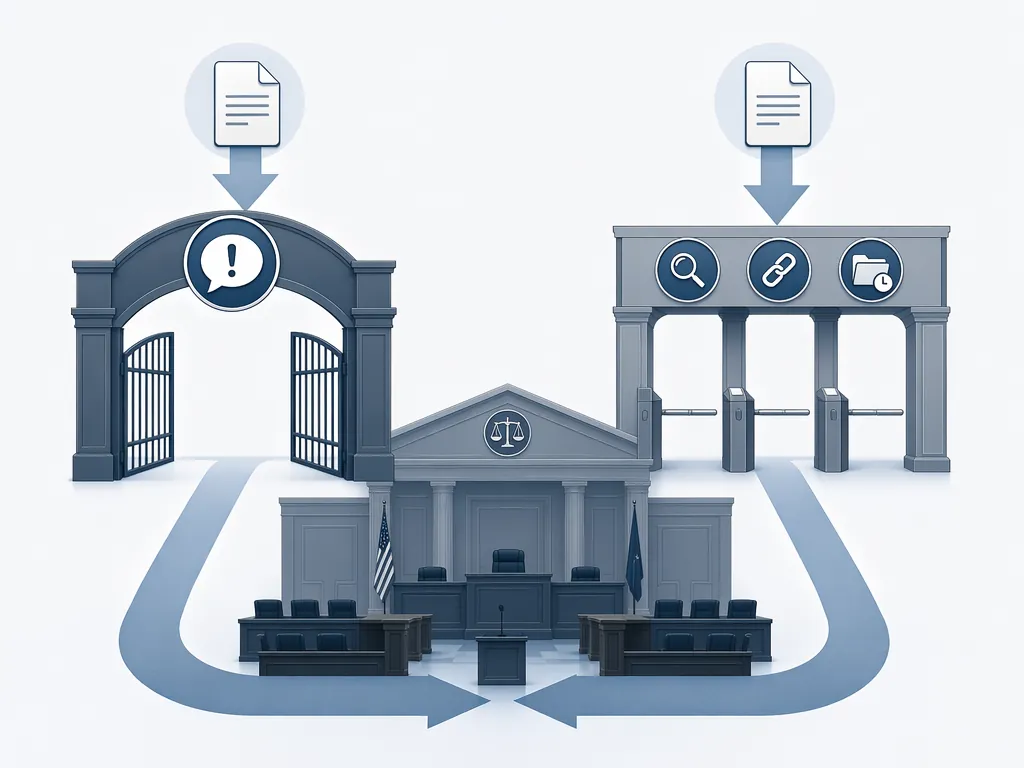
A jury can hear a recording because it fits a hearsay exception without the court first conducting anything resembling a digital provenance audit. That is the hinge. Hearsay doctrine asks whether an out-of-court statement may be considered for its truth. Authentication asks whether the item is what the proponent claims it is. Those questions can overlap in the courtroom’s rhythm, but they are not the same question.
The reported Clancy posture therefore should not be inflated into an accusation that the 911 call, photographs, or forensic materials were fabricated. No cited source supports that claim. The point is less dramatic and more useful: ordinary Massachusetts evidence doctrine, as applied in the visible Day 1 path, would not necessarily require file history, metadata, custody documentation, or model-specific detection methodology before emotionally powerful digital evidence reached the jury.
The 911 recording carries the clearest authentication lesson
Reports described the 911 recording as admitted under the excited-utterance exception. In Massachusetts, an excited utterance is a hearsay exception; it concerns spontaneity, stress, and the circumstances of the statement, not the native file’s origin or edit history. The recording may still need to be authenticated, but the reported fight was not a metadata fight. [1][2][5]
Massachusetts Guide to Evidence § 901 sets a familiar threshold: the proponent must offer evidence sufficient to support a finding that the item is what the proponent claims it is. The 2026 Guide, effective February 1, 2026, does not add a special AI-evidence authentication rule that requires native-file production, system logs, hash values, chain-of-custody records, or a provenance certificate for audio. [5][6]
That matters because a recording can be persuasive before anyone has argued about its digital life. Once jurors hear the voice, cadence, pauses, and distress, the exhibit has already done evidentiary work. A later instruction or cross-examination may narrow its legal use, but it cannot erase the first listen.
The ordinary authentication path may accept testimony from a person familiar with the call, a dispatcher, a custodian, or other “confirming circumstances.” Those are not useless safeguards. They can establish that a call was received, preserved, and associated with a particular incident. They do not, by themselves, answer the AI-era questions:
- Was the native audio file produced, or only an exported copy?
- What system generated the file, and what logs show the date, time, transfer path, and access history?
- Were there conversions, redactions, enhancements, or compression steps before trial?
- Who had custody of each version?
- Was any forensic audio review performed, and if so, what method and error profile were disclosed?
Those questions are not the same as saying the recording is false. They are the questions counsel must ask if the legal system wants authentication to mean more than recognition plus courtroom confidence. A synthetic or altered emergency call, in a hypothetical future case, would not announce itself as a doctrinal problem. It would arrive as an exhibit attached to a familiar foundation.
Photographs: shielding the public is not a provenance protocol
The photograph issue is different but related. Day 1 reporting described autopsy and scene photographs as admitted while restricted from public broadcast or public display. That restriction may protect dignity, privacy, and courtroom order. It does not establish where the image file came from, what device created it, whether it was exported, whether it was edited, or whether the admitted image matched the original capture. [1][3]
Under ordinary authentication doctrine, a witness may authenticate a photograph by testifying that it fairly and accurately depicts what the witness observed. That can be enough for many photographs because the legal system has long treated images as demonstrative or illustrative evidence tied to witness perception. The AI problem is that image confidence now has two layers: the scene layer and the file layer. A witness can recognize a room, body, object, or injury while still knowing nothing about the capture device, file lineage, export settings, or post-processing chain.
The reported Clancy photo posture therefore exposes a narrow gap. Public non-broadcast restrictions answer who may see disturbing images outside the courtroom. Provenance answers whether the image admitted in court is the same image originally captured and whether its transformations are documented. One is about access; the other is about authenticity.
The “voodoo forensics” attack is a reliability objection in courtroom clothing
The defense’s reported description of prosecution forensic methodology as “voodoo forensics” and “junk science” is easy to quote and easy to misuse. The full Court TV article was not available for review, and the attribution should be verified before relying on the phrase as a transcript-level quotation. MassLive and Court TV reporting, however, support the basic point that the defense framed at least part of the prosecution’s forensic case as a methodology problem. [1][4]
That kind of attack belongs in the same family as a Daubert-Lanigan reliability challenge. The issue is not whether an expert sounds credentialed, or whether the conclusion helps one side, but whether the method is sufficiently reliable for the use being made of it. The same question would apply if a party offered a deepfake-detection expert or an AI-authentication tool.
This is where the “just run a detector” answer fails. The National Cyber Security Centre has warned that AI detection tools can be brittle, showing high accuracy on clean datasets but collapsing when confronted with real-world fakes, and that detection approaches may require recalibration for particular AI models. [7]
A detector, then, is not a magic gatekeeper. If offered in court, it becomes another expert methodology to authenticate, test, and cross-examine. Counsel would need to know what model family the tool was built to detect, what post-processing conditions degrade performance, what validation set was used, whether the tool has been updated since the evidence was created, and whether the proponent is offering a probability, a binary conclusion, or a demonstrative aid.
Massachusetts still relies on ordinary authentication rules
The 2026 Massachusetts Guide to Evidence did not create an AI-specific authentication rule. Section 901 remains the operative general authentication provision, and the Guide’s structure does not impose a separate requirement for AI-origin inquiry, metadata production, or provenance disclosure when a party offers audio, images, or other digital exhibits. [5][6]
That does not mean Massachusetts law has no tools. A judge can require foundation. Opposing counsel can object. Discovery can seek source files. Experts can be challenged. Chain of custody can matter. But those tools require someone to use them. The rule itself does not force every digital exhibit through an AI-provenance checkpoint before the jury encounters it.
The Clancy Day 1 posture tests a common institutional claim: existing authentication standards are adequate. Adequate for what? If the task is to let a witness say a recording, photograph, or report is what the proponent says it is, the traditional rule is familiar. If the task is to surface AI-generation risk before the exhibit shapes the jury’s mental picture, the rule does not do that work automatically.
The known deepfake-evidence record is small, not reassuring
The practical warning case is Mendones v. Cushman & Wakefield. Reporting in 2025 described it as the first documented instance of a deepfake submitted as genuine evidence and caught; the case was dismissed in September 2025, and detection succeeded because the AI tool used was primitive. [8][9]
That is not a comforting success story. It shows that a bad fake can be caught. It does not show that a better fake would be caught under ordinary foundation practice. NBC News also reported in November 2025 that every judge it interviewed believed deepfake evidence was happening more frequently than the reported record shows. [8]
The absence of many confirmed cases should be read carefully. It may mean the problem is rare. It may mean the problem is underdetected. It may mean parties settle, withdraw, or never create a public record. The available materials support caution, not a frequency claim.
The rulemaking split leaves counsel with uneven safeguards
Federal rulemaking has not filled the gap. Proposed Federal Rule of Evidence 707 and a draft Rule 901(c) remained in committee after the U.S. Judicial Conference declined in May 2025 to advance them, reportedly concluding that existing standards were adequate. [8]
Some states have moved faster. Louisiana Act 250, adopted in 2025, mandates attorney diligence concerning the AI origin of evidence. California SB 970 directed rulemaking by January 1, 2026. Massachusetts has no comparable AI-evidence rule identified in the 2026 Guide. [6]
The split matters in day-to-day litigation. In one jurisdiction, a lawyer may have an express diligence obligation or an emerging procedural hook for AI-origin inquiry. In another, counsel must build the issue from ordinary authentication, discovery, expert reliability, and preservation law. Massachusetts, on the materials available here, is in the second category.
Stronger authentication also protects real evidence
AI authentication is not only a prosecution-side or defense-side weapon. It also addresses the liar’s dividend: the tactic of dismissing authentic evidence as AI-generated. NBC News and Thomson Reuters have reported that the phenomenon has appeared in at least three federal cases, and research professor Maura Grossman has said she expects it to appear more frequently than actual deepfakes. [8][9]
That risk should keep courts from treating every AI objection as paranoia and every authenticity assurance as sufficient. A party with real audio, real photographs, or real messages should want a record that shows why they are real. A party facing suspect material should want the same record for the opposite reason. Provenance discipline serves both functions.
What counsel has to create before the exhibit settles in
The counsel-facing lesson is procedural. In a jurisdiction that lacks an AI-specific evidence rule, a lawyer cannot wait for the authentication rule to ask the missing questions by itself. The objection has to identify the missing file history, the discovery request has to demand the native material, and the expert challenge has to force the method into the open.
| Exhibit posture | Authentication risk | Record counsel should try to create |
|---|---|---|
| Emergency-call audio admitted through a hearsay route | Hearsay admissibility may be resolved without native-file provenance | Request native audio, system logs, export history, custody records, enhancement notes, and any forensic audio analysis |
| Scene or autopsy photographs authenticated by witness testimony | A witness may recognize the scene without knowing the image file’s lineage | Demand original files, device information, hash values where available, edit/export history, custody documentation, and a protocol for displaying restricted images |
| Forensic methodology attacked as unreliable | The same reliability inquiry would apply to AI-detection or deepfake-authentication tools | Seek validation data, model-specific performance limits, post-processing sensitivity, error rates, version history, and the expert’s actual workflow |
| Authentic evidence accused of being AI-generated | The liar’s dividend can turn weak provenance into a tactical opening | Build an affirmative authenticity record before trial, not merely a rebuttal after accusation |
Nothing in this analysis predicts the Clancy trial or accuses any party of evidentiary misconduct. The narrower conclusion is enough: in Massachusetts and similar jurisdictions, ordinary authentication doctrine will not reliably surface AI provenance problems on its own. Lawyers who need that record must ask for metadata, custody, native files, image provenance, and reliability foundations before the exhibit has already done its work.
References
- MassLive coverage of Lindsay Clancy trial day 1, MassLive
- Boston.com coverage of Lindsay Clancy trial day 1, Boston.com
- WPRI coverage of Lindsay Clancy trial day 1, WPRI
- Court TV coverage and social-media reporting on Lindsay Clancy trial day 1, Court TV
- 2026 Massachusetts Guide to Evidence, Massachusetts Guide to Evidence, effective February 1, 2026
- Serpa Law analysis of the 2026 Massachusetts Guide to Evidence and AI-evidence rules, Serpa Law
- NCSC analysis of AI detection-tool reliability, National Cyber Security Centre
- NBC News reporting on deepfake evidence, proposed evidence rules, and the liar’s dividend, NBC News, November 2025
- Thomson Reuters reporting on deepfake evidence and the liar’s dividend, Thomson Reuters, May 2025
Related records
Tool profile
How Meta's AI Spending Reshapes Law Firm ProfitabilityGoverning regulation
Browse the obligations tracker →Preventive workflow
Browse verification workflows →
Report a correction or tip
Spotted an outdated figure, a misstated fact, or a ruling this case record should reflect? Public comments are disabled for this content given the professional cost of a misreported case outcome, penalty amount, or rule text — use the structured correction channel instead.
Report a correction or tip for this record →