
A witness-by-witness recap of Lindsay Clancy trial week 2
A source-linked, witness-by-witness record of Week 2 of the Commonwealth's case in the Lindsay Clancy trial as of Aug. 3, 2026, with confirmed-versus-reported status flagged throughout. It shows how the prosecution's medical and psychiatric testimony built toward its criminal-responsibility argument, and where the defense countered on cross-examination.
- Jurisdiction
- US-MA
- Court
- Plymouth Superior Court
- AI tool named
- No AI tool named
- Ruling date
- Jul 20, 2026
- Source document
- View primary court order ↗
- Last verified
- Aug 4, 2026
Lex Machina Review is an independent risk-tracking and reference resource. Nothing on this site is legal advice, and using it does not create an attorney-client relationship. Every record is reviewed against primary sources but may not reflect the most current status of a matter — always verify directly against the cited court order, rule text, or a licensed attorney before relying on it.
Companion explanation — secondary to the source document above
Status note, Aug. 3–4, 2026
Monday, Aug. 3, 2026, was reported as the fifth day of testimony in Plymouth Superior Court in Commonwealth v. Lindsay Clancy, and this recap is current through the Aug. 3–4 reporting window. Later testimony remains pending. Because no primary transcript or docket material is available here, the record below treats accessible journalism as the source base and labels contested items as reported, asserted on cross-examination, or confirmed across more than one accessible account rather than transcript-confirmed fact. NBC Boston’s day-5 coverage supplies the basic timestamp and witness roster for the day. [1]
Week 1 gave jurors the emotional architecture of the case: the 911 call as described in testimony, first responders, a jury view of the Duxbury home, and Patrick Clancy’s testimony. Week 2 changed the prosecution’s load-bearing material. The Commonwealth moved from scene-setting to doctors, ICU personnel, psychiatrists, evidence custodians, and handwritten entries — evidence meant to support not only that the children died by homicide, but that Clancy was criminally responsible when she killed Cora, Callan, and Dawson.
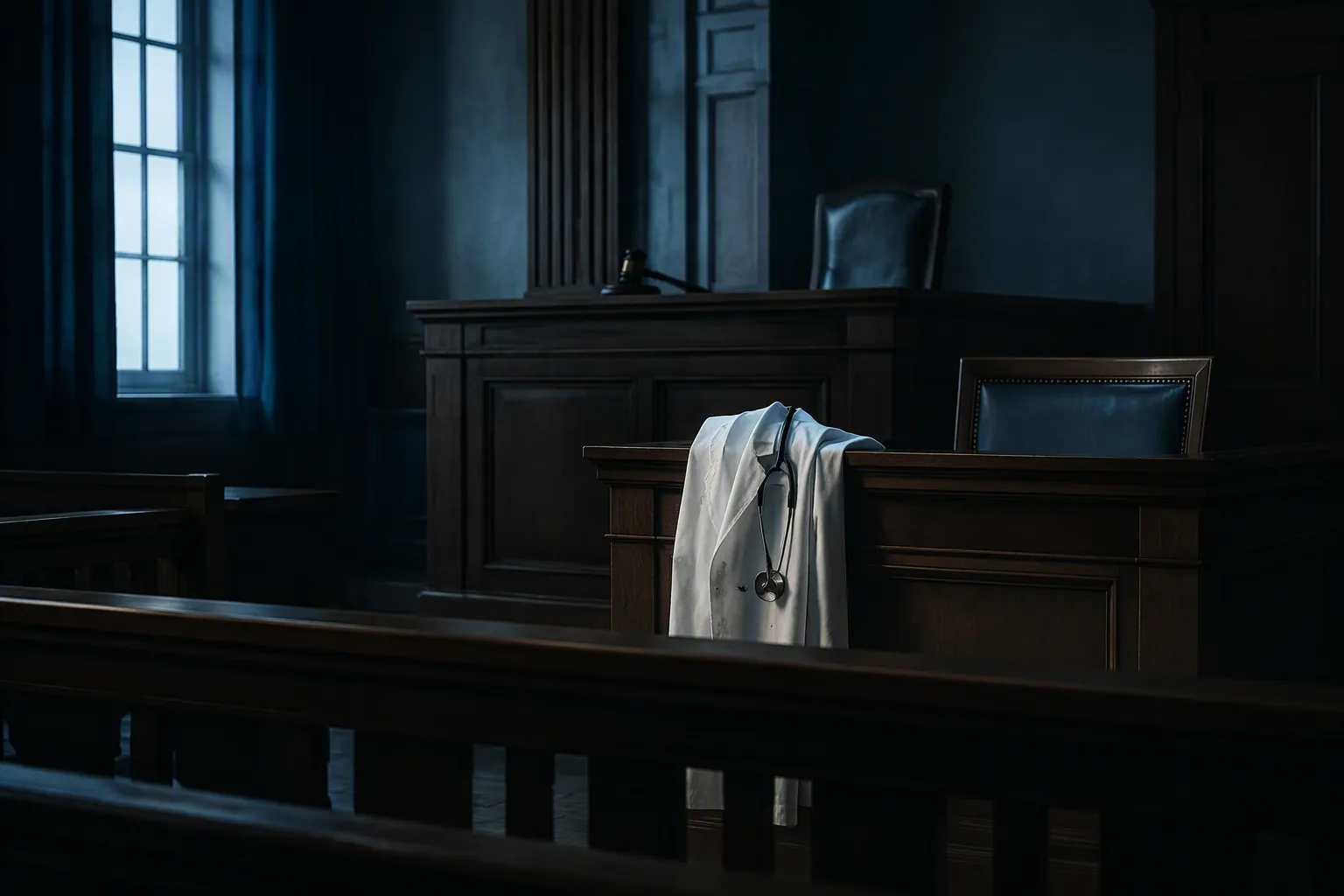
The witness ledger before the argument
The useful way into Week 2 is not through a single “insanity defense” headline. It is through the witness grid: who testified, what the Commonwealth tried to prove with that witness, what the defense preserved on cross, and how securely the public record supports the detail.
| Witness or exhibit sponsor | Commonwealth use | Defense use or limitation | Public-record status |
|---|---|---|---|
| Dr. Michael Snyder, Dr. Andrew Capraro, Dr. David Casavant | Medical testimony about the children’s emergency treatment, injuries, and deaths. | The accessible summaries emphasize the fatal medical evidence more than cross-examination disputes. | Witness roster confirmed in accessible live reporting; the most specific child-death details come from AP via PBS. [1][2] |
| Dr. Kelly McDonough | Emergency-room testimony about Clancy’s neck and wrist wounds, including that the cuts were described as “superficial” and did not require stabilization for bleeding. | Defense counsel raised more serious injury details on cross — including a crushed thyroid, fractured cervical vertebrae, and complete spinal cord transection at T5/T6 — but those are treated here as defense-raised assertions in live reporting, not as the prosecution’s direct medical presentation. | McDonough’s direct testimony is reported by CNN; the injury assertions from cross are reported in Boston.com’s live blog. [3][4] |
| Dr. Sejal Shah | Psychiatric assessment evidence from Jan. 30, 2023: denial of suicidal or homicidal intent, hallucinations, and delusions; observations that Clancy was calm, cooperative, organized, and goal-directed; approval of a health care proxy change. | Cross-examination drew out that communication and planning can coexist with psychosis and that Clancy was regarded as an honest patient. | Core testimony reported by CNN and NBC Boston; cross-examination concessions reported by CNN. [1][3] |
| Dr. Jhilam Biswas | Psychiatric assessment evidence from Jan. 26, 2023, when Clancy was intubated and communicating in writing; reported writings included that she was “horrified,” asked for an attorney, and asked whether her body was broken and her legs were straight. | Cross-examination again preserved the defense point that organized communication does not rule out psychosis. | Core testimony reported by CNN and NBC Boston; cross-examination concessions reported by CNN. [1][3] |
| ICU nurses Rachelle Amedee and Meghan Collins | Hospital-care context for Clancy’s ICU condition and communications. | The accessible summaries do not provide enough detail to treat their testimony as a separate psychiatric conclusion. | Witnesses appear in the day-5 roster; substantive detail is limited in accessible reporting. [1] |
| Sgt. Rose Stoffers | Evidence-handling and chain-of-custody role. | No major cross-examination point is established in the accessible summaries. | Listed in live reporting; not expanded in the accessible public accounts reviewed. [1] |
| Trooper Cory Melo | Sponsor for Clancy’s handwritten journal, which both sides read from in court. | The defense used different entries from the same journal to emphasize help-seeking, brain fog, and inability to plan. | Journal admission and readings reported by WCVB and NBC Boston. [5][6] |
| Detective John Santos | Context evidence about postpartum-related books found in the family kitchen cabinet, including “Good Moms Have Scary Thoughts” and an unfilled postpartum anxiety workbook. | The books cut both ways: they can show awareness and concern, but they are not themselves proof of psychosis or responsibility. | Reported by AP via PBS and NBC Boston. [2][6] |
The children’s medical testimony: restrained facts with legal weight
The testimony about Cora, Callan, and Dawson is the easiest part of the trial to sensationalize and the part least in need of embellishment. AP, published by PBS NewsHour, reported that Cora was declared dead shortly before 7:30 p.m. on Jan. 24, 2023, after about 30 minutes of CPR. Callan was described with fixed and dilated pupils and hypoxic-ischemic brain injury; he was declared brain dead and life support was removed on Jan. 27, 2023. Dawson underwent roughly 40 minutes of resuscitation. [2]
That testimony did not need to answer every mental-state question. Its first job was to establish the deaths, the emergency interventions, and the medical consequences of the assaults. Its second job, for the prosecution’s larger case, was to place those deaths beside evidence of planning and conduct before and after the killings. The medical record of the children’s injuries is therefore foundational, but not self-sufficient on criminal responsibility.
The public summaries do not support treating every detail from the children’s medical testimony as disputed. They do support treating it as the Commonwealth’s factual base for the homicide counts and for the first-degree murder theories that have been reported in the case: deliberate premeditation and extreme atrocity or cruelty. Northeastern law professor Daniel Medwed’s public explanation of the case describes those theories and the Massachusetts criminal-responsibility burden once mental disease or defect is raised. [7]
Clancy’s wounds: what “superficial” did for the Commonwealth
Dr. Kelly McDonough’s testimony mattered because the Commonwealth needed jurors to compare the children’s fatal injuries with Clancy’s own post-incident presentation. CNN reported that prosecutor Shanan Buckingham elicited testimony that Clancy’s neck and wrist cuts were “superficial” and that she did not require stabilization for bleeding. [3]
In the prosecution’s reading, that point fits a deliberateness theory: three children dead or dying, the mother alive, and the self-inflicted cuts described by the emergency physician as not medically urgent for bleeding. The word “superficial” did a great deal of work there. It suggested control, survivability, and a staged or secondary injury pattern without requiring the witness to say all of that directly.
The defense did not leave the injury picture there. Boston.com’s live blog reported cross-examination assertions about a crushed thyroid, fractured cervical vertebrae, and complete spinal cord transection at T5/T6. Those details are important because they resist a clean “minor wounds” narrative. They are also important because of their procedural posture: in the accessible record reviewed here, they come through defense cross-examination reporting, not through the prosecution’s direct medical presentation as summarized by CNN. [4]
That distinction is not cosmetic. A fact personally testified to by an emergency physician on direct examination and an injury characterization raised by counsel during cross-examination do not carry the same public-record weight when the transcript is unavailable. The jury heard the exchange; readers outside the courtroom have live-report descriptions of it.
The psychiatric testimony is the hinge of Week 2
The prosecution’s Week 2 psychiatric witnesses gave jurors the bridge from hospital presentation to criminal responsibility. The Commonwealth did not merely need evidence that Clancy could answer questions. It needed evidence from trained clinicians that, in the days after the killings, she was calm, cooperative, organized, and goal-directed, and that she did not report hallucinations or delusions during key assessments.
Dr. Jhilam Biswas assessed Clancy on Jan. 26, 2023, while Clancy was intubated and communicating in writing. CNN and NBC Boston reported that Biswas described her as calm and cooperative, organized, and goal-directed. The reported writings included Clancy saying she was “horrified,” asking for an attorney, and asking whether her body was broken and whether her legs were straight. [1][3]
Those writings are not all the same kind of evidence. “Horrified” can point toward awareness of what happened. A request for an attorney can be argued as awareness of legal jeopardy. Questions about whether her body was broken and her legs were straight place the exchange inside a catastrophic medical setting. The prosecution could use the set as organized, reality-based communication; the defense could use the same set to remind jurors that physical trauma and psychiatric crisis were unfolding at the same time.
Dr. Sejal Shah assessed Clancy on Jan. 30, 2023, at Brigham and Women’s Hospital. CNN reported that Clancy denied suicidal intent, homicidal intent, hallucinations, and delusions, and that Shah approved a health care proxy change from Clancy’s husband to her parents. NBC Boston also reported Shah’s testimony that Clancy was calm, cooperative, organized, and goal-directed. [1][3]

The proxy change is easy to rush past, but it belongs in the criminal-responsibility ledger. It gave the Commonwealth another post-incident act that looked purposeful and legally meaningful. It also occurred in a hospital context where Clancy’s physical condition, treatment needs, and family relationships were not abstractions. Purposeful conduct is powerful evidence for the prosecution, but it does not automatically answer the psychiatric question the defense is raising.
The cross-examination of Shah and Biswas is why the psychiatric testimony should not be flattened into “doctors said she was sane.” CNN reported that both psychiatrists agreed a person can communicate and make plans while in psychosis, and that Clancy was an “honest” patient. [3]
That concession is the defense’s preserved route through the Commonwealth’s own witnesses. If calm speech, writing, legal requests, and planning behavior can coexist with psychosis, then the jury cannot treat organization as a shortcut. The prosecution can still argue that the total pattern — the arranged errand, the children’s deaths, Clancy’s own wounds, the hospital presentation, the denial of hallucinations or delusions, and the proxy change — proves criminal responsibility beyond a reasonable doubt. The defense can still answer that the pattern is compatible with severe mental disease.
This is where public moral certainty and legal responsibility begin to separate. Massachusetts places the burden on the Commonwealth to prove criminal responsibility beyond a reasonable doubt once a mental disease or defect issue is raised. A not-criminally-responsible verdict is not described as a simple acquittal in the public legal commentary; MassLive’s expert discussion describes commitment to a secure facility as the consequence framework. [7][8]
The journal was not a single exhibit with a single meaning
Trooper Cory Melo’s role, as reported in the Week 2 coverage, was to bring Clancy’s handwritten journal into evidence. Once admitted, the journal did not remain in one side’s column. WCVB reported prosecution readings that included “Completely overwhelmed, I feel like I’m drowning.” NBC Boston and WCVB reported defense readings including “I want to be well,” “I want help,” “I have crazy brain fog. I feel like I can’t make a plan,” and a Nov. 18, 2022 entry about desperately wanting a mental break. [5][6]
A journal is a tempting object for a tidy recap because it looks like the defendant speaking without lawyers in the room. This one resists that treatment. The Commonwealth’s selected passages support overwhelm, pressure, and the “drowning” language prosecutors can pair with later acts. The defense’s selected passages support help-seeking, cognitive fog, and inability to plan. Neither side owns the document just because one passage sounds more dramatic when read aloud.
Detective John Santos’ testimony about postpartum-related books found in the family kitchen cabinet belongs next to the journal, not in a separate morality file. AP and NBC Boston reported titles including “Good Moms Have Scary Thoughts” and an unfilled postpartum anxiety workbook. [2][6]
Those books can support awareness that something was wrong. They can also support the defense’s account that Clancy was trying to understand and seek help for postpartum mental-health symptoms. Standing alone, they do not prove psychosis, planning, criminal responsibility, or lack of responsibility. Their value is contextual.
The shorter witnesses: chain, care, and context
Not every Week 2 witness carries the same analytical weight in the public record. Sgt. Rose Stoffers appears in the day-5 roster as part of the evidence presentation. ICU nurses Rachelle Amedee and Meghan Collins appear in the same roster and help place Clancy inside the hospital-care timeline, but the accessible summaries reviewed here do not supply enough detail to turn their testimony into a separate psychiatric finding. [1]
That limitation matters. Chain-of-custody witnesses and care witnesses can be essential in court while producing little quotable material outside court. Their testimony can authenticate, situate, and connect exhibits without changing the central public dispute. Week 2’s central dispute remained the interpretation of medical and psychiatric facts, not whether every custodial step made headlines.
What Week 2 has set up, and what remains pending
As of Aug. 3–4, the Commonwealth has laid a medical and psychiatric foundation for criminal responsibility. The children’s doctors established the fatal medical consequences. McDonough’s testimony gave prosecutors the “superficial” wound evidence they can place against the children’s injuries. Shah and Biswas gave the Commonwealth calm, organized, goal-directed hospital observations and denials of hallucinations or delusions. Melo and Santos gave the jury documentary and contextual material that both sides can use.
The defense has not yet needed to prove its full case to preserve its main frame. Through cross-examination of prosecution witnesses, it has kept alive the argument that planning and communication can coexist with psychosis, that Clancy’s own injuries were more serious than the word “superficial” may suggest, and that the journal contains help-seeking and cognitive-fog entries as well as overwhelm language.
The next major test is expert structure. Court TV reported a July 20, 2026, pretrial ruling in which prosecutors won a bid to bar undisclosed defense experts, including forensic pathologist Dr. Elizabeth Laposata. The same reporting frames the remaining prosecution mental-health experts, the defense case, and any Commonwealth rebuttal as the path ahead. [9]
For now, the record stops at an unresolved conflict rather than a verdict-shaped conclusion: the Commonwealth has built the hospital-presentation and medical-evidence case it needs for responsibility; the defense has preserved the proposition that the same organized behavior may still be compatible with psychosis.
References
- Lindsay Clancy trial day 5 live stream, live updates, NBC Boston.
- Trial of Lindsay Clancy, the mom who killed her 3 children, enters second week of testimony, PBS NewsHour.
- Lindsay Clancy trial medical testimony, CNN, Aug. 3, 2026.
- Lindsay Clancy murder trial livestream video Monday August 3, Boston.com, Aug. 3, 2026.
- Lindsay Clancy trial live updates: Aug. 3, WCVB.
- Lindsay Clancy trial enters week 2 with more expert testimony expected, NBC Boston.
- Daniel Medwed Lindsay Clancy trial, Northeastern Global News, July 31, 2026.
- Lindsay Clancy’s trial hinges on an insanity defense. Experts say it’s a hard case to make, MassLive.
- Prosecution Wins Battle Over Expert Witnesses as Lindsay Clancy’s Trial Begins, Court TV.
Related records
Tool profile
How Meta's AI Spending Reshapes Law Firm ProfitabilityGoverning regulation
Browse the obligations tracker →Preventive workflow
Browse verification workflows →
Report a correction or tip
Spotted an outdated figure, a misstated fact, or a ruling this case record should reflect? Public comments are disabled for this content given the professional cost of a misreported case outcome, penalty amount, or rule text — use the structured correction channel instead.
Report a correction or tip for this record →