
What's legally at stake after the Clooney vineyard fire
Forest fires fall outside France's CatNat regime, so any damage to the Clooneys' estate from the July 29 Brignoles wildfire would run through ordinary fire cover under a five-working-day declaration deadline, extended for Var policyholders to August 31, 2026. As of August 2, 2026, no authority has confirmed damage to Domaine du Canadel; this record separates verified facts from what remains unconfirmed.
- Jurisdiction
- France
- Court
- No court proceeding
- AI tool named
- No AI tool implicated
- Ruling date
- Aug 2, 2026
- Source document
- View primary court order ↗
- Last verified
- Aug 2, 2026
Lex Machina Review is an independent risk-tracking and reference resource. Nothing on this site is legal advice, and using it does not create an attorney-client relationship. Every record is reviewed against primary sources but may not reflect the most current status of a matter — always verify directly against the cited court order, rule text, or a licensed attorney before relying on it.
Companion explanation — secondary to the source document above
Last verified: August 2, 2026, 00:00 UTC. This is a structured risk record, not legal advice. It uses a confirmed-vs-reported format because the public question — whether George and Amal Clooney’s Domaine du Canadel suffered property damage in the July 29 Brignoles wildfire — is not the same as the legally urgent question: what a French property owner may need to do while damage is still unconfirmed.
| Status point | Record as of August 2, 2026 |
|---|---|
| Fire event | Wildfire south-east of Brignoles, Var, began around 17:00 on July 29, 2026; about 130 hectares burned; several districts were evacuated; the fire was fixed around midnight and evacuees were allowed to return July 30. [1] |
| Clooney estate | Domaine du Canadel is the estate drawing public attention, but no authority has confirmed damage to it as of this verification date. |
| Evacuation status | Reports say the Clooneys left voluntarily; the estate itself was not reported as being under an evacuation order. [1] |
| Claims lane | If insured fire damage exists, the claim runs through ordinary fire cover, not France’s catastrophe naturelle regime for non-insurable natural perils. [2] |
| Deadline issue | The ordinary French insurance declaration rule is five working days, with an industry extension to August 31, 2026 for policyholders in Gironde, Landes and Var. [3][4] |
That distinction matters. A headline can travel faster than an inspection report, and a famous owner can make an exposure look like a loss. In a claims file, however, “near the fire,” “evacuated,” and “damaged” are three different statuses. The first two may support urgency. They do not prove the third.
What is confirmed about the Brignoles fire
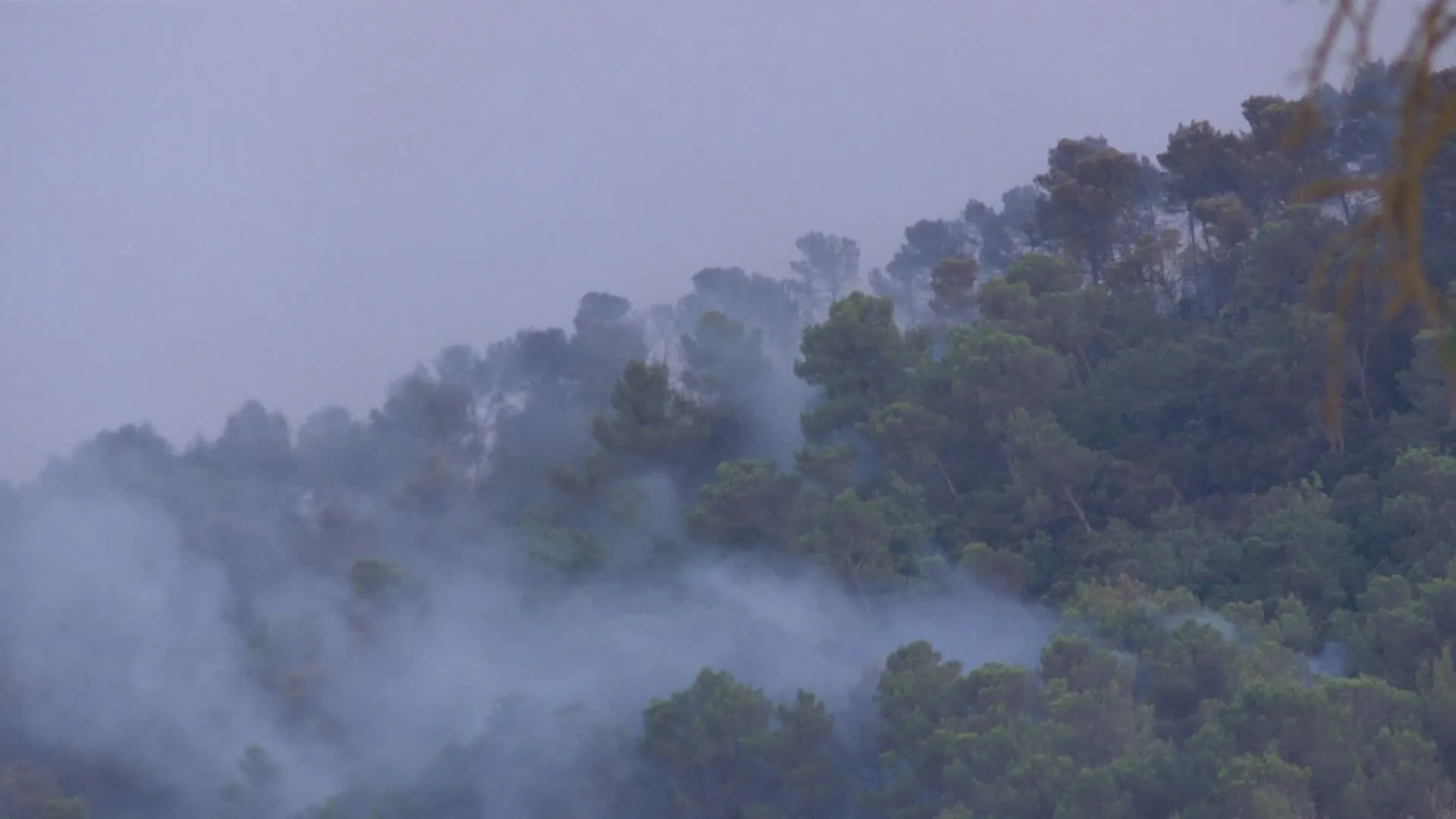
The fire began south-east of Brignoles in the Var at about 17:00 on July 29, 2026. Reporting from AFP carried by France 24 put the burned area at roughly 130 hectares, with 650 to 700 people evacuated from six districts: Pélicon, Tombarel, Les Jausserannes, Sainte-Barbe, Les Agasses and Petits Ubacs. Around 250 firefighters were mobilized, four people were injured, the fire was fixed around midnight, and evacuees were able to return on July 30. [1]
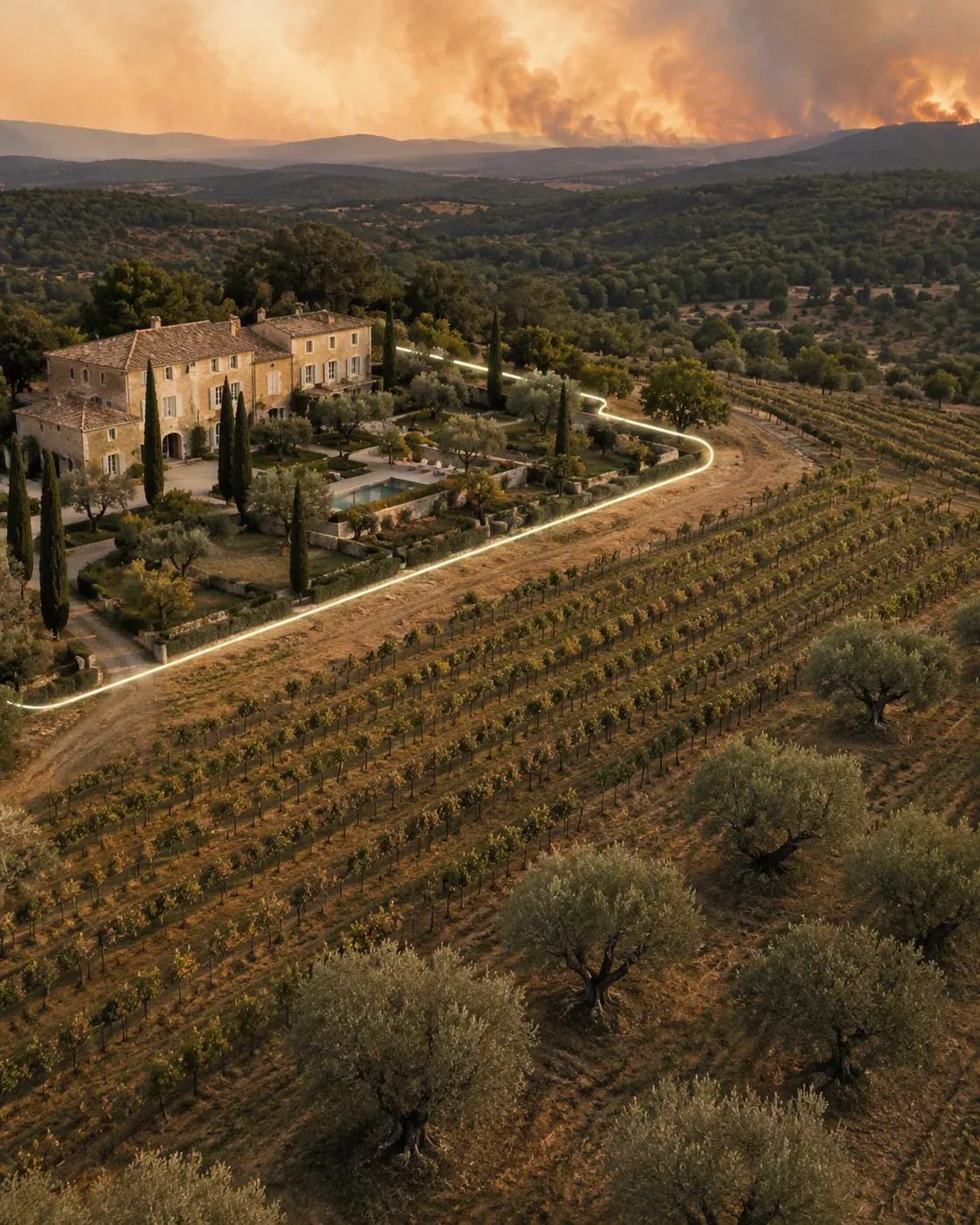
Le Monde separately reported the fire in the same Brignoles area and identified the Clooneys’ property, Domaine du Canadel, as a 170-hectare estate with a 900-square-meter bastide, bought in May 2021. The reported purchase price, about €8 million, is useful only as context for why the property attracts attention; it is not a verified measure of loss, insurance value, or rebuilding exposure. [5]
The human detail came through the letter attributed to George and Amal Clooney and authenticated through their agent, Guido Gotz. AP quoted the couple as writing to Brignoles Mayor Didier Brémond that “we have no idea whether our beautiful home makes it through this terrible moment,” while also committing to help the village rebuild. [6]
That sentence is doing two things at once. It shows real fear for a home and a community. It also stops short of confirming property damage. The legally careful reading is not that the estate survived; it is that the public record had not yet crossed from exposure into confirmed loss.
Domaine du Canadel: what remains unconfirmed
As of August 2, 2026, the available record supports four narrow statements. Domaine du Canadel is associated with George and Amal Clooney; the Brignoles wildfire created a serious nearby exposure; the couple reportedly left the area voluntarily; and no official source in the materials reviewed has confirmed damage to the estate.
France 3 described the estate as about 170 hectares, or 425 acres, with a large bastide and vineyard setting, and reported that the Clooneys had made it their primary residence. It also reported the May 2021 acquisition and the approximate €8 million price, while treating that figure as an estimate rather than a publicly confirmed sale value. [7]
Those property details matter because large Provençal estates do not present the same insurance problem as a single insured dwelling. The valuable things may include a house, outbuildings, vehicles, wine-production assets, vines, ornamental trees, irrigation systems, stone walls, access roads, stored equipment, and temporary accommodation needs. Some may be within a home or estate policy. Some may require separate professional, agricultural, vehicle, or high-value exterior cover. Some may sit outside ordinary household cover altogether.
No confirmed damage does not mean no claim issue. A property owner who cannot safely enter the land may still need to notify an insurer, preserve messages from local authorities, photograph smoke or access restrictions when safe, document emergency expenses, and avoid later being told that the declaration arrived late.
Why this is not a catastrophe naturelle claim
The first legal trap is the neat assumption that a major wildfire in France must be handled under the catastrophe naturelle, or CatNat, system. Forest fires are not treated that way. The materials reviewed explain that forest fires fall outside the 1982 CatNat framework because they are not among the listed non-insurable natural perils; fire is instead an insurable peril handled through ordinary insurance cover. [2]
That sends the claim back to the insurance contract. For a homeowner, the central question becomes whether the policy includes garantie incendie and what property that guarantee actually covers. For a vineyard estate, the more difficult question is not whether a house fire is covered in principle. It is whether the parts that make the estate valuable — vines, grounds, trees, plantations, outdoor installations and vehicles — are inside or outside the insured perimeter.
La finance pour tous makes the point plainly: in a forest-fire scenario, home insurance may cover the dwelling and insured contents, but gardens, trees and plantations are generally excluded from standard multi-risk home insurance, and vehicle fire cover depends on the policy options purchased. [2]
The declaration clock is the immediate legal risk
Under Article L113-2 of the French Insurance Code, the insured must declare a loss to the insurer within the contractual period, which cannot be less than five working days for most property claims. Service-Public’s wildfire guidance repeats that five-working-day rule for fire-loss declarations. [3]
In ordinary conditions, that is a tight window. After a wildfire, it can become awkward. The owner may be away. Access may be restricted. The building may not be inspected immediately. Power, water, communications, gates or roads may be affected. The insured may know there was exposure before knowing whether there was compensable damage.
France Assureurs announced an exceptional claims-handling measure for policyholders affected by the summer 2026 fires in Gironde, Landes and Var: insurers committed to extend the claim declaration deadline until August 31, 2026. [4]
That extension is important, but it should be described accurately. It is an industry commitment, not a rewrite of Article L113-2 and not a general national rule for all hazards everywhere. Its practical force is still significant for Var policyholders: it gives affected insureds time to make a cleaner declaration, gather initial evidence, and avoid filing a guess as if it were an expert report.
| Step | What the insured should separate |
|---|---|
| Initial notice | Date, policy number, address, known exposure, access limits, and whether damage is confirmed or still being assessed. |
| Evidence preservation | Photos, videos, official evacuation or access notices, firefighter or mairie communications, invoices, and emergency repair records. |
| Coverage mapping | Dwelling, contents, outbuildings, vehicles, vines, trees, plantations, equipment, irrigation, walls, pools, guest housing, and business use. |
| Expenses | Temporary accommodation, cleaning, emergency works, security, animal care, transport, and any costs tied to official orders. |
| Follow-up declaration | Corrected description once access is restored and the owner can distinguish smoke, heat, water, suppression damage, and total loss. |
Evacuation and rehousing are narrower than they look
France Assureurs also said insurers would reimburse rehousing costs for up to three weeks for insureds subject to an official evacuation order because of the fires. [4]
The official-order condition is not a drafting detail. A voluntary departure may be sensible, especially when smoke, wind, roads or emergency instructions make staying irresponsible. But if the policy or industry measure requires an official evacuation order, the claims file needs the order, the affected address, the dates, and the link between the order and the accommodation expense.
That is one reason the Clooney record should not be overstated. Reporting that the couple left voluntarily helps explain the public story. It does not by itself establish eligibility for a rehousing measure framed around official evacuation orders, and it does not prove physical damage at Domaine du Canadel.
The expensive assets may be outside the house policy
For a high-value rural estate, the biggest insurance surprise may be spatial. The insured house can sit inside one coverage line while much of the economic and aesthetic value sits outside it. Vines and olive trees may be central to what the owner believes was bought, but that does not mean they are covered under standard multi-risk home insurance.
The same problem applies to gardens, plantations and some outdoor installations. A household policy may respond to the building, contents, and certain annexes. It may not respond to landscape loss unless a specific extension exists. A vehicle parked on the estate may require its own fire guarantee under motor cover. [2]
A vineyard adds another layer. If vines are cultivated commercially, even partly, the relevant cover may not be household cover at all. The policyholder may need to look for agricultural, professional, crop, equipment, business-interruption, or estate-specific endorsements. The legal question then becomes contractual: which insured, which activity, which asset class, which peril, and which exclusions.
- The bastide: usually the easiest asset to place within a property policy, subject to sums insured, exclusions and proof of damage.
- Outbuildings and estate infrastructure: covered only if declared and included within the insured premises or extensions.
- Vines, trees and plantations: high-value assets that may fall outside standard home cover.
- Vehicles: dependent on separate motor insurance terms and whether fire cover was purchased.
- Temporary housing: dependent on policy terms and, for the 2026 industry measure, an official evacuation order.
Mitigation duties and defensible paper trails
Wildfire insurance files are rarely only about flames. They also collect questions about prevention, access, vegetation management, emergency works and post-loss preservation. French law imposes débroussaillement obligations in designated risk zones, requiring clearing of brush and vegetation around buildings and installations in order to limit fire spread. Service-Public’s guidance describes those legal clearing obligations and their geographic application. [8]
The point for an insured estate owner is not to litigate a prevention defense before any loss is confirmed. It is to preserve the file that will answer predictable questions later: maintenance contracts, brush-clearing invoices, municipal notices, photographs before and after the fire season, and communications with caretakers or estate managers.
For counsel, the same discipline applies to public statements. A statement that the property was threatened is safer than a statement that it was damaged if no authorized person has inspected it. A statement that a claim notice has been filed is different from saying the insurer has accepted coverage. A statement that the CatNat route is unavailable is not the same as saying there is no insurance.
Arson, causation and subrogation should stay in their lane
The cause of the July 29 Brignoles fire remains under investigation in the materials reviewed. That uncertainty should not be filled with a separate criminal case from the same region.
Nice-Matin reported that a 23-year-old man was placed under formal investigation on July 27, 2026 in connection with fires between July 19 and July 24 in Brignoles, Cabasse and Vins-sur-Caramy, with potential penalties of up to 15 years’ imprisonment and a €150,000 fine. That is a separate reported prosecution and should not be conflated with the July 29 fire affecting the Clooney public record. [9]
If a responsible third party is later established for a given insured loss, the insurer may have a recovery route through subrogation after indemnifying the insured. Selectra’s fire-claim guidance describes the ordinary claims path and the possibility of insurer recourse where a responsible party is identified. [10]
That is downstream work. It does not suspend the insured’s need to declare the claim, identify the damaged assets, document costs, and keep the causation record clean.
The legally safe status of the Clooney vineyard fire record
The legally safe formulation is narrow: the July 29, 2026 Brignoles wildfire threatened the area around Domaine du Canadel; George and Amal Clooney reportedly left voluntarily; their authenticated letter expressed uncertainty about whether their home would survive; and, as of August 2, 2026, no authority has confirmed property damage to the estate.
If damage is later confirmed, the claim should be analyzed through ordinary French fire insurance rather than CatNat, with attention to the five-working-day declaration rule, the France Assureurs August 31 extension for Var policyholders, and the likely coverage gap between the insured residence and exterior assets such as vines, grounds, trees and plantations.
The legal stakes are not yet a confirmed Clooney loss. They are a documented claims-timing and coverage-gap problem in French wildfire response, made visible by a famous estate whose damage status remains unconfirmed.
References
- George and Amal Clooney flee French home due to wildfire, AFP via France 24, July 30, 2026
- Assurance : quelle indemnisation en cas d'incendie de forêt ?, La finance pour tous, August 22, 2025
- Service-Public A19020, Service-Public
- Incendies en Gironde, dans les Landes et dans le Var..., France Assureurs, July 27, 2026
- George and Amal Clooney flee home in southeastern France due to wildfire, Le Monde, July 30, 2026
- French authorities allow 84,000 wildfire evacuees to return home, AP
- Nous sommes déterminés..., France 3 Régions
- Service-Public F33298 on débroussaillement, Service-Public
- Nice-Matin on the 23-year-old mis en examen, Nice-Matin
- How to Declare a Fire Claim in France, Selectra
Related records
Tool profile
How Meta's AI Spending Reshapes Law Firm ProfitabilityGoverning regulation
Browse the obligations tracker →Preventive workflow
Browse verification workflows →
Report a correction or tip
Spotted an outdated figure, a misstated fact, or a ruling this case record should reflect? Public comments are disabled for this content given the professional cost of a misreported case outcome, penalty amount, or rule text — use the structured correction channel instead.
Report a correction or tip for this record →