
How DMCA § 512(h) subpoenas unmask GTA 6 leakers
DMCA § 512(h) lets rightsholders unmask anonymous posters without filing a lawsuit, but overbroad demands still face First Amendment review on a Rule 45 motion to quash. GTA 6 maker Take-Two's three-server subpoena sweep is the live case in point.
- Jurisdiction
- U.S. federal (S.D.N.Y.)
- Court
- U.S. District Court for the Southern District of New York
- Judge
- Jennifer L. Rochon, Analisa Torres
- AI tool named
- No AI tool named
- Ruling date
- Aug 24, 2026
- Source document
- View primary court order ↗
- Last verified
- Aug 24, 2026
Lex Machina Review is an independent risk-tracking and reference resource. Nothing on this site is legal advice, and using it does not create an attorney-client relationship. Every record is reviewed against primary sources but may not reflect the most current status of a matter — always verify directly against the cited court order, rule text, or a licensed attorney before relying on it.
Companion explanation — secondary to the source document above
The legally unusual part of the GTA 6 leak hunt is not that a game publisher wants names. It is that DMCA § 512(h) gives a copyright owner a way to obtain subpoenas for identifying information without first filing an infringement lawsuit and without a judge deciding, at issuance, whether the anonymous speaker actually infringed. The statute asks for a takedown predicate, a proposed subpoena, and a sworn declaration; if those statutory pieces are in place, the clerk-side mechanism can move before ordinary merits litigation has even begun.[1]
That distinction matters in the current Take-Two campaign. For the docket-by-docket status timeline, including the September 4, 2026 deadline and later verification updates, the live status record is Who is Rockstar's parent subpoenaing over the GTA 6 leaks?. This companion analysis uses the same campaign to explain the machinery. As of that record’s last-verified status on August 24, 2026, the confirmed federal matters were the Microsoft matter, No. 1:26-mc-00421 before Judge Jennifer L. Rochon, and the X Corp. matter, No. 1:26-mc-00426 before Judge Analisa Torres; no user data had been confirmed produced.[2][3]
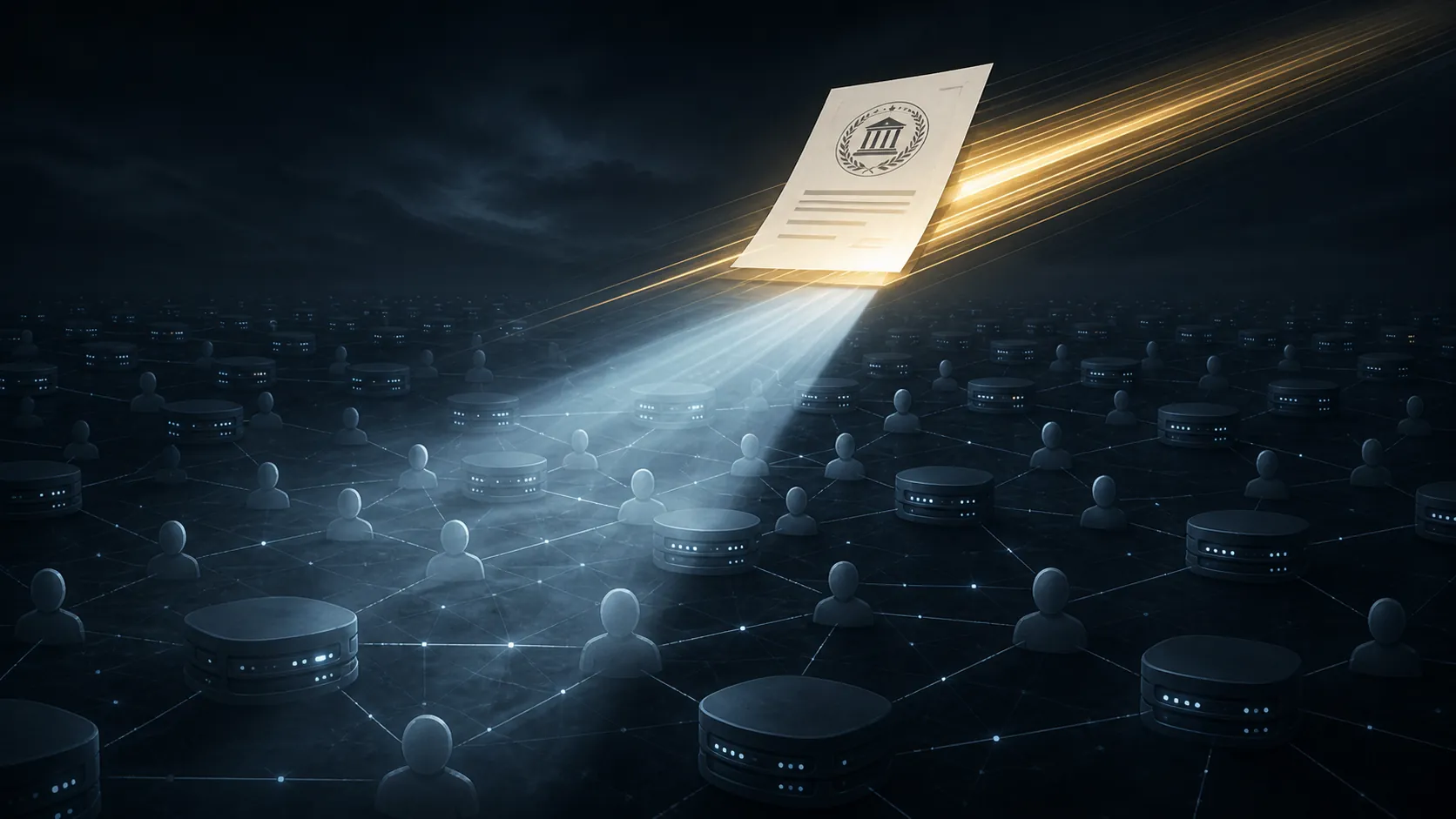
So the careful formulation is not “the leaker was unmasked.” It is: Take-Two obtained orders directing issuance of subpoenas that, if honored and not narrowed or quashed, could identify accounts associated with the spread of alleged GTA 6 leak material. A clerk-issued subpoena, a judge’s order directing issuance, actual platform production, and a ruling that the demand survives a First Amendment challenge are four different procedural events. Collapsing them into one headline is how bystanders in a server become “leakers” before anyone has tested the premise.
The live sweep: three servers, many identifiers, and a short fuse
The Take-Two requests are broad enough to make the procedural posture more than academic. The materials described in the filings and exhibits seek records tied to accounts that communicated in three named Discord servers — Ødyssey.gg, “! Odyssey,” and DarkViperAU — from June 1, 2026 forward.[4][5] The categories reportedly include account IDs, registration emails, IP addresses, phone numbers, device identifiers, message logs, telemetry, and OneDrive content associated with responsive accounts.[4][6]
That is not just a request to identify one uploader of one file. It is an account-and-communications sweep built around presence and activity in named servers during a defined period. Some of those accounts may have posted alleged infringing material. Some may have repeated it. Some may have commented on it. Some may have been in the wrong place when the subpoena passed through. The law has tools for copyright owners to identify infringers; it also has tools for platforms and affected users to say the identification demand has outrun the showing.
The X portion needs the same discipline. TorrentFreak reported that the three X accounts named in the X subpoena had been flagged by the GTA community as impostors and were suspended, and that the filing did not say whether Take-Two treated them as the source of the leak or as copycats.[7] That is an attribution warning, not an invitation to solve the identity puzzle in public. Reported Discord and Google/YouTube details likewise should not be elevated beyond the sources that actually verify them; the confirmed case numbers in this analysis are the Microsoft and X matters.
The same restraint applies to older GTA leak history. The 2022 Lapsus$/Arion Kurtaj criminal matter involved a different actor and a different proceeding; it should not be folded into the civil Cyberleek subpoena campaign as if it were the same dispute.
What § 512(h) actually requires
Section 512(h) is not a litigation subpoena wearing a different label. Congress gave copyright owners a specific identification mechanism tied to the DMCA takedown system. To request one, the owner or authorized agent must submit three things to the clerk: a copy of a notification described in § 512(c)(3)(A), a proposed subpoena, and a sworn declaration stating that the purpose is to obtain the identity of an alleged infringer and that the information will be used only to protect rights under Title 17.[1]
The notification predicate is doing real work. A § 512(h) subpoena rides on a takedown-style assertion that copyrighted material is being infringed online. In the Take-Two materials, the reported predicates include an August 19, 2026 GitHub notice stating that the repository “must be completely disabled,” and a YouTube Content ID reference identified as UNAUTH_2026AUG_VIDEO2.[6][7] Those facts help explain why Take-Two reached for § 512(h) rather than beginning with a complaint and Rule 26 discovery.
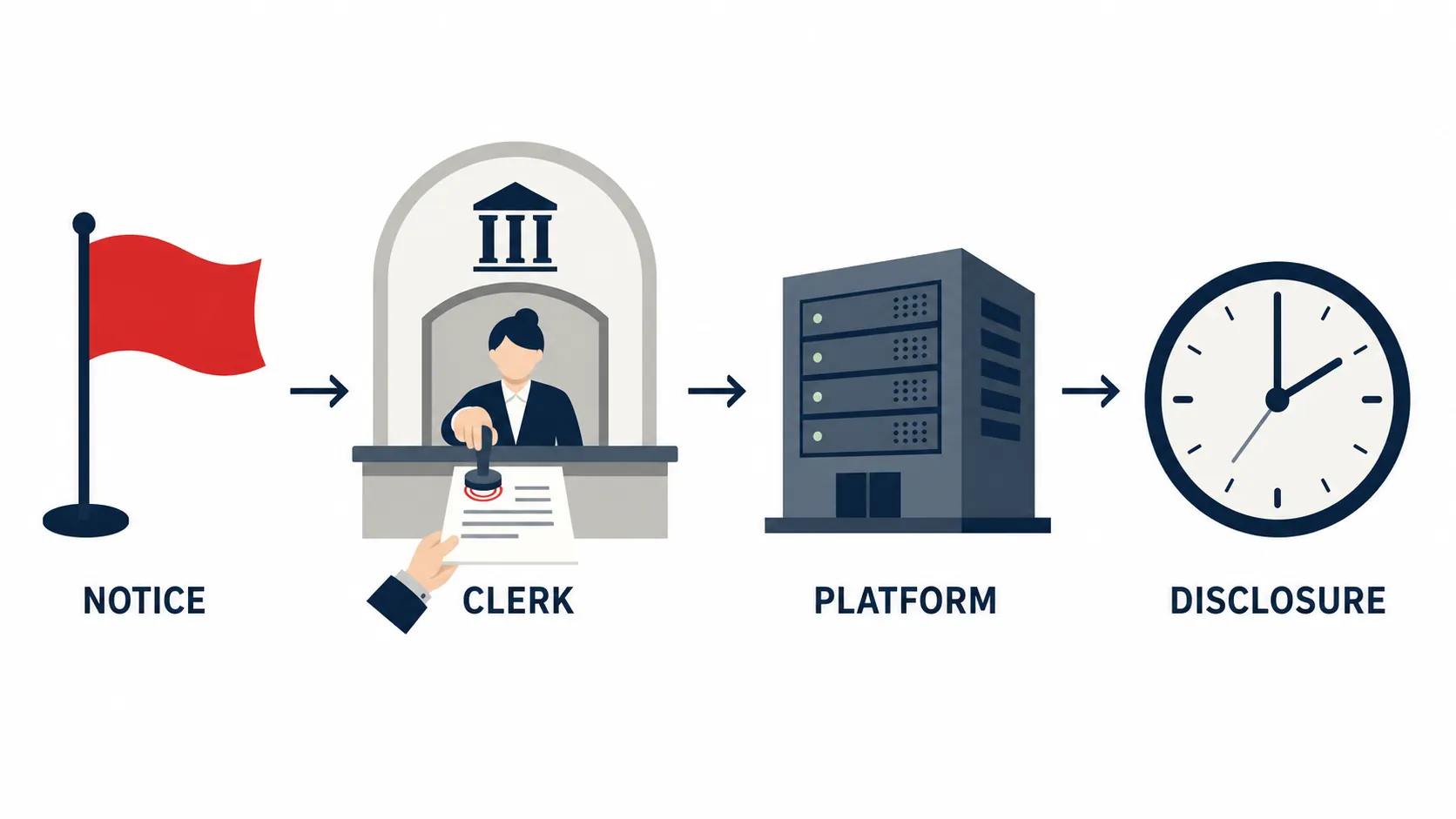
Once the required materials are submitted, the statute says that if the notification satisfies § 512(c)(3)(A), the proposed subpoena is in proper form, and the declaration is properly executed, the clerk “shall expeditiously issue and sign” the subpoena and return it for delivery to the service provider.[1] That is the point many public accounts miss. At issuance, the clerk is not deciding whether the anonymous users infringed. The clerk is checking statutory form.
The subpoena itself then “shall authorize and order” the service provider to “expeditiously disclose” information sufficient to identify the alleged infringer of the material described in the notification.[1] In ordinary civil discovery, a plaintiff usually needs a case, a discovery plan or early-discovery order, and time for adversarial process. Section 512(h) compresses that sequence. That compression is the feature rightsholders value and the source of the risk for anonymous users.
Clerk issuance is powerful because it arrives before merits review
For a platform lawyer, the practical problem is immediate. The subpoena may arrive with court paperwork and a deadline, but that does not mean a judge has already held that every requested account identifier, device ID, message log, telemetry record, or stored file is lawfully discoverable. It means the statutory packet was accepted for issuance. The platform still has to decide whether to produce, notify users, negotiate narrowing, or move to quash.
For an anonymous user’s lawyer, the problem is even tighter. The user may learn about the subpoena only if the platform gives notice, if the platform’s policies allow notice, and if the deadline leaves enough time to appear. A § 512(h) request aimed at “accounts that communicated” in several servers may include people with very different factual positions. One account may have uploaded leaked video. Another may have reacted to a link. Another may have criticized the publisher. The subpoena form does not sort those people by culpability.
This is why the September 4 status date in the Take-Two record is not just a scheduling note. It is the window in which someone has to decide whether the breadth of the demand is tolerable, whether user notice is required or appropriate, and whether a challenge can be filed before production happens. Once identifying information is produced, later narrowing may be legally important but practically incomplete.
The First Amendment brake runs through Rule 45
The best-developed limiting authority in the materials is not from the Southern District of New York GTA 6 matters. It is the Northern District of California’s In re DMCA § 512(h) Subpoena to Twitter, Inc. line, where Judge Vince Chhabria held that a DMCA subpoena seeking to identify an anonymous Twitter user had to be tested against First Amendment anonymous-speech protections.[8]
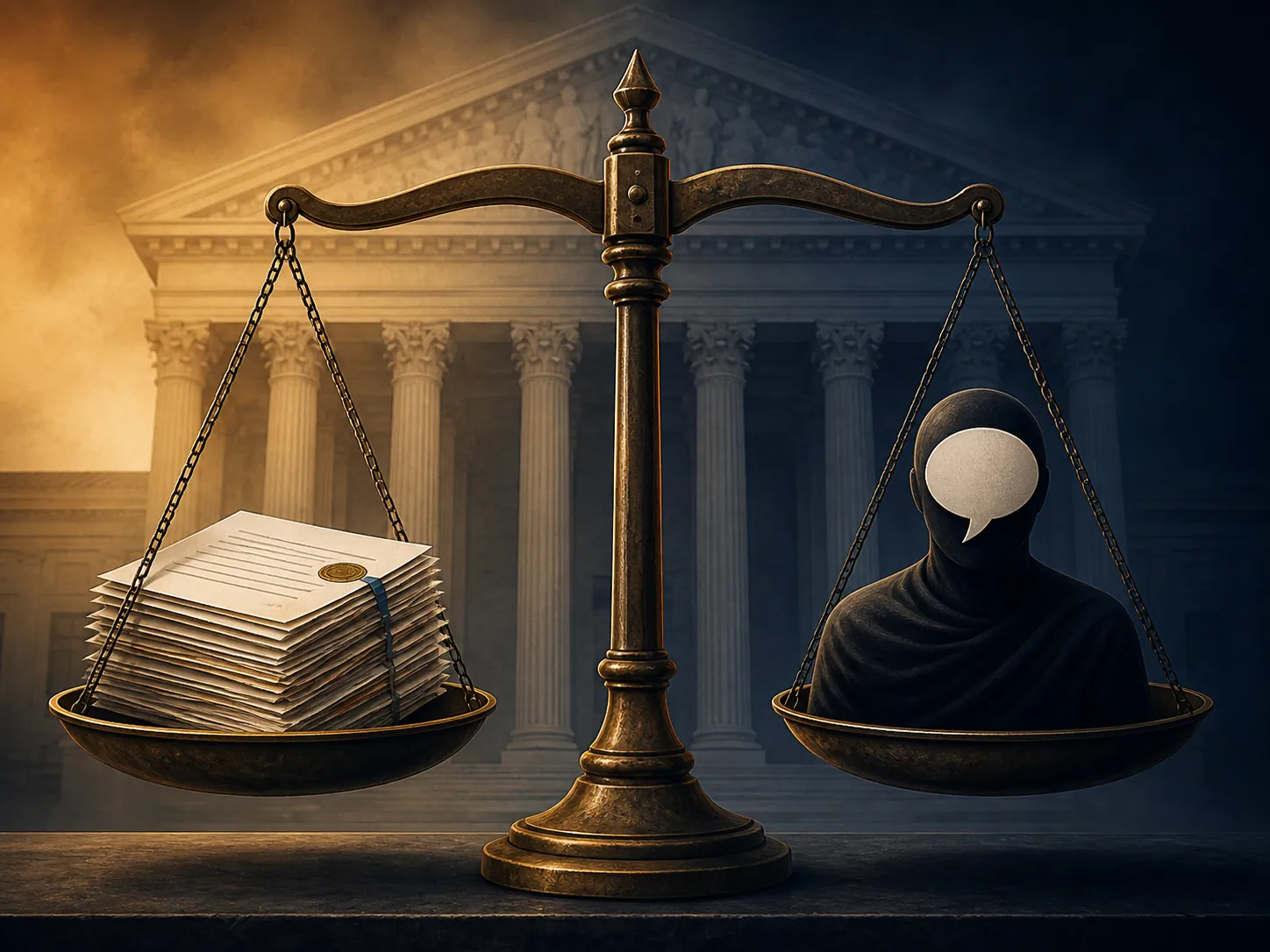
The route into that analysis is § 512(h)(6). That subsection incorporates the Federal Rules of Civil Procedure governing issuance, service, and enforcement of subpoenas to the greatest extent practicable.[1] Rule 45(d)(3)(A)(iii), in turn, requires a court to quash or modify a subpoena that requires disclosure of privileged or other protected matter if no exception or waiver applies. Anonymous speech can be protected matter. So the fight is not over whether § 512(h) exists. It is over whether this subpoena, against this record, can pierce anonymity.
Judge Chhabria applied a two-step approach. First, the copyright owner had to make a prima facie showing of infringement. Second, if that showing was made, the court had to balance the need for disclosure against the First Amendment harm from unmasking the anonymous speaker.[8] That structure is a useful antidote to two overstatements: the DMCA does not automatically defeat anonymity, and anonymity does not automatically defeat a copyright-identification subpoena.
Applied cautiously to the Take-Two sweep, the likely pressure point is breadth. A request for information sufficient to identify the account that uploaded a specific allegedly infringing video presents one problem. A request covering every account that communicated in three named servers since June 1, 2026 presents another. The latter makes the prima facie and balancing questions harder because the link between the protected work, the allegedly infringing act, and each account may vary sharply across the population swept in.
That is a prediction about where a challenge would focus, not a holding in the GTA 6 matters. As of the August 24, 2026 verification point in the live record, no court in those matters had been asked to apply the In re Twitter test to Take-Two’s subpoenas. Northern District of California authority is not the same thing as a Southern District of New York ruling on this record.
What issuer-side counsel should have in the file
A § 512(h) request can be fast, but speed is not a substitute for a record. The issuer’s file should be able to survive the motion-to-quash brief that may arrive after the subpoena is served.
- A clean § 512(c)(3)(A) notification predicate tied to the material at issue, not a vague assertion that leak discussion exists somewhere online.
- A sworn declaration that tracks § 512(h): the purpose is to identify an alleged infringer, and the information will be used only to protect copyright rights.
- Source-link discipline. If the request depends on a GitHub repository, YouTube upload, Discord message, X post, or stored file, counsel should be able to explain which source connects which account or platform to which alleged infringement.
- A tailoring rationale for each category of data. Account ID and registration email are different from message logs, telemetry, device identifiers, phone numbers, and cloud-storage content.
- A narrower fallback. If a court is troubled by “every account that communicated” in a server, the issuer should be prepared to identify the smaller subset that matters most.
The temptation in an urgent leak investigation is to ask first and sort later. Section 512(h) makes that temptation procedurally available. The First Amendment cases make it dangerous when the subpoena reaches speakers whose connection to infringement is thin or unexplained.
What platform and user-side counsel should check first
The defense posture starts with timing. A motion to quash filed after production may still matter, but it cannot fully restore anonymity. The first review should be operational as much as doctrinal: who received the subpoena, what deadline applies, what notice can be given, and whether the user or platform can get before the issuing court in time.
- Standing and participation: can the platform object, can the user appear anonymously, and does local practice require a specific procedural path?
- User notice: what do the platform’s policies, the subpoena, and any court order say about notice, delay, or confidentiality?
- Overbreadth: does the subpoena identify alleged infringers, or does it collect everyone who communicated in a location where infringement was discussed?
- Protected anonymity interests: were users engaged in commentary, criticism, reporting, or other speech distinct from uploading or distributing alleged copyrighted material?
- Prima facie infringement: has the copyright owner connected each targeted account category to copying, distribution, display, or another actionable act?
- Balancing of harms: what is the copyright owner’s need for the specific identifying information, and what speech or associational harm follows from disclosure?
- Narrowing before motion practice: can the subpoena be limited to particular messages, accounts, files, dates, or identifiers without giving up the core dispute?
Negotiated narrowing is not capitulation. In this setting it may be the difference between identifying a plausible uploader and exposing a crowd of server participants whose legal positions have never been separated.
Where the record stops
Take-Two’s filings show why § 512(h) is a powerful copyright-enforcement tool: a rightsholder can move quickly from takedown predicate to subpoena issuance, and the statute tells the recipient to disclose identifying information expeditiously. The same filings show the fault line: a demand built around three Discord servers, multiple identifier categories, communications records, telemetry, and cloud content invites the question whether the subpoena is identifying alleged infringers or sweeping too many anonymous speakers into the same net.
The In re Twitter authority supplies a serious brake: prima facie infringement first, then balancing of copyright need against anonymous-speech harm, through Rule 45 as incorporated by § 512(h)(6). But that brake operates only if someone invokes it. As of the last-verified GTA 6 status record on August 24, 2026, no court in the confirmed Take-Two matters had applied that test to these subpoenas, and no production of user data had been confirmed.
References
- 17 U.S. Code § 512 - Limitations on liability relating to material online, Cornell Legal Information Institute
- In re Take-Two Interactive Software, Inc., 1:26-mc-00421, CourtListener
- Take-Two Interactive Software Inc., 1:26-mc-00426, CourtListener
- Exhibit A, In re Take-Two Interactive Software, Inc., CourtListener
- Exhibit A, In re Take-Two Interactive Software, Inc., CourtListener
- Take-Two subpoenas Microsoft for Windows device IDs of everyone in three Discord servers in GTA 6 leak hunt, Tom's Hardware
- Take-Two Expands GTA 6 Leak Hunt With DMCA Subpoenas, TorrentFreak
- In re DMCA § 512(h) Subpoena to Twitter, Inc., No. 20-mc-80214, Order, CourtListener
Related records
Tool profile
How Meta's AI Spending Reshapes Law Firm ProfitabilityGoverning regulation
Browse the obligations tracker →Preventive workflow
Browse verification workflows →
Report a correction or tip
Spotted an outdated figure, a misstated fact, or a ruling this case record should reflect? Public comments are disabled for this content given the professional cost of a misreported case outcome, penalty amount, or rule text — use the structured correction channel instead.
Report a correction or tip for this record →