
DNC lost $28,860 to an email scammer posing as Ken Martin
Verified via FEC correspondence: the DNC lost $28,860.92 to a scammer posing as Chair Ken Martin in February 2025 and recovered only $7,000 (~24%) despite detecting the fraud within minutes. The risk lesson for legal and finance teams is that post-payment recovery is unreliable — two-person authorization and independent out-of-band verification of wire instructions are the controls that prevent the loss.
- Jurisdiction
- US federal
- Court
- Federal Election Commission (FEC)
- AI tool named
- No AI tool named
- Ruling date
- Jul 8, 2025
- Source document
- View primary court order ↗
- Last verified
- Aug 2, 2026
Lex Machina Review is an independent risk-tracking and reference resource. Nothing on this site is legal advice, and using it does not create an attorney-client relationship. Every record is reviewed against primary sources but may not reflect the most current status of a matter — always verify directly against the cited court order, rule text, or a licensed attorney before relying on it.
Companion explanation — secondary to the source document above
The verified record on the DNC’s Ken Martin impersonation loss is narrower, and more useful, than the political shorthand. In February 2025, an unknown external party impersonated Democratic National Committee Chair Ken Martin in an email to a DNC staffer. The payment that followed was listed in FEC correspondence as a “Misdisbursement—seeking return of funds” in the amount of $28,860.92.[1][2]
The DNC’s later response said the transaction involved “fraudulent activity by an external third party” and that the committee had “no reason to believe” the payment involved personnel misconduct.[3] The committee detected the fraud within minutes, notified Wells Fargo, and recovered $7,000 of the $28,860.92.[4] That is roughly 24% of the payment, leaving most of the money unrecovered even under a prompt-detection fact pattern.

As of August 2, 2026, the public record cited here does not report an arrest, criminal charge, court action, or FEC enforcement outcome arising from the payment. The FEC inquiry letter warned that “the Commission may take further legal action,” but a warning in an inquiry letter is not an enforcement finding.[1][2]
What the FEC correspondence establishes
The starting point is the FEC paper trail, not the after-market commentary. The July 8, 2025 FEC inquiry letter to DNC treasurer Virginia McGregor flagged a February disbursement entry described as “Misdisbursement—seeking return of funds” and identified the amount as $28,860.92.[1][2] That exact amount matters. “Nearly $29,000” is fine for a headline; it is not fine for a binder tab.
| Record point | What is supported |
|---|---|
| Committee | Democratic National Committee |
| Month of payment | February 2025 |
| Impersonated person | DNC Chair Ken Martin |
| Actor identified in the record | Unknown external party |
| Amount in FEC correspondence | $28,860.92 |
| Description in FEC correspondence | “Misdisbursement—seeking return of funds” |
| Amount recovered | $7,000 |
| Reported enforcement posture as of August 2, 2026 | No reported arrest, charge, court action, or FEC enforcement outcome in the cited public record |
The DNC’s August 2025 response is the next layer. As described in reporting on that response, the committee characterized the incident as external fraud, not internal theft, and said it had no reason to believe personnel misconduct was involved.[3] That distinction should not be softened. There is a considerable difference between a staffer being deceived by an outside impersonator and a staffer misappropriating committee money.
NOTUS supplied the surrounding narrative: the fraudulent email posed as Martin, went to a DNC staffer, and led to the disbursement days after Martin became chair.[4] NOTUS also reported that the staffer later left the committee, but the available record does not support treating the departure as caused by the payment. If the only support is sequence, the safe verb is “left,” not “was fired over.”
The uncomfortable timeline: fast detection, limited recovery
The key operational sequence is short enough to fit on one page: money moved; the fraud was detected within minutes; Wells Fargo was notified; $7,000 came back; $21,860.92 did not.[4] That is the part of the file that should travel beyond campaign-finance circles, because it defeats the usual reassurance that a quick internal catch will make the organization whole.
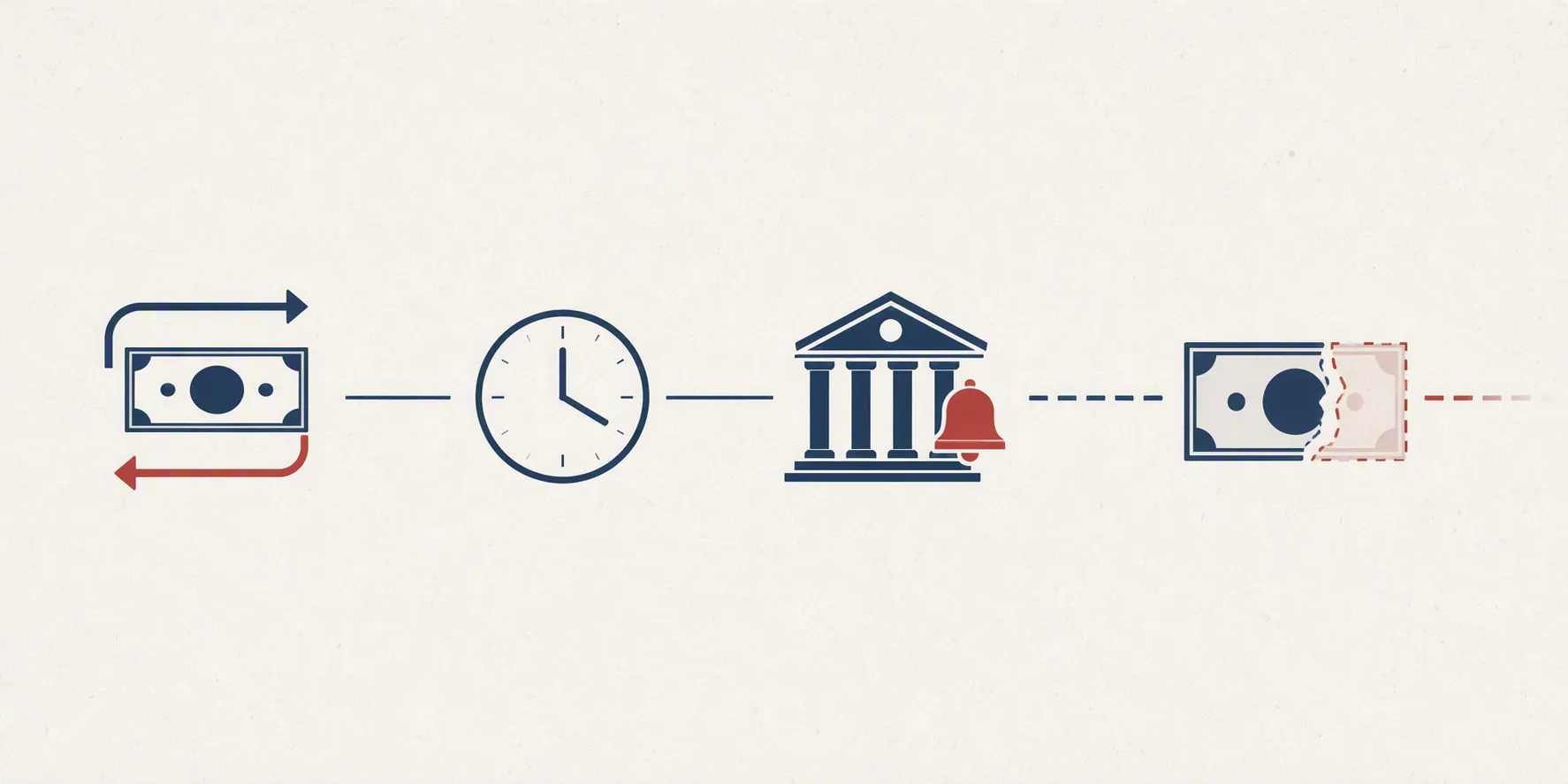
There is no need to exaggerate the DNC’s response failure. Detecting a fraudulent payment within minutes is materially better than finding it during a monthly reconciliation. Notifying the bank promptly is exactly what a treasurer, finance director, or general counsel would want documented. Those facts should be credited.
But recovery is a different control objective. A bank notification after release depends on where the funds are, whether they have moved again, what intermediary institutions can freeze, and how fast the recipient account can be identified. The DNC’s result is therefore useful precisely because the detection facts are favorable. Even with a prompt internal catch, the committee recovered only $7,000 of $28,860.92.[4]
Spokesperson Mia Ehrenberg described the incident to NOTUS as “a one-off mistake that was promptly caught and addressed.”[4] That may be fair as a communications sentence. It is not a sufficient risk-control sentence. “Promptly caught” describes detection. “Addressed” describes response. Neither word proves that the payment-release process prevented the loss.
What is not in the record
The impersonator’s identity is not established in the cited public record. The record does not show that a DNC employee stole the money. The record does not show that Ken Martin sent the instruction. The record does not show that artificial intelligence was used to generate the email. It shows an external impersonation email, a committee payment, partial recovery, and FEC correspondence asking for an explanation.
That boundary is not an exercise in charity. It is how the file should be read if it is going to be useful in a partner briefing, a client alert, or a control review. Unsupported embellishment makes the incident easier to circulate and harder to rely on.
Why the safe-harbor language should be handled carefully
The DNC response said its internal controls were “consistent with” the FEC safe-harbor policy.[3] That wording deserves close reading. “Consistent with” is the committee’s characterization. It is not the same thing as an FEC finding that the safe harbor applies to this particular loss.
The FEC’s safe-harbor policy was adopted for misreporting due to embezzlement and sets out minimum internal controls a political committee should maintain, including controls over bank accounts, receipts, disbursements, and reconciliation.[5][6] The DNC incident, as described in the available record, involved external impersonation rather than a finding of insider embezzlement. The policy is still relevant because its control concepts are the right neighborhood; it should not be stretched into an agency blessing of the DNC’s handling of this payment.
For payment controls, the safe-harbor discussion points to the question that matters: before money leaves the account, did the organization require independent approval and verification sufficient to break the impersonator’s chain of instruction?
The control failure to study is release, not recognition
For committees, law firms, client-trust operations, settlement administrators, and in-house legal departments, the DNC incident is not primarily a lesson in spotting a suspicious email. It is a lesson in what must happen before a payment instruction becomes a bank instruction.
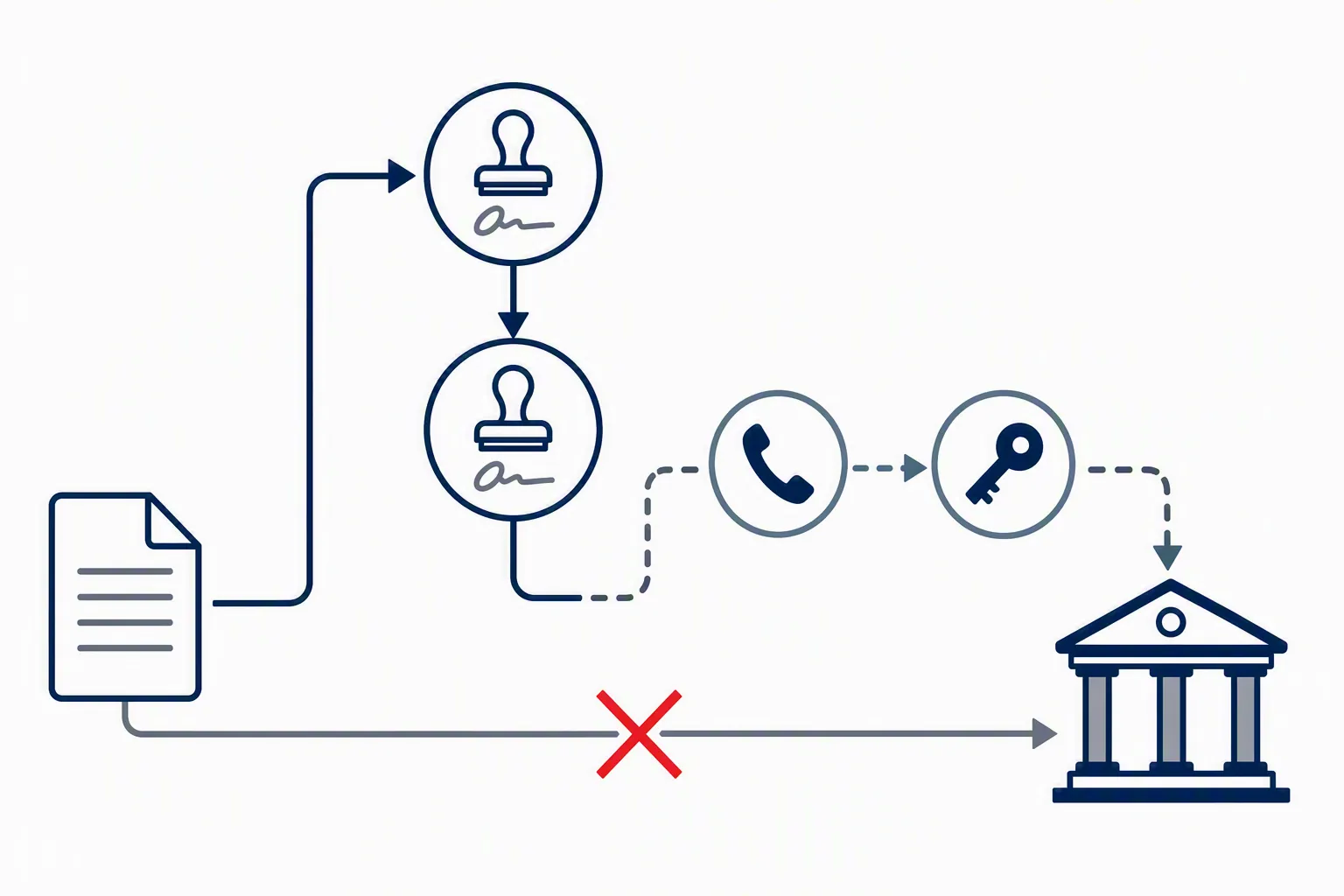
The two controls that matter most here are written two-person authorization and independent out-of-band verification of wire instructions. They do different work.
- Written two-person authorization asks whether a second authorized person reviewed and approved the payment before release. The second person should not merely be copied on the same email chain that created the risk.
- Independent out-of-band verification asks whether the payment instruction was confirmed through a trusted channel that the email requester did not supply or control, such as a known phone number or previously established vendor, client, or committee contact protocol.
Those controls are not interchangeable. A second approver who relies on the same fraudulent email has added hierarchy, not verification. A phone call to a number embedded in the suspicious email has added activity, not independence. The approving file should show who authorized the payment, what source established the payee or wire details, which trusted contact channel was used, and when the bank instruction was released.
For a legal or finance team, the practical test is simple: could the impersonator succeed with one convincing email to one person? If yes, the process is still exposed. The DNC record matters because the organization’s later speed did not convert an exposed release process into full recovery.
A control file should answer these questions before payment
- Who requested the payment, and through what channel?
- Was the requester authorized to initiate that type and amount of payment?
- Who approved the payment independently of the requester?
- Were bank or wire instructions verified through a trusted channel already in the organization’s records?
- Was any change in payee, account, routing, timing, urgency, or communication channel treated as a red flag requiring re-verification?
- Could an auditor reconstruct the approval and verification path without relying on memory?
The last question is the one that tends to surface after the money is gone. A staffer may remember calling someone. A finance approver may remember checking with a colleague. A treasurer may remember a policy. None of that is the same as a contemporaneous record showing that the payment instruction was independently verified before release.
Financial context is background, not causation
The DNC’s broader financial position has been reported separately, and it should be kept separate. PBS NewsHour, citing Associated Press reporting, described DNC financial context as of June 30, 2026: $16.3 million in cash and $18.5 million in debt.[7] NOTUS also reported that the DNC had pledged its headquarters as collateral for a $15 million credit line.[8]
Those figures provide scale. They do not prove that the February 2025 impersonation loss caused later financial strain, affected the credit line, or explains the committee’s broader operating condition. A $28,860.92 loss can be operationally serious without being the reason for every later balance-sheet headline.
The payment-control lesson
The DNC caught the fraud within minutes and notified its bank. The committee still recovered only $7,000 of $28,860.92.[4] That is the fact worth retaining after the partisan noise drops away.
For any organization releasing committee funds, client funds, settlement proceeds, escrow money, or trust-account money on email instructions, post-payment recovery is not the control to bet on. The reliable control point is before release: written two-person authorization, paired with independent out-of-band verification of wire instructions, documented well enough that the file can survive the awkward briefing later.
References
- DNC Gave Tens of Thousands of Dollars to Scammer Pretending to Be Ken Martin, The New Republic
- DNC Paid Big Bucks to Email Scammer Posing as Chair Ken Martin, Officials Reveal, Mediaite
- DNC scammed out of nearly $30K by Ken Martin impersonator, The Washington Times
- The DNC Lost Nearly $29,000 to an Email Scammer Posing as Ken Martin, NOTUS
- Safe harbor for misreporting due to embezzlement, Federal Election Commission
- Statement of Policy: Safe Harbor for Misreporting Due to Embezzlement, Federal Register, April 5, 2007
- Inside the furor plaguing Democratic National Committee leader Ken Martin, PBS NewsHour
- DNC Headquarters Used as Collateral for Loan as Ken Martin Tries to Shore Up Party Finances, NOTUS
Related records
Tool profile
How Meta's AI Spending Reshapes Law Firm ProfitabilityGoverning regulation
Browse the obligations tracker →Preventive workflow
Browse verification workflows →
Report a correction or tip
Spotted an outdated figure, a misstated fact, or a ruling this case record should reflect? Public comments are disabled for this content given the professional cost of a misreported case outcome, penalty amount, or rule text — use the structured correction channel instead.
Report a correction or tip for this record →