
Why Don Lemon Was Indicted Over a St. Paul Church Protest
Federal prosecutors charged Don Lemon and eight others under the FACE Act and a federal conspiracy statute after protesters disrupted a January 2026 Sunday service at Cities Church in St. Paul. The piece breaks down the two counts, the contested path to indictment — including a magistrate judge's rejection of the initial charges — and the dismissal arguments now pending.
- Jurisdiction
- US Federal - Minnesota
- Court
- U.S. District Court for the District of Minnesota
- AI tool named
- No AI tool implicated
- Ruling date
- Jan 29, 2026
- Source document
- View primary court order ↗
- Last verified
- Aug 27, 2026
Lex Machina Review is an independent risk-tracking and reference resource. Nothing on this site is legal advice, and using it does not create an attorney-client relationship. Every record is reviewed against primary sources but may not reflect the most current status of a matter — always verify directly against the cited court order, rule text, or a licensed attorney before relying on it.
Companion explanation — secondary to the source document above
Record status: Verified through August 27, 2026. A federal grand jury has indicted Don Lemon and eight other people over the January 18 disruption of worship at Cities Church in St. Paul. Lemon has pleaded not guilty, dismissal arguments remain unresolved, and the case is the first criminal prosecution under the religious-worship provision of the Freedom of Access to Clinic Entrances Act, commonly called the FACE Act.[1][2][3]
The primary charging record discussed below is the January 29 indictment in United States v. Lemon, No. 0:26-cr-00025-LMP-DLM, Document 39. The statutory analysis also draws on the text of 18 U.S.C. §§ 2, 241 and 248 and attributed legal analysis from Lawfare. Later defense activity is sourced to court-focused reporting and the Knight First Amendment Institute’s case page. This article provides general legal information, not legal advice.
The procedural fact the indictment headline leaves out
The government did not obtain the charges against Lemon on its first attempt. Prosecutors initially sought criminal complaints against eight people. A federal magistrate judge found insufficient probable cause to approve charges against five of them, including Lemon, while reportedly directing prosecutors toward the grand-jury process. Prosecutors then presented the case to a grand jury, which returned an indictment naming nine defendants on January 29.[1][4]
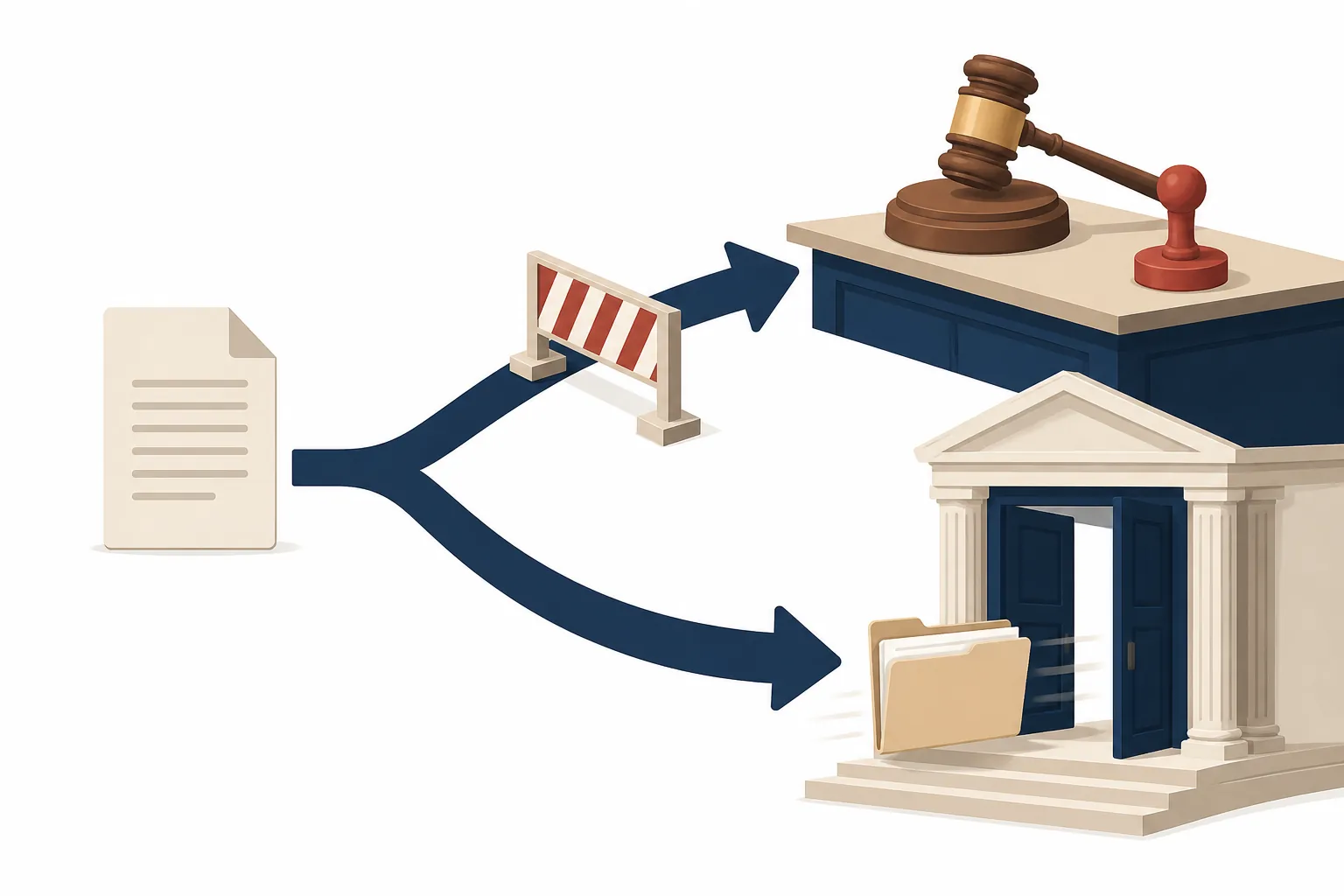
Those outcomes came from different mechanisms. A criminal complaint generally requires a judge to decide whether sworn allegations establish probable cause. A grand jury hears evidence presented by prosecutors and decides whether probable cause exists to issue an indictment; the defense ordinarily does not present its competing case at that stage.
The later indictment therefore did not erase the magistrate judge’s rejection, but neither did that rejection prevent prosecutors from using another lawful charging route. Most importantly, neither decision determined guilt. The contrast matters because it shows that the sufficiency of the government’s allegations was disputed before Lemon was arrested, not merely after defense lawyers began attacking the case.
| Date | Procedural event | What it established—and what it did not |
|---|---|---|
| January 18, 2026 | Protesters disrupted a Sunday service at Cities Church. | The event supplied the conduct investigated by state and federal authorities; competing descriptions of that conduct remained unresolved. |
| Around January 22 | Prosecutors sought complaints against eight people; a magistrate judge rejected charges against five, including Lemon, for insufficient probable cause.[4] | The requested complaints were not approved as to those five. This was not an acquittal. |
| January 29 | A grand jury indicted Lemon and eight co-defendants; Lemon was arrested in Beverly Hills.[1][5] | The indictment authorized prosecution. It was not a finding of guilt. |
| January 30 | Lemon was released on his own recognizance despite a prosecution request for a $100,000 bond.[5] | Release conditions addressed pretrial custody, not the merits. |
| February 6 | Co-defendant Ian Austin filed a motion arguing that the indictment failed to state an offense.[6] | The filing raised a legal challenge for the court to decide. |
| February 13 | Lemon and co-defendants pleaded not guilty before Magistrate Judge Douglas L. Micko.[2] | The pleas joined the legal and factual issues for litigation. |
| By August 12 | Press and civil-liberties organizations filed an amicus brief supporting dismissal on First Amendment grounds.[7] | An amicus brief offers outside legal argument; it does not decide the motion. |
The numbers also require care. The January 29 indictment names nine defendants: Nekima Levy-Armstrong, Megan Allen, Alayna Kelly, Don Lemon, Georgia Fort, Ryan Lundy, Lola Crews, Grace Fort and Ian Austin. The earlier complaint reportedly targeted eight people.[1][4] A separate Associated Press account referred more broadly to federal civil-rights charges against 39 people, but that figure is not the defendant count in this indictment and should not be substituted for the nine names in the charging document.[8]
What the two federal counts allege
The indictment describes the church action as a coordinated “takeover-style attack” associated with an effort called “Operation Pullup.” That is the prosecution’s characterization, not an adjudicated account of what every defendant did or intended.[1] The two counts depend on different statutes, even though both arise from the same event.
Count one: interference with religious worship under the FACE Act
Section 248(a)(2) makes it a federal crime intentionally to injure, intimidate or interfere with a person—or attempt to do so—by force, threat of force or physical obstruction because that person is lawfully exercising the First Amendment right of religious freedom at a place of worship. The government therefore needs more than proof that a protest was loud, offensive or unwelcome. Its theory must fit one of the statutory means: force, a threat of force or physical obstruction.[1][3]
That language explains why descriptions of movement inside the church matter. Who blocked whom, whether congregants could enter or leave, how long any obstruction lasted, and what each defendant intended are potentially consequential facts. The indictment supplies the government’s allegations, but those allegations have not yet been tested through a trial record.
It is misleading to label the FACE Act count categorically as either a misdemeanor or a felony without identifying the applicable penalty tier. The materials describe a maximum of six months when the offense consists exclusively of nonviolent physical obstruction, a generally applicable maximum of 18 months, and a maximum of 10 years if bodily injury is proved.[3] Which tier could apply depends on facts and legal findings that the indictment itself does not settle.
The novelty is real. Congress added the worship provision in 1994, in an amendment associated with concern about attacks on Black churches, but this is reported to be the first criminal case brought under that provision.[3] A provision can sit in the U.S. Code for decades without generating enough decisions to answer its difficult boundary questions. Calling the prosecution routine would conceal that absence of precedent.
Count two: conspiracy against rights
Section 241 applies when two or more people conspire to injure, oppress, threaten or intimidate someone in the free exercise or enjoyment of a right secured by the Constitution or federal law. In this case, prosecutors allege a conspiracy directed at worshippers’ protected exercise of religion.[1]
The hard question is not whether religious exercise receives constitutional protection; it plainly does. The dispute is whether the indictment adequately connects the alleged agreement and conduct to a right enforceable through Section 241 in this setting. Lawfare’s analysis argues that the count may fail to identify a right secured by law with the necessary precision and questions the relationship between the Section 241 theory and the FACE Act’s own statutory predicates. Those are expert objections being presented for judicial consideration, not holdings already adopted by the court.[3]
The indictment also invokes 18 U.S.C. § 2, the federal aiding-and-abetting statute. Section 2 can make someone punishable as a principal if that person intentionally assists the commission of a federal offense. It does not eliminate the need to prove the underlying crime or the defendant’s legally required intent, and its inclusion does not by itself establish that reporting, livestreaming or interviewing amounted to criminal assistance.
The protest and the conflict behind it
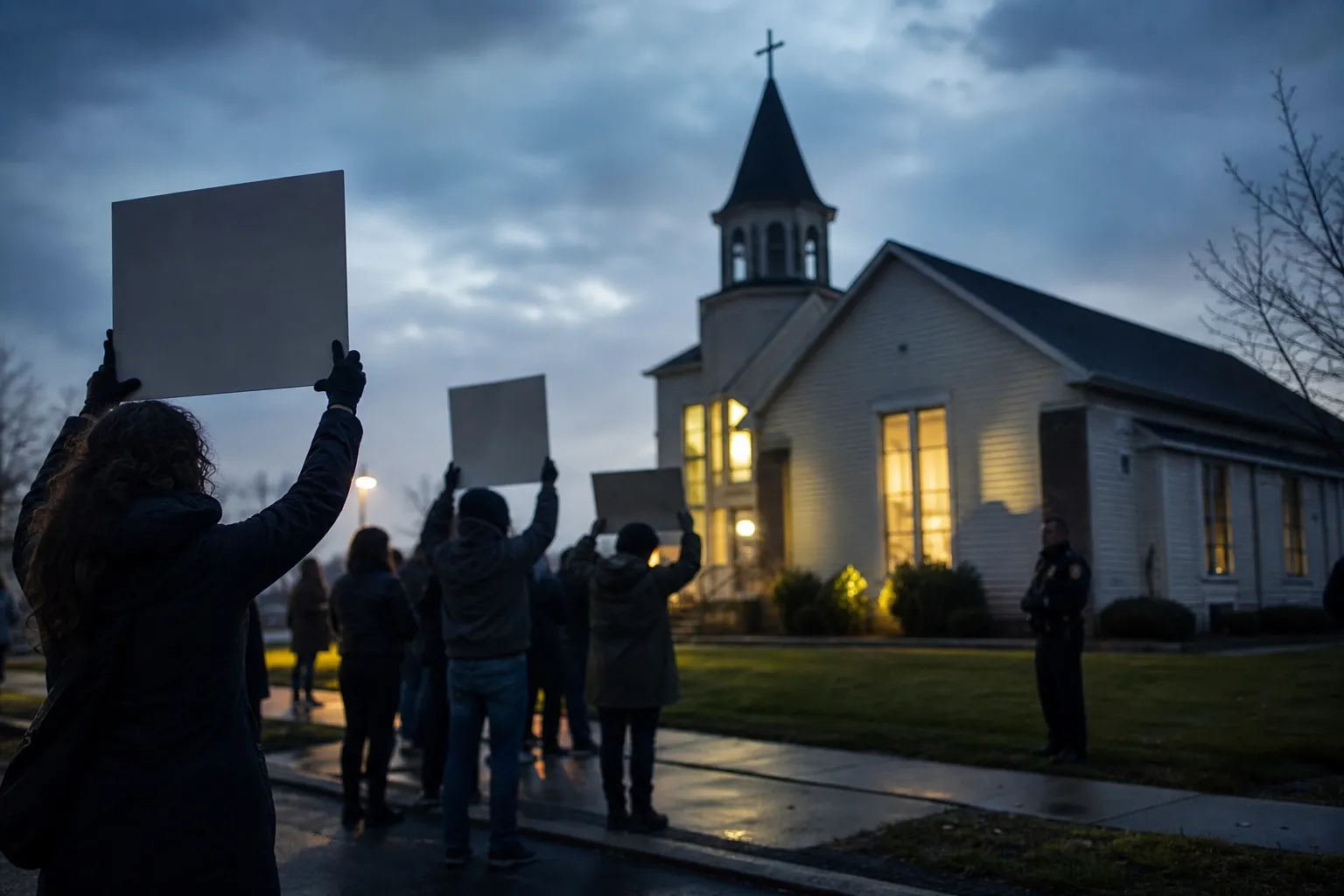
On January 18, protesters entered Cities Church, a Southern Baptist Convention-affiliated congregation in St. Paul, during its Sunday service. They chanted “ICE Out” and “Justice for Renee Good” and focused attention on associate pastor David Easterwood, who also leads Immigration and Customs Enforcement’s St. Paul field office.[1][8]
Renee Good, a 37-year-old mother of three, had been fatally shot by an ICE agent in Minneapolis on January 7 amid a surge in federal immigration enforcement.[8] Her death supplied the immediate human and political context for the action at the church. It did not, by itself, answer whether the defendants crossed the lines drawn by Sections 248 and 241.
The competing descriptions are stark. Prosecutors portray an organized occupation intended to interfere with worship. Defendants and their supporters describe protest activity and, in Lemon’s and Georgia Fort’s cases, journalism documenting a newsworthy confrontation. The congregation’s claim to worship without physical disruption remains part of the legal and ethical picture; press freedom is not a general license to enter or remain in every private space. But the government still must prove that each charged person’s own conduct and intent satisfy the statutes rather than relying on the atmosphere of the event or the conduct of others.
Lawfare’s authors reported that their review of the livestream segment running roughly from 42 minutes to one hour and six minutes did not neatly match parts of the indictment’s presentation, including because doors appeared to be held open for departing congregants. That is Lawfare’s reading of video evidence, not a judicial factual finding.[3] The prosecution may rely on other evidence, context or alleged acts; the defense may contest whether those materials prove obstruction, agreement or criminal intent.
Arrest, release and the state-federal divide
Federal agents arrested Lemon on January 29 in the lobby of a Beverly Hills hotel while he was in California to cover the Grammy Awards. He was released on his own recognizance the next day, although a prosecutor had requested a $100,000 bond.[5] On February 13, Lemon and his co-defendants entered not-guilty pleas. Lemon is represented by Abbe Lowell and Joseph H. Thompson, a former Minnesota federal prosecutor who resigned amid tensions with the Trump administration over the investigation into Good’s death.[2]
State and federal authorities reached different charging decisions. St. Paul City Attorney Irene Kao declined to bring state charges, saying the “current evidence is insufficient” under Minnesota law. Cities Church lead pastor Jonathan Parnell sharply criticized that decision.[8] The state conclusion does not control the federal case because the prosecutors were assessing different statutes, but it reinforces that the disruption has not produced one uncontested legal characterization.
The dismissal and First Amendment disputes
The defense challenges are aimed at the indictment before any jury weighs guilt. Ian Austin’s February 6 motion argues that the allegations fail to state a federal offense. Lemon and Fort have sought access to grand-jury materials, and Lowell has said the defense intends to challenge the prosecution’s constitutionality.[6] A motion to dismiss generally asks whether the case is legally sufficient on its face; it does not automatically permit the judge to resolve every disputed fact as if conducting a trial.
The Knight First Amendment Institute’s case page reports that it joined the Reporters Committee for Freedom of the Press and 44 other media organizations in an August 12 amicus filing supporting dismissal and challenging a superseding indictment.[7] Because the underlying superseding document was not among the primary filings verified for this article, its specific language, filing date and any changes to the counts are not described here.
Press organizations including the Committee to Protect Journalists condemned the arrests of Lemon and Fort, arguing that prosecuting journalists for covering a protest risks intimidating other reporters.[9] That concern is substantial where the alleged newsgathering occurs alongside conduct the government considers criminal. The opposing argument is also narrower and stronger than a general attack on journalism: being a journalist does not create a constitutional right to invade private property, obstruct worship or intentionally assist someone else in doing so.
The unresolved issue is where Lemon’s conduct falls between those propositions. A court must distinguish observation and reporting from intentional participation or assistance, using evidence rather than professional labels. It must also decide whether the government’s statutory theories reach the charged conduct at all.
As of August 27, the record reviewed here contains no ruling resolving the central dismissal arguments, no trial finding about the disputed events inside Cities Church and no determination of guilt. The prosecution may become an important test of the FACE Act’s worship provision, Section 241 and First Amendment protection for reporters at protests. For now, it remains exactly that: a test, not settled law.
References
- Indictment, United States v. Lemon, No. 0:26-cr-00025-LMP-DLM, Document 39, U.S. District Court for the District of Minnesota via CourtListener, January 29, 2026.
- Journalist Don Lemon to enter plea in Minnesota ICE protest case, Reuters, February 13, 2026.
- Minnesota FACE-Off: A Deep Dive Into the St. Paul Church Protest Case, Lawfare.
- Magistrate judge rejects charges against Don Lemon in anti-ICE protest at Minnesota church, CBS News, January 2026.
- Don Lemon arrested over protest at Minnesota church, Spectrum News and The Associated Press, January 30, 2026.
- Inside the Legal Defense of Georgia Fort and Don Lemon, Columbia Journalism Review, March 9, 2026.
- United States v. Lemon, Knight First Amendment Institute at Columbia University.
- St. Paul declines state charges over Cities Church anti-ICE protest, The Associated Press, 2026.
- CPJ condemns arrests of journalists Don Lemon and Georgia Fort over Minnesota protests, Committee to Protect Journalists, January 2026.
Related records
Tool profile
How Meta's AI Spending Reshapes Law Firm ProfitabilityGoverning regulation
Browse the obligations tracker →Preventive workflow
Browse verification workflows →
Report a correction or tip
Spotted an outdated figure, a misstated fact, or a ruling this case record should reflect? Public comments are disabled for this content given the professional cost of a misreported case outcome, penalty amount, or rule text — use the structured correction channel instead.
Report a correction or tip for this record →