
Proactive Detection Reshapes 2026 Egg Recall Liability
Assesses legal liability theories for the July 2026 Midwest Poultry Services egg recall, explaining how proactive detection before any confirmed illnesses shifts immediate exposure toward economic loss claims and reduces retailer strict-liability risk compared to prior salmonella outbreaks.
- Jurisdiction
- US Federal
- Court
- Pre-litigation
- AI tool named
- Proactive environmental monitoring
- Ruling date
- Jul 22, 2026
- Source document
- View primary court order ↗
- Last verified
- Jul 25, 2026
Lex Machina Review is an independent risk-tracking and reference resource. Nothing on this site is legal advice, and using it does not create an attorney-client relationship. Every record is reviewed against primary sources but may not reflect the most current status of a matter — always verify directly against the cited court order, rule text, or a licensed attorney before relying on it.
Companion explanation — secondary to the source document above
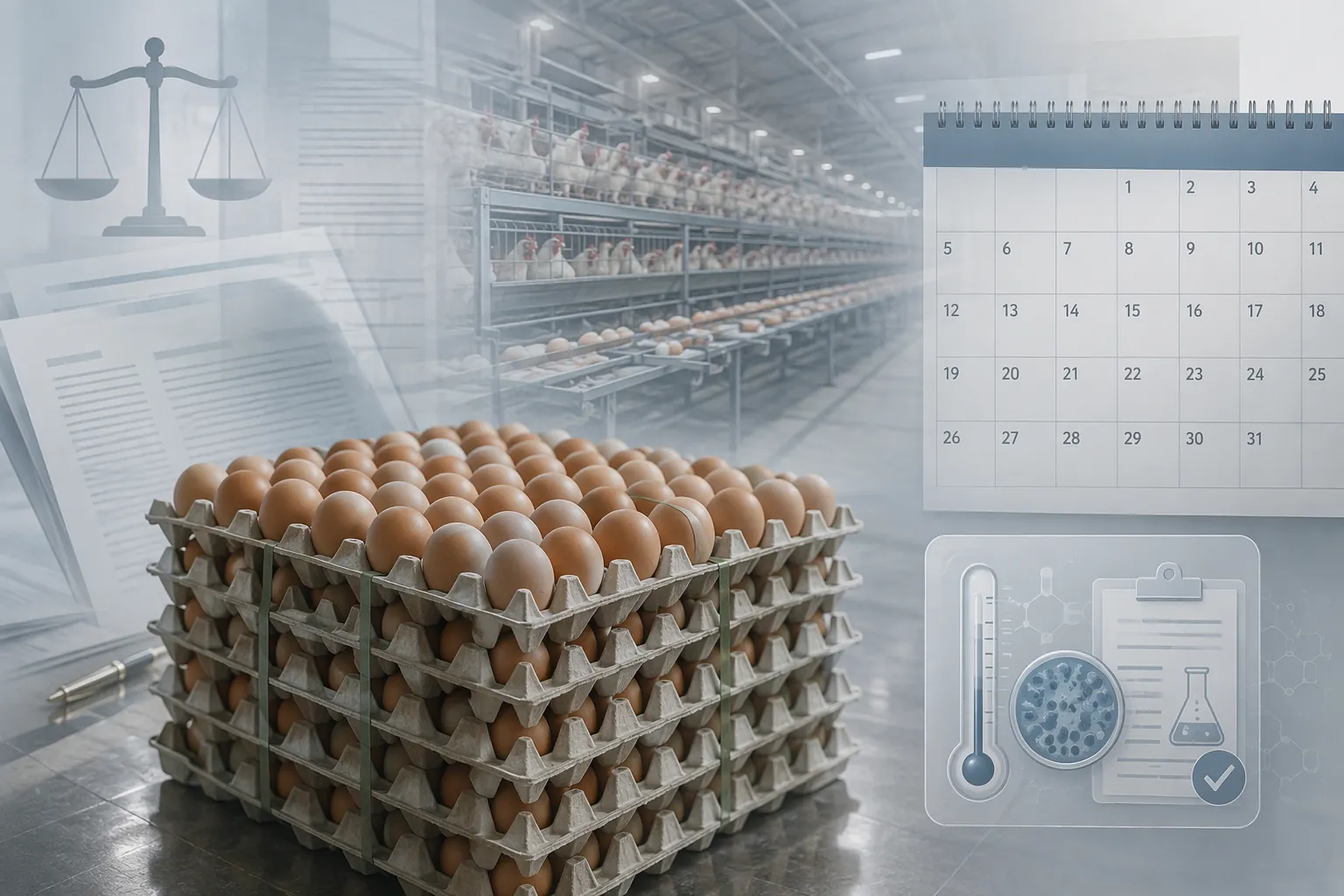
The useful starting point for the July 2026 Midwest Poultry egg recall is not the word “salmonella.” It is the sequence. Midwest Poultry Services, L.P. recalled 1,589,577 dozen shell eggs on July 22, 2026, after proactive environmental monitoring indicated the potential presence of Salmonella Enteritidis. The FDA notice identifies the affected brands as Kroger, Simple Truth, Brookshire’s, Country Morning, and Sunups; the relevant plant and code markers as P-1950 and 840962 with Julian dates 157 through 184; and the distribution states as Texas, Oklahoma, Arkansas, Louisiana, New Mexico, and Mississippi. The notice also says no illnesses had been reported at the time of the recall.[1]
That makes this recall large, but legally quiet at the moment. Reuters described it as nearly 1.6 million dozen eggs and reported it as the largest egg recall by count since the 2018 Rose Acre Farms recall.[2] Size matters for notice, refunds, inventory holds, and retailer operations. It does not, by itself, create a personal-injury case. On July 25, 2026, three days after the recall date, the record still lacks the items that usually move foodborne-illness litigation out of the intake folder and into a complaint: confirmed illnesses, an outbreak investigation page from CDC, public inspection findings tied to the farms, and filed lawsuits.
The Recall Record Controls the First Liability Read
The recall universe is unusually concrete. Counsel do not need to infer the product scope from scattered consumer reports. The FDA notice provides the brand names, states, plant codes, and Julian dates that define what should be pulled, refunded, preserved, or traced.[1] That is the first practical divide between this event and a post-illness outbreak. Here, the product boundary exists before a confirmed injury boundary.
| Recall Element | Current Record |
|---|---|
| Recall date | July 22, 2026 |
| Producer | Midwest Poultry Services, L.P. |
| Quantity | 1,589,577 dozen shell eggs |
| Brands named by FDA | Kroger, Simple Truth, Brookshire’s, Country Morning, Sunups |
| Product identifiers | P-1950 and 840962; Julian dates 157–184 |
| Distribution states | TX, OK, AR, LA, NM, MS |
| Detection trigger | Proactive environmental monitoring |
| Illnesses reported in FDA notice | None |
The voluntary halt in distribution from the two Texas farms matters for defense posture, though it does not end the analysis. It suggests a containment step taken before confirmed consumer illness, not after epidemiology forced the company’s hand. If later inspection records show sanitation failures, delayed response, or ignored positives, the negligence story changes. But those records are not public in the materials available now.
Retailer counsel should treat the product codes as both a recall map and a litigation hold map. Cartons within the FDA-defined range are potential evidence even if the current exposure looks like a refund problem. Cartons outside that range are not automatically irrelevant, but they are not presently inside the public recall universe. That distinction will matter if a consumer later alleges illness after eating eggs purchased under one of the listed store brands.
Why the Immediate Claim Is Mostly Economic Loss
A recalled carton can produce a legal loss before it produces a bodily injury. Consumers may have paid for eggs they should not eat. Retailers may have pulled inventory, processed refunds, handled customer contacts, and managed brand damage. Distributors may have incurred reverse-logistics and destruction costs. Those are real costs, but they are not the same as a salmonella personal-injury claim.
The current consumer-facing exposure is therefore refund-centered. A customer who bought a covered carton can usually show purchase, product identity, and economic loss without proving infection. That is a cleaner claim administratively than medically. It is also smaller. The immediate question for Kroger, Brookshire, and other sellers is how quickly they can match recalled codes to store inventory and consumer refund procedures. Readers tracking the operational refund side can compare the current product-code list with the related Kroger egg recall refund and risk assessment.
The missing personal-injury element is not contamination in the abstract. It is damages tied to exposure. A plaintiff alleging salmonella illness would need to connect consumption of recalled eggs to a diagnosed or otherwise provable illness, then address timing, alternative exposures, and causation. Without a sick person, there is no present medical bill, hospitalization, lost wage claim, pain-and-suffering claim, or wrongful-death claim. That is why the absence of reported illnesses in the FDA notice is an active fact, not a footnote.[1]
The harder question is class treatment. A refund class built around recalled products is easier to imagine than a personal-injury class because the common question is narrower: did consumers buy eggs in the recall universe and lose the benefit of the purchase? Even there, proof of purchase, state consumer-protection variations, retailer refund programs, and whether consumers already received compensation can cut down the practical value. A medical-injury class would face the familiar problems of individualized exposure, symptoms, diagnosis, severity, and causation.
Strict Liability Is Dormant, Not Gone
The producer’s strict product liability risk is latent because the recalled product is food, the alleged defect is contamination, and the chain of sale is already identifiable. If confirmed infections appear, plaintiffs will not need an exotic theory. They will likely plead that the eggs were defective and unreasonably dangerous because they were contaminated with Salmonella Enteritidis when sold, and that consumption caused illness.
What they do not have today is the injury record. CDC-related outbreak confirmation and reporting can lag; outbreak-linked cases may take 3–4 weeks to be confirmed.[3] That keeps the file unstable. A defense lawyer cannot close the book on July 25 simply because the FDA notice says no illnesses have been reported. A plaintiff intake lawyer, however, should not treat recall participation as a substitute for a client with symptoms, diagnosis, exposure facts, and product-code evidence.
Proactive detection also changes the negligence tone. A recall triggered by consumer illnesses often begins with a factual question about why the producer did not detect the problem earlier. Here, the first public fact cuts the other way: Midwest Poultry identified possible contamination through proactive environmental monitoring and halted distribution from the affected farms before confirmed illness reports appeared.[1] That does not immunize the company. It does make the first negligence theory less obvious until inspection records, environmental positives, corrective actions, and internal timelines are available.
The difference is practical. Strict liability, if illnesses appear, can focus on the product condition and causation. Negligence will need conduct: what the producer knew, when it knew it, what it tested, what it cleaned, what it shipped, what it held, and what it told buyers. The FDA recall notice starts that chronology but does not complete it.
Retailer Exposure Depends on the Role They Actually Played
The named store brands make Kroger and Brookshire visible, but visibility is not the same as fault. In a chain-of-distribution analysis, the producer, distributor, and retailer can face different theories depending on who manufactured, packaged, labeled, stored, sold, or transformed the product. Marler Clark’s food-liability framework treats strict liability and negligence as distinct routes and emphasizes that entities in the distribution chain may be drawn in based on their role in placing contaminated food into commerce.[4]
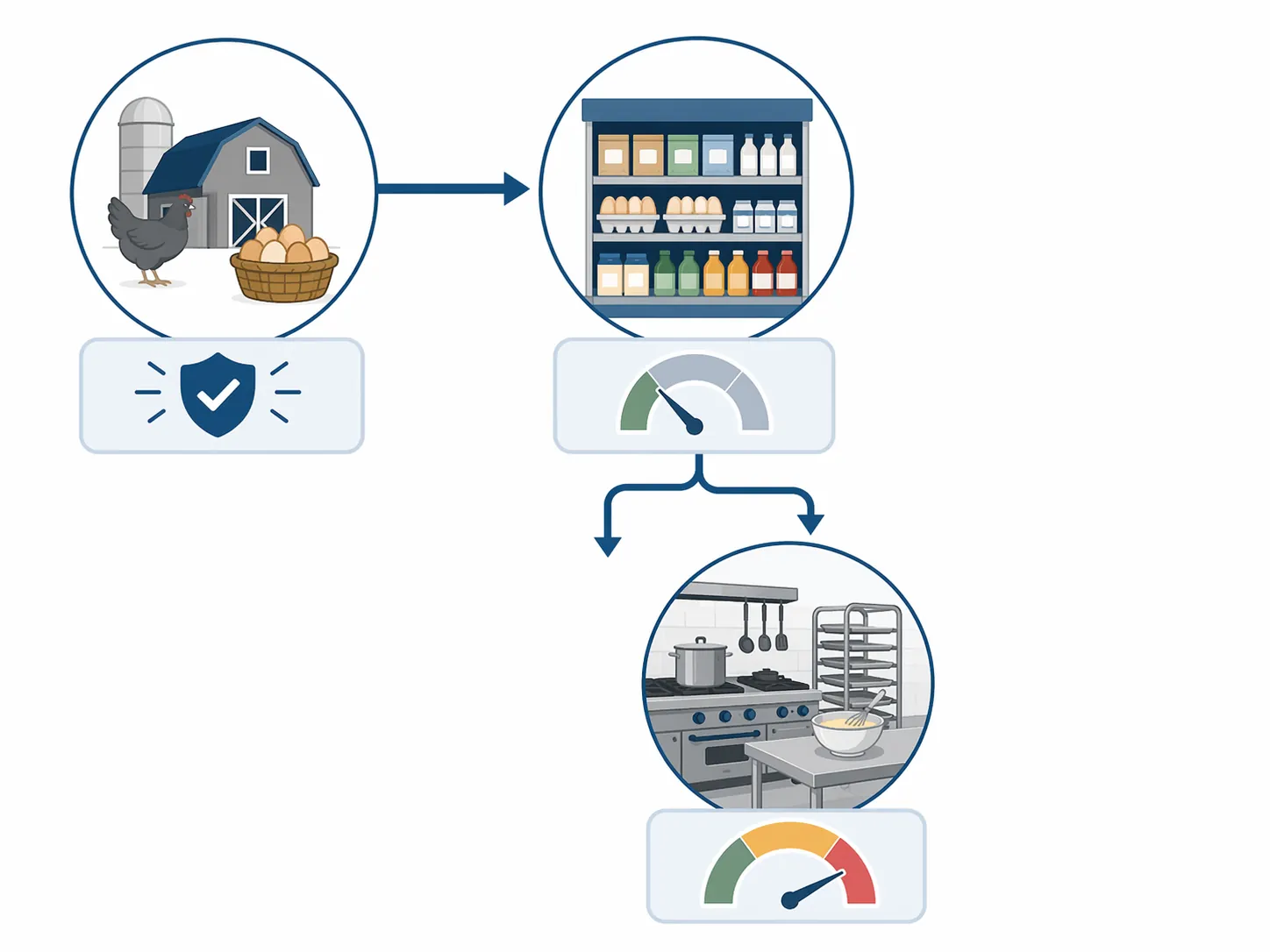
For shell eggs sold in cartons, retailer risk is reduced but not erased. If Kroger or Brookshire merely sold sealed cartons supplied by Midwest Poultry, their strongest immediate duties are recall execution, customer notice, inventory removal, refund handling, and preservation of records. A plaintiff may still name a retailer in a strict-liability complaint if illness later appears, especially in jurisdictions that allow claims against sellers in the distribution chain. But the retailer’s comparative target value is lower where it did not create the contamination and acted promptly once the recall was announced.
The analysis changes if recalled eggs were further processed. If a grocery store used affected eggs in bakery, deli, prepared-food, catering, or private-label manufactured items, the retailer may no longer look like a passive seller of sealed cartons. It may have become a processor of a new food product. That creates more factual questions: which lot was used, whether cooking was adequate, whether cross-contamination occurred, whether finished products were labeled or held, and whether consumers can trace exposure to the store-made item.
That is where retailer counsel should spend attention now. The public recall codes should be matched not only against shelf inventory but also against internal-use inventory. If eggs from the recall range entered prepared foods, the retailer’s preservation burden expands. Purchase orders, lot records, production logs, temperature records, recipes, sanitation logs, and pull dates may matter later. If they did not, that negative fact should be documented while records are fresh.
Prior Egg Outbreaks Show What Would Change
The recent egg-salmonella comparators are useful only if they are kept in their lane. They show how the litigation picture changes once confirmed illnesses exist. They do not prove that the Midwest Poultry recall will follow the same path.
The August Egg Company outbreak is the most direct timing comparator. Ron Simon & Associates announced the first salmonella lawsuit against August Egg Company on June 24, 2025, after a June 6 recall, with the firm stating that confirmed outbreak victims were approaching 100.[5] That 18-day gap is not a deadline or prediction. It is a reminder that litigation can arrive quickly once public-health confirmation, client intake, and product tracing converge.
Milo’s Poultry Farms followed a different public trajectory. ClassAction.org tracked a class action filed in November 2024 after an egg-linked salmonella outbreak that had sickened 65 people and hospitalized 24.[6] The point for the 2026 recall is not that a class action is inevitable. It is that confirmed illness counts change the pleading environment. Once a docket can point to sick consumers rather than only recalled cartons, damages and causation become the center of the case.
The 2025 official outbreak materials add the same caution from the public-health side. FDA and CDC outbreak pages for egg-linked salmonella incidents in 2025 reported confirmed illnesses, hospitalizations, and multistate scope, and CDC cautioned in those investigations that the true number of illnesses was likely higher than the number reported because many people recover without medical care or testing.[3][7] That underreporting principle is important, but it should not be converted into present proof against Midwest Poultry. As of July 25, there is no CDC outbreak page for this recall.
What Plaintiff Intake Can and Cannot Do Today
A plaintiff firm can sensibly open a watchlist now. It can screen for clients who bought recalled brands in the listed states, ask for carton photos or receipts, document consumption dates, collect symptom timing, and preserve medical records. It can also monitor CDC, FDA, state health departments, and docket filings. That is case development, not yet a case.
A viable personal-injury intake should still require more than “I bought recalled eggs.” The stronger file has a recalled code, a plausible consumption window, compatible symptoms, medical testing when available, exclusion of obvious alternative exposures, and a jurisdictional route to sue the producer or seller. Without those facts, the recall may support a refund claim or consumer complaint, but not a serious salmonella injury complaint.
Defense counsel should assume that the absence of filed lawsuits is temporary information, not comfort. Litigation holds should cover recall communications, environmental monitoring data, positive test results, corrective actions, distribution lists, retailer notifications, and customer complaints. The documents created in the first week after a recall often decide whether later testimony sounds orderly or improvised.
The Dated Liability Posture
As of July 25, 2026, the Midwest Poultry recall sits in a narrow but unstable posture. The immediate exposure is mostly economic loss: refunds, inventory destruction, customer notice, and commercial allocation among producer, distributors, and retailers. The producer’s personal-injury exposure is dormant but alive because confirmed salmonella illnesses, if they emerge and trace to recalled eggs, would support conventional strict-liability and negligence theories. Retailer strict-liability risk is reduced where the retailer sold sealed cartons and followed the recall, but it increases if recalled eggs were incorporated into prepared or manufactured foods.
The analysis should change if CDC opens an outbreak page, if state health departments link illnesses to the recalled eggs, if inspection reports identify farm-level failures, or if the first complaints are filed. Until then, the recall is large enough to demand preservation and operational discipline, but not yet enough to plead the personal-injury case that headlines may imply.
References
- Midwest Poultry Services, L.P. Recalls Shell Eggs Due to Possible Salmonella Enteritidis Contamination, FDA
- Poultry firm recalls nearly 1.6 mln dozen eggs over potential salmonella, Reuters
- Salmonella Outbreak Linked to Eggs, CDC, August 2025
- Strict Liability and Negligence and when they apply and chain of distribution liability, Marler Clark
- Ron Simon & Associates Files First Salmonella Lawsuit Against August Egg Company, PRNewswire
- Milo’s Poultry Farms, LLC, ClassAction.org
- Outbreak Investigation of Salmonella: Eggs (June 2025), FDA
Related records
Tool profile
Browse tool evaluations →Governing regulation
Browse the obligations tracker →Preventive workflow
Browse verification workflows →
Report a correction or tip
Spotted an outdated figure, a misstated fact, or a ruling this case record should reflect? Public comments are disabled for this content given the professional cost of a misreported case outcome, penalty amount, or rule text — use the structured correction channel instead.
Report a correction or tip for this record →