
When true crime becomes AI training data: the Elize Matsunaga case
Netflix produced two different treatments of the Elize Matsunaga case—a documentary series and a fictionalized drama—creating a porous boundary between court-record fact and dramatization that AI legal research tools can ingest and reproduce as hallucinated case facts. This article examines the risk vector using documented hallucination rates and an analogous criminal-defense sanction incident.
- Jurisdiction
- Australia (Victoria)
- Court
- Supreme Court of Victoria
- AI tool named
- AI legal research tool
- Ruling date
- Aug 1, 2025
- Source document
- View primary court order ↗
- Last verified
- Jul 27, 2026
Lex Machina Review is an independent risk-tracking and reference resource. Nothing on this site is legal advice, and using it does not create an attorney-client relationship. Every record is reviewed against primary sources but may not reflect the most current status of a matter — always verify directly against the cited court order, rule text, or a licensed attorney before relying on it.
Companion explanation — secondary to the source document above
Netflix has now placed the Elize Matsunaga case in two adjacent public forms: a 2021 four-episode documentary, Elize Matsunaga: Once Upon a Crime, and a 2026 fictionalized drama, Elize: Shadows of a Woman.[1][2] That double treatment is what makes the case useful for legal analysis. It is not simply a question of whether a true-crime audience understands the difference between a record and a retelling. It is whether a later system—trained on, retrieving from, or summarizing material around those productions—can keep that distinction intact when the output is delivered in the voice of legal authority.
The important point is not the sensational story. It is the source chain. A Brazilian criminal proceeding, reported through English-language entertainment coverage, then reframed through a documentary and a drama, then summarized again by websites and potentially ingested by AI systems, is exactly the kind of chain in which a fact can become less verifiable while looking more polished.
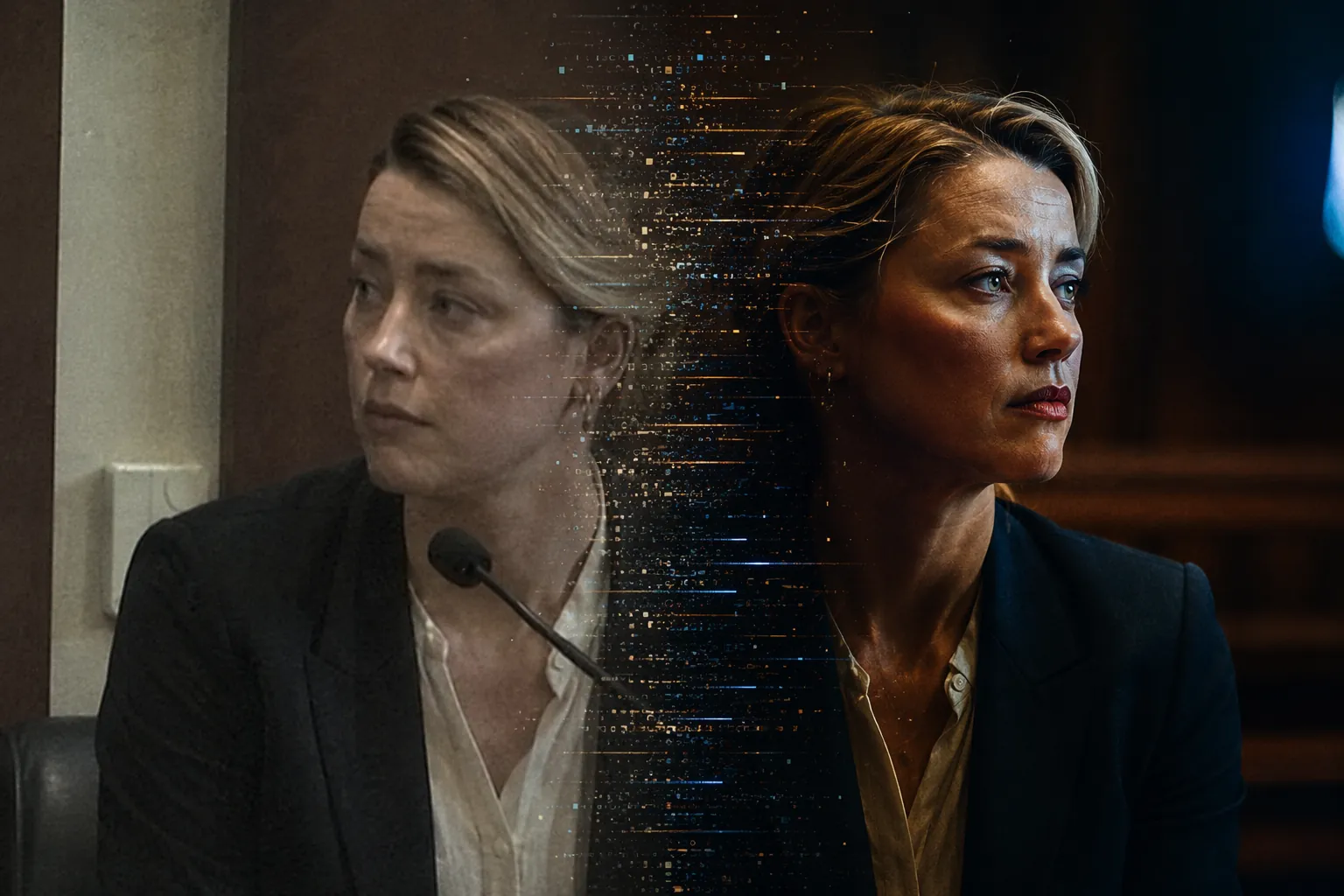
There are limits that should be stated at the front. There is no evidence in the available materials that an AI legal research tool has already hallucinated facts about the Matsunaga case. There is also no direct evidence here that either Netflix production used AI-generated imagery. And the strongest claims about the Brazilian court record should be checked against Portuguese-language primary materials before they appear in a brief, memo, or due-diligence note. The risk is prospective, but it is not fanciful.
The record is already more specific than the media layer usually has room to be
The English-language accounts available for this article describe a sentencing path with several legal and diagnostic details that should not be collapsed. Matsunaga was originally sentenced to 19 years and 11 months; that sentence was later reduced on appeal to 16 years and 3 months; she was released on parole in 2022.[3][4] Those are separate procedural facts, and each one would matter if a lawyer were using the case as an example in a comparative criminal-law memo.
The same is true of the psychological material reported in English. Newsweek and Esquire describe two evaluations: one by Jaci Ferfila, privately hired by the defense, and a court-ordered 25-page report by Claudia Lúcia Callegari Teixeira. The reports are described as finding no psychopathy while identifying depressive disorder and narcissistic traits.[3][4] That is a narrow proposition. It is not the same as a broad claim about motive, culpability, or character, and it is not a substitute for the underlying Portuguese-language reports.
This is where dramatization becomes legally awkward. A documentary can dwell on interview access. A drama can compress sequence, emphasis, and internal state. A recap of either can simplify still further. By the time those materials appear in search results or are fed into retrieval systems, the distinctions between sentence imposed, sentence reduced, parole status, expert evaluation, and narrative interpretation may no longer be visible to the user.
The criticism that both Netflix treatments lean heavily on Matsunaga’s own account should be used carefully. Martin Cid Magazine is not a court, and its analysis is not a legal finding. But its media criticism identifies the reliability problem plainly: “Marcos Matsunaga is dead… He cannot contest any characterization… The result is a single-source narrative dressed in two different formats.”[5] As a legal-research warning, that observation matters less as a judgment on Netflix than as a description of asymmetry. One side’s account can become abundant, searchable, and narratively coherent while the record remains harder to retrieve.
The contamination path does not require Netflix to have done anything unlawful
The cleanest mistake to avoid is overclaiming causation. The available materials do not show that Netflix caused any legal hallucination about the Matsunaga case. They do not show that a vendor trained a legal tool on either production. They do not show that a lawyer has filed a Matsunaga-related falsehood. The concern is more mechanical: widely distributed narrative content produces secondary coverage; secondary coverage is scraped, summarized, indexed, and reused; later systems may return a blended answer without making the source hierarchy clear.
Reach increases the size of that surface area. Elize: Shadows of a Woman reportedly reached No. 2 globally on Netflix at launch.[6] That ranking does not prove legal unreliability. It does mean the fictionalized version is more likely to be discussed, summarized, translated, clipped, and folded into the general web layer around the case.

That matters because legal AI tools already have a measurable hallucination problem. A Stanford RegLab and HAI study found that leading AI legal research tools hallucinated between 17% and 34% of outputs, with Lexis at 17% and Westlaw at 34% in the study’s reported results.[7] Those figures do not measure the Matsunaga materials specifically. They do establish that legal-research hallucination is not just a consumer chatbot problem or a theoretical media-literacy complaint.
The danger is not only a fake citation. A tool can also make a real case unusable by attaching the wrong procedural posture, overstating what an expert found, converting a dramatized scene into a factual assertion, or presenting an English-language entertainment summary as though it were a court record. In a foreign criminal case, that failure is harder to catch because the reviewing lawyer may not know the language, docket structure, or local reporting conventions.
The criminal-defense failure mode is no longer hypothetical
The most useful analogy is not another true-crime lawsuit. It is the Rishi Nathwani KC incident in Australia. In August 2025, the senior defense lawyer apologized after filing AI-fabricated case citations and quotes in a murder proceeding in the Supreme Court of Victoria.[8] That is the professional setting that should focus attention: a criminal case, a legal filing, and invented authority that reached the court.
The Nathwani incident does not involve Matsunaga, Netflix, or Brazilian law. Its relevance is narrower and stronger: it shows that AI-generated legal material can enter criminal defense work with enough surface plausibility to be filed. Once that is true, the question for any real case surrounded by narrative media is not whether the worst possible hallucination has already occurred. It is whether the available source environment makes a bad output easier to produce and harder to detect.
A fabricated citation is relatively stark. A blended factual paragraph can be more dangerous because it may contain enough true material to pass a quick read. A paragraph saying that Matsunaga received a long sentence, later had it reduced, underwent psychological evaluation, and was eventually paroled could be directionally true while still getting the numbers, appellate sequence, diagnostic language, or evidentiary basis wrong. The lawyer who files it owns the defect, even if the prose arrived from a tool that sounded certain.
True-crime legal drift is already a known media problem
Netflix’s broader exposure over true-crime and “true story” programming is useful here only as background, not as proof about the Matsunaga productions. Wall Street Journal reporting, discussed in entertainment-law commentary, has described more than 20 U.S. defamation suits against Netflix since 2019 over true-crime content.[9][10] Those disputes are not AI cases. They do show that the boundary between legal record, narrative packaging, and reputational harm is already contested in conventional media litigation.
For legal AI use, the defamation suits are a warning about drift. A production may frame itself as documentary, dramatized, inspired by events, or based on interviews. Later summaries often shed those distinctions. A retrieval system may not preserve them at all. The resulting answer can look like a neutral account of a case when it is actually a stack of intermediaries.
What should be unsafe without verification
The Matsunaga case should be treated as unsafe for AI-assisted legal use unless the source chain is visible. That does not mean lawyers cannot mention it. It means an AI-generated paragraph about the case should not be trusted merely because it names a real person, a real Netflix title, or a real sentence length.
At minimum, a lawyer using AI output about this case would need to separate four layers before relying on the material:
- Primary legal record: charging documents, trial materials, sentencing decisions, appellate rulings, parole decisions, and expert reports, preferably in the original Portuguese where applicable.
- Reported legal facts: English-language journalism describing the sentence, appeal, parole, and psychological evaluations.
- Documentary claims: interview-driven material from the 2021 Netflix series and coverage of that series.
- Dramatized or critical retellings: the 2026 fictionalized film, reviews, recaps, and analysis that may blend narrative interpretation with factual shorthand.
The distinction is not academic. If a memo says the appellate court reduced a sentence, the reviewer should be able to identify the appellate source. If a filing refers to psychological findings, the reviewer should know whether the statement comes from a court-ordered report, a defense-retained evaluation, a journalist’s summary, or a dramatized scene. If the material is being used only as a media-risk example, that should be clear too.
The narrow risk judgment is this: the Matsunaga case is not evidence of an existing hallucinated filing, but it is a concrete prospective risk vector. It combines a real foreign criminal record, English-language intermediary reporting, a documentary built around exceptional access, a later fictionalized drama, broad platform distribution, and a legal AI environment in which hallucinated outputs have already been measured and sanctioned in analogous settings.
Before any AI-generated reference to the case appears in a brief, internal memo, expert chronology, or diligence note, the source chain should be checked against actual legal records. A Netflix-adjacent summary is not a court record, even when the sentence it produces sounds like one.
References
- Elize Matsunaga: Once Upon a Crime, Wikipedia.
- Elize: Shadows Of A Woman Trailer: Netflix Film Revisits Brazil’s Matsunaga Case, Deadline.
- Where Is Elize Matsunaga Today? ‘Once Upon a Crime’ Subject Is in Prison in Brazil, Newsweek.
- Where Is Elize Matsunaga Now? The Once Upon a Crime Subject Is Still in Prison, Esquire.
- Elize Matsunaga: Netflix’s Shadows of a Woman, Martin Cid Magazine, July 25, 2026.
- Netflix’s Elize: Shadows of a Woman Is a Global Streaming Hit, MovieWeb.
- Hallucination-Free? Assessing the Reliability of Leading AI Legal Research Tools, Stanford RegLab / Stanford HAI.
- Lawyer apologizes after AI creates fake quotes and case judgments in murder case, CBS News.
- Netflix true stories lawsuits, The Wall Street Journal.
- Netflix True Crime on Trial: The Defamation Battles, Cardozo Arts & Entertainment Law Journal, November 4, 2024.
Related records
Tool profile
How Meta's AI Spending Reshapes Law Firm ProfitabilityGoverning regulation
Browse the obligations tracker →Preventive workflow
Browse verification workflows →
Report a correction or tip
Spotted an outdated figure, a misstated fact, or a ruling this case record should reflect? Public comments are disabled for this content given the professional cost of a misreported case outcome, penalty amount, or rule text — use the structured correction channel instead.
Report a correction or tip for this record →