
Elize Matsunaga Netflix Legal Accuracy: A Court Record Comparison
A systematic comparison of Netflix's two Elize Matsunaga productions (the 2021 docuseries and the 2026 fictional film) against the actual Brazilian court record. The entry documents key discrepancies in bullet trajectory evidence, motive timing, and the jury's actual findings, and concludes that both productions function as defense advocacy pieces and are unreliable substitutes for the trial record for legal professionals.
- Jurisdiction
- Brazil
- Court
- Superior Court of Justice (STJ)
- AI tool named
- No AI tool
- Ruling date
- Mar 22, 2019
- Source document
- View primary court order ↗
- Last verified
- Jul 27, 2026
Lex Machina Review is an independent risk-tracking and reference resource. Nothing on this site is legal advice, and using it does not create an attorney-client relationship. Every record is reviewed against primary sources but may not reflect the most current status of a matter — always verify directly against the cited court order, rule text, or a licensed attorney before relying on it.
Companion explanation — secondary to the source document above
The professional risk in the Elize Matsunaga Netflix cycle is not that viewers may feel sympathy for a defendant. It is that two productions from the same production company now occupy the space where the court record should be: the 2021 docuseries Elize Matsunaga: Once Upon a Crime and the July 22, 2026 fictional film Elize: Shadows of a Woman. Both are defendant-centered accounts, both come through Boutique Filmes, and both are likely to become the version remembered by people who will never read a Brazilian jury verdict, forensic report, or appellate ruling. Contemporary coverage of the docuseries observed that it did not meaningfully challenge the credibility of Elize’s account; early commentary on the 2026 film similarly describes a narrative that adheres closely to the version Elize confessed to, while another review correctly notes that a film positioned almost entirely inside Elize’s interior experience is making an editorial argument, not adding evidence. [1][2][3]
This is a legal-accuracy review of the Elize Matsunaga Netflix adaptations, not a review of acting, pacing, or moral psychology. The useful question for lawyers, journalists, and anyone correcting a Netflix-shaped retelling is narrower: where do the Netflix accounts track the record, where do they omit legally material facts, and where do they invite an inference the verdict itself does not support?
The method is the same evidentiary-review approach used in this site’s legal analysis of Charles Manson documentaries: separate narrative utility from evidentiary status. A dramatized scene may be emotionally coherent and still make a legal claim the record does not sustain.

Where the Netflix Versions Depart From the Record
The court record does not require a simple prosecution-friendly story. The Brazilian jury rejected two aggravating circumstances the prosecution wanted. The sentence was later reduced. Those facts matter. But the same record also contains forensic and procedural findings that make the most mitigating defendant-centered version difficult to accept as a neutral account.
| Issue | Netflix Emphasis | Court-Record Problem |
|---|---|---|
| Bullet trajectory | Both versions give substantial narrative room to Elize’s account of a standing confrontation. | Reported forensic trajectory was left to right, front to back, and downward, which conflicts with a simple face-to-face standing struggle account. [4][5] |
| Throat-cutting timing | The 2026 film omits the necroscopy detail that most sharply affects sequence and culpability. | Folha reported death by traumatic shock with suffocation by aspirated blood due to decapitation, indicating the throat was cut while Marcos was still breathing. [5] |
| Financial motive | The Yoki sale context is downplayed as motive evidence. | General Mills announced a definitive agreement to acquire Yoki five days after the killing for R$1.75 billion, about $857 million; the jury rejected the base-motive aggravator, so the acquisition is context, not a proved aggravator. [6][7] |
| Verdict structure | English-language retellings tend to collapse the case into self-defense versus premeditation. | The seven-member jury rejected base motive and cruel method, accepted impediment to defense, and imposed a sentence later reduced by the STJ. [7][8] |
| Psychological profile | The docuseries mentions evaluations; the 2026 film reportedly leans into a more ominous fictionalized psychopathy signal. | Two evaluations ruled out psychopathy while identifying depressive disorder, narcissistic traits, low self-esteem, and infantile psychological structure. [4][9] |
| Accomplice theory | Neither production gives this investigative path much weight. | The DHPP investigated an accomplice theory, but it was archived in 2018 after concluding Elize acted alone. [4] |
The Bullet Path Is Not a Minor Forensic Detail
The central mitigating account depends heavily on bodily positioning. If Marcos and Elize were standing in a direct confrontation when the gun discharged, the mechanics should not be treated as atmospheric detail. They are part of the legal claim.
Piauí reported that medical examiner Jorge Pereira de Oliveira used a stiletto probe and determined that the bullet traveled “from left to right, front to back, and downward.” Folha de S.Paulo’s police-report coverage also identified that same directional problem. That trajectory is hard to reconcile with Elize’s account of a standing confrontation in which she shot Marcos while facing him. [4][5]
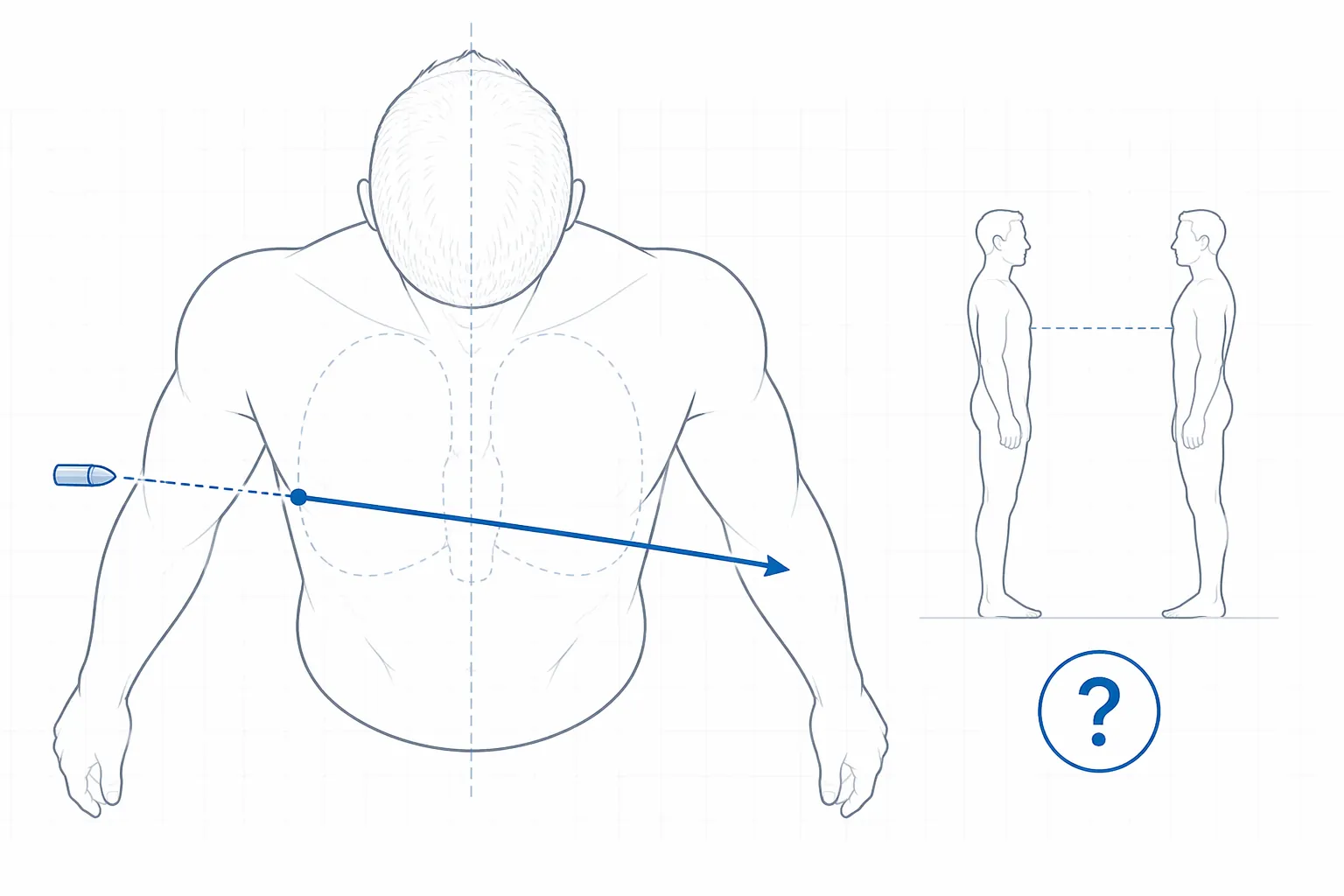
That does not mean the forensic evidence should be overstated. Piauí also notes a methodological complication: the examination was not formally requested, and the reported stiletto-probe reconstruction has limits. A probe can help identify a wound path, but it is not the same as a complete biomechanical reconstruction of the shooting. The point is not that a single phrase mechanically proves an execution. The point is that the record contains a directional finding that directly tests the defendant’s account, and a legal-accuracy review cannot let a film’s staging quietly erase that test.
For lawyers, this is the kind of discrepancy that matters because it changes the burden of explanation. A standing-confrontation scene asks the viewer to accept panic, proximity, and immediate threat as the organizing frame. A downward, front-to-back trajectory asks different questions: Was the victim positioned lower? Turned? Falling? Already incapacitated? The available sources do not allow a clean reconstruction of every movement in the room, but they do make one thing plain: the Netflix-friendly version is not the only record-based account of the shot.
The Throat-Cutting Evidence Changes the Sequence
The throat-cutting evidence is even less suited to soft-focus treatment. Folha reported that the necroscopy found death by “traumatic shock (cranial trauma) with suffocation by blood aspirated due to decapitation.” The legal significance is not merely gruesomeness. If blood was aspirated because of decapitation, the victim was still breathing when the throat was cut. [5]
That fact bears directly on sequence. A narrative that treats dismemberment as post-mortem concealment alone leaves out the harder allegation: that the cutting began before death was complete. The 2026 film’s omission of that necroscopy detail therefore does more than reduce graphic content. It changes the viewer’s sense of culpability, timing, and the meaning of later dismemberment.
This is also where a clean “defense narrative equals false” shortcut should be avoided. The jury did not accept every aggravating theory advanced against Elize. But the record’s throat-cutting evidence is precisely the kind of fact a neutral adaptation would have to confront because it places pressure on the claim that the killing unfolded only as an immediate defensive reaction.
The Verdict Was More Specific Than the Netflix Frame
English-language true-crime coverage often pushes homicide cases into a familiar binary: self-defense or premeditated murder. The Matsunaga verdict does not fit that template neatly. Brazil’s jury system uses seven jurors answering specific questions from the judge, and the resulting structure matters.
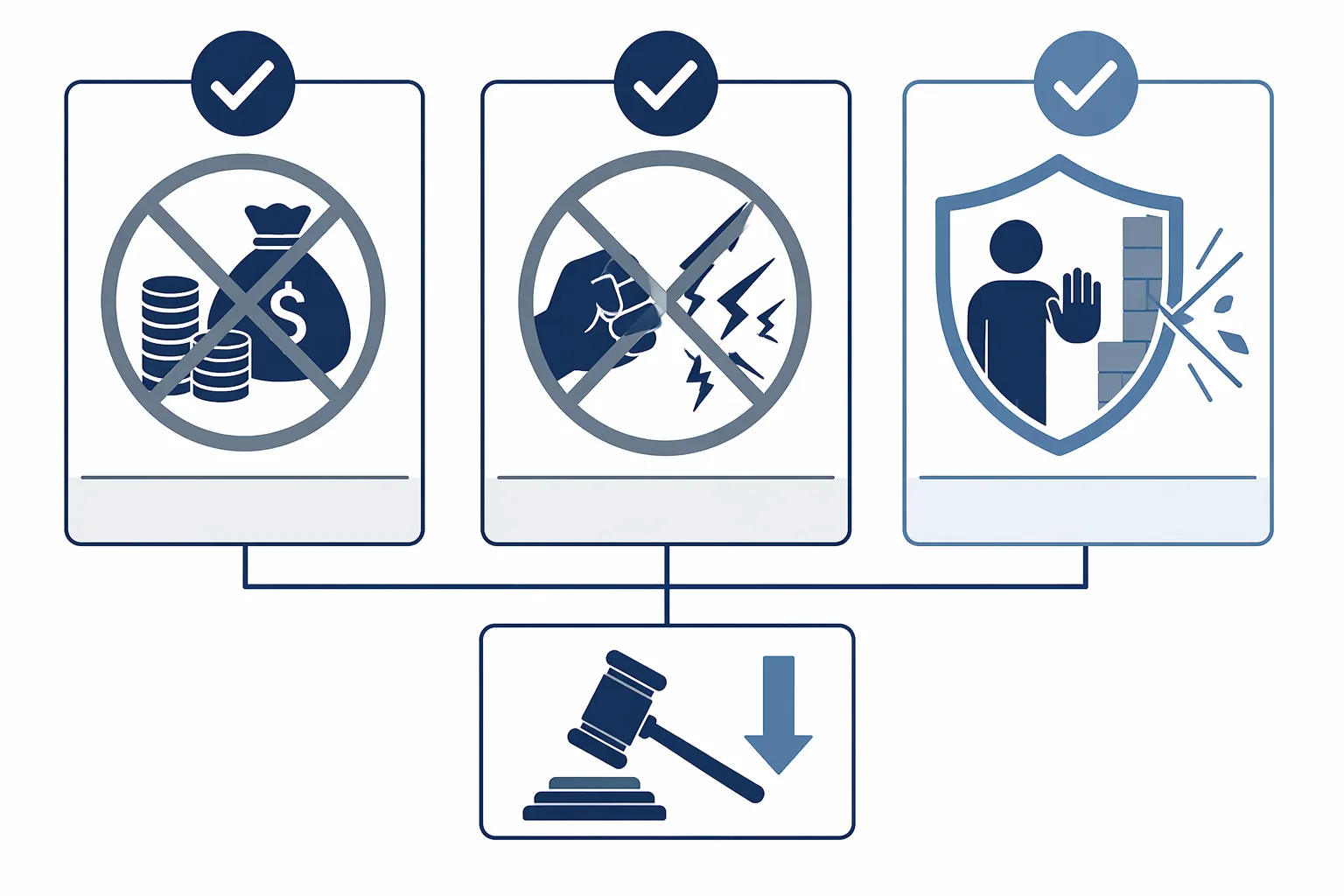
The seven-member jury rejected the “base motive” aggravating circumstance tied to financial gain. It also rejected the “cruel method” aggravating circumstance. It accepted “impediment to defense,” associated in the reporting with the fact that Elize cut Marcos’s throat after shooting him. The sentence was 18 years and 9 months, later reduced by Brazil’s Superior Court of Justice to 16 years and 3 months because confession credit had been improperly denied at trial. [7][8]
Those findings should discipline both sides of the retelling. The prosecution’s financial motive theory cannot be written as though the jury proved it as an aggravator. The jury rejected that. At the same time, the rejection of base motive does not make the surrounding business context irrelevant. General Mills announced a definitive agreement to acquire Yoki on May 24, 2012, five days after Marcos Matsunaga’s killing, for R$1.75 billion, approximately $857 million. Marcos was Yoki’s CEO and heir. That timing was real, legally contested context; it was not the same thing as a jury finding that she killed for the money. [6][7]
A legally accurate account has to hold both propositions at once. Netflix can downplay the acquisition context to keep the viewer inside Elize’s emotional account. A prosecution-driven tabloid version can overstate it as settled motive. The record supports neither shortcut.
Psychology, Fictionalization, and the Single-Narrator Problem
The psychological evidence matters mainly because it corrects an easy cinematic temptation. The available record identifies two evaluations: a private evaluation by Jaci Ferfila and a court-ordered 25-page evaluation by Claudia Lúcia Callegari Teixeira in 2017. Both ruled out psychopathy. The findings instead included depressive disorder, narcissistic traits, low self-esteem, and an infantile psychological structure. [4][9]
That cuts in two directions. The 2021 docuseries was not wrong to include psychological material favorable to a more complicated portrait of Elize. But the 2026 film’s reported use of fictionalized hunting scenes to imply latent psychopathy is not an evidentiary improvement. It replaces one unsupported simplification with another.
The same caution applies to character substitution. The 2026 film fictionalizes the mistress figure as Danielle, while the real person identified in the case was Karina Abreu. That is not, by itself, a major legal distortion; dramatizations routinely compress or rename peripheral figures. It becomes legally relevant only if the fictionalization alters what the audience thinks was proved, who could respond, or what corroboration existed.
The larger structural problem is simpler: Marcos Matsunaga is dead, and Elize is the only living central narrator. Documents, police work, forensic testimony, and jury findings carry the other side of the case. A production that makes Elize’s interior life the main evidentiary route is not automatically dishonest, but it is not neutral. It invites viewers to treat narrative access as proof.
What the Accomplice Investigation Adds—and Does Not Add
The accomplice theory is worth noting because it existed as an investigative path, not because the current record supports it as the better explanation. Piauí reported that the DHPP investigated whether another person was involved, but the path was archived in 2018 after authorities concluded Elize acted alone. [4]
That should keep the issue in its proper scale. Netflix did not need to build a major subplot around an archived theory. But a legally careful account would at least distinguish between “not explored on screen” and “never investigated.” The difference matters when viewers later treat narrative absence as procedural absence.
Parole Is Procedural Status, Not Narrative Closure
Elize was granted conditional parole in May 2022 after serving 10 years and is currently living under supervised release. [10] That fact belongs near the end of the legal account because it explains present status. It does not retroactively validate the defense narrative, undo the jury’s findings, or supply a redemption arc.
For legal professionals, the practical conclusion is limited and important: both Netflix productions may be useful examples of defense-centered narrative construction. Neither should be treated as a neutral account of the court record. The docuseries gives Elize’s account unusually protected space; the fictional film appears to intensify the same center of gravity while dropping or softening some of the forensic facts that most directly test it. If a client, juror, colleague, or reporter comes in with the Netflix version, the correction should begin with the bullet trajectory, the throat-cutting timing, the verdict structure, and the STJ reduction—not with a debate over whether Elize is sympathetic.
References
- Elize Matsunaga: Once Upon A Crime, Decider, 2021.
- Elize: Shadows Of A Woman, DMTalkies, 2026.
- Elize: Shadows of a Woman, Martin Cid Magazine, July 25, 2026.
- A mulher que esquartejou o marido, Piauí, 2017.
- Laudo indica que empresário foi decapitado ainda vivo, Folha de S.Paulo, June 15, 2012.
- General Mills to Acquire Brazilian Food Company Yoki Alimentos, General Mills Investor Relations, May 24, 2012.
- STJ reduz pena de Elize Matsunaga, G1, March 22, 2019.
- STJ reduz pena de Elize Matsunaga para 16 anos e 3 meses, Estado de Minas, March 22, 2019.
- Laudo psicológico de Elize Matsunaga descarta psicopatia, Portal SGC.
- Elize Matsunaga consegue liberdade condicional, Gazeta do Povo, May 2022.
Related records
Tool profile
How Meta's AI Spending Reshapes Law Firm ProfitabilityGoverning regulation
Browse the obligations tracker →Preventive workflow
Browse verification workflows →
Report a correction or tip
Spotted an outdated figure, a misstated fact, or a ruling this case record should reflect? Public comments are disabled for this content given the professional cost of a misreported case outcome, penalty amount, or rule text — use the structured correction channel instead.
Report a correction or tip for this record →