
Legal grounds for Turkey's Etimesgut Belediyesi operation
Reported-not-confirmed record of the Etimesgut Belediyesi operation (Ankara, July 30 – August 3, 2026): eight announced offense categories, the Sayıştay/MASAK evidence chain, and the 55-warrant-to-40-arrest path, with each figure attributed to ministry statements or press coverage. No court order or indictment is public yet.
- Jurisdiction
- Turkey / Ankara
- Court
- Ankara Batı Cumhuriyet Başsavcılığı
- AI tool named
- None
- Ruling date
- Aug 3, 2026
- Source document
- View primary court order ↗
- Last verified
- Aug 3, 2026
Lex Machina Review is an independent risk-tracking and reference resource. Nothing on this site is legal advice, and using it does not create an attorney-client relationship. Every record is reviewed against primary sources but may not reflect the most current status of a matter — always verify directly against the cited court order, rule text, or a licensed attorney before relying on it.
Companion explanation — secondary to the source document above
Verification posture
The controlling absence is still a court document. As of August 3, 2026, no public court order or indictment has been made available in the source set for the Etimesgut Belediyesi operation. That means the legal grounds can be listed, but not treated as judicial findings: they come from ministry wording and press reporting about an active Ankara investigation.
| Field | Record |
|---|---|
| Jurisdiction | Turkey / Ankara |
| Authority | Ankara Batı Cumhuriyet Başsavcılığı; Smuggling, Narcotics and Organized Crime Bureau as reported in Turkish press coverage [1] |
| Event window | July 30–August 3, 2026 [1][2] |
| Public status | Reported-not-confirmed; no public indictment or court order in the cited record set as of August 3, 2026 |
| AI tool implicated | None |
| Last verified | August 3, 2026 |
| Non-advice note | This is a legal-risk record for source hygiene and procedural tracking, not legal advice. |

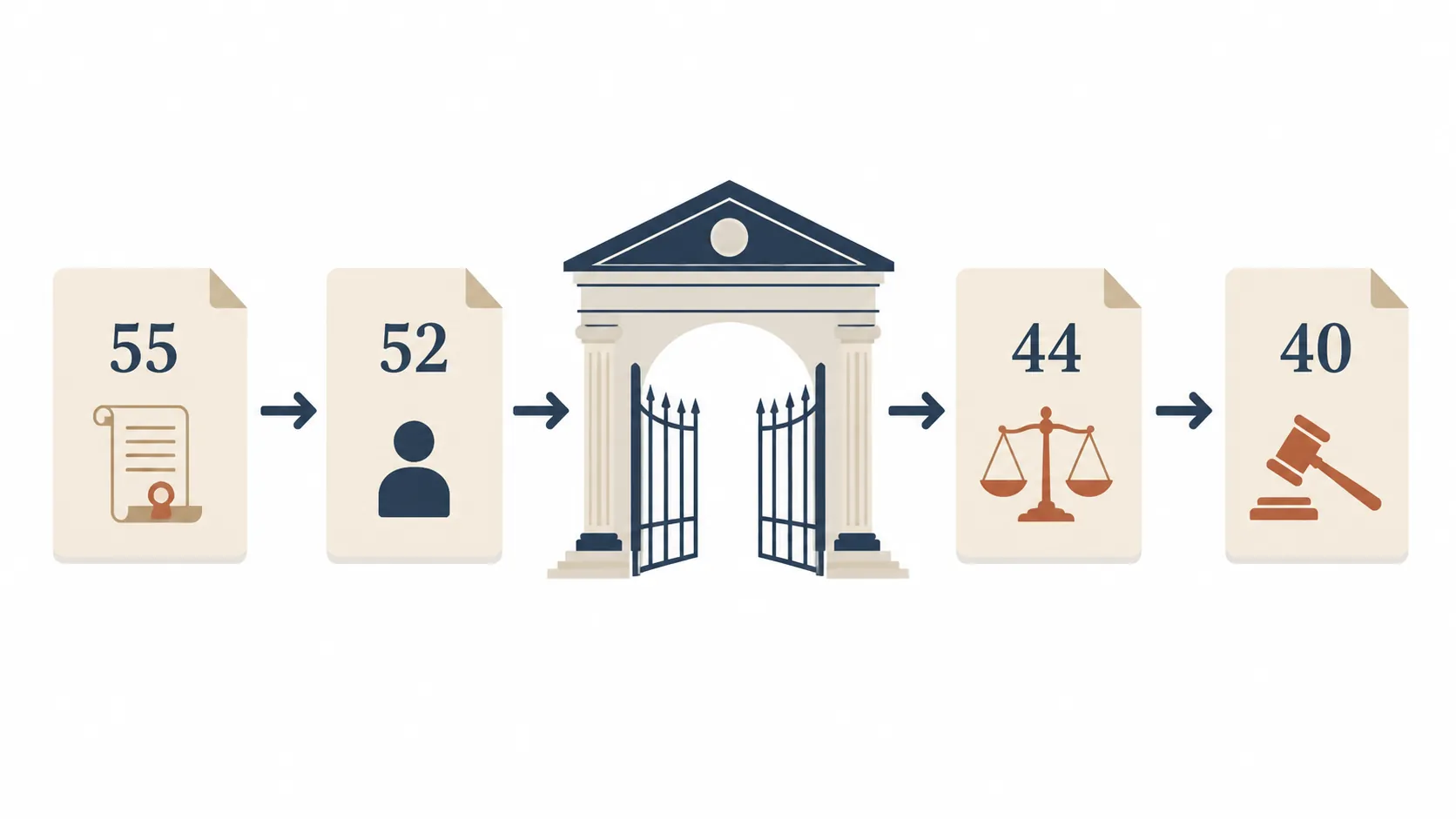
For the target question — the legal reasons for the Etimesgut Belediyesi operation in Turkey — the public record is now enumerable but not adjudicated. The announced theory includes eight offense categories, an evidence file described around Sayıştay and MASAK material, and a four-day path from reported warrants and detentions to courthouse referral and arrest decisions. Press and ministry-linked reports put the main procedural sequence at 55 warrants, 52 initially detained, 44 referred for arrest with 10 judicial-control requests, and 40 arrests, including Mayor Erdal Beşikçioğlu [1][2][3].
Announced legal grounds, without article-number mapping
The offense categories reported for the Etimesgut Belediyesi operation are serious, but the cited sources do not supply a public charging instrument. They should therefore be quoted as announced categories, not translated into Turkish Penal Code article numbers unless counsel has checked the actual file.
- Establishing or managing a criminal organization [1][2]
- Membership in a criminal organization [1][2]
- Embezzlement [1][2][3]
- Bribery [1][2][3]
- Extortion / irtikap [1][2]
- Bid-rigging [1][2][3]
- Interference in the performance of contractual obligations [1][2]
- Misuse of office [1][2][3]
That list is useful precisely because it is finite. It is also easy to overread. A ministry statement or a prosecutor-linked press account can describe suspected offenses; it does not, by itself, show that a court has accepted each factual element, matched each suspect to each offense, or approved a specific legal characterization.
The suspect group is also reported in two ways. Reuters, through WTVB, described the operation as involving 37 municipal officials and 18 company officials [3]. AP and Turkish outlets reported the split as 42 municipal officials and 13 company officials [2][4][1]. This record does not reconcile those versions. It treats both as attributed counts pending a public prosecutor or court document.
Procedure: from raids to arrest decisions
The operation began with dawn raids on July 30, 2026, reported across nine provinces. Coverage from bianet and bne IntelliNews described a search footprint of 56 residences, 15 workplaces, and 41 vehicles; AP described 71 search locations [2][4][5]. That is a material discrepancy in the physical scope of enforcement, not a detail to smooth over.
| Date | Procedural step | Record status |
|---|---|---|
| July 30, 2026 | Raids and detentions reported in a multi-province operation; AP reported 52 detained, while bianet and bne IntelliNews reported 55 detained [2][4][5] | Reported; count discrepancy preserved |
| August 2, 2026 | TRT Haber reported that 44 suspects were referred to the magistrate with arrest requests and 10 with judicial-control requests [1] | Reported ministry/prosecutor-linked procedural step |
| August 3, 2026 | BBC Türkçe and Euronews Türkçe reported 40 arrests, including Mayor Erdal Beşikçioğlu [6][7] | Reported arrest outcome; no public arrest order in source set |
The difference between detention, referral, judicial-control request, and arrest matters here. A detention is not a conviction, and a referral with an arrest request is not the same thing as a magistrate accepting that request. The public record shows state power moving through those stages over four days, but it does not yet show the reasoning of the court that ordered arrests.
The 40-arrest figure is the figure supported by BBC Türkçe and Euronews Türkçe in the cited record set [6][7]. A separate social-media count put the number one lower; without a durable article link in the working source set, that lower count is noted only as a discrepancy signal, not used as this record’s arrest count.
The evidence file described in public reporting

The evidence chain reported for the operation has several layers, and they do not have the same confirmation value. Ministry-linked reporting described an investigation file built from Sayıştay reports, MASAK financial-intelligence findings, HTS call-record analysis, audio and video records, CİMER complaints, and effective-remorse statements [1][8].
| Evidence category | What the source set says | How to read it now |
|---|---|---|
| Sayıştay reports | Sabah reported six Court of Accounts reports, including a September 30, 2025 report said to identify TRY 11,990,000 in public loss [8] | Single-outlet detail; not independently confirmed in the cited set |
| MASAK findings | Press coverage described financial-intelligence findings as part of the file [1][8] | Announced investigative material; not a public financial report in the source set |
| HTS call-record analysis | Reported as part of the investigative file [1][8] | Metadata-type evidence as described by sources; content and admissibility not public |
| Audio/video records | Reported as file material [1][8] | Existence reported; content not available for independent review |
| CİMER complaints | Reported as part of the file [1][8] | Complaint channel material; not proof of underlying facts by itself |
| Effective-remorse statements | Gazete Oksijen reported allegations tied to effective-remorse statements and Beşikçioğlu’s response [9] | Statement evidence; weight depends on file context and court assessment |
The safest formulation is not that the file “proves” the operation’s theory. It is that the public enforcement theory is reported to rely on audit findings, financial-intelligence analysis, communications metadata, recordings, complaints, and cooperating-suspect statements. Whether those materials establish probable cause, support each arrest, or later sustain an indictment is a separate question.
Tender threads named in the reporting
The tender material is the part that gives the operation its practical shape. The public allegations are not merely that municipal corruption existed in the abstract; they point to procurement files, municipal services, and contractor relationships. The tender-level details, however, come mainly from Sabah and should be kept under that attribution unless later court documents repeat them.
Sabah reported scrutiny of a 2025 aşevi tender and a waste-collection / vehicle-rental tender range. Its report gave tender figures of TRY 814,498,556 and TRY 760,591,551.68, and also reported a TRY 975,000 transfer as part of the money-flow allegations [8]. Those are unusually specific amounts from a single outlet in the cited set. They are therefore useful leads for file tracking, not settled loss findings.
The same reporting described a cancelled tender later re-run under a negotiated procedure associated with Law No. 4734 [8]. That kind of procurement sequence may be legally significant, but the public record does not yet show the tender file, the cancellation grounds, the negotiating-procedure justification, or the suspect-by-suspect theory connecting that procedure to the announced offenses.
Beşikçioğlu’s denial belongs in the record
Erdal Beşikçioğlu is not just a public-facing mayor in this record; he is a reported arrested suspect whose defense position is available in the press. Gazete Oksijen reported that he gave a 207-page statement and denied authority over the tenders at issue, saying in substance that he had no authority in tenders [9].
That denial does not dispose of the investigation, and it does not need to. It marks a live issue that the public record cannot resolve: whether the prosecution theory is based on formal tender authority, alleged de facto influence, municipal hierarchy, knowledge, approval, or some other connection. Until the indictment or arrest reasoning is public, the denial and the ministry-linked allegations sit in different procedural positions rather than canceling each other out.
Source discrepancies that should not be harmonized
| Issue | Reported versions | Treatment in this record |
|---|---|---|
| Municipal / company suspect split | Reuters via WTVB: 37 municipal officials and 18 company officials; AP, bianet, TRT Haber and Sabah: 42 municipal officials and 13 company officials [3][2][4][1][8] | Both versions attributed; no harmonization |
| Initial detentions | AP: 52 detained; bianet and bne IntelliNews: 55 detained [2][4][5] | Use 52 as AP’s initial detention count and 55 as the wider warrant/detention figure reported elsewhere |
| Search locations | AP: 71 locations; bianet and bne IntelliNews: 56 residences, 15 workplaces and 41 vehicles [2][4][5] | Preserve as different descriptions of the search footprint |
| Arrest outcome | BBC Türkçe and Euronews Türkçe: 40 arrests [6][7] | Use 40 as the cited arrest figure while noting an uncited social-media discrepancy separately |
| Tender amounts and money-flow details | Sabah reported TRY 11,990,000 public loss, TRY 814,498,556 and TRY 760,591,551.68 tender figures, and a TRY 975,000 transfer [8] | Single-outlet detail; do not treat as independently confirmed |
The discrepancy table is not a defect in the record. It is the record. When no public court file is available, the differences between wire copy, Turkish outlets, ministry-linked reporting, and single-outlet investigative detail are part of the legal-risk picture.
Separate Turkish municipal-corruption records
This Etimesgut record should not be merged with the Sinem Dedetaş records. The site’s Sinem Dedetaş detention case and Sinem Dedetaş corruption investigation are separate Turkish municipal-corruption enforcement records: different municipality, different suspect set, different jurisdictional facts, and different procedural path.
For comparison on verification posture rather than subject matter, the site’s Perşembe Yaylası drilling court decision record is a closer model: it separates reported material from confirmed judicial action instead of using a broad Turkey-politics frame to carry legal conclusions.
Current legal-risk position
As of August 3, 2026, the legal basis for the Etimesgut Belediyesi operation is clear enough to cite narrowly: eight announced offense categories; an evidence file described around Sayıştay, MASAK, HTS, recordings, CİMER complaints and effective-remorse statements; and a reported procedural path ending in 40 arrests. It is not clear enough to cite as an adjudicated corruption finding, a settled tender-loss finding, or a court-confirmed offense map.
The next verification step is not another political characterization. It is the first public court order, arrest reasoning, indictment, or defense filing that identifies which facts are alleged against which suspect and under which legal provisions. Until then, every element remains reported-not-confirmed.
References
- Etimesgut Belediyesine yolsuzluk soruşturması: 44 şüpheli mahkemeye sevk edildi — TRT Haber
- Turkey Besikcioglu opposition Etimesgut arrests Behzat — AP News
- Turkey detains another opposition mayor in sustained crackdown — Reuters via WTVB
- Ankara's Etimesgut district mayor Erdal Beşikçioğlu detained in corruption probe — bianet
- Detention of Etimesgut mayor signals re-escalation of operations targeting Turkey's opposition municipalities — bne IntelliNews
- Etimesgut Belediye Başkanı Erdal Beşikçioğlu tutuklandı — BBC Türkçe
- Etimesgut Belediye Başkanı Erdal Beşikçioğlu tutuklandı — Euronews Türkçe
- Son dakika: Etimesgut Belediyesine yönelik yolsuzluk soruşturması derinleşiyor! Sayıştay raporları ve para trafiği mercek altında: Rüşvet çarkı böyle kuruldu — Sabah
- Etimesgut Belediyesi soruşturması: Erdal Beşikçioğlu'ndan 207 sayfalık ifade verdi — Gazete Oksijen
Related records
Tool profile
Browse tool evaluations →Governing regulation
Browse the obligations tracker →Preventive workflow
Browse verification workflows →
Report a correction or tip
Spotted an outdated figure, a misstated fact, or a ruling this case record should reflect? Public comments are disabled for this content given the professional cost of a misreported case outcome, penalty amount, or rule text — use the structured correction channel instead.
Report a correction or tip for this record →