
Perşembe Yaylası Drilling Court Decision Was Only a Stay
A verified status check on the Perşembe Yaylası drilling litigation: the 22 May 2026 ruling was an interim stay, lifted on appeal by the Samsun regional court on 9 June, and no merits decision had issued as of 3 August 2026. Anyone relying on the May headlines that the court 'stopped the drilling' is working from a materially incomplete record.
- Jurisdiction
- Turkey
- Court
- T.C. Ordu İdare Mahkemesi (Ordu Administrative Court)
- AI tool named
- No AI tool implicated
- Ruling date
- May 22, 2026
- Source document
- View primary court order ↗
- Last verified
- Aug 3, 2026
Lex Machina Review is an independent risk-tracking and reference resource. Nothing on this site is legal advice, and using it does not create an attorney-client relationship. Every record is reviewed against primary sources but may not reflect the most current status of a matter — always verify directly against the cited court order, rule text, or a licensed attorney before relying on it.
Companion explanation — secondary to the source document above
Verified status as of 3 August 2026
A 2026 Turkish court decision about Perşembe Yaylası drilling does exist. The part often summarized as “the court stopped the drilling” was the Ordu Administrative Court’s 22 May 2026 interim stay, not a final annulment or permanent stop-work order; that stay was lifted by the Samsun Regional Administrative Court’s 2nd Administrative Case Chamber on 9 June 2026, and the case had no merits decision as of 3 August 2026.[1][2][3]
| Record field | Verified entry |
|---|---|
| Jurisdiction | Turkey — administrative litigation |
| First-instance court | T.C. Ordu İdare Mahkemesi |
| Case number | Esas No 2026/95 |
| Ruling that generated the headlines | 22 May 2026 unanimous yürütmeyi durdurma, an interim stay of execution[1] |
| Appellate action | Samsun Bölge İdare Mahkemesi 2. İdari Dava Dairesi lifted the stay and remanded the file on 9 June 2026[2] |
| Current procedural status | Open annulment proceeding; no final merits ruling as of 3 August 2026[3] |
| Known open-file materials | Expert report in the file; company objection pending in the record as of 3 August 2026[3] |
| Last verified | 3 August 2026[3] |
| Use note | This is an editorial status record for risk and source-checking purposes, not legal advice. |
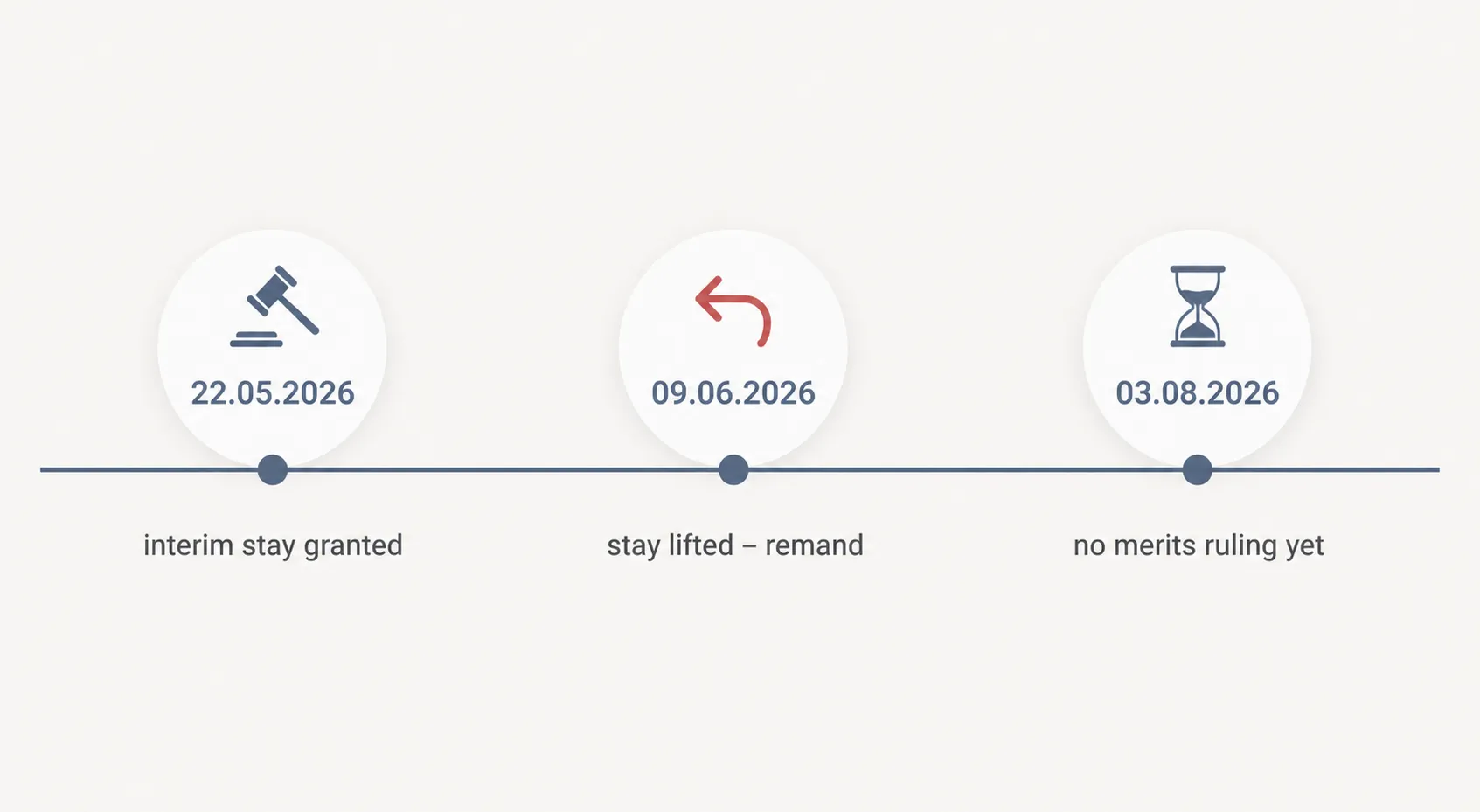
That distinction is not cosmetic. A filing, procurement note, regulatory memo, or article that cites only the 22 May ruling as if it were the final Perşembe Yaylası drilling court decision 2026 is relying on the first procedural moment in a case that moved again eighteen days later.[1][2]
What the Ordu court actually did on 22 May
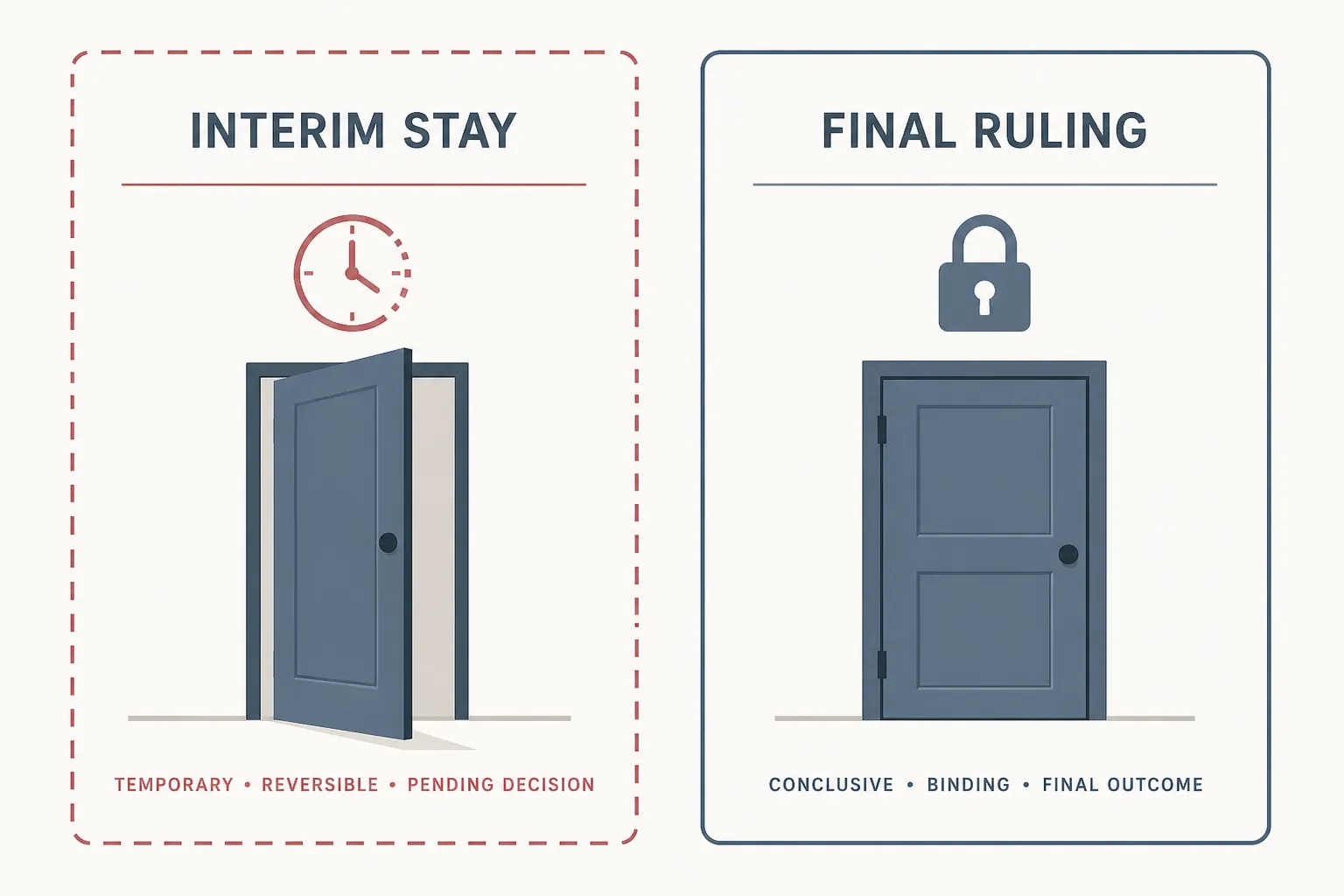
The Ordu Administrative Court, sitting under Esas No 2026/95, unanimously granted yürütmeyi durdurma on 22 May 2026.[1] The closest English rendering is “stay of execution”: a temporary suspension of the challenged administrative act while the lawsuit continues. It is not the same thing as a final judgment annulling the permit, license, approval, or administrative decision being challenged.
The stay order matters because it was real and immediate enough to support the short-form news verb “stopped.” But it was framed as an interim measure pending submission of the expert report, not as the court’s final answer on the lawfulness of the drilling-related administrative action.[1]
Several Turkish administrative-law phrases in the May order are easy to overread in English. Üstün kamu yararı means overriding or superior public interest. Zaruret hali means a state of necessity. Telafisi güç zarar means harm that would be difficult to remedy. Açıkça hukuka aykırılık, a term associated with the stay mechanism, means clear unlawfulness. These expressions explain why a court may preserve the position temporarily while it waits for more record material; they do not, by themselves, tell the reader that the plaintiff has won the annulment case.
The concrete site fact worth carrying forward is also narrower than some retellings may imply: the order recorded the drilling site as approximately 3,800 meters, as the crow flies, from the plateau center.[1] That is a court-record detail. It is not, standing alone, a complete ecological assessment of the plateau, the drilling program, or the broader mining dispute.
The 9 June order changed the operative posture
On 9 June 2026, the Samsun Bölge İdare Mahkemesi 2. İdari Dava Dairesi lifted the Ordu court’s stay and remanded the file.[2] In English, Samsun Bölge İdare Mahkemesi is the Samsun Regional Administrative Court; the 2. İdari Dava Dairesi is its Second Administrative Case Chamber. The appellate order did not leave the 22 May stay in place as the continuing answer to the drilling question.
The ground identified for that appellate action was procedural.[2] That matters in both directions. It prevents a careless reading that treats the Samsun order as a merits endorsement of drilling. It also prevents the opposite careless reading, the one that treats the Ordu stay as if it remained the final operative result after appellate review.
For risk purposes, the 9 June order is the fact that changes the file from a simple “stay granted” item into an open proceeding with a vacated interim measure. An interim stay that has been lifted on appeal cannot be cited as though it were a still-standing final court ban.
What remained undecided on 3 August
As of 3 August 2026, no final merits decision had been issued in the Perşembe Yaylası drilling litigation.[3] The file remained an annulment proceeding: the court still had to decide whether the challenged administrative act should be annulled or left standing.
The expert report was in the file, and the company had objected as of that status point.[3] Bilirkişi means the court-appointed expert; keşif, when it appears in this kind of Turkish administrative file, means an on-site judicial inspection. Neither term should be mistaken for a final ruling. They are parts of the record-building process through which the court reaches the merits.
The correct status label on 3 August was therefore not “project permanently stopped” and not “case over.” It was pending: interim stay granted on 22 May, stay lifted and file remanded on 9 June, merits unresolved as of 3 August.[1][2][3]
Safer wording for briefs, notes, and articles
| Avoid | Use instead |
|---|---|
| “A Turkish court stopped the Perşembe Yaylası drilling in 2026.” | “On 22 May 2026, the Ordu Administrative Court granted an interim stay in the Perşembe Yaylası drilling case; the stay was lifted on appeal on 9 June 2026, and the merits remained undecided as of 3 August 2026.” |
| “The court ruled the drilling unlawful.” | “The May order used stay-stage reasoning, including difficult-to-remedy harm and public-interest language, but no final merits ruling had issued as of 3 August 2026.” |
| “The 22 May decision is the current result.” | “The 22 May interim stay is part of the record, but it was vacated by the Samsun regional court eighteen days later.” |
A precise citation should identify the Ordu Administrative Court, Esas No 2026/95, the 22 May 2026 interim stay, the 9 June 2026 Samsun appellate action, and the absence of a merits decision as of 3 August 2026.[1][2][3] Without those later procedural facts, the popular “court stopped the drilling” formulation leaves out the event that changes the legal risk.
References
- T.C. Ordu İdare Mahkemesi, Esas No 2026/95 interim stay order PDF, T.C. Ordu İdare Mahkemesi, 22 May 2026.
- Samsun Bölge İdare Mahkemesi 2. İdari Dava Dairesi vacatur and remand order, Samsun Bölge İdare Mahkemesi 2. İdari Dava Dairesi, 9 June 2026.
- Perşembe Yaylası drilling litigation file-status check, 3 August 2026.
Related records
Tool profile
How Meta's AI Spending Reshapes Law Firm ProfitabilityGoverning regulation
Browse the obligations tracker →Preventive workflow
Browse verification workflows →
Report a correction or tip
Spotted an outdated figure, a misstated fact, or a ruling this case record should reflect? Public comments are disabled for this content given the professional cost of a misreported case outcome, penalty amount, or rule text — use the structured correction channel instead.
Report a correction or tip for this record →