
The legal fight over Fauci's diary and Rand Paul's contempt vote
A structured record of the legal fight over Senator Rand Paul's release of Anthony Fauci's diary, covering the subpoena, Fifth Amendment invocations, pardon dispute, and contempt vote scheduled for the week of August 3, 2026.
- Jurisdiction
- US Federal
- Court
- U.S. Senate Homeland Security and Governmental Affairs Committee
- AI tool named
- No AI tool implicated
- Ruling date
- Jul 29, 2026
- Source document
- View primary court order ↗
- Last verified
- Aug 3, 2026
Lex Machina Review is an independent risk-tracking and reference resource. Nothing on this site is legal advice, and using it does not create an attorney-client relationship. Every record is reviewed against primary sources but may not reflect the most current status of a matter — always verify directly against the cited court order, rule text, or a licensed attorney before relying on it.
Companion explanation — secondary to the source document above
Record status
The legal fight over Fauci’s diary release and Rand Paul’s contempt vote is not, as of August 3, 2026, a resolved court fight. It is a live congressional-enforcement sequence: a Senate subpoena, a document release, a hearing, repeated Fifth Amendment invocations, a disputed presidential pardon, and a threatened contempt referral. Reuters reported that Anthony Fauci declined to answer at Rand Paul’s Senate hearing after the release of diary materials, and CBS reported Paul’s position that a contempt vote and possible DOJ submission would follow because the privilege question remains contested rather than adjudicated. [1][2]
| Field | Status as of Aug. 3, 2026 |
|---|---|
| Category | Risk Digest — congressional subpoena, witness privilege, contempt exposure |
| Current procedural status | Live; no final enforcement outcome reported in the collected record, and no court ruling identified on whether the Biden pardon eliminates Fauci’s Fifth Amendment privilege in this setting. |
| Last verified timestamp | Aug. 3, 2026, UTC |
| Forum | U.S. Senate Homeland Security and Governmental Affairs Committee process, with possible Senate floor action and possible DOJ review. |
| Key actors | Sen. Rand Paul; Anthony Fauci; Fauci’s counsel David Schertler; Senate committee members; DOJ if a contempt referral is transmitted. |
| Next live steps | A contempt vote scheduled for the week of Aug. 3–7, followed, if adopted and transmitted, by DOJ discretion over whether to pursue prosecution. [2] |
The principal document pools for checking the record are Paul’s Senate Reading Room, which hosts released materials, and the HSGAC press release in which Paul described alleged evidence concerning Fauci’s official records. The latter should be read as committee-side allegations, not as judicial findings. [3][4]
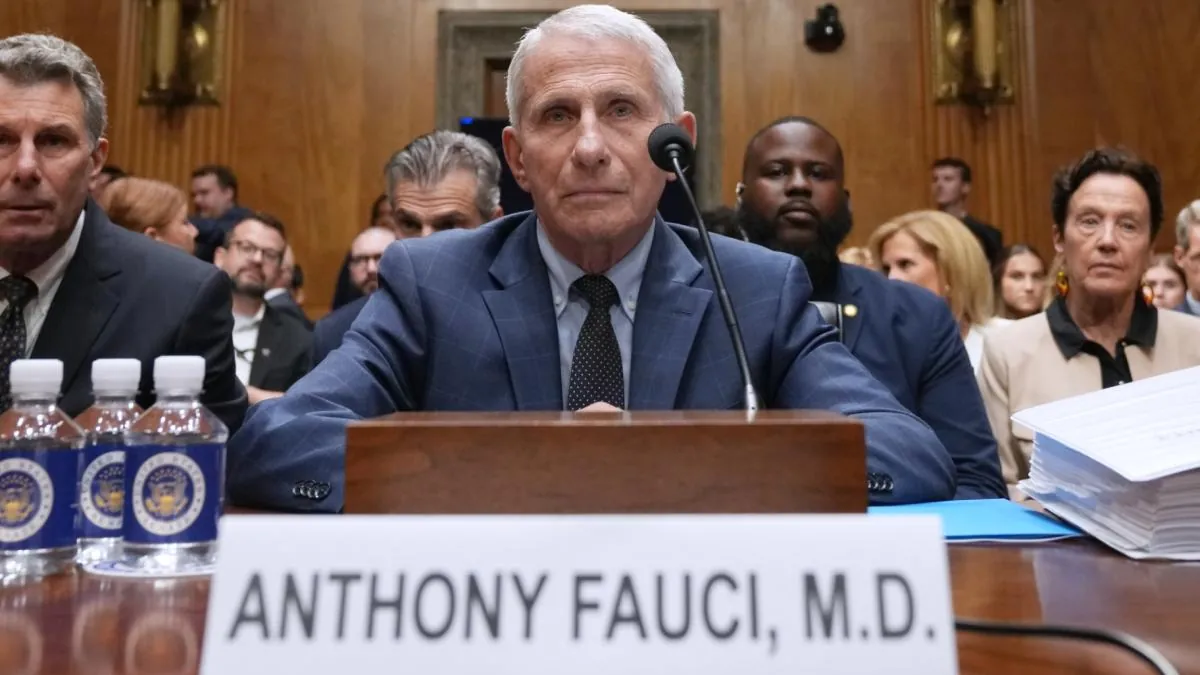
Chronology of the live procedure
The sequence matters because each step changes who has authority to act next. A released diary does not itself create contempt exposure. A subpoena and refusal to answer may. A contempt resolution does not itself create a prosecution. DOJ still has to decide what to do with it.
| Date or window | What happened | Status marker | Why it matters |
|---|---|---|---|
| June 2026 | Paul’s committee process included a subpoena for Fauci testimony connected to COVID-origin and records questions; CNN framed the coming clash around diary entries, a subpoena, and an anticipated hearing. [5] | Reported congressional process | The subpoena is the procedural hinge for later contempt arguments. |
| July 24–27, 2026 | Diary materials were released through Paul’s office and related public channels. Reuters used Paul’s count of 1,141 pages and reported that the materials covered December 2019 through December 2022. [1] | Released materials; page count attributed | The release created the factual backdrop for the hearing, but the page count should remain source-attributed. |
| July 24–27, 2026 | Other outlets used less exact descriptions: CNN referred to more than 1,100 pages, while AP described over 1,000 pages. [5][7] | Reported count variation | Those descriptions should not be merged into a single false precision. |
| July 29, 2026 | Fauci appeared at Paul’s Senate hearing and invoked the Fifth Amendment rather than answer substantive questions. [1] | Confirmed hearing event | This is the point at which the release-and-hearing dispute became a privilege-and-contempt dispute. |
| July 29, 2026 | Paul and Republican committee sources said Fauci invoked the Fifth 111 times; Fox’s congressional notebook framed that number as central to a possible court fight. [12] | Reported count | The number matters for contempt drafting, but it remains tied to the reporting and committee-side characterization. |
| Week of Aug. 3–7, 2026 | Paul said he would pursue a contempt vote and a DOJ submission. CBS reported the vote timing and Paul’s view that the pardon question may ultimately require a court ruling. [2] | Scheduled next step | The Senate can act before a court resolves the privilege question, but its action would not by itself settle the constitutional issue. |
What was released, and what remains only alleged
The narrowest well-sourced description of the release is this: Reuters reported that Paul released 1,141 pages of diary materials covering December 2019 through December 2022. That figure should be written as Reuters’ report of Paul’s count, not as a court-verified exhibit inventory. [1]
The mechanics of the release are themselves part of the legal risk record. NPR reported that Health and Human Services Secretary Robert F. Kennedy Jr. said the diary was extracted from 11 government servers after an eight-month search, that Fauci did not receive advance notice, and that the material was taken down and reposted with redactions. [6]
Those mechanics explain why newsroom lawyers and congressional staff would be watching for two different kinds of filings. One would be a challenge by Fauci over release, privacy, privilege, records handling, or related claims. The other would be a contempt or enforcement filing arising from the hearing testimony. As of August 3, 2026, the collected record identifies the hearing and threatened contempt path, but it does not identify a Fauci-filed lawsuit over the diary release or a court ruling on such a challenge.
Paul’s separate records-deletion material also has to stay in its lane. HSGAC’s press release said Paul had uncovered new evidence, including alleged communications about deleting official records, and called Fauci to testify. That is an allegation by Paul and the committee-side record, not an adjudicated finding that Fauci unlawfully deleted records. [4]
The Fifth Amendment dispute turns on the pardon, but not cleanly
Fauci’s refusal to answer is being challenged because of President Biden’s pardon. Reuters and Al Jazeera described the January 19, 2025 pardon as covering federal offenses since 2014 connected to COVID-19 or Fauci’s NIAID role, while not covering later conduct. [1][8]
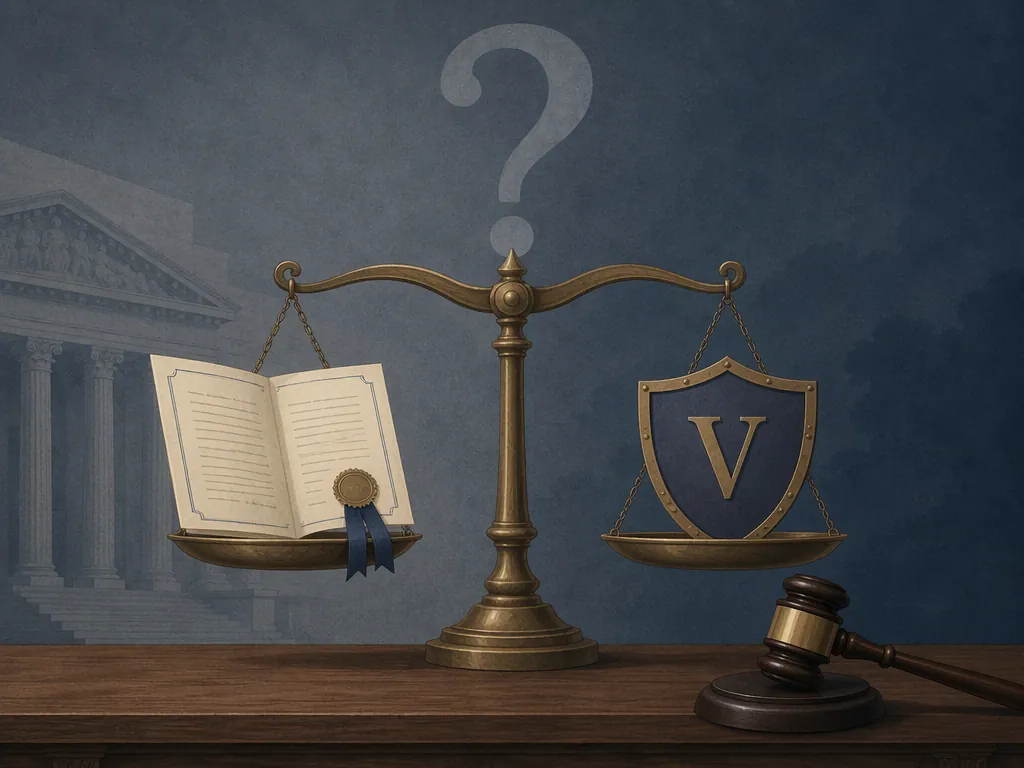
Paul’s position, as reported by CBS, is that the pardon removes the federal criminal jeopardy that would otherwise support a Fifth Amendment refusal, and that Fauci therefore can be compelled to answer. CBS also reported Paul acknowledging that a court ultimately would have to determine the issue. [2]
Fauci’s side has a plausible reason not to treat the pardon as a complete answer. The National Constitution Center’s discussion of presidential pardons and the Fifth Amendment notes the tension between Brown v. Walker, which supports the idea that immunity can defeat a self-incrimination claim, and Burdick v. United States, which treats acceptance of a pardon as carrying legal consequences. It also notes that the privilege may survive where realistic state exposure remains and that later perjury is not covered by an earlier pardon. [9]
That is why the operative sentence cannot be “a pardon removes the Fifth Amendment.” The narrower, supported statement is that Paul argues this pardon defeats Fauci’s Fifth Amendment claim for the subpoenaed questions, while Fauci’s invocation preserves the issue until a court or enforcement decision tests it. No cited source in the collected record reports a court ruling that resolves that question as of August 3, 2026.
What a contempt vote can do
The contempt route is statutory, but it is not automatic prosecution. The congressional contempt statute, 2 U.S.C. § 192, covers a witness summoned by congressional authority who willfully defaults or refuses to answer a question pertinent to the inquiry. [10]
CBS also identified 18 U.S.C. § 1505 as part of the possible legal frame. That statute covers obstruction of proceedings before departments, agencies, and congressional inquiries, and Cornell’s text lists a maximum prison term of five years for covered violations. [2][11]
On Senate procedure, CBS reported that adopting a contempt resolution could require only a simple majority, but ending debate could require 60 votes. [2]
| Stage | Actor with authority | What it decides | What it does not decide |
|---|---|---|---|
| Committee or Senate contempt action | Senate actors | Whether to formally accuse Fauci of contempt and transmit the matter. | Whether Fauci committed a crime or whether his Fifth Amendment invocation was invalid. |
| DOJ review | Department of Justice | Whether to open, decline, or pursue a criminal matter after referral. | Whether Congress was politically right to seek testimony. |
| Court proceeding, if one is filed | Federal court | Whether the asserted privilege, pardon effect, statute, or prosecution theory survives judicial review. | Whether every diary-release allegation is true. |
Al Jazeera summarized the enforcement menu as including a DOJ referral, a federal civil action, or Senate sergeant-at-arms detention. The practical center of gravity in the current record is the DOJ-referral path, because Paul has described sending the contempt resolution and a legal brief to DOJ. [8][12]
Referral is not the same thing as prosecution
Past contempt fights show why the referral step should not be treated as an enforcement result. Fox’s congressional notebook compared earlier matters, including DOJ declining to prosecute Lois Lerner after a 2014 referral, prosecutions of Steve Bannon and Peter Navarro, and non-pursuit of Eric Holder and Harriet Miers. [12]
| Example | Reported enforcement outcome | Use in this record |
|---|---|---|
| Lois Lerner | DOJ declined prosecution after a 2014 contempt referral. [12] | Shows that referral can stop at DOJ. |
| Steve Bannon and Peter Navarro | DOJ pursued prosecutions. [12] | Shows that prosecution is possible after referral. |
| Eric Holder and Harriet Miers | DOJ did not pursue the contempt path described in the comparison. [12] | Shows that institutional and executive-branch discretion can control the practical result. |
Paul has also said he previously sent criminal referrals concerning Fauci twice under Biden and twice under Trump, and Fox reported his plan to send the contempt resolution and a legal brief directly to DOJ. That history matters for source status: it shows Paul’s continuing legal posture, not a finding by prosecutors or a court. [12]
What remains unresolved on August 3
Three points are verified enough to anchor the record. First, diary materials were released before the hearing, with Reuters reporting Paul’s 1,141-page count and the December 2019–December 2022 coverage. Second, Fauci appeared and invoked the Fifth Amendment rather than answer substantive questions. Third, Paul has moved toward a contempt vote and possible DOJ submission. [1][2]
Three points remain unresolved. No cited source reports a court ruling on the central pardon-versus-Fifth-Amendment question. No final contempt-enforcement outcome is identified in the collected record. And even if the Senate adopts a contempt resolution, DOJ discretion would still stand between referral and prosecution.
References
- Fauci invokes Fifth Amendment, declines to answer at Rand Paul hearing — Reuters
- Rand Paul says Anthony Fauci has a “very real chance” of being prosecuted after COVID Senate hearing — CBS News
- Reading Room — U.S. Sen. Rand Paul
- Chairman Rand Paul Uncovers New Evidence of Fauci Deleting Official Records, Calls Him to Testify Before HSGAC — U.S. Senate Homeland Security and Governmental Affairs Committee
- Diary entries, a subpoena and an anticipated clash — CNN
- Anthony Fauci contempt of Congress vote — NPR
- A look at Fauci’s diaries released by Rand Paul — AP News
- Why did Anthony Fauci invoke the Fifth Amendment? Senate hearing explained — Al Jazeera
- Do presidential pardons remove the Fifth Amendment rights of recipients? — National Constitution Center
- 2 U.S. Code § 192 — Refusal of witness to testify or produce papers — Cornell Legal Information Institute
- 18 U.S. Code § 1505 — Obstruction of proceedings before departments, agencies, and committees — Cornell Legal Information Institute
- Reporter’s Notebook: Why Fauci’s 111 Fifth Amendment pleas could end up before courts — Fox News
Related records
Tool profile
How Meta's AI Spending Reshapes Law Firm ProfitabilityGoverning regulation
Browse the obligations tracker →Preventive workflow
Browse verification workflows →
Report a correction or tip
Spotted an outdated figure, a misstated fact, or a ruling this case record should reflect? Public comments are disabled for this content given the professional cost of a misreported case outcome, penalty amount, or rule text — use the structured correction channel instead.
Report a correction or tip for this record →