
Fired US Attorney Lawsuits Open New Defense Avenues in 2025
This digest entry analyzes the 2025 wave of lawsuits challenging the validity of US attorney appointments and firings, and identifies the concrete motion strategies defense counsel can use to challenge indictments, subpoenas, and grand jury actions in affected districts. Multiple courts have already dismissed indictments or rejected warrants based on appointment defects.
- Jurisdiction
- US Federal
- Court
- Eastern District of Virginia
- AI tool named
- No AI tool
- Ruling date
- Jan 1, 2025
- Source document
- View primary court order ↗
- Last verified
- Jul 25, 2026
Lex Machina Review is an independent risk-tracking and reference resource. Nothing on this site is legal advice, and using it does not create an attorney-client relationship. Every record is reviewed against primary sources but may not reflect the most current status of a matter — always verify directly against the cited court order, rule text, or a licensed attorney before relying on it.
Companion explanation — secondary to the source document above
The appointment litigation around fired and contested U.S. attorneys is no longer just a separation-of-powers argument waiting for appellate courts. It has already produced defendant-facing relief in active federal matters: indictments dismissed in the Eastern District of Virginia and New Jersey, a search warrant application rejected in the District of Columbia, and grand jury refusals in the Central District of California. For motion practice, that is the difference between an academic defect and a filing issue counsel has to screen before arraignment, suppression deadlines, subpoena compliance, or plea negotiations.
The useful question is narrower than the political story. It is not whether every act taken by a contested U.S. attorney collapses automatically. It is which government act depends on the challenged official’s authority, who actually signed or authorized that act, and whether the district judge treats the defect as curable, harmless, ratified, or structural enough to require relief.

What has already worked
The strongest foothold, at least as of Q3 2026, is the indictment challenge. The Eastern District of Virginia and New Jersey rulings matter because they moved past abstract appointment objections and granted the remedy criminal defendants usually need most: dismissal of the charging instrument. That does not mean dismissal follows in every affected case. It does mean defense counsel now has citable district court authority for the proposition that a defect in U.S. attorney authority can reach the validity of an indictment when the challenged official’s role is tied closely enough to the charging decision.
That is why the signature block and authorization chain are not clerical details. In an indictment case, counsel should be asking who supervised the grand jury presentation, who approved the return of the indictment, who signed the pleading, and whether any later official with valid authority attempted to ratify the action. A motion that treats “invalid appointment” as a general atmosphere is weaker than one that identifies the act being attacked and the official whose authority supplied it.
The District of Columbia warrant ruling points in a different but equally practical direction. If a court rejects a search warrant application because prosecutorial authority is defective, the issue is not confined to post-indictment motions. It can affect investigative steps before charges are returned. That gives counsel a suppression-adjacent path: examine whether the warrant application, approval, or presentation depended on an official whose authority was already under challenge.
The Central District of California grand jury refusals widen the problem again. Grand jury practice is usually insulated by presumptions of regularity, and courts are not quick to turn every irregularity into dismissal. But refusals at the grand jury stage show that the appointment dispute can interfere with the machinery that produces indictments in the first place. For defense counsel, the point is not to overstate grand jury secrecy as a black box. It is to identify whether the contested official’s claimed authority was necessary to convene, supervise, authorize, or present to that body.
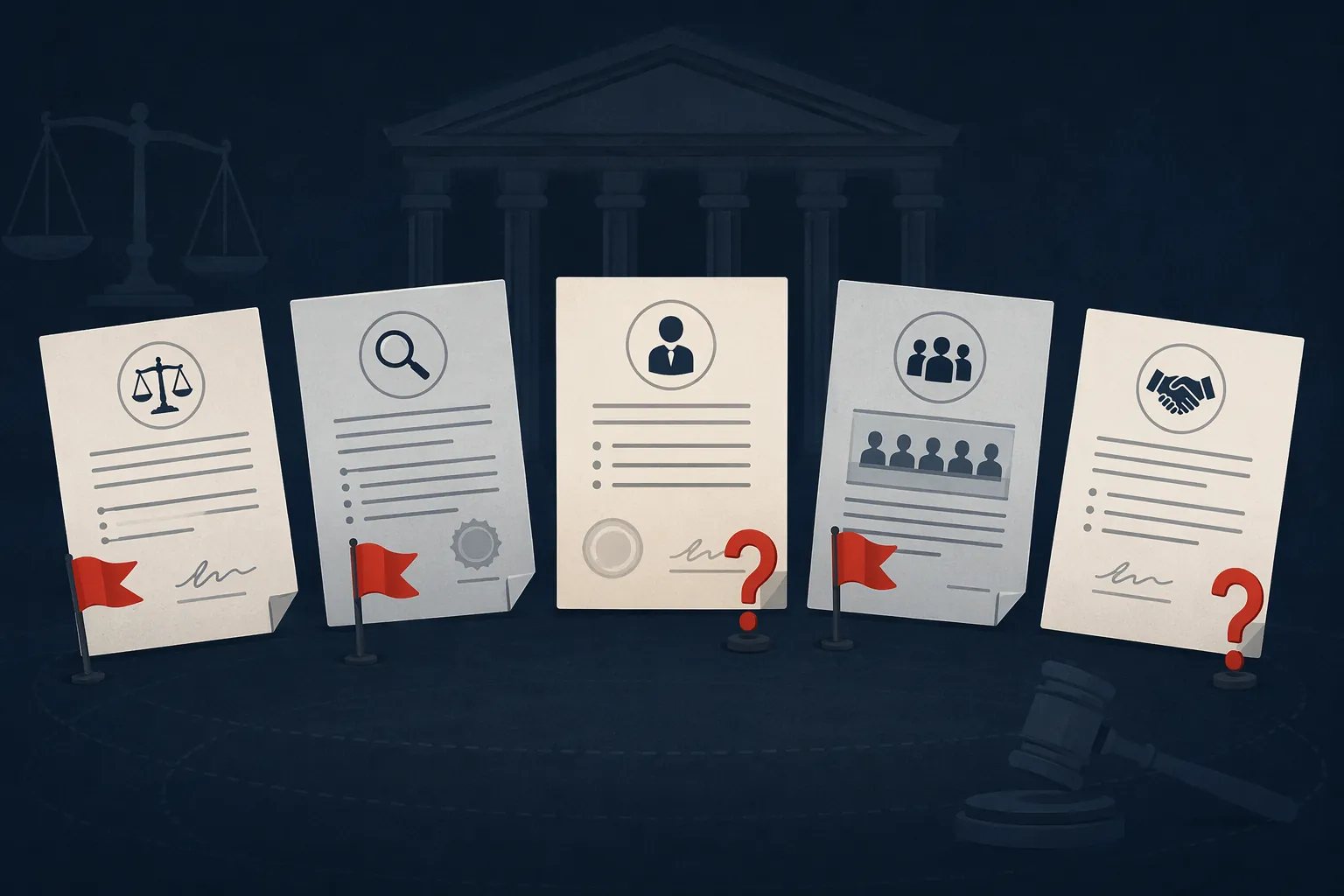
Map the challenge to the government act
The filing vehicle changes with the thing being attacked. A contested U.S. attorney appointment may matter to an indictment, a warrant, a subpoena, a grand jury action, or a plea-related filing, but those are not the same motion. Collapsing them into one “appointment challenge” is how a potentially serious defect gets briefed too broadly.
| Government act | Likely filing vehicle | Immediate question for counsel |
|---|---|---|
| Indictment | Motion to dismiss | Did the contested official sign, approve, supervise, or materially authorize the charging decision? |
| Search warrant | Suppression motion or warrant challenge | Did the warrant application depend on approval or presentation by an official whose authority is contested? |
| Subpoena | Motion to quash, resist enforcement, or preserve objection | Was the subpoena issued, approved, or enforced under the contested official’s authority? |
| Grand jury action | Motion challenging authorization or preservation argument | Was the grand jury presentation or supervision tied to the disputed appointment? |
| Plea agreement or plea-related filing | Targeted validity, enforcement, or preservation argument | Did the contested authority affect a material prosecutorial commitment rather than a later ministerial filing? |
Indictments are the cleanest target
The indictment cases give defense counsel the most concrete starting point because the remedy is familiar and the challenged act is discrete. If the indictment is invalid, the prosecution may have to start over, face limitations problems, or seek a new indictment through properly authorized channels. Even when dismissal is without prejudice, that is not a paper victory for a client with detention, discovery, speedy trial, or plea posture consequences.
The hard part is causation. A defendant should expect the government to argue that career prosecutors, assistants, or later-appointed officials carried sufficient authority; that any defect was ratified; or that the indictment remains valid because the grand jury itself returned it. Those arguments may carry weight in some districts. The EDVA and New Jersey dismissals make the defense argument live, not automatic.
Warrants require a tighter record
A warrant challenge needs a different record. The defense lawyer is not only attacking who held office. The useful question is whether the warrant application was reviewed, approved, or presented through an invalid chain of prosecutorial authority. If agents supplied probable cause independently and a magistrate judge issued the warrant, the government will have more room to argue attenuation, good faith, or lack of prejudice.
That does not make the D.D.C. ruling easy to ignore. A rejected warrant application is an early-stage consequence. It signals that some judges are willing to test authority before evidence is collected, not merely after a defendant has been charged. For pending cases, the practical move is to request and inspect the warrant file, approval forms, application signature, and any local practice materials that identify who authorized the application.
Subpoenas sit between civil resistance and criminal exposure
Subpoena practice is where civil litigants and criminal targets may meet the same problem. A subpoena can be challenged through a motion to quash, opposition to enforcement, or a narrower preservation objection, depending on posture. The appointment issue is most useful when the subpoena’s issuance or enforcement depends on the contested U.S. attorney’s authority rather than on a line prosecutor’s independent delegated role.
Counsel should be careful with timing. A recipient who ignores a subpoena because of an appointment theory risks contempt or enforcement consequences if the court later rejects the challenge. The safer route is usually to raise the authority defect inside the subpoena dispute itself, while also preserving ordinary objections such as burden, privilege, relevance, and improper purpose.
Grand jury challenges depend on the point of contact
Grand jury challenges are often uphill because courts protect the independence and secrecy of the grand jury. The Central District of California refusals nevertheless matter because they locate the defect before indictment, at the point where prosecutorial authority interacts with the grand jury’s work. That is different from saying every indictment later returned in the district is void.
The best version of the argument identifies the specific contact point: who sought the grand jury’s action, who appeared before it, who authorized subpoenas or presentations, and whether any valid official later adopted those acts. The weaker version asks a court to infer invalidity from the existence of a disputed appointment alone.
Plea-related filings are vulnerable only in narrower circumstances
Plea agreements deserve caution. A defendant may be tempted to treat a contested U.S. attorney appointment as a universal escape hatch from an unfavorable plea posture. The better question is whether the challenged authority affected a material government promise, charging concession, appeal waiver, forfeiture term, or sentencing position. If the disputed official had no practical role in the plea decision, the appointment issue may do little work.
Where the plea was negotiated, approved, or enforced under a contested chain of authority, counsel may still preserve the issue. But the remedy could differ from dismissal: the court might consider ratification, specific enforcement, withdrawal, harmlessness, or whether the defendant knowingly accepted the agreement despite later authority objections. That makes plea challenges more fact-bound than indictment challenges.
Districts to flag before filing anything routine
The districts identified in the current appointment-and-firing litigation materials are not interchangeable. Western District of Washington, New Jersey, Eastern District of Virginia, Northern District of New York, Central District of California, and Nevada matters should be screened as jurisdiction-specific risk files, not treated as one national procedural event. A dismissal in one district may be persuasive elsewhere, but it does not supply binding authority across the board.
- New Jersey and Eastern District of Virginia: strongest immediate attention because dismissals of indictments are already on the record.
- Central District of California: important for grand jury authorization and presentation issues, especially before indictment or where the grand jury process is directly implicated.
- District of Columbia: relevant by analogy for warrant practice, even though it is not the same posture as a motion to dismiss a returned indictment.
- Western District of Washington, Northern District of New York, and Nevada: risk flags where counsel should verify the appointment history, case signature chain, and any local rulings before assuming routine filings are insulated.
The screening should happen early. Once a defendant pleads, misses a suppression deadline, complies with a subpoena, or allows a grand jury dispute to pass without objection, the appointment issue may become harder to present cleanly. Preservation does not guarantee success, but silence can turn a live structural argument into a forfeiture fight.
What to look for in the case file
The appointment defect becomes usable only when it is tied to a record. The first review should be mechanical: indictment signature pages, notices of appearance, warrant applications, subpoena captions, grand jury correspondence, plea approval forms, delegation memos if available, and any order naming or recognizing the acting or interim U.S. attorney. That is not busywork. It is how counsel separates a district-wide headline from a case-specific motion.
- Identify the contested official and the exact period in which the disputed authority mattered.
- Match that period to the indictment, warrant, subpoena, grand jury act, plea approval, or other government filing.
- Determine whether a properly authorized official later ratified, refiled, or adopted the challenged act.
- Check whether the local district has already ruled on the same appointment sequence or only on a neighboring dispute.
- Preserve the issue without abandoning ordinary criminal procedure arguments that may be stronger on the same facts.
Ratification will be a recurring government answer. If a later valid official re-signs an indictment, reauthorizes a subpoena, or adopts prior filings, the court has to decide whether that cures the original defect and whether the timing matters. Counsel opposing ratification should focus on the act that cannot be recreated without consequence: an expired limitations period, a grand jury step that already occurred, a warrant application already rejected or executed, or a plea posture already altered.
The current limits of the defense avenue
The rulings on record justify treating appointment authority as a real litigation risk. They do not justify treating every prosecution in an affected district as void. Courts may distinguish between the U.S. attorney’s formal appointment, the authority of assistant U.S. attorneys, the independent role of the grand jury, and the ability of the Department of Justice to cure defects through delegation or ratification.
The likely divide is practical. Where the contested official’s authority is visible on the face of the indictment or embedded in the authorization of a warrant, subpoena, or grand jury act, the motion has a clearer target. Where the official is only part of the district’s background leadership and the challenged filing was handled by properly delegated career prosecutors, the defense argument becomes thinner.
Appellate courts may narrow or reverse some of the existing district court rulings. That possibility matters for final doctrine, but it does not eliminate the present filing question. Trial courts are managing live dockets now. Defendants are being arraigned now. Subpoena recipients are deciding whether to comply now. A risk manager reviewing active federal matters does not need a Supreme Court endpoint before flagging a case in which the charging or investigative authority runs through a contested appointment.
As of Q3 2026, the 2025 appointment-and-firing litigation has turned into a district-specific defense checklist. The strongest immediate motions are still those aimed at indictments in districts where dismissal authority exists. The next tier is warrant, subpoena, and grand jury practice where the challenged official’s authority can be traced to the specific act. Plea-related arguments remain possible but narrower. The work is not to invoke the controversy; it is to prove the chain.
Related records
Tool profile
How Meta's AI Spending Reshapes Law Firm ProfitabilityGoverning regulation
Browse the obligations tracker →Preventive workflow
Browse verification workflows →
Report a correction or tip
Spotted an outdated figure, a misstated fact, or a ruling this case record should reflect? Public comments are disabled for this content given the professional cost of a misreported case outcome, penalty amount, or rule text — use the structured correction channel instead.
Report a correction or tip for this record →