
What Made Florida's Rare Double Execution a Legal Controversy
The Eleventh Circuit rejected an Eighth Amendment challenge to Florida's same-day double execution as 'pure conjecture' at the emergency-stay stage, but the court did not reach the merits. This article examines the factual record—including documented FDOC protocol violations in prior executions—that could support a future challenge and explains why the legal question remains open for litigation with a developed evidentiary record.
- Jurisdiction
- US-Florida
- Court
- U.S. Court of Appeals for the Eleventh Circuit
- AI tool named
- No AI tool implicated
- Ruling date
- Jul 28, 2026
- Source document
- View primary court order ↗
- Last verified
- Jul 29, 2026
Lex Machina Review is an independent risk-tracking and reference resource. Nothing on this site is legal advice, and using it does not create an attorney-client relationship. Every record is reviewed against primary sources but may not reflect the most current status of a matter — always verify directly against the cited court order, rule text, or a licensed attorney before relying on it.
Companion explanation — secondary to the source document above
The legal controversy over Florida’s rare double execution began, for present purposes, with what the Eleventh Circuit did not have in front of it. In an emergency order in Duckett and Occhicone, the court rejected the prisoners’ joint Eighth Amendment theory as “pure conjecture,” holding that they had not shown a “sure or very likely” risk of serious pain under Glossip v. Gross. The panel also distinguished Oklahoma’s 2014 Clayton Lockett execution, finding no “meaningful factual basis to compare the circumstances” between that botched execution day and Florida’s lethal-injection protocol.[1]
That is a consequential ruling. It is not the same thing as a final merits holding that scheduling two executions on the same day can never violate the Eighth Amendment. The distinction matters because emergency litigation rewards clean records and punishes theories that still need discovery. That problem is familiar well outside capital cases. In sanctions disputes, habeas proceedings, civil-rights cases, and now AI-related litigation risk reviews, courts often reject a claim because the record is thin, the deadline is immediate, and the requested relief is extraordinary. The later risk question is different: what would the theory look like if the missing facts were actually developed?
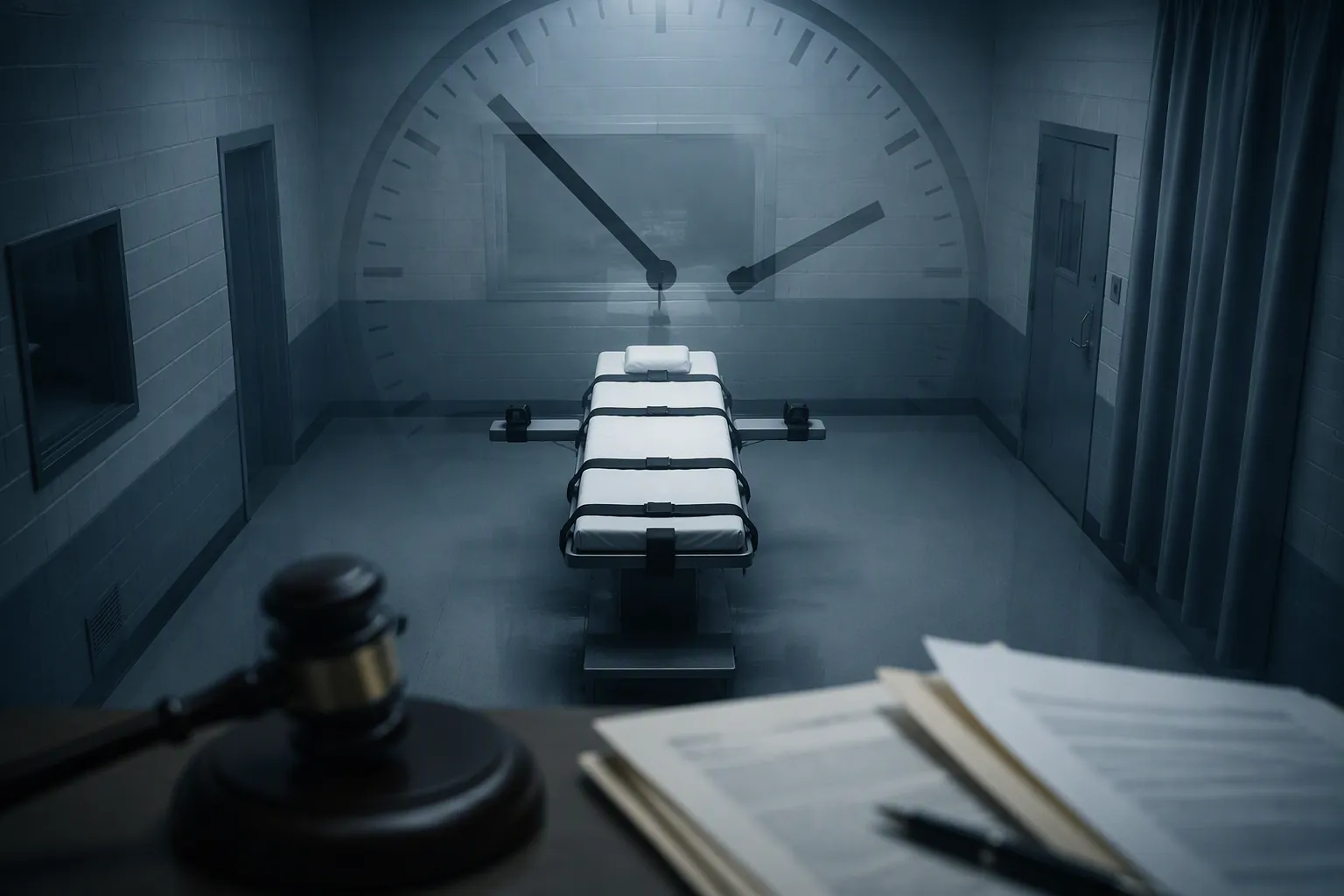
Florida carried out the executions anyway. James Duckett was pronounced dead at 1:19 p.m. and Michael Occhicone at 6:13 p.m. on July 28, 2026; public reporting after the executions did not describe visible botching in the chamber.[2] That fact weakens any simple account that imminent catastrophe was obvious. It does not answer the narrower litigation question that remains useful after the news cycle moves on: what kind of evidence would have been needed to move the same-day scheduling theory from speculation toward proof?
What Glossip Requires Before Risk Becomes Constitutional
A method-of-execution claim is not won by showing that a protocol is unpleasant, secretive, unusual, or poorly administered in the abstract. Under the Glossip formulation applied by the Eleventh Circuit, the prisoner must show a risk that is “sure or very likely” to cause serious illness and needless suffering. In emergency posture, that burden becomes especially unforgiving because the court is being asked to halt an execution on a compressed record.[1]
The prisoners’ scheduling theory had a plausible practical intuition behind it: two lethal injections on one day could stress personnel, compound preparation and documentation problems, reduce time for review between executions, and increase the chance that the second execution inherits mistakes from the first. But intuition is not the same as evidence. A court looking through Glossip wants the connective tissue. Which step in the protocol becomes more failure-prone? Which prior incidents show that Florida’s team struggles with that step? How does the six-hour interval change the risk? Who is responsible for checking drug source, drug dose, IV access, consciousness, or deviations from the written procedure?
The Eleventh Circuit’s “pure conjecture” language should be read against that missing chain. The panel did not need to decide whether a double-execution schedule could ever produce an unconstitutional risk. It only had to decide whether these prisoners, on this record and deadline, had shown enough to justify emergency relief. That is why treating the order as a categorical endorsement of same-day executions overreads it.
A developed record would need to do more than point to rarity. Rarity can explain why the evidence is sparse, and it can justify scrutiny. It does not itself establish that Florida’s procedure is sure or very likely to create needless suffering when used twice in a day. The legal work would have to be done by documents, witness testimony, protocol histories, execution logs, medical or pharmacological evidence, and proof about how Florida actually staffs and audits the process.
The Missing Substrate: Florida’s Own Protocol-Deviation Record
The most important separate record is not a generalized objection to capital punishment or a broad claim that Florida was moving too fast. It is the protocol-deviation evidence raised in the Frank Walls litigation. According to reporting on that litigation, prisoners alleged that Florida used etomidate more than six months past expiration in four August–September 2025 executions, administered lidocaine even though it was not part of the written execution protocol in two executions, and maintained incomplete dosage documentation.[3]
Those allegations do not prove the July 28 double-execution claim. They were not before the Eleventh Circuit in the same way a fully developed evidentiary record would be, and no court finding in the materials provided establishes that the alleged deviations caused pain or were caused by same-day scheduling. The point is more limited, and more useful: they are the kind of concrete facts that could change the legal analysis if connected to the operational stress of performing two executions within hours.
Expired etomidate matters because the first drug in a lethal-injection sequence is supposed to render the prisoner unconscious before the later drugs act. A plaintiff would still need expert evidence to explain what the expiration means in practice, whether potency or reliability was affected, and whether any resulting risk satisfies Glossip. But an allegation that the state used expired execution drugs is different in kind from saying the schedule felt rushed.
The lidocaine allegation has a different significance. A non-protocol drug raises questions about who authorized the deviation, whether it was documented contemporaneously, whether prisoners had notice of the actual procedure, and whether the written protocol accurately describes the state’s practice. Again, it does not automatically establish unconstitutional pain. It does, however, give a future plaintiff a specific place to aim discovery.
Incomplete dosage documentation may be the least dramatic allegation and the most useful for a scheduling challenge. A same-day theory depends heavily on process control: preparation, verification, transfer, administration, and post-execution review. If the state’s own records do not reliably show what doses were used, a prisoner arguing that a second execution magnifies documentation and quality-control failures has a more concrete argument than the one the Eleventh Circuit rejected.
| Record Fact | What It Could Support | What It Does Not Establish Alone |
|---|---|---|
| Expired etomidate alleged in four 2025 executions | A question about drug reliability and protocol compliance | That the July 28 executions used expired drugs or caused severe pain |
| Lidocaine alleged in two executions despite not appearing in the written protocol | A question about undisclosed deviations from the state’s stated method | That every deviation creates an Eighth Amendment violation |
| Incomplete dosage documentation | A question about auditability and quality control under operational pressure | That same-day scheduling caused the documentation gaps |
Secrecy Turns the Evidentiary Burden Into the Central Problem
Justice Sotomayor’s February 2026 statement in Trotter v. Florida identified the procedural trap that keeps recurring in this area. She called Florida’s execution secrecy “troubling” and described a Catch-22: prisoners are denied records because they lack sufficient evidence, but they need the records to develop that evidence.[4]
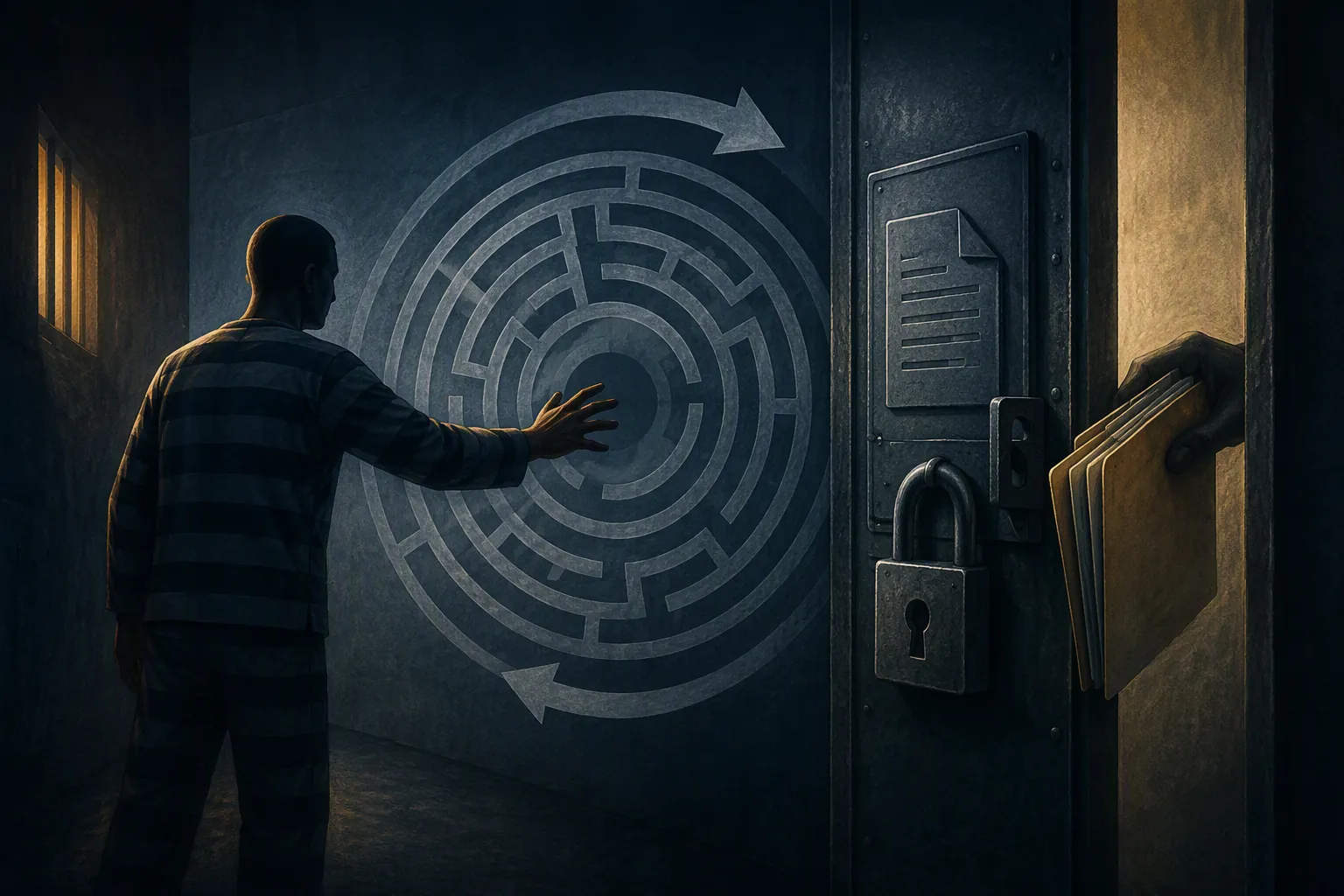
That is not just a transparency complaint. It goes directly to the Glossip burden. If the prisoner must show a sure or very likely risk, and the state controls the information about drugs, doses, personnel, timing, deviations, IV access, and prior execution logs, the record can remain “conjectural” by design. The law may demand specificity from the party least able to obtain it before the execution date arrives.
This is where the FDOC materials matter most. They do not let a court assume that any double execution is unconstitutional. They do suggest that the relevant evidence is not purely theoretical. If prior executions included alleged expired drugs, non-protocol drugs, and missing dosage details, then a future plaintiff could ask a more pointed set of questions: Were the same personnel involved? Did the same pharmacy or supply chain provide the drugs? Was there time between executions to review whether the first procedure followed protocol? Did any deviation in the first execution require an adjustment before the second?
Those questions would still need answers. Litigation risk is not built from adjectives. It is built from records that make the court uncomfortable saying “conjecture” because the alleged mechanism has been traced from prior deviation to present danger.
Why Oklahoma 2014 and Arkansas 2017 Only Go So Far
Oklahoma’s 2014 execution of Clayton Lockett appears in this litigation because it is the modern cautionary reference point for a disastrous execution day. The Eleventh Circuit distinguished it, however, because a botched execution in another state does not automatically create a meaningful comparison to Florida’s protocol. A plaintiff needs to show why the same type of failure is likely under the challenged procedure, not merely that lethal injection has failed somewhere before.[1]
Arkansas in 2017 is closer because the state executed Ledell Lee and Jack Jones on the same night, and reporting described the second execution as delayed for hours by litigation while the execution team encountered vein-access difficulties.[5] That comparison helps identify the sort of operational problem a same-night schedule might aggravate. It still does not substitute for Florida-specific proof. Vein access, drug preparation, staffing, time pressure, and protocol review have to be tied to the defendant state’s actual system.
The better use of these comparisons is modest. Oklahoma shows why courts ask for a factual bridge before importing another state’s disaster. Arkansas shows that same-night execution logistics can produce real complications worth examining. Neither comparison, by itself, gets a Florida prisoner over Glossip.
Duckett’s Innocence Fight Was Procedurally Important, But Separate
Duckett’s case also carried a separate innocence and DNA-testing controversy. Florida rescheduled his execution for July 28 after the Florida Supreme Court lifted a DNA-testing stay on July 8, placing that dispute inside the same compressed July litigation calendar as Occhicone’s execution.[6] That timing helps explain why the day felt procedurally crowded. It does not change the elements of the joint Eighth Amendment scheduling claim.
For the double-execution theory, Duckett and Occhicone were not asking the court to decide whether Duckett was innocent. They were arguing that Florida’s decision to execute two prisoners on the same day created an unconstitutional risk in the administration of lethal injection. Merging those disputes makes the controversy easier to narrate and harder to analyze.
What the Supreme Court’s Silence Signals—and What It Does Not
The Supreme Court allowed the executions to proceed without a noted dissent or separate statement.[1] Practically, that is a signal worth taking seriously. A prisoner bringing this theory again should not expect the current Court to intervene on a sparse emergency record, especially after an appellate panel has already characterized the theory as conjectural.
But silence on an emergency application is not a merits opinion. It does not say that two executions scheduled six hours apart can never violate the Eighth Amendment. It says, at most, that the presented record did not attract intervention at the moment intervention mattered. For future litigants, that distinction is not academic. It determines whether the next case should be framed as an appeal to outrage or as a records case.
The Record a Future Plaintiff Would Need
A stronger challenge would need to connect three things that were not connected tightly enough in the emergency litigation: Florida’s prior protocol deviations, the operational demands of two same-day executions, and the specific risk of severe pain. The claim would become less about the word “rare” and more about institutional capacity.
- Protocol proof: the written lethal-injection procedure, any deviations, and records showing who approved or documented them.
- Drug proof: source, expiration, concentration, dose, storage, preparation, and chain-of-custody records for both executions.
- Personnel proof: staffing overlap, training, fatigue, role assignments, and whether the same team handled both procedures.
- Timing proof: what review occurred after the first execution and before the second, including any opportunity to identify and correct problems.
- Causation proof: expert testimony explaining how the scheduling decision increases the likelihood of a constitutionally significant failure.
The Frank Walls allegations would fit into that architecture as prior-deviation evidence, not as a substitute for it. A plaintiff could use them to argue that Florida’s protocol compliance is a live factual issue and that same-day scheduling increases the need for verification. The state would likely respond that prior alleged deviations did not establish pain, did not involve a double execution, and did not show that July 28 presented a sure or very likely risk. That is the dispute a developed record would actually tee up.
The controversy, then, is narrower than the public shorthand. Florida did hold a rare double execution. The emergency challenge failed. The failure was record-dependent. A future challenge would need evidence showing more than speed, rarity, or generalized fear. It would need to show that known protocol problems become materially more dangerous when the state runs the machinery twice in one day.
That leaves an uncomfortable risk-assessment conclusion. The Eleventh Circuit did not secretly validate a dangerous practice on the merits. It rejected an undeveloped emergency record. The harder problem is that the legal system may require prisoners to produce protocol evidence the state has strong incentives to withhold before the Eighth Amendment question can be meaningfully tested.
References
- Supreme Court lets rare double execution move forward in Florida — Courthouse News Service
- Florida executes 2 men in a day, including an octogenarian — CNN
- Florida used expired execution drugs, lower doses, lawsuit claims — Tampa Bay Times, Dec. 2025
- Supreme Court Justice Sotomayor Calls Secrecy Around Florida's Recent Spate of Executions Troubling — Death Penalty Information Center, Feb. 2026
- Alarm as Florida rushes to carry out incredibly rare double execution — The Guardian
- Florida to execute 2 inmates on same day for first time in 60 years — AP News
Related records
Tool profile
How Meta's AI Spending Reshapes Law Firm ProfitabilityGoverning regulation
Browse the obligations tracker →Preventive workflow
Browse verification workflows →
Report a correction or tip
Spotted an outdated figure, a misstated fact, or a ruling this case record should reflect? Public comments are disabled for this content given the professional cost of a misreported case outcome, penalty amount, or rule text — use the structured correction channel instead.
Report a correction or tip for this record →