
Ford Bronco Recall Cascade and Its Legal Implications
Ford Bronco's four overlapping recall campaigns, combined with a 2024 NHTSA consent order requiring re-review of past recalls, create a cumulative litigation risk that weakens Ford's standard prudential mootness defense. This cascade makes class-action claims harder to dismiss and increases exposure for Ford and its dealers.
- Jurisdiction
- US Federal
- Court
- United States District Court for the Eastern District of Pennsylvania
- AI tool named
- None
- Ruling date
- Nov 1, 2024
- Source document
- View primary court order ↗
- Last verified
- Jul 28, 2026
Lex Machina Review is an independent risk-tracking and reference resource. Nothing on this site is legal advice, and using it does not create an attorney-client relationship. Every record is reviewed against primary sources but may not reflect the most current status of a matter — always verify directly against the cited court order, rule text, or a licensed attorney before relying on it.
Companion explanation — secondary to the source document above
The legal issue is no longer one Bronco defect
Risk Digest note: This is a litigation-risk analysis, not legal advice. It was last verified on July 28, 2026, against the public sources cited below. Where campaign numbers or remedy details depend on NHTSA campaign documents not reproduced in the cited materials, those documents should control before the point is used in briefing.
The sharpest legal implications of the Ford Bronco recalls do not come from the most dramatic allegation in the file. They come from the posture Ford may have to defend: four overlapping Bronco recall campaigns, a November 2024 NHTSA consent order requiring Ford to re-review prior recall decisions, and a public compilation reporting that a substantial share of Ford’s recent recalls corrected vehicles from earlier recalls that were repaired incorrectly.
That combination matters because Ford has had a clean defense available in some recall class actions: the company announces a recall, offers a remedy, and argues that the court should dismiss because the recall gives owners complete relief. The cascade makes that harder. A court does not have to treat every Bronco campaign as proof of liability to view the overall record as a reason to test whether the remedy actually ends the dispute.

The single-recall baseline is different. A prior Risk Digest analysis of the July 2026 Bronco recall litigation exposure treated the engine-fire campaign as its own litigation trigger. This article adds the harder question: what happens when that campaign is filed into a record that already contains repeat Bronco recalls and a federal consent order aimed at Ford’s recall decision-making process?
The cascade is procedurally significant
NHTSA announced in November 2024 that Ford had agreed to a consent order carrying a $165 million civil penalty, described by the agency as the second largest in its history. The order required Ford to re-review recalls from the prior three years and submit to independent third-party oversight with authority to recommend changes to recall decision-making, testing, analytics, and compliance practices.[1]
That is not the same thing as a judicial finding that any Bronco recall remedy is inadequate. It is more limited, and more useful: it changes the background against which a court may hear Ford say a current recall should be trusted as complete relief. A consent order requiring re-review of prior recall decisions is awkward terrain for a dismissal motion built on the proposition that the present recall process has already solved the putative class’s injury.
The broader recall numbers should be handled with care. Hearn Law Firm, in a compilation citing NHTSA data, reports that Ford issued 153 recall orders in 2025, more than double the prior single-year record, and 56 more in the first half of 2026. The same compilation states that 27% of Ford’s 2025 recalls addressed vehicles from earlier recalls that were “repaired incorrectly,” and that the Bronco accumulated 46 NHTSA recall campaigns between 2022 and mid-2026, including 27 in the prior 18 months.[2]
Those figures are not independently verified here through a direct query of the raw NHTSA database. They are still relevant as a litigation-risk signal, especially because the pleaded point would not need to be that every number is independently dispositive. The point would be that Ford’s recall history supplies plaintiffs with a ready answer to the usual recall-mootness script: this is not a one-off safety campaign operating in a vacuum.
| Campaign or issue | Current public record | Litigation use |
|---|---|---|
| 26S55 engine-fire recall | July 2026 campaign covering 565,691 Bronco vehicles, with 15 confirmed fires and no reported injuries according to Ford as reported publicly.[3][4] | Immediate trigger for class-action and individual-claim attention; remedy adequacy and timing will matter most. |
| 26V236 rollaway recall | Reported as covering nearly 4,900 Bronco SUVs that might roll away.[5] | Adds a separate safety-risk vector and additional service-visit exposure. |
| Seat-bolt loosening | Campaign number requires confirmation against NHTSA records. | Relevant as part of the overlap pattern, but should not be over-weighted without the campaign file. |
| Rearview camera failure | Campaign number requires confirmation against NHTSA records. | Useful as another owner-service burden and safety-function recall, subject to document verification. |
The engine-fire campaign deserves the most attention because it is the freshest and most serious trigger. Public reporting describes the July 2026 recall as involving 565,691 Bronco vehicles, 15 confirmed fires, and no reported injuries according to Ford.[3][4] The same reporting did not frame the campaign as a do-not-drive recall. Because that absence can become legally important, it should be checked against the actual NHTSA campaign documents rather than assumed from press coverage alone.
Why “complete relief” is the pressure point
The decisive phrase is not “large recall.” It is “complete relief.” Dentons’ discussion of voluntary recalls as a class-action defense identifies Pacheco v. Ford Motor Co., an Eastern District of Michigan decision from 2022, as an example of a court dismissing claims on prudential-mootness grounds where Ford had implemented a recall remedy the court viewed as complete relief.[6]
That description comes through secondary commentary, not a fresh review of the full Pacheco opinion here. Anyone briefing the issue should read the opinion itself. For risk analysis, though, the defense architecture is clear enough: if a manufacturer can credibly say the recall provides the same practical repair the plaintiff seeks, the court may decline to supervise a parallel class action.
The Bronco cascade attacks that architecture at its weakest joint. A recall is a powerful dismissal fact when it appears targeted, final, and administratively reliable. It loses force when plaintiffs can point to overlapping campaigns, repeat repair visits, agency-imposed re-review obligations, and public reporting that a meaningful portion of the manufacturer’s recent recall activity involved correcting earlier repairs.
That does not make prudential mootness unavailable. It changes what Ford may have to show. A bare notice of recall may be less persuasive than evidence that parts are available, dealers can perform the repair once, the repair addresses the alleged defect rather than a symptom, and owners are not cycling back through the service lane for related failures.
The consent order is especially uncomfortable for a motion-to-dismiss record. NHTSA required Ford to re-review recalls from the prior three years and accept independent oversight.[1] Plaintiffs do not need that order to prove the Bronco fire remedy failed. They can use it for a narrower and more defensible point: courts should be cautious before treating a newly announced Ford recall as automatically complete where the regulator recently required Ford to revisit past recall decisions.
The Hearn compilation adds a second layer, with the same caveat about source posture. If 27% of Ford’s 2025 recalls addressed vehicles from earlier recalls that were repaired incorrectly, plaintiffs can argue that the risk is not merely theoretical: recall implementation itself is part of the factual dispute.[2] That is the kind of dispute that can make early dismissal harder, even when the defendant may ultimately prove that the specific Bronco remedy is adequate.
The better defense response would not be to minimize the number of campaigns. It would be to separate them. Ford would likely argue that an engine-fire wiring-sheathing remedy, a rollaway issue, seat-bolt loosening, and a rearview camera defect involve different systems, different failure modes, and different remedies. That distinction matters. The cascade is not proof that one defect caused another. Its legal force is procedural: it gives plaintiffs a plausible reason to challenge whether the current recall should end the case before discovery.
Benson supplies the inadequate-remedy bridge, not a Bronco holding
The live pleading theory comes into sharper focus in Benson v. Ford Motor Co., but the case should not be overstated. ClassAction.org reports that the Benson complaint, filed February 5, 2025 in the Eastern District of Pennsylvania, alleges Ford’s Bronco Sport and Maverick battery-recall fix used a software update for an alleged hardware weld defect and therefore did not address the root cause. ClassAction.org also lists a May 2026 follow-on suit tied to the same battery-recall theory.[7]
Those are allegations as summarized by a secondary source, not adjudicated facts. They nevertheless show the pleading move plaintiffs will likely adapt if a Bronco remedy appears incomplete: identify the alleged physical defect, compare it to the recall repair, and argue that Ford is managing consequences rather than correcting the source of the risk.
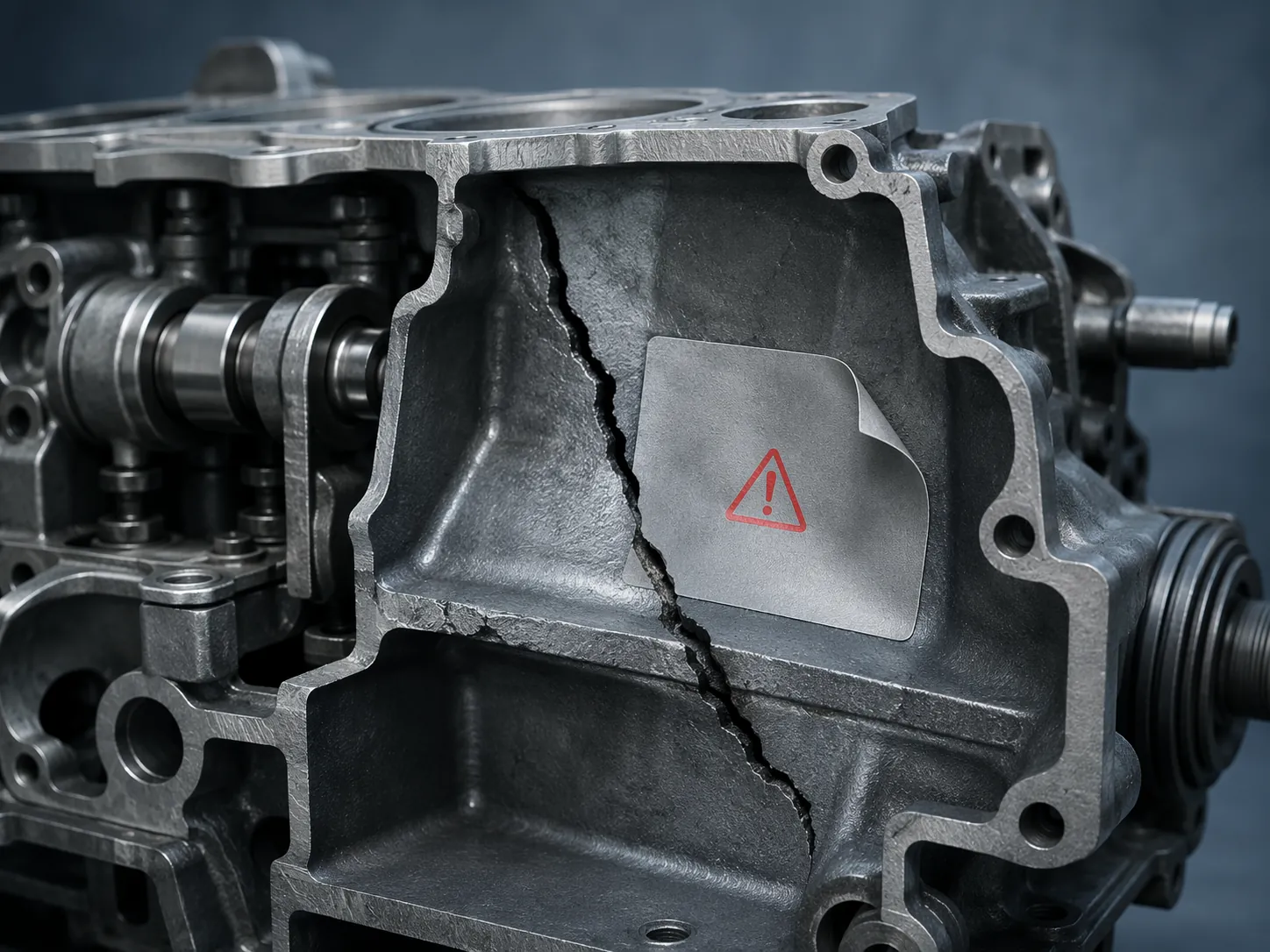
For the July 2026 Bronco fire recall, the corresponding question would be whether the wiring-sheathing fix, as documented in the NHTSA file, actually removes the fire risk for the affected population. If it does, the recall remains a strong defense fact. If owners later report repeated overheating, smoke, fire, warning lights, or related service visits after the recall repair, Benson gives plaintiffs a ready vocabulary for saying the remedy was inadequate.
That is also where the nearby Ford recall record becomes relevant without becoming conclusive. Prior site coverage of the 2025 Bronco Sport and Escape recall and the Bronco Sport/Maverick recall cascade helps frame the manufacturer-wide litigation environment. It should not be used to imply that the full-size Bronco engine-fire campaign shares the same defect unless the campaign documents and expert record support that connection.
Dealer visits are where mootness meets lemon-law exposure
The class-action question is not the only consequence. Repeat recall work creates a practical record: repair orders, parts delays, failed inspections, loaner denials, and days out of service. Dealers may not control the original design decision, but they often become the place where the legal story is documented.
California is the obvious pressure point. Mousavi Law’s Bronco lemon-law page describes the Song-Beverly framework and the familiar presumption triggered when a vehicle is out of service for warranty repairs for 30 or more cumulative days.[8] Multiple recall visits do not automatically create a California lemon-law claim, but they can move an owner toward the kind of downtime record that makes repurchase, replacement, or civil-penalty exposure more than a class-action abstraction.
Ohio is less arithmetic in the way it is usually discussed. Burdge Law Office frames Ohio lemon-law exposure around safety risks, recurring defects, and whether a problem is permanently repairable after reasonable attempts.[9] For a Bronco owner, the relevant file will be less about the headline number of Ford recalls and more about whether the same vehicle returns for related symptoms after the supposedly final repair.
That downstream exposure also feeds back into the prudential-mootness analysis. If owners can plead concrete post-recall downtime or failed repairs, Ford’s argument that the recall moots the dispute becomes more fact-bound. The issue moves from “there is a recall” to “this recall gave this owner the promised relief.”
What should change the risk assessment
The current record supports increased dismissal friction and aggregate exposure. It does not support a merits prediction. The difference matters. Ford may still show that the engine-fire remedy is technically sound, promptly available, and unrelated to the other Bronco campaigns. Plaintiffs may still fail to plead a defect, injury, causation, warranty breach, or a viable class theory.
- NHTSA campaign files: confirm 26S55 remedy language, owner notices, part availability, any do-not-drive position, and the campaign numbers for the seat-bolt and rearview-camera recalls.
- Repair performance: track whether vehicles repaired under the engine-fire campaign later present related symptoms or require repeat work.
- Dealer documentation: preserve repair orders, parts-delay notes, warranty coding, loaner records, and cumulative days out of service.
- Pleadings: separate allegations about full-size Bronco defects from Bronco Sport, Maverick, Escape, or Expedition allegations unless the complaint connects them with facts.
- Consent-order implementation: compare Ford’s current recall decision-making and remedy rollout against the oversight and re-review obligations imposed by NHTSA.
The regulatory backdrop is not limited to Bronco. Prior coverage of the Expedition seat-belt recall under the Ford consent-order regime is useful because it shows why the November 2024 order belongs in the analysis even when the defect systems differ.
The litigation risk, then, is cumulative but not mystical. The Bronco recall cascade gives plaintiffs a stronger answer to prudential mootness and a cleaner inadequate-remedy theory if repairs fail. Ford and dealers face greater early-motion friction because “complete relief” is harder to credit on a thin record. Final liability still depends on verified NHTSA documents, actual repair adequacy, vehicle downtime, and the pleadings in the specific case.
References
- NHTSA Issues $165 Million Civil Penalty, Second Largest in Agency's History — Ford Consent Order — NHTSA.gov
- Ford Recall Statistics & Fast Facts [2026] — Hearn Law Firm
- Ford recalls more than half a million Broncos due to engine fire risk — ABC News
- Ford Recalls Bronco, Bronco Raptor over Potential Engine Fires — Car and Driver
- Ford Recalls Nearly 5000 Bronco SUVs Because They Might Roll Away — Car and Driver
- Voluntary Recalls as a Class Action Defense — Dentons, April 2023
- Ford Facing Class Action Lawsuit Over Bronco Sport, Maverick Battery Recall (Benson v. Ford Motor Co.) — ClassAction.org
- Ford Bronco Lemon Law (Fire Recall & Engine Problems) — Mousavi Law
- Ohio Lemon Law — Ford Recalls 2021-2026 Models Due to Safety Risks — Burdge Law Office
Related records
Tool profile
Browse tool evaluations →Governing regulation
Browse the obligations tracker →Preventive workflow
Browse verification workflows →
Report a correction or tip
Spotted an outdated figure, a misstated fact, or a ruling this case record should reflect? Public comments are disabled for this content given the professional cost of a misreported case outcome, penalty amount, or rule text — use the structured correction channel instead.
Report a correction or tip for this record →