
Can Charges Still Be Filed in the Fukuoka Assembly Scandal?
The Fukuoka Prefectural Assembly cash-for-post scandal raises three plausible criminal theories — bribery, extortion, and political-funds disclosure violations — each with a distinct penalty range and a limitation-period problem created by the 2018-2020 payment dates. This assessment maps those theories to the reported payments and explains what the absence of charges as of July 30, 2026 does and does not mean.
- Jurisdiction
- Japan
- Court
- No court proceeding identified
- AI tool named
- No AI tool named
- Ruling date
- Jul 30, 2026
- Source document
- View primary court order ↗
- Last verified
- Jul 30, 2026
Lex Machina Review is an independent risk-tracking and reference resource. Nothing on this site is legal advice, and using it does not create an attorney-client relationship. Every record is reviewed against primary sources but may not reflect the most current status of a matter — always verify directly against the cited court order, rule text, or a licensed attorney before relying on it.
Companion explanation — secondary to the source document above
The legal implications of the Fukuoka Prefectural Assembly political-fund scandal are serious, but the first clean answer is also the most inconvenient one: on the public record reviewed here, no charges had been filed as of July 30, 2026, and that fact proves neither innocence nor prosecutorial foot-dragging. The reported payments can be mapped onto three plausible theories — bribery, extortion, and political-funds disclosure trouble — but the reported payment window, roughly December 2018 through June 2020, may matter as much as the cash itself. Former Speaker Yoshimatsu reportedly described about ¥20 million in payments before becoming speaker in June 2020; Jiji also reported the broad payment chronology; Mainichi later reported admissions by four former leaders totaling about ¥36.25 million, including former Vice Speaker Eto’s account of ¥8.25 million.[1][2][3]
The core limitation problem is conditional but unavoidable. Miura & Partners’ Chambers contribution describes Japanese bribery exposure as up to five years’ imprisonment for a public official who accepts a bribe, rising to seven years where the official agrees to act on request, and up to three years’ imprisonment or a fine of up to ¥2.5 million for a giver; the same Chambers-based summary supplies the five-year recipient and three-year giver limitation figures used in this assessment.[4] Those limitation figures should be verified against the relevant Japanese criminal-procedure provisions before publication or client reliance. If they are correct, many 2018–2020 bribery charges would be difficult to bring by mid-2026 even if the factual reporting were accurate.
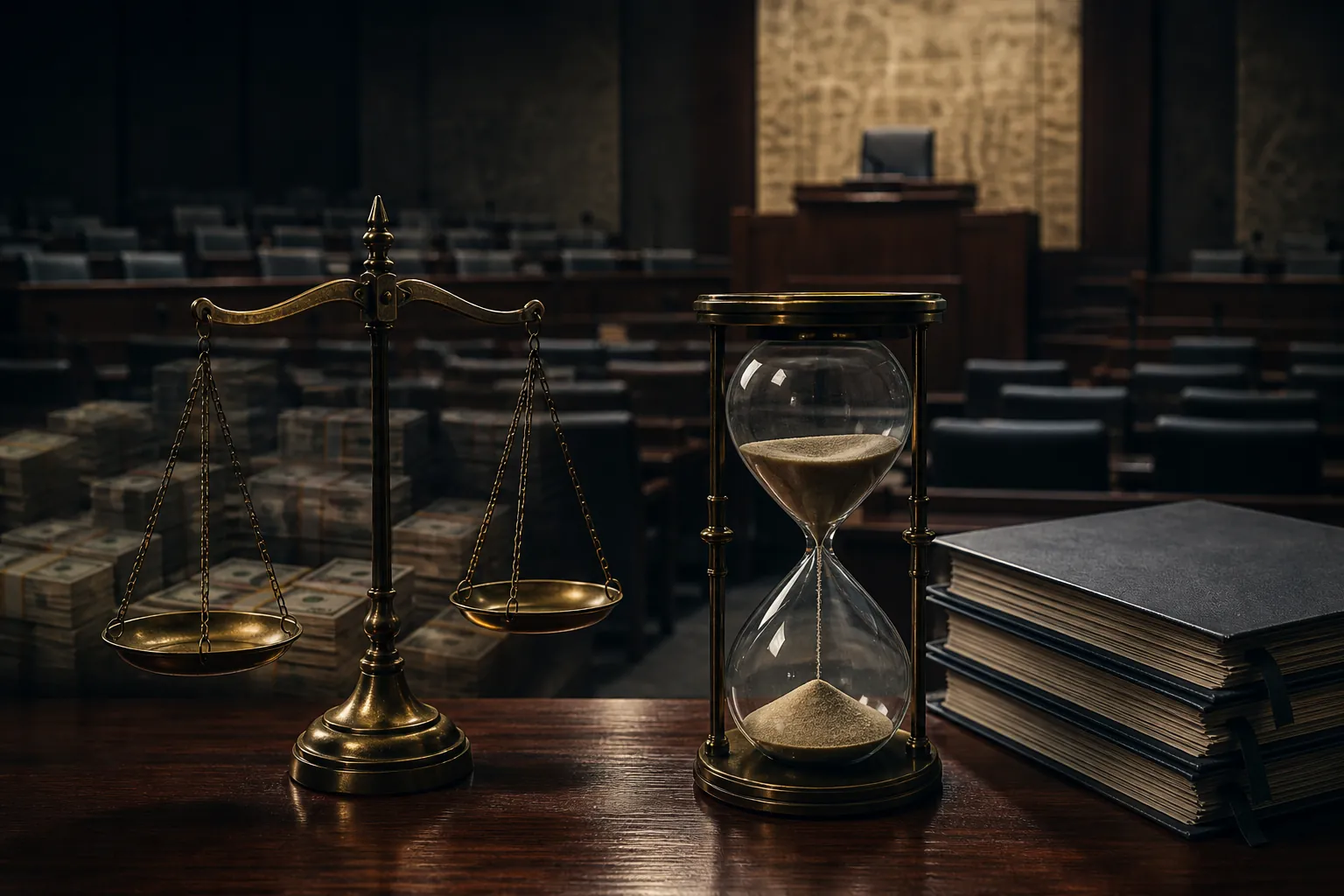
The charge map
| Reported conduct | Possible legal theory | Reported exposure | Limitation problem | What the public record does not yet prove |
|---|---|---|---|---|
| Assembly executives allegedly received cash or expense payments in connection with leadership posts. | Penal Code bribery, focused on the alleged recipients under Article 197. | Up to five years’ imprisonment for accepting a bribe; up to seven years where the official agrees to act on request, as summarized by Miura & Partners in Chambers.[4] | If the five-year limitation figure cited in the Chambers-based summary is correct, payments ending in June 2020 create an obvious charge-timing problem by July 2026.[4] | Public reporting is not an indictment. It does not establish every recipient’s mental state, official-act nexus, or limitation tolling. |
| Yoshimatsu and Eto reportedly paid cash or expenses to obtain or secure senior assembly positions. | Penal Code bribery, focused on the alleged givers under Article 198. | Up to three years’ imprisonment or a fine up to ¥2.5 million, as summarized by Miura & Partners in Chambers.[4] | If the three-year limitation figure for givers is correct, 2018–2020 payments would be especially vulnerable to time-bar arguments by mid-2026.[4] | The reports do not by themselves resolve whether a payment was a bribe, a coerced transfer, a political custom, or some combination of contested accounts. |
| Yoshimatsu reportedly characterized the demanded payments as being squeezed or “katsuage.” | Penal Code extortion under Article 249, focused on whether money was obtained through coercive conduct. | Imprisonment with work for not more than 10 years under the official Cabinet Secretariat translation of Penal Code Article 249.[5] | The limitation period for any extortion theory was not independently verified in the materials reviewed here. | A complainant’s characterization makes the theory intelligible; it does not prove threat, coercion, causation, or the statutory elements. |
| LDP executives allegedly told Yoshimatsu that appointment-party proceeds could recoup the outlay, and he reportedly netted more than ¥20 million. | Political Funds Control Act disclosure or compliance issues, adjacent to the cash-for-post allegations. | Potentially significant if revenue, contributions, ticket purchases, or related flows were undisclosed or mischaracterized; this assessment does not assign a penalty without a verified provision. | The January 1, 2026 PFCA amendments do not, on the materials reviewed, retroactively solve or reclassify 2018–2020 conduct. | The public record does not establish a specific PFCA violation tied to each payment, party event, or account entry. |
Bribery depends on whose conduct is being charged
The easiest way to overstate this case is to say “bribery” once and let the word do all the work. Japanese bribery law points in two directions. Article 197 exposure, as summarized by Miura & Partners, concerns the public official who accepts a bribe; Article 198 exposure concerns the person who gives, offers, or promises one.[4] In the Fukuoka reporting, that distinction matters because the same cash transfer can make one actor look like a payer, another like a recipient, and a third like someone describing the arrangement after the fact as custom.
For alleged recipients, the charging question would not be whether the reported arrangement was unattractive. It would be whether the money or benefit was connected to official duties in a way that satisfies the bribery provision. Miura & Partners’ Chambers discussion notes that bribery in Japan can include intangible benefits, including hospitality and travel, so a prosecutor would not be limited to an envelope-of-cash theory.[4] That said, reported admissions to a newspaper and a chargeable Article 197 case are not the same thing. The public materials reviewed here do not supply an authenticated confession, a complete ledger, bank records, or prosecutorial findings.
For alleged givers, Article 198 raises a different exposure profile. Yoshimatsu’s account, as reported by Asahi and Jiji, places him in the position of having paid roughly ¥20 million before becoming speaker in June 2020.[1][2] Eto’s reported account is smaller but still material: Mainichi reported ¥8.25 million in total, while Nikkei described ¥5 million in cash plus more than ¥3 million in expenses.[3][6] If those payments were voluntary bribes, payer exposure becomes part of the case. If they were extracted under pressure, the same facts begin to point toward extortion. That is not a stylistic distinction; it changes the subject of criminal blame.
Why the extortion theory cannot be dismissed, but also cannot be assumed
Extortion is the theory that best fits the reported “katsuage” framing, but the word itself is not the proof. NHK reported Yoshimatsu’s account that he was told cash was required, and the broader reporting describes his position as one of being squeezed for money in connection with the speakership.[7] Penal Code Article 249, in the official Cabinet Secretariat translation, punishes a person who extorts another to obtain property, with imprisonment with work for not more than 10 years.[5]
That makes the theory intelligible. It does not make it established. A prosecutor would still need evidence of the statutory conduct: not merely that a payment was expected, or that an internal political custom existed, but that property was obtained through conduct meeting the legal threshold for extortion. Public reporting does not yet answer the hard evidentiary questions: who made the demand, what words were used, whether there was a threat or coercive pressure recognizable under Article 249, what the payer understood would happen if he refused, and whether corroborating records support that account.
The extortion lens also affects how to read Yoshimatsu’s own exposure. A person who pays because he has been extorted is not in the same posture as a person who pays to buy official action. The public record may ultimately support one theory, the other, both as to different actors, or neither beyond a reasonable doubt. At this stage, the careful conclusion is narrower: the reported “squeezed” account is legally relevant because Article 249 exists and carries a materially different penalty ceiling, not because a media characterization proves the charge.
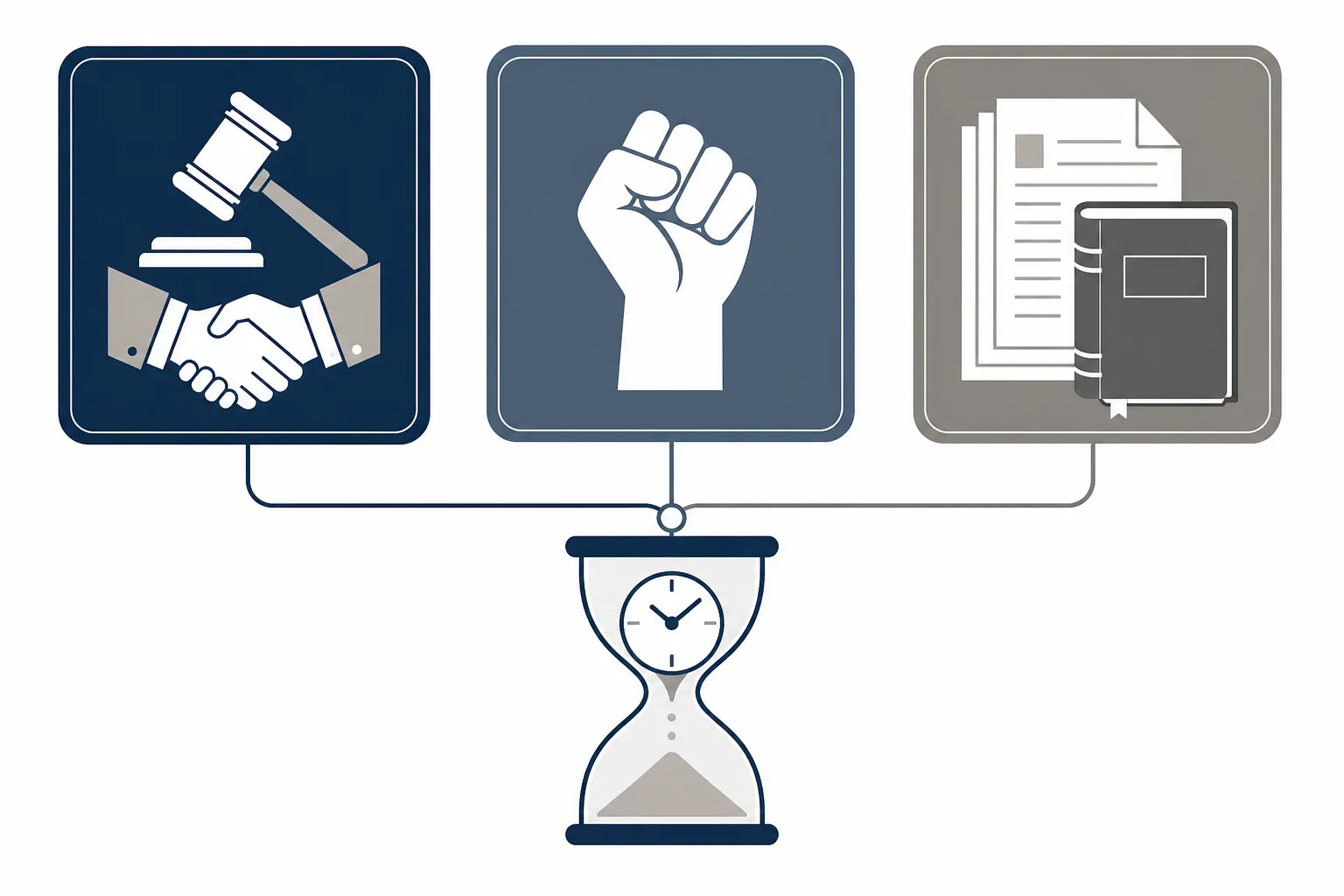
The calendar may be the decisive fact
The reported cash figures attract attention, but the dates may control the legal outcome. The alleged payments sit mainly between December 2018 and June 2020, with Yoshimatsu reportedly becoming speaker in June 2020 after funding the payments through borrowing.[1][2] By July 30, 2026, that chronology is not just old; under the reported limitation framework, it is potentially disabling.
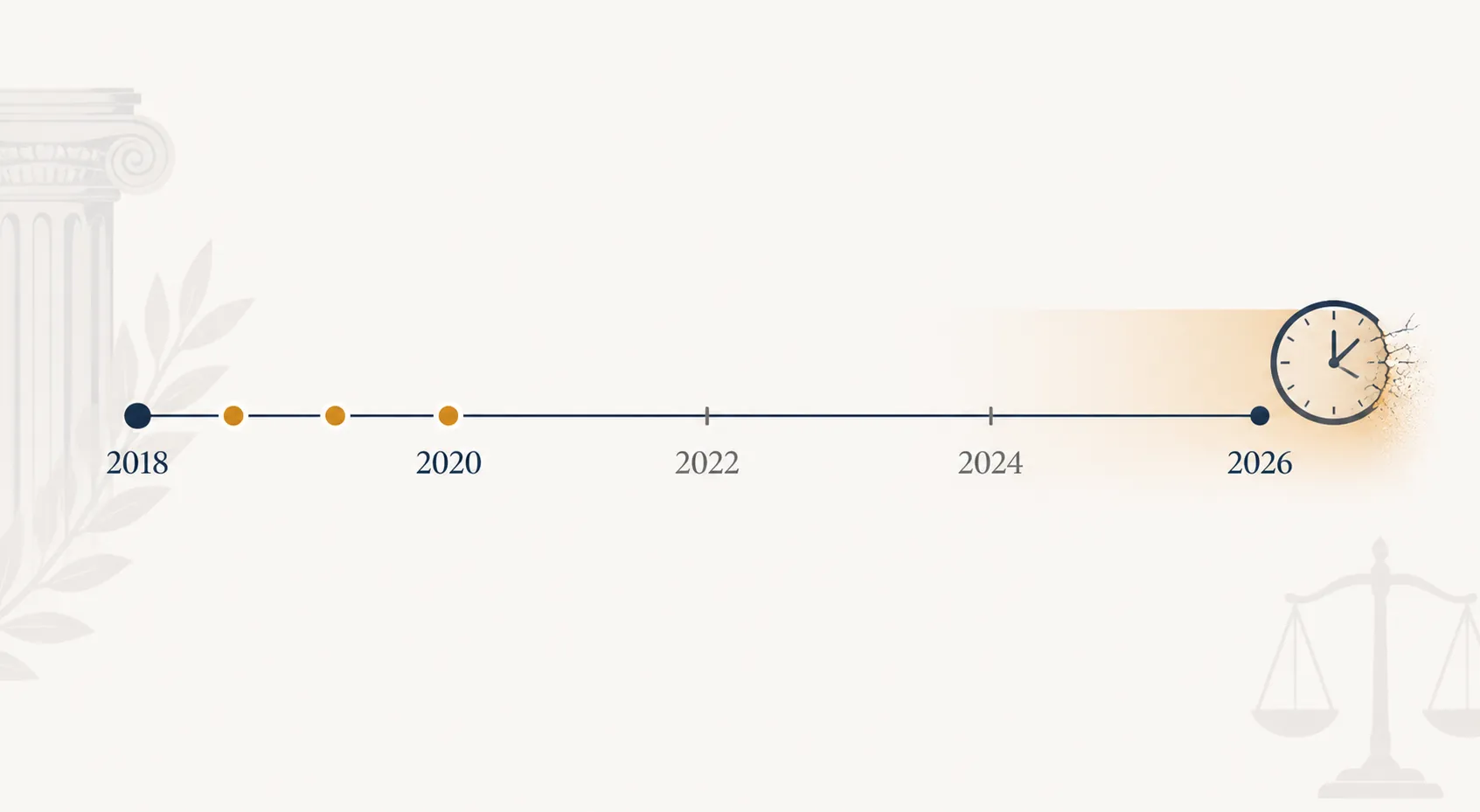
Take the recipient theory first. If a five-year limitation period applies to a bribe recipient, as the Chambers-based summary reports, a payment received in December 2018 would become time-sensitive by December 2023. A payment received in June 2020 would become time-sensitive by June 2025.[4] Unless there is a tolling rule, continuing-offense theory, later chargeable act, or another procedural basis not visible in the public record, a July 2026 prosecution of those receipt events would face an immediate limitation question.
The giver theory is even tighter if the reported three-year period is correct. A December 2018 giving offense would run into a limitation problem by December 2021; a June 2020 giving offense by June 2023.[4] That does not mean a prosecutor could never charge anything arising from the scandal. It means that a straightforward Article 198 charge based only on the publicized 2018–2020 payments would need a legal answer to the clock.
This is why “no charges by July 30, 2026” should not be read as an exonerating fact by itself. It may reflect insufficient admissible evidence. It may reflect limitation periods. It may reflect prosecutorial judgment about witnesses, corroboration, public-office nexus, or charge selection. What it cannot fairly support, without more, is the conclusion that the alleged conduct either certainly happened in a chargeable way or certainly did not.
The political-funds strand is adjacent, not identical
The phrase “political fund scandal” is useful for public discussion, but it can blur the legal categories. The central Fukuoka allegation is a cash-for-speakership arrangement. The Political Funds Control Act strand matters because the reported recoup mechanism allegedly routed political-event proceeds back toward the payer’s outlay: Asahi reported that Yoshimatsu said he netted more than ¥20 million from appointment-party proceeds after LDP executives told him the proceeds would repay what he had spent.[1]
That creates disclosure and compliance questions, not an automatic PFCA conviction. A careful PFCA analysis would need event records, ticket-purchaser information, political organization accounts, reports filed at the time, and the precise statutory provisions in force when the money moved. The public reporting summarized here does not establish all of that. It does, however, explain why political-funds governance remains part of the legal risk map rather than mere background.
The 2026 PFCA framework also matters, but mostly prospectively. Asahi reported that revisions passed on June 19, 2024, took effect January 1, 2026, including a reduction of the fundraising-party ticket-purchaser disclosure threshold from ¥200,000 to ¥50,000, a bank-account requirement, confirmation documents, and civil-rights suspension mechanisms.[8] Those reforms may change compliance expectations going forward. The materials reviewed here do not show that they retroactively determine the legality of alleged 2018–2020 payments.
Fukuoka’s political-funds governance was already under pressure before the speakership-payment reporting fully ripened. The prefectural assembly adopted a March 8, 2024 Article 99 opinion statement calling for national PFCA reform.[9] Mainichi later reported, on March 25, 2026, that prefectural mutual-aid groups funded by department and section chiefs’ dues bought political-fundraising tickets, raising possible PFCA forced-contribution and Local Public Service Law political-activity issues.[10] Those are separate compliance concerns. They should not be collapsed into proof of bribery in the speakership matter.
What is happening after the headlines
The post-headline procedure matters because it shows the gap between political accountability and formal fact-finding. The Fukuoka Prefectural Assembly ordered interviews by external lawyers of all 87 current members beginning in August 2026, while declining to create a third-party committee with formal fact-finding authority.[11] That choice may still produce useful accounts. It is not the same as a prosecutor’s investigation, and it is not the same as an independent committee empowered to compel a fuller record.
There is also an AI-audio subplot in the reporting, but it is not load-bearing for this legal assessment. Nikkei reported a privately commissioned voiceprint analysis in connection with a disputed audio account, and the public narrative includes an AI-generated-audio claim.[6] Unless and until that material becomes authenticated evidence in a criminal or formal investigative setting, it is best treated as investigative context, not as a substitute for proving payments, demands, intent, or limitation-period answers.
Status last verified
Last verified: 2026-07-30 UTC. This assessment is a public-record legal-risk map, not legal advice and not a prediction of prosecutorial action. Several Japanese reports cited here are partially paywalled, and amounts should be rechecked against the full articles before publication, filing, or client reliance.
As of that verification date, the legally safe position is restrained. The reported facts create plausible bribery, extortion, and political-funds theories. The bribery theories face a visible limitation-period problem if the reported five-year recipient and three-year giver periods are correct. The extortion theory depends on evidence of coercive conduct, not only on a payer’s “katsuage” description. The PFCA issues require account-level proof. Absence of charges may be consistent with evidentiary limits, limitation periods, or prosecutorial judgment; it should be treated as a time-sensitive status marker, not a conclusion.
References
- Ex-Fukuoka assembly speaker says he paid about ¥20 million to secure top post, The Asahi Shimbun
- Fukuoka assembly pay-to-play scandal report, Jiji Press, 2026-07-08
- Fukuoka assembly cash scandal report on ¥36.25 million in admitted payments, Mainichi Shimbun, 2026-07-13
- Anti-Corruption 2026 - Japan: Trends and Developments, Chambers and Partners / Miura & Partners, updated December 2025
- Penal Code (Act No. 45 of 1907), Cabinet Secretariat
- Fukuoka assembly payment report, Nikkei, 2026-07-27
- Fukuoka assembly cash-for-post report, NHK
- Japan enacts law to revise Political Funds Control Law, The Asahi Shimbun
- 政治資金規正法の改正を求める意見書, Fukuoka Prefectural Assembly, 2024-03-08
- Fukuoka prefectural mutual-aid group political-fundraising ticket report, Mainichi Shimbun, 2026-03-25
- Assembly Orders Independent Probe, Fukuoka Now
Related records
Tool profile
How Meta's AI Spending Reshapes Law Firm ProfitabilityGoverning regulation
Browse the obligations tracker →Preventive workflow
Browse verification workflows →
Report a correction or tip
Spotted an outdated figure, a misstated fact, or a ruling this case record should reflect? Public comments are disabled for this content given the professional cost of a misreported case outcome, penalty amount, or rule text — use the structured correction channel instead.
Report a correction or tip for this record →