
What Gorsuch's Firing Line Civics Lesson Means for AI Risks
Neil Gorsuch's July 2026 Firing Line interview defending originalism as a constraint on judicial power provides a framework for assessing the risk of AI-generated legal arguments. This article analyzes how originalist methodology elevates the sanction risk for AI outputs that cannot trace their reasoning to fixed textual sources.
- Jurisdiction
- United States (federal)
- Court
- Supreme Court of the United States
- Judge
- Neil Gorsuch
- AI tool named
- General AI legal drafting tool
- Ruling date
- Jul 24, 2026
- Source document
- View primary court order ↗
- Last verified
- Jul 29, 2026
Lex Machina Review is an independent risk-tracking and reference resource. Nothing on this site is legal advice, and using it does not create an attorney-client relationship. Every record is reviewed against primary sources but may not reflect the most current status of a matter — always verify directly against the cited court order, rule text, or a licensed attorney before relying on it.
Companion explanation — secondary to the source document above
If an AI system drafts a constitutional or statutory argument tomorrow, the first risk question is not whether the argument sounds like a brief. It is whether a signing lawyer can walk it backward to enacted text, constitutional text, accepted interpretive materials, real precedent, and disclosed reasoning before filing. Justice Neil Gorsuch’s July 24, 2026 appearance on Firing Line matters for that narrow reason. As of July 29, 2026, the episode is only five days old, and a full transcript of the new appearance was not available from the materials reviewed. The available source is the Firing Line summary and clip, supplemented only where necessary by an earlier PBS Firing Line transcript that covers Gorsuch’s interpretive framework in greater detail. Gorsuch did not discuss AI in the July 2026 appearance. The AI-risk point is an inference from his stated theory of legal constraint, not a statement he made about legal technology.[1]
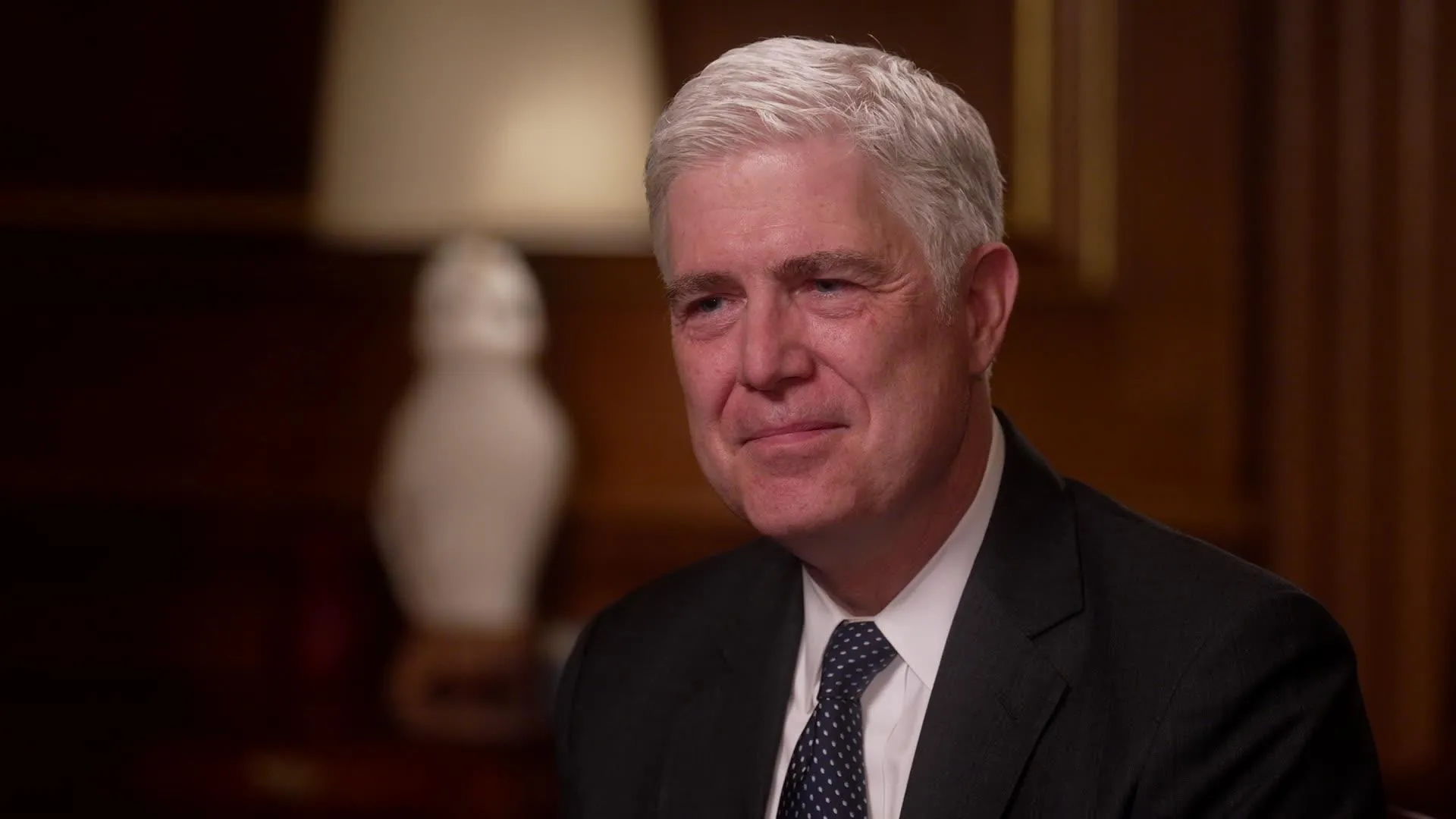
That distinction is important because Gorsuch’s Firing Line appearance can easily slide into the wrong article: biography, book-tour coverage, or another scorecard on originalism as politics. The filing risk sits elsewhere. Gorsuch described originalism and textualism as constraints against judicial overreach, using Dred Scott as the warning case for judges “becoming legislators.”[1] In a court that takes that warning seriously, a legal argument is not weak merely because it is new. It becomes dangerous when its novelty depends on a judge taking authority that the method says the judge does not have.
The constraint claim comes before the AI problem
Gorsuch’s civics lesson is built around a separation-of-powers premise: judges do not get to revise legal meaning because the result feels better now. In the July 2026 Firing Line materials, that premise appears through his defense of originalism and textualism as disciplines that keep judges from substituting their own preferences for law.[1] The earlier PBS Firing Line transcript is useful because it shows the same distinction in fuller form: legal meaning is fixed, while legal applications may change as new facts arise under that fixed meaning.[2]
That is not a small technical distinction. It is the hinge. A rule against “unreasonable searches” can apply to technologies the framers did not know; a commerce power can be litigated in markets that did not exist. But under the framework Gorsuch is defending, the lawyer still has to explain why the modern application follows from the legal text’s original public meaning or from an accepted body of interpretive authority. The application may be contemporary. The source of authority may not be invented for the case.
Gorsuch made the same broader case in his 2019 TIME essay, arguing that originalism asks judges to respect the Constitution’s meaning rather than update it according to their own values.[3] Whether one agrees with that account is a constitutional-theory fight. For lawyers using AI, the more immediate point is evidentiary and professional: if a draft argument cannot identify the legal materials that permit the move it is making, the problem is not just persuasion. It is traceability.
Where AI-generated arguments collide with textualist judging
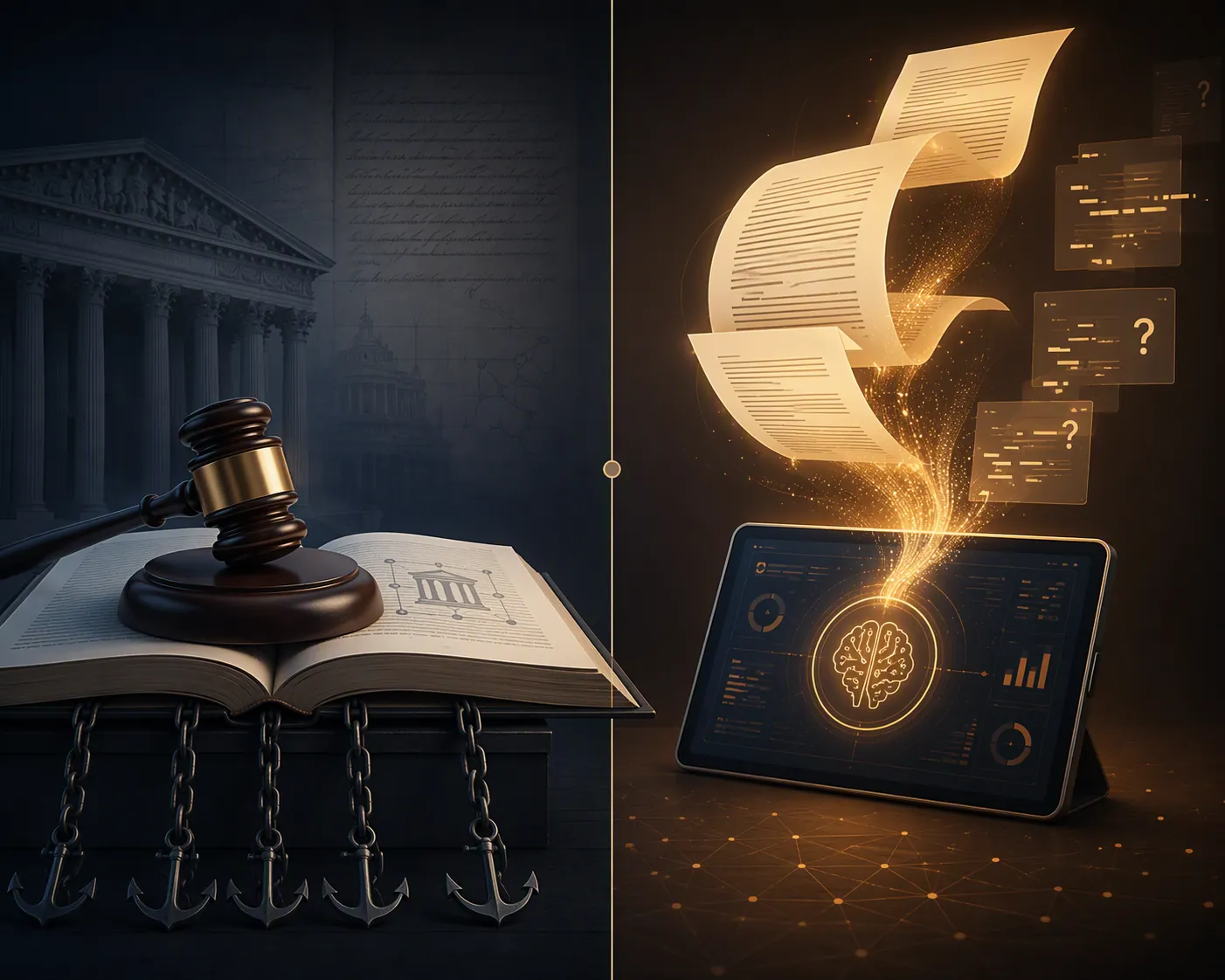
AI legal drafting tools are often useful at the beginning of a messy issue. They can surface possible claims, organize factual predicates, identify statutory terms that need attention, and make an argument map visible before a human has decided which path survives. That early-stage value is different from filing-ready authority. The danger begins when the tool turns a possible theory into polished doctrinal prose without showing the chain of law that makes the theory permissible.
In an originalist or textualist court, the pressure points are predictable. A generated argument may quote a statute accurately but then smuggle in a purpose-based limitation the text does not contain. It may invoke “Founding-era understandings” without identifying real sources or without explaining why those sources represent public meaning rather than a convenient historical anecdote. It may cite precedent for a level of generality that the case does not actually support. Or it may dress a normative claim as if it were a textual one: because a result seems consistent with liberty, equality, efficiency, or modern expectations, the legal text must be read to require it.
Those are not all hallucinations in the crude sense. A fake case is the easy failure to understand. The subtler failure is theory fabrication: the cases exist, the quotations may be real, and the prose may sound like constitutional law, but the inferential bridge is missing. A brief can be sanction-sensitive even when every citation bluebooks cleanly if the proposition for which those citations are offered cannot fairly be drawn from them.
| AI output problem | Why textualist or originalist review makes it risky | What the filing lawyer has to verify |
|---|---|---|
| Fabricated citation | The proposition has no legal source at all. | The case, statute, quotation, and pincite exist and say what the draft claims. |
| Real citation, false proposition | The authority exists but does not support the generated rule. | The cited material actually carries the legal step for which it is used. |
| Invented historical support | A modern theory is presented as fixed original meaning without adequate source grounding. | The historical material is real, relevant, and used at the right level of generality. |
| Purpose override | The draft substitutes a preferred policy outcome for enacted text. | The argument starts from the operative words, not from a result the drafter wants. |
| Evolutionary claim labeled textual | The draft treats changed social judgment as changed legal meaning. | The theory distinguishes fixed meaning from changed application. |
The last category is where Gorsuch’s Firing Line framework does the most work. If legal meaning is fixed but applications evolve, then a lawyer may argue that a constitutional provision reaches a new technology or practice. But the argument has to show why the new application is an application of the old meaning. An AI draft that skips that step and writes as though constitutional meaning matures whenever a court finds the policy case attractive is not simply using a different tone. It is using a different theory of judicial power.
Sanction exposure is not limited to fake cases
Lawyers understandably focus on hallucinated citations because those failures are visible and embarrassing. They are also only one part of the risk profile. A court can reject, criticize, or sanction advocacy that misrepresents what real authorities stand for. The signing lawyer’s duty is not satisfied by confirming that a case name appears in a database. The lawyer has to confirm that the proposition is supportable, that adverse limitations are not concealed, and that the argument’s method fits the court’s method.
Originalist and textualist judging heighten that last inquiry because they ask a disciplined source question: where does this rule come from? A draft that moves from broad constitutional value to specific legal command without passing through text, history, structure, precedent, or accepted doctrine is vulnerable. A draft that uses a real Founding-era pamphlet as if it resolves a modern constitutional question, without explaining representativeness or relevance, is also vulnerable. Fluency can make both drafts look less risky than they are.
The professional consequence is practical. Before filing AI-assisted work in a court likely to scrutinize text and original meaning, review should not ask only, “Are the citations real?” It should ask a sequence of harder questions: What legal text authorizes this move? What interpretive rule permits this level of generality? Which cited case actually adopts the proposition? What historical source is being used, and for what purpose? Where does the draft admit uncertainty? If the answer is “the model connected the dots,” the answer is not ready for a signature block.
This scrutiny floor is broader than Gorsuch
It would be a mistake to treat this as a risk only in front of Gorsuch or only before conservative judges. Justice Elena Kagan’s well-known Scalia Lecture remark that “we’re all textualists now” is often quoted because it captured a broader shift in statutory interpretation: judges across ideological lines now tend to begin with text and expect lawyers to do the same.[4] That does not mean all judges are originalists. It does mean a lawyer should assume that a free-floating policy argument, even when wrapped in legal vocabulary, will face a baseline demand for textual support.
The difference matters for AI review. A generated statutory argument that begins with legislative purpose and treats text as an obstacle may fail in front of judges who disagree sharply about constitutional originalism. A generated constitutional argument that announces a principle at a high level of abstraction, then treats that principle as if it answers the case, may draw fire from judges with different politics but similar impatience for ungrounded doctrinal leaps. Textualism’s cross-ideological dominance gives practitioners a conservative verification rule: if the draft cannot survive a text-first read, do not assume judicial sympathy will rescue it.
The nonpartisanship caveat does not erase the method signal
There is a credibility wrinkle around the public packaging of this civics message. SCOTUSblog’s July 2026 comparison of Gorsuch’s Heroes of 1776 appearances and Justice Sonia Sotomayor’s children’s-book tour noted the tension between justices claiming nonpartisanship while appearing through ideologically aligned media channels.[5] Bloomberg Law reported on May 9, 2026 that Gorsuch was pitching his children’s book to right-leaning audiences while insisting that the Court is nonpartisan, and it referenced Fix the Court’s venue-rating frame.[6] Fix the Court’s underlying partisan-scoring analysis, however, addressed Gorsuch’s 2024 Over Ruled tour, not the 2026 Heroes of 1776 tour.[7]
That caveat should be kept honest, but it should not be allowed to replace the legal question. Venue selection may affect how the civics message is received. It does not answer what happens when a lawyer files an AI-generated argument that cannot be traced to fixed legal materials. For that, the more useful evidence is still Gorsuch’s own account of judging as constrained by text and original meaning, read alongside the broader textualist baseline reflected in Kagan’s remark.
How to review an AI draft under this signal
A practical review does not need to begin with a lecture on jurisprudence. It can begin with source tracing. For every generated proposition that matters, the reviewing lawyer should identify the operative legal text, the cited authority, the interpretive move, and the level of generality. If any of those elements is missing, the lawyer should treat the passage as a lead to investigate, not as draft language to polish.
- Text first: isolate the statutory or constitutional words the argument depends on.
- Authority next: confirm that every case, quotation, historical source, and pincite exists and supports the stated proposition.
- Method check: decide whether the draft is making a textual, originalist, precedential, structural, or policy argument, and label it honestly.
- Application check: when the facts are modern, explain why the application follows from fixed meaning rather than changed judicial preference.
- Signature check: remove or rewrite any passage whose legal authority cannot be verified by a human reviewer before filing.
This is not anti-AI. It is ordinary filing discipline applied to a tool that can make unsupported propositions look finished. AI can help a legal team see possibilities early. It should not be allowed to launder possibility into authority.
Gorsuch’s July 2026 Firing Line civics lesson is not an AI policy statement. It is still a meaningful risk signal for AI-assisted legal drafting. In a textualist court, the safest AI output is not the most imaginative argument. It is the argument whose chain of authority can be verified before the lawyer signs the brief.
References
- “Justice Neil Gorsuch on Civics, Originalism, and Heroes of 1776,” Firing Line with Margaret Hoover, July 24, 2026.
- “Neil Gorsuch,” PBS Firing Line with Margaret Hoover.
- “Why Originalism Is the Best Approach to the Constitution,” TIME, 2019.
- “The Scalia Lecture: A Dialogue with Justice Kagan on the Reading of Statutes,” Harvard Law School, 2015.
- “A tale of two justices and their children’s books,” SCOTUSblog, July 2026.
- “Gorsuch Pitches Kids Book to Right, Insisting Court Nonpartisan,” Bloomberg Law, May 9, 2026.
- “SCOTUS Book Tours,” Fix the Court, September 2025.
Related records
Tool profile
How Meta's AI Spending Reshapes Law Firm ProfitabilityGoverning regulation
Browse the obligations tracker →Preventive workflow
Browse verification workflows →
Report a correction or tip
Spotted an outdated figure, a misstated fact, or a ruling this case record should reflect? Public comments are disabled for this content given the professional cost of a misreported case outcome, penalty amount, or rule text — use the structured correction channel instead.
Report a correction or tip for this record →