
Guyana–ExxonMobil cost recovery dispute remains unresolved
A verified status record on the Guyana–ExxonMobil cost-recovery dispute: the US$214.4 million audit finding, the production-sharing agreement's sole-expert mechanism that governs resolution, and why the matter is still pending as of August 2026. No tribunal award or sole-expert determination exists, with ICC fallback appointment now the stated next step.
- Jurisdiction
- Guyana
- Court
- No court (PSA sole-expert process)
- AI tool named
- No AI tool involved
- Source document
- View primary court order ↗
- Last verified
- Aug 2, 2026
Lex Machina Review is an independent risk-tracking and reference resource. Nothing on this site is legal advice, and using it does not create an attorney-client relationship. Every record is reviewed against primary sources but may not reflect the most current status of a matter — always verify directly against the cited court order, rule text, or a licensed attorney before relying on it.
Companion explanation — secondary to the source document above
Status as of August 2, 2026
The Guyana–ExxonMobil cost-recovery dispute is a pending Stabroek Block production-sharing agreement matter over a US$214.4 million audit finding. It is not, on the present public record, an arbitration award, a sole-expert determination, a cash recovery, or a conceded overcharge. The next step remains procedural: selection of a sole expert, or fallback appointment through the ICC process if the parties cannot agree.
| Field | Current record |
|---|---|
| Jurisdiction | Guyana |
| Governing instrument | Stabroek Block production-sharing agreement. Public reporting describes the relevant dispute mechanism as a sole-expert framework under PSA Article 26.10 / 26.34, but those clause-number references should be verified against the official 2016 PSA text before being treated as primary-text citations. [3][5] |
| Disputed amount | US$214.4 million from the first Stabroek Block cost-oil audit, broken into US$34.34 million deemed ineligible and US$180 million said to lack supporting documentation. [1][2] |
| Legal characterization | A disputed cost-bank adjustment. It is not cash already recovered by Guyana and not a finding of wrongdoing. |
| Current posture | Pending. The public record through August 2, 2026 shows no tribunal award and no sole-expert determination on the US$214.4 million issue. |
| Next procedural milestone | Mutual selection of a sole expert if agreement succeeds; otherwise, the reported fallback is ICC appointment under the expert/neutrals process. [4][5] |
The audit number needs to be kept in its audit categories. Of the US$214.4 million flagged, US$34.34 million was described as ineligible and US$180 million as lacking supporting documentation; together, the figure was reported as 12.8% of the cumulative cost-recovery balance as of Q4 2017. [1][2]
That is why the phrase “cost-bank adjustment” matters. If US$214.4 million is removed from recoverable costs, the immediate fiscal effect is not a US$214.4 million payment to the state; it is a reduction in the cost bank, with the reported effect of increasing Guyana’s 50% profit-oil share by about US$107 million. [4]
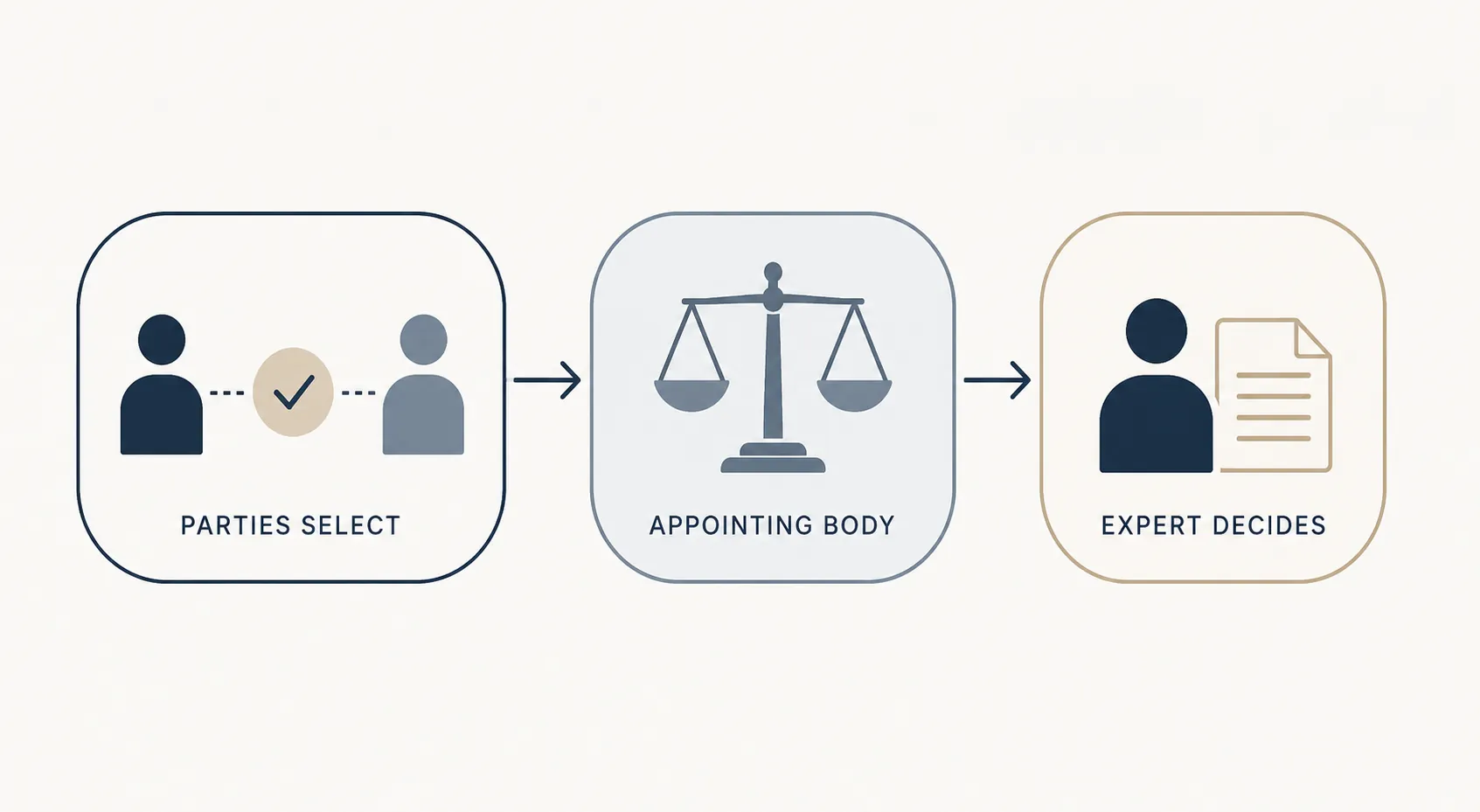
What the PSA process appears to require
Public reports describe the Stabroek PSA mechanism as a sole-expert process, not a conventional merits arbitration already before a tribunal. The reported framework gives the parties a 30-day window to agree on a sole expert; if they cannot agree, the fallback is appointment through the ICC, with the expert then expected to issue an opinion within a reported 30-to-60-day period. [3][5]
ExxonMobil’s Guyana vice president John Colling was reported in June 2026 as saying that, if mutual selection fails, referral to the ICC under its Rules for the Appointment of Experts and Neutrals “may be the next step.” [4]
That distinction is not clerical. A government instruction to start dispute resolution can authorize movement under the contract. It does not decide the audit merits. A nomination dispute can block the appointment route. It does not convert the audit figure into an award. Until the relevant decision-maker is in place and issues the required determination, the matter remains at the contract-procedure gate.
Procedural record
| Date or period | Event | Procedural significance |
|---|---|---|
| March 2021 | The final IHS Markit audit report was delivered to the Guyana government. [3] | The audit finding entered the government record; it did not itself decide recoverability. |
| April 2023 | The US$214.4 million issue surfaced publicly, with the audit breakdown reported as US$34.34 million ineligible and US$180 million unsupported. [1][3] | The public number became fixed enough to track, but the contractual dispute process had not produced a determination. |
| October 2023 | The Guyana Revenue Authority fixed US$214.4 million as the final figure after review. [3] | This is the key administrative figure for the dispute; it remains a challenged cost-recovery position, not an award. |
| March 6, 2025 | Guyana’s Natural Resources Ministry directed the GRA to begin dispute resolution with ExxonMobil over the expenses; Reuters reported that the GRA had no objection to a US$214.4 million cost-bank adjustment. [6] | The instruction moved the matter into the PSA dispute path and preserved the cost-bank framing. |
| May–June 2025 | Public reporting later referred to a May 31, 2025 deadline and June 2025 activation of the process. [3][5] | These are activation references, not proof that a decision-maker had reached the merits. |
| March 15, 2026 | The matter was reported as still unresolved, with movement toward the PSA dispute process described in arbitration language. [3] | The important point is procedural: the record still showed no award or expert determination. |
| June 2026 | Guyana challenged ExxonMobil’s sole-expert nominee on conflict-of-interest grounds; ExxonMobil disputed the characterization. [4][5] | The dispute was still about who would decide the audit issue, not about the audit merits themselves. |
| July 31–August 1, 2026 | The IMF urged Guyana to resolve the cost-oil audits quickly, citing fiscal and governance implications. [7][8] | External pressure increased, but it did not change the procedural status of the US$214.4 million issue. |
The March 2026 and June 2026 reporting uses some arbitration language, but the described mechanism remains the sole-expert route with an ICC fallback appointment process. For risk purposes, those are different states of the file. A tribunal award would answer the merits. An ICC fallback appointment would only identify the neutral who can begin the expert determination process.
Confirmed, reported, and not established
| Status | Treatment in this record |
|---|---|
| Confirmed in the cited public record | The first audit produced a US$214.4 million disputed amount; the reported breakdown is US$34.34 million ineligible and US$180 million unsupported; the GRA fixed US$214.4 million as the final figure in October 2023; the Natural Resources Ministry directed the GRA to begin dispute resolution in March 2025. [1][2][3][6] |
| Reported or attributed, not independently verified here against the official PSA text | The specific Article 26.10 / 26.34 clause references, the 30-day agreement window, the ICC fallback, and the 30-to-60-day opinion window are taken from press reporting and should be checked against the official PSA before being quoted as primary contract text. [3][5] |
| Disputed characterization | Guyana’s side reportedly raised a conflict-of-interest objection to ExxonMobil’s proposed sole expert; ExxonMobil disputed that characterization. [4][5] |
| Not established | No public source cited here shows a tribunal award, a sole-expert determination, a cash payment to Guyana, or a concession by ExxonMobil that the US$214.4 million was improperly recovered. |
Financial and audit context
The consortium context is now ExxonMobil 45%, Chevron 30%, and CNOOC 25%, following Chevron’s acquisition of Hess. Reuters reported that ownership split in its July 31, 2026 coverage of Guyana’s oil-profit outlook. [8]
The disputed US$214.4 million also sits inside a much larger cost-recovery account. OilNOW reported that the Exxon-led group had recovered more than US$51 billion of more than US$55 billion in expenses by the end of 2025, leaving roughly US$4.5 billion in the cost bank. [9]
There are parallel Stabroek audit tracks, and they should not be folded into this dispute. The second audit, covering 2018–2020, involved roughly US$7.2 billion of costs and identified about US$65.1 million not accepted; a third audit covering later years and about US$19.6 billion has been reported as under review or in procurement-related stages. [2][10][11]
Those other audits may matter to Guyana’s broader cost-oil administration, but they do not supply a decision on the first audit’s US$214.4 million issue. They are separate review work unless and until the contract process joins them procedurally.
Next milestone
As of August 2, 2026, the next meaningful event is not a merits ruling. It is either mutual agreement on a sole expert or, if that fails, referral to the ICC fallback appointment process described in the public record. Only after the expert is properly selected or appointed can the disputed cost-bank adjustment move toward a determination under the PSA mechanism. [4][5]
References
- US$214mn of spending flagged in Guyana’s audit of ExxonMobil, Caribbean Council, Apr. 14, 2023
- Update on Status of Stabroek Block Cost Recovery and Verification of Profit Oil Audits, petroleum.gov.gy
- Cost oil audit from 2019 still unresolved, Stabroek News, Mar. 15, 2026
- ExxonMobil’s nominee for US$214 million cost oil maybe in conflict of interest, Demerara Waves, Jun. 9, 2026
- Exxon still fighting Guyana for US$214M flagged by auditors, Kaieteur News, Jun. 10, 2026
- Guyana's tax agency to begin dispute resolution with Exxon over expenses, Reuters, Mar. 6, 2025
- Resolve ExxonMobil cost oil audits quickly – IMF, Demerara Waves, Aug. 1, 2026
- Guyana set for bigger oil profits as ExxonMobil recoups initial costs, Reuters, Jul. 31, 2026
- Exxon-led group recovers over US$51 billion in Guyana expenses from growing oil output, OilNOW, Jun. 14, 2026
- Despite recorded violations, ExxonMobil vows block ringfencing is best for Guyana, Guyana Standard, Feb. 7, 2024
- Contract for third cost oil audit to be signed next month, Stabroek News, Aug. 16, 2024
Related records
Tool profile
How Meta's AI Spending Reshapes Law Firm ProfitabilityGoverning regulation
Browse the obligations tracker →Preventive workflow
Browse verification workflows →
Report a correction or tip
Spotted an outdated figure, a misstated fact, or a ruling this case record should reflect? Public comments are disabled for this content given the professional cost of a misreported case outcome, penalty amount, or rule text — use the structured correction channel instead.
Report a correction or tip for this record →