
Harvard Law Student Jeopardy Win Streak Tests Legal AI Accuracy
Caleb Groen's 12-game, $349,968 Jeopardy winning streak provides a rare human baseline for legal knowledge retrieval under pressure. The gap between his error-free performance and legal AI hallucination rates of 17–34% clarifies why ABA Formal Opinion 512's verification mandate remains the practitioner's irreducible risk management tool.
- Jurisdiction
- us-federal
- Court
- U.S. District Court for the Northern District of Mississippi
- AI tool named
- Westlaw AI-Assisted Research
- Ruling date
- Jun 8, 2026
- Source document
- View primary court order ↗
- Last verified
- Jul 27, 2026
Lex Machina Review is an independent risk-tracking and reference resource. Nothing on this site is legal advice, and using it does not create an attorney-client relationship. Every record is reviewed against primary sources but may not reflect the most current status of a matter — always verify directly against the cited court order, rule text, or a licensed attorney before relying on it.
Companion explanation — secondary to the source document above
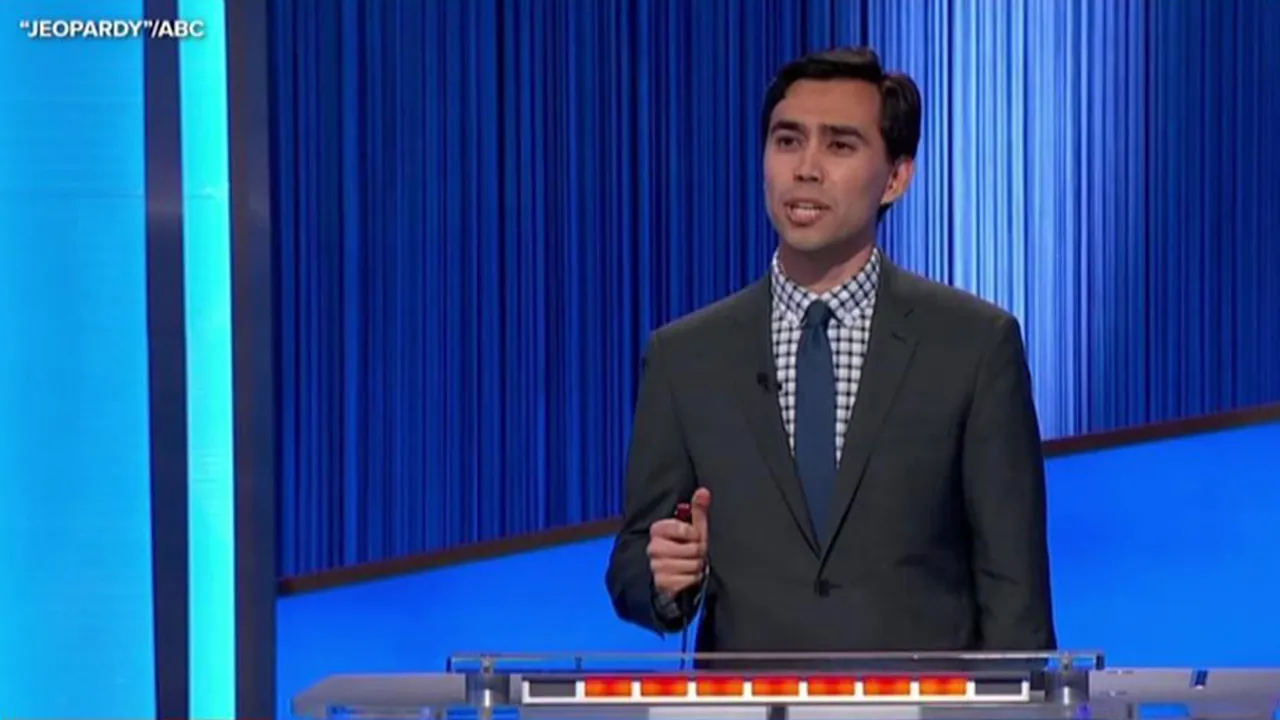
Caleb Groen’s 2026 “Jeopardy!” winning streak is useful to lawyers for a reason that has little to do with trivia fame. Groen, then a Harvard Law student, won 12 games on “Jeopardy!” from July 2 to July 20, 2026, with Harvard Law School reporting total winnings of $349,968, a regular-play total ranked 17th at the time and enough to make him the show’s 23rd super-champion.[1] Across the run, the useful professional fact is not just that he won. It is that the show’s record reflected an error-free performance across 61 categories.[1]
A sourcing note belongs near the top because this subject punishes slippage. Harvard Law School’s official account is the figure used here. Some secondary accounts have listed $346,968 instead of $349,968; that discrepancy is noted because a piece about verification should not quietly smooth over a conflicting number. This analysis is current to July 27, 2026, and is offered as Risk Digest commentary, not legal advice.
The comparison that follows is also limited. Groen’s run is not a controlled empirical test against legal AI tools, and no cited study measured him and those tools on the same task. It is a benchmark frame: a visible example of disciplined human retrieval under pressure placed beside published error rates for legal research systems that lawyers may be tempted to trust too quickly.
What the streak shows before it becomes a legal-tech analogy
A quiz-show streak can look like spontaneous recall because television compresses the work. Groen’s own description points in the opposite direction. In a Harvard Kennedy School interview, he described five years of preparation: flashcard drills, study of thousands of past episodes, and attention to recurring clue patterns.[2] That is less a party trick than a retrieval system built by repetition.
The more interesting part is how porous the system was. Groen’s preparation did not stay inside a single database. The Harvard Kennedy School account describes him cross-referencing what he saw in news, cooking shows, and conversations with classmates.[2] He was not merely storing answers; he was connecting unfamiliar material to additional sources before it appeared under game conditions.
His own formulation is almost aggressively unglamorous: “the best way to prepare is to just pay attention to what people around you are saying. To look things up, if you aren't familiar with them.”[2] That sentence matters more to a filing lawyer than the buzzer. It describes a habit of interrupting confidence with verification.
Legal work has different stakes and different source rules, of course. A “Jeopardy!” clue is not a binding authority check, and a contestant is not filing a brief. Still, the mechanics are recognizable: encounter a clue, retrieve a likely answer, test it against prior exposure, and avoid volunteering a confident falsehood. The professional lesson starts there, before any AI system enters the room.
The published legal-AI numbers are still too material to treat as background noise
The Stanford RegLab and Stanford HAI work supplies the other side of the frame. In their 2024 assessment of leading legal research tools, Lexis+ AI and Ask Practical Law AI hallucinated on more than 17% of benchmark queries, while Westlaw AI-Assisted Research hallucinated on more than 34%; general-purpose chatbots in the same research context produced hallucination rates from 58% to 82%.[3][4]
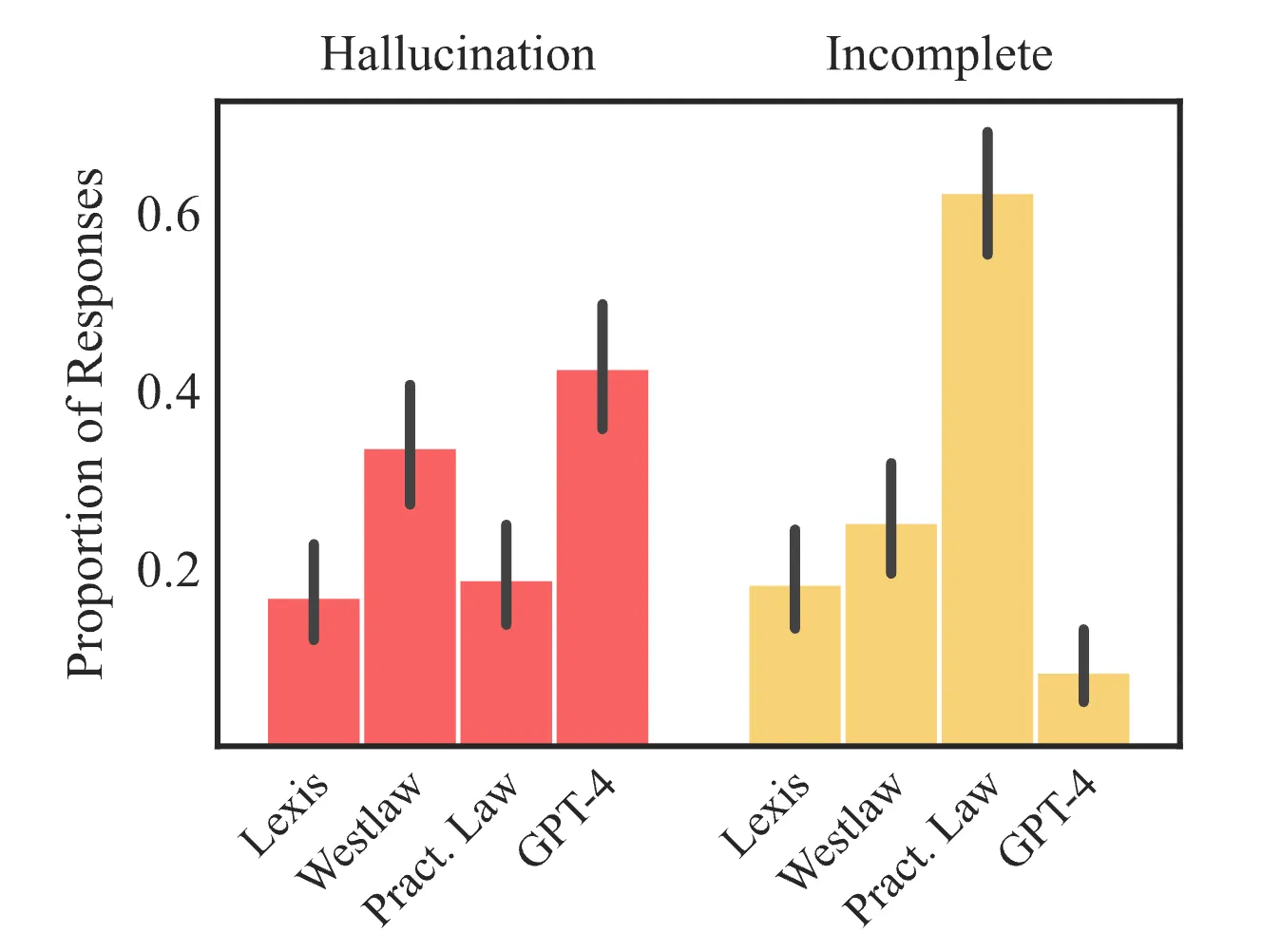
Those numbers should be read carefully. They do not prove that a current version of any product performs the same way on every legal task in 2026. Tools change, retrieval systems improve, benchmarks differ, and vendors may tune systems after public testing. The narrower conclusion is enough: peer-reviewed work found that purpose-built legal AI research tools, not just consumer chatbots, generated unsupported or incorrect legal answers at rates that matter for professional use.[3][4]
| Observed system | What was measured | What the number can fairly support |
|---|---|---|
| Caleb Groen’s 2026 “Jeopardy!” run | 12 wins, $349,968, and an error-free record across 61 categories as reported in the public show context [1] | A concrete example of disciplined human retrieval after years of multi-source preparation, not a legal-research experiment |
| Purpose-built legal AI tools in the Stanford RegLab/HAI study | Hallucination rates above 17% for Lexis+ AI and Ask Practical Law AI and above 34% for Westlaw AI-Assisted Research in a 2024 benchmark [3][4] | Evidence that legal-domain tooling can still produce material unsupported output requiring human verification |
| General-purpose chatbots in the Stanford reporting | Hallucination rates from 58% to 82% in the cited benchmarking context [4] | A warning against treating ordinary chatbot fluency as legal authority |
The table is not a scoreboard between a student and software. It separates what each fact can bear. Groen’s record shows how reliable retrieval can look when the person has spent years checking, connecting, and rehearsing sources. The Stanford figures show why generated legal answers still need someone to close the evidentiary loop before a client or court relies on them.
Why hallucination is a role problem, not just a tool problem
A hallucinated citation does not arrive at court wearing the vendor’s signature block. It usually arrives inside a lawyer’s work product, sometimes after passing through an associate, paralegal, contract attorney, or knowledge-management workflow. That is why the practical question is not whether a tool is impressive in a demo. It is who verifies the proposition before the proposition becomes someone’s representation to a tribunal, regulator, counterparty, or client.
ABA Formal Opinion 512, issued July 29, 2024, makes that allocation hard to evade. The opinion addresses lawyers’ use of generative AI and places verification within the lawyer’s professional duties; the duty to verify AI-generated content is not something the lawyer can delegate to the tool that produced the content.[5] For teams turning that obligation into controls, a structured ABA Formal Opinion 512 compliance playbook is less paperwork than proof that someone owns the last check.
This is where the Groen analogy earns its keep. His preparation method was not “ask once and trust the answer.” It was repeated exposure, pattern study, cross-source confirmation, and lookup when unfamiliar material appeared.[2] Legal verification should be at least that disciplined, with the added constraint that the final answer must be anchored in primary or otherwise authoritative legal sources.
What a defensible verification loop actually checks
The minimum control is not a vague instruction to “review AI output.” Review has to be tied to the type of risk the output creates. A legal-research answer can be directionally helpful and still fail if one cited case is fictional, overruled, jurisdictionally irrelevant, or quoted for a proposition it does not contain.
- Citation existence: confirm that every cited case, statute, regulation, rule, docket entry, and quotation exists in an authoritative source.
- Proposition fit: read the cited authority for the exact sentence it is supposed to support, not merely for a similar theme.
- Current validity: check negative treatment, amendments, supersession, and jurisdictional limits.
- Procedural posture: distinguish holdings from dicta, trial-level orders from appellate authority, and settled rules from fact-bound applications.
- Human ownership: record who performed the final check before the work product left the organization.
That last item is often the least glamorous and the most important. When a system drafts a research memo or brief section, someone still has to decide whether the authority can survive contact with an opposing lawyer, a clerk, or a judge. For a practical implementation path, verification is better treated as a workflow discipline than as a one-time reminder; see how lawyers can enter AI legal tech through verification for the operational version of that point.
The sanctions environment is no longer hypothetical
The public record of AI-related legal hallucinations is imperfect, but it is already large enough to change risk conversations. HAQQ’s AI hallucination tracker reported 1,598 documented cases globally as of June 9, 2026, with roughly eight new cases per day and a record single-matter sanction of about $109,700.[6] HAQQ is a third-party aggregation maintained by Damien Charlotin at HEC Paris, not an official court database. That matters. It may undercount incidents, classify edge cases differently than a court would, and depend on public availability.
Even with those limits, the direction of risk is plain enough for management purposes. HAQQ’s data showed U.S. sanctions exceeding $145,000 in Q1 2026.[6] The same tracker identifies Withers v. City of Aberdeen in the Northern District of Mississippi, where a June 8, 2026 order followed AI-hallucinated citations with cancellation of a trial and two-year suspensions for lawyers on both sides.[6] That is not a frequency claim about all AI-assisted filings. It is a consequence claim: when the verification loop fails, the damage can land in the case calendar, the sanctions ledger, and the lawyer’s disciplinary record.
Hallucination should therefore be treated as a known failure mode, not an embarrassing surprise. The controls will differ by tool and task. A drafting assistant, a retrieval-augmented research system, and a general chatbot do not create identical risks. But the lawyer’s burden is similar at the point of use: test the output against the sources that actually govern. If a firm is mapping failure modes across systems, the same discipline used for outages, permission errors, and flawed instructions applies to citation fabrication; law firm fixes for common AI failure modes should include authority verification as a separate control, not a footnote.
What the Groen benchmark does, and does not, justify
It would be easy to overdraw the lesson. Groen’s streak does not prove that human memory beats AI legal research. “Jeopardy!” rewards rapid recognition in a closed game format; legal research demands source hierarchy, jurisdiction, procedural posture, and currentness. A lawyer who relies on memory alone is creating a different version of the same problem.
The better comparison is between verified retrieval and generated confidence. Groen’s answer process, as described publicly, was built through years of flashcards, past-clue pattern recognition, and lookup habits across ordinary sources.[2] The legal AI studies, by contrast, show that tools designed for legal research can still produce legal-sounding answers that are unsupported or wrong at rates requiring active supervision.[3][4]
That distinction is also fairer to AI. A research tool can reduce drudge work, surface leads, summarize long materials, and help organize questions for review. None of that makes it the final authority on whether a case exists, whether a quotation is accurate, or whether a proposition belongs in a filing. The productivity value and the verification duty can both be true.
For litigation teams, the useful standard is not perfection in the abstract. It is traceability before reliance. If an AI answer produces a case citation, the citation must be found. If it states a rule, the rule must be read in the source. If it summarizes a holding, the holding must be checked in context. If no human has done that work, the output is not ready for a filing no matter how polished it sounds.
Groen’s 2026 streak does not tell lawyers to replace research systems with memory. It shows what reliable knowledge retrieval looks like when confidence is trained by repeated checking. Under ABA Formal Opinion 512, that final verification duty still belongs to the lawyer, not to the AI tool.[5]
References
- Harvard Law student wins 12 games on ‘Jeopardy!’, Harvard Law School.
- Next question: Which Harvard Kennedy School and Harvard Law School student, Harvard Kennedy School.
- Hallucination-Free? Assessing the Reliability of Leading AI Legal Research Tools, Stanford RegLab.
- AI on Trial: Legal Models Hallucinate in 1 out of 6 (or More) Benchmarking Queries, Stanford HAI.
- Formal Opinion 512, American Bar Association, July 29, 2024.
- AI Legal Hallucination Audit, HAQQ.
Related records
Tool profile
Dunia AI funding exposes legal industry's verification gapGoverning regulation
Browse the obligations tracker →Preventive workflow
Browse verification workflows →
Report a correction or tip
Spotted an outdated figure, a misstated fact, or a ruling this case record should reflect? Public comments are disabled for this content given the professional cost of a misreported case outcome, penalty amount, or rule text — use the structured correction channel instead.
Report a correction or tip for this record →