
Dunia AI funding exposes legal industry's verification gap
Q1 2026 AI funding totaled $255.5B, with 67.3% going to three frontier labs, while law's verification layer is still funded reactively through sanctions. Dunia's €280M GigaLab makes the verification bottleneck concrete — read as an analogy, the legal takeaway is that verification belongs in the budget and the RFP as an explicit line item, not an assumed vendor feature.
- Tool
- Westlaw AI-Assisted Research
- Benchmark source
- Stanford RegLab and HAI
- Hallucination rate
- >34%
- Test methodology
- Pre-registered benchmark of more than 200 legal queries
- Test date
- Jan 1, 2026
The most useful legal-industry implication of “dunia ai funding” is not that a new legal-tech vendor has appeared. Dunia Innovations is a Berlin materials-discovery AI company, not a legal research platform, not an eDiscovery vendor, and not a law-firm workflow product. The legal point is an analogy: in 2026, capital is lavishly funding AI generation, and in Dunia’s case it is also funding a physical verification layer, while law still tends to pay for verification after the bad filing, the sanctions order, or the midnight citation audit.
That distinction matters because the keyword is ambiguous. “Dunia” can read generically as “world” in several languages, so some searches will really mean “global AI funding and legal-industry implications.” Here, the actual Dunia Innovations event makes the verification bottleneck unusually concrete: AI-generated outputs do not become reliable merely because the model, the infrastructure, or the funding round is large.
The capital frame is stark. PitchBook, as reported by Yahoo Finance, put global AI startup funding at $255.5 billion in Q1 2026 across 1,546 deals, with 67.3% — about $172 billion — flowing to OpenAI, Anthropic, and xAI.[1] In May 2026, Dunia committed €280 million to a 6,000-square-meter autonomous GigaLab in Berlin, with operations targeted for 2028 and backing from Siemens, ABB Robotics, NVIDIA, AWS, and ILS.[2] On the legal side, Stanford RegLab and HAI’s pre-registered benchmark of more than 200 legal queries found incorrect information from named legal AI research products at material rates, and EDRM’s Q1 2026 sanctions aggregation reported at least $145,000 in penalties for AI-generated fake citations.[3][4]

Keep the three funding stories separate
The mistake is to let every AI funding number become a reliability number. PitchBook’s Q1 2026 total is a capital-market fact. Dunia’s GigaLab is an industrial verification fact. Stanford’s hallucination benchmark and the sanctions record are legal-risk facts. They sit near each other, but they do not measure the same thing.
| Layer | What the evidence shows | What legal buyers should not infer |
|---|---|---|
| General AI capital concentration | PitchBook reported $255.5B in Q1 2026 AI startup funding, with 67.3% going to OpenAI, Anthropic, and xAI.[1] | That funding concentration does not prove downstream legal tools are accurate. |
| Dunia’s industrial verification bet | Dunia committed €280M to an autonomous materials GigaLab aimed at experimental validation of AI-generated materials.[2] | Dunia is not a legal-tech company, and the GigaLab is not evidence about legal research tools. |
| Legal AI verification gap | Stanford found incorrect answers from major legal AI research products at measured rates, and courts imposed reported sanctions for fake AI citations.[3][4] | Retrieval, vendor scale, or model access should not be treated as a substitute for source-level checking. |
Dealroom’s separate tracker reported $399 billion raised by AI companies in H1 2026, compared with $215.9 billion for all of 2025.[5] That is useful for understanding the size of the cycle, but it should not be blended with PitchBook’s Q1 figure as though the two reports were one dataset. For procurement work, the attribution discipline is not pedantry. It is the same discipline buyers need from vendors when they describe benchmarks, test sets, retrieval methods, and failure rates.
What Dunia makes concrete about verification
Dunia was founded in Berlin in 2022 and had raised $11.5 million in October 2024 in a round co-led by Elaia and Redalpine.[6] The company’s work is electrocatalyst discovery, not legal automation. Its May 2026 GigaLab announcement is still worth reading closely because it names the handoff that many AI deployments prefer to blur: generation creates candidates; a different system has to prove which ones survive contact with reality.
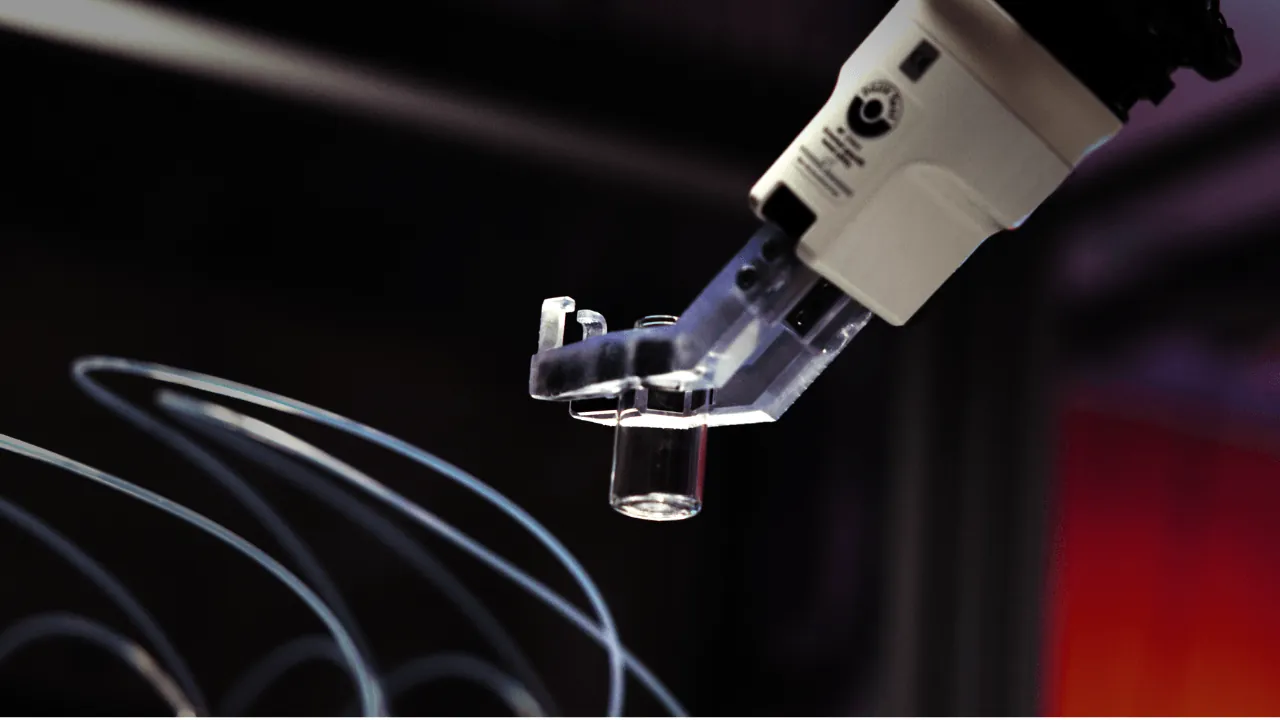
Dunia CEO Alexander Hammer framed the problem directly, saying AI is “dreaming up millions of new materials” and that “experimental verification” is the bottleneck exploding as a result.[2] That is the sentence legal buyers should take from the announcement, not the lab architecture. A legal AI system can produce a plausible answer, a case citation, a deposition summary, a privilege call, or a research path at high speed. The question is who verifies it, with what sources, under whose supervision, and on whose budget.
In materials science, the verification layer may involve robotics, instruments, physical samples, and experimental design. In law, it involves primary-source review, citation checking, docket validation, jurisdictional analysis, privilege review protocols, audit trails, and escalation rules. The tools are different, but the handoff is structurally similar. Generation is not the end of the workflow. It is the point at which a verification obligation begins.
This is where funding announcements become useful for risk teams. The €280 million figure is not proof that Dunia will succeed. It is proof that a serious operator thinks verification is expensive enough to deserve its own infrastructure commitment. Law firms and legal departments often make the opposite budgeting move: they buy the generation layer, assume the vendor has absorbed the verification layer, and discover later that the missing work has been assigned to associates, knowledge lawyers, risk partners, or the court.
RAG is not a waiver of checking
The Stanford RegLab and HAI benchmark is the bridge from capital markets to legal procurement because it tested legal research products that buyers would not dismiss as hobbyist chatbots. In a pre-registered study of more than 200 legal queries, Lexis+ AI and Ask Practical Law AI produced incorrect information more than 17% of the time, while Westlaw AI-Assisted Research hallucinated more than 34% of the time.[3]
Those figures should be read carefully. They do not say every answer was useless. They do not prove all legal AI tools fail at the same rate. They do not settle whether a product performs better inside a narrower practice area, with better prompts, or under a different workflow. They do show that retrieval-augmented legal AI products can still provide incorrect information at rates that matter for filing, advice, and internal knowledge work.
That is why “RAG-based” cannot be the end of the procurement conversation. Retrieval can change the error profile; it does not eliminate the buyer’s obligation to know what the system retrieves, what it omits, when it fabricates, how it cites, and how the vendor measures failure. A demo that shows linked sources is not the same thing as a benchmark with a disclosed methodology and test date.
This is also the place to separate infrastructure capacity from application reliability. Large cloud and AI-capex commitments may improve compute access, latency, product breadth, or vendor staying power. They do not, by themselves, establish that a legal answer is correct. That point has already shown up in adjacent buyer-risk questions, including whether Amazon’s cloud AI capex makes Quick for Legal safer and how AWS’s AI investment shifts legal-tech risk to buyers. Dunia adds a sharper version of the same lesson: when the output matters, verification must be designed as work, not assumed as atmosphere.
Sanctions are a terrible way to fund the verification layer
EDRM’s ComplexDiscovery republication described a Q1 2026 “AI sanction wave” and reported at least $145,000 in sanctions for AI-generated fake citations.[4] The “at least” matters. This is a floor for publicly reported, monetarily penalized cases in that aggregation, not a complete measure of legal AI misuse, private rework, client write-offs, insurer concern, disciplinary exposure, or matters quietly corrected before filing.
The same report identified examples including a $30,000 Sixth Circuit sanction in Whiting v. City of Athens and an approximately $109,700 Oregon aggregate.[4] Norton Rose Fulbright’s 2026 update separately surveyed six GenAI sanctions decisions, which is useful corroboration that the issue is not confined to one courtroom or one unlucky filing.[7] For any matter-specific risk memo, though, a secondary tracker is not enough. The primary order belongs in the file.
The cost signal is not only the dollar amount. A sanctions order reallocates verification work under pressure. Someone must reconstruct what was filed, identify how the false authority entered the document, brief supervising lawyers, notify clients or carriers where required, repair the record, and decide whether the same workflow has contaminated other matters. That labor is real even when the sanction is modest. It is also worse than boring upfront review because it happens under a court’s timetable.
ABA Formal Opinion 512, issued in 2024, anchors the professional-responsibility side of the same problem by addressing lawyers’ duties when using generative AI, including competence, confidentiality, communication, and supervision.[8] The operational consequence for buyers is straightforward: if a tool will touch legal research, drafting, client advice, litigation filings, discovery, or knowledge assets, the verification workflow is not optional decoration. It is part of the ethical and risk-control system around the tool.
What should change in the RFP
A procurement file should not treat funding, model access, or vendor reputation as substitutes for verification evidence. A large funding round may signal capacity and ambition. It may also signal pressure to ship. The buyer still needs to know how the product behaves in the legal tasks it will actually perform.
For AI legal research tools, the practical comparison should move from “does it have RAG?” to “how is correctness measured, reviewed, and escalated?” Buyers building that comparison by practice area can start with which AI legal research tool fits your practice, but the RFP itself should force the vendor to disclose enough for the buyer to assess verification burden.
- Benchmark source and date: identify whether the vendor is relying on internal tests, third-party tests, customer pilots, public benchmarks, or a mixture, and when each test was run.
- Task-specific error rates: request hallucination or incorrect-answer rates where available for the tasks being purchased, not only aggregate performance claims.
- Test-set boundaries: require the vendor to state the jurisdictions, practice areas, document types, and query types covered by the benchmark.
- Primary-source obligations: specify which outputs require source-level checking before use in advice, filings, client-facing work, or internal knowledge assets.
- Human-review workflow: name the reviewer role, review depth, sampling method, and approval point before the output leaves the team.
- Escalation responsibility: decide who handles suspected hallucinations, missing authority, jurisdictional conflicts, and post-filing corrections.
- Audit trail: require logs that let the firm reconstruct prompts, retrieved sources, generated answers, user edits, and final use.
- Update triggers: require notice when the vendor changes models, retrieval sources, ranking systems, citation logic, or benchmark methodology.
The budget should mirror that list. Verification time is not a rounding error inside “adoption.” It includes lawyer review, knowledge-team testing, prompt and workflow design, source checking, training, exception handling, and periodic retesting after vendor changes. If the buyer does not name those costs, they do not disappear. They move to write-offs, emergency review, court-ordered explanations, and professional-responsibility exposure.
Dunia’s GigaLab does not tell the legal industry which research product to buy. It does something narrower and more useful: it shows an AI operator treating verification as the bottleneck created by abundance. Legal buyers should do the same in their procurement records. Funding belongs in the market-background section. Verification evidence belongs in the decision file.
Last verified: August 1, 2026, UTC.
References
- Q1 2026 AI funding blows past 2025 total with three deals accounting for 67% of capital — Yahoo Finance
- Berlin's Dunia Innovations commits €280M to an autonomous AI-materials GigaLab — The Next Web, May 2026
- AI on Trial: Legal Models Hallucinate in 1 out of 6 (or More) Benchmarking Queries — Stanford HAI
- The AI Sanction Wave: $145K in Q1 Penalties Signals Courts Have Lost Patience with GenAI Filing Failures — ComplexDiscovery via EDRM, April 2026
- AI — Dealroom
- AI start-up Dunia raises $11.5 million — C&EN, October 2024
- AI in litigation: Update on Gen AI sanctions in 2026 — Norton Rose Fulbright
- Formal Opinion 512: Generative Artificial Intelligence Tools — American Bar Association, July 29, 2024
Chronological incident history
- Halusinasi AI pada fakta zodiak Cina — peguam wajib semak
- How to Verify AI Answers on HOA Foreclosure Laws
Report a correction or tip
Spotted an outdated figure, a misstated fact, or a ruling this tool profile should reflect? Public comments are disabled for this content given the professional cost of a misreported case outcome, penalty amount, or rule text — use the structured correction channel instead.
Report a correction or tip for this record →