
What are the border entry rules at the Haskell Free Library?
The Haskell Free Library is not a border crossing: since October 2025, Canadians using the US-side door must first present at a nearby port of entry, and the new Canadian entrance permits only same-door exits. The record details who may use each entrance, what documentation is required, and which exceptions apply, and the June 2026 federal prosecutions confirm these rules are now actively enforced.
- Jurisdiction
- US federal (District of Vermont)
- Court
- U.S. District Court for the District of Vermont
- Judge
- Magistrate Judge Kevin Doyle
- AI tool named
- No AI tool implicated
- Ruling date
- Jun 29, 2026
- Source document
- View primary court order ↗
- Last verified
- Aug 3, 2026
Lex Machina Review is an independent risk-tracking and reference resource. Nothing on this site is legal advice, and using it does not create an attorney-client relationship. Every record is reviewed against primary sources but may not reflect the most current status of a matter — always verify directly against the cited court order, rule text, or a licensed attorney before relying on it.
Companion explanation — secondary to the source document above
Last verified: August 3, 2026. This is an exceptional non-AI legal-obligations record for a site that usually tracks AI and legal-practice risk. It is not legal advice. Anyone whose immigration status, documents, pending case, or inspection obligation is uncertain should check current CBP and Haskell Free Library instructions or consult qualified counsel before relying on a memory of how the building used to work.
The answer to the practical question is short: the Haskell Free Library and Opera House is not a border crossing. The library’s current visitor rules say the building is “NOT a border crossing,” require visitors to leave through the same door they used to enter, identify the Canadian entrance on Church Street, and state that passports and visas are not necessary merely to enter the building under the library’s rules.[1] CBP’s March 2025 policy statement changed the inspection rule for Canadians using the U.S.-side entrance: after October 1, 2025, Canadians who want to use the Caswell Avenue door in Derby Line, Vermont, must first present at the nearby port of entry unless a listed exception applies.[2]
That means the legal significance of a doorway now depends on where the visitor is coming from, whether the visitor has presented for inspection when required, and whether the visitor exits through the same door. The border line inside the building may still be civic symbolism; the entrance rule is not.
The current rule, door by door
| Visitor’s position before entering | Entrance rule | Exit rule | What the rule does not do |
|---|---|---|---|
| Already in the United States | Use the U.S.-side Caswell Avenue entrance if otherwise permitted to visit the library. | Exit back through the same U.S.-side door under the library’s same-door rule.[1] | It does not authorize a visitor to leave through Canada as a border crossing. |
| In Canada and planning to use the U.S.-side Caswell Avenue entrance | Present first at the nearby U.S. port of entry, described in the CBP reporting as roughly a three-minute walk away, unless a CBP-listed exception applies.[2] | After lawful inspection and entry, follow the library’s same-door visitor rule unless otherwise directed.[1][2] | Being a library visitor is not, by itself, the post-October 1, 2025 exception. |
| In Canada and using the Canadian Church Street entrance | Enter through the Canadian-side door. The library’s posted rule says passports and visas are not required merely to enter the building.[1] | Exit through that same Canadian-side door.[1] | The Canadian door does not turn the library into a port of entry or authorize onward entry into the United States. |
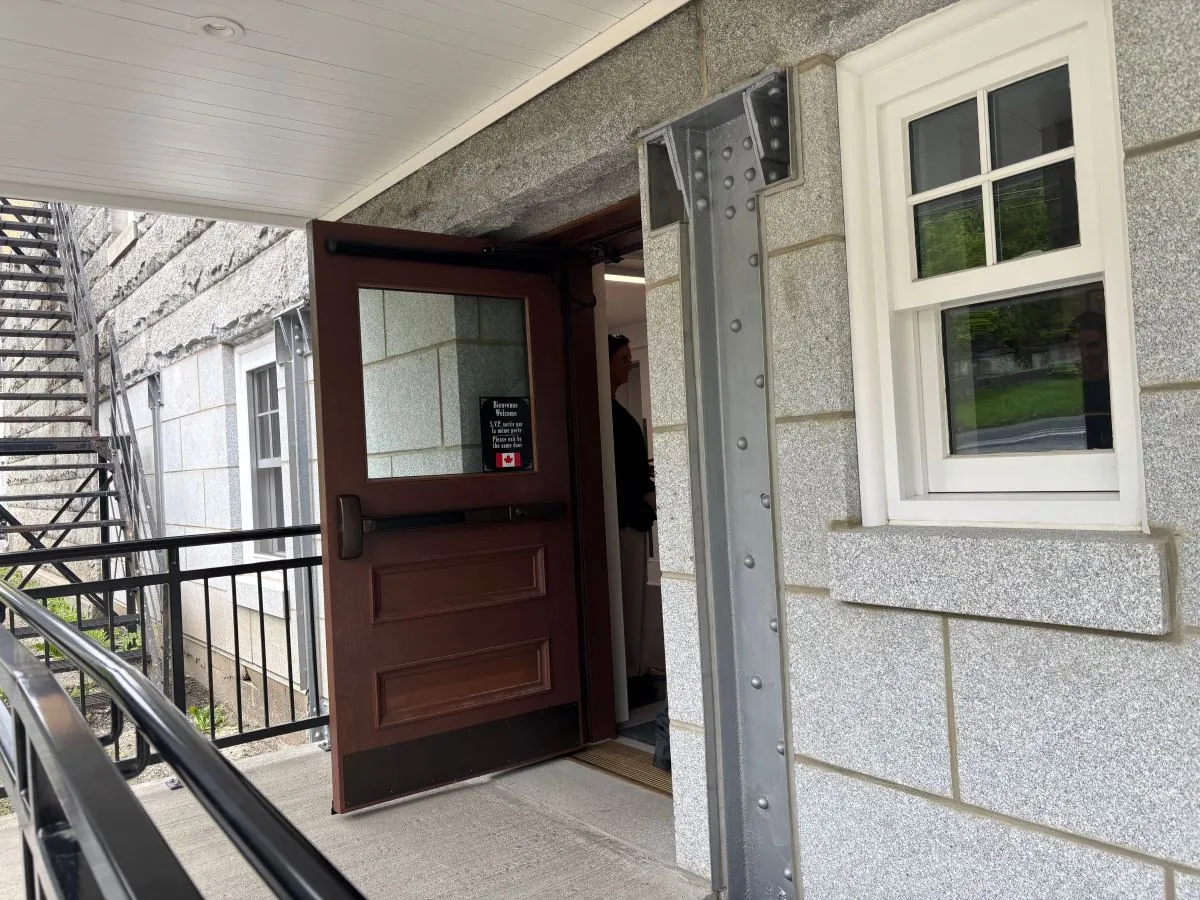
The phrase “passports and visas are not necessary” should be read exactly as the library uses it: as a rule for entering the building under the library’s visitor system, not as permission to cross the international border through the building. The library can tell visitors which door to use for a library visit. It cannot designate a U.S. port of entry.
The same-door rule also matters in the opposite direction. A Canadian visitor who enters through the Church Street door and leaves through the U.S.-side Caswell Avenue door has not simply chosen a more convenient sidewalk. Under the present rule set, that person has treated a library exit as a U.S. entry route. That is the behavior the current instructions are designed to prevent.
The CBP exceptions are narrow
CBP’s March 2025 statement described a phased approach: Canadian library members could continue using the U.S.-side entrance until October 1, 2025, and after that date Canadians would be required to present at the port of entry before entering from the U.S. side. The statement listed exceptions for law enforcement, medical personnel, fire personnel, mail and package delivery, official workers, school visits with notice to CBP, and handicapped individuals.[2]
The timing is where many older explanations now become dangerous. Before October 1, 2025, CBP’s phase-in left a temporary path for Canadian library members. After October 1, the general “library visitor” category no longer carries that function in the CBP statement. A visitor looking at a dated travel blog, an old photograph of the line on the floor, or a fond account of walking in from either sidewalk is looking at something other than the operative inspection rule.
Why this is now a prosecution question, not just a courtesy rule
The relevant federal exposure is not created by library etiquette. It comes from 8 U.S.C. § 1325(a), which covers an alien who enters or attempts to enter the United States at a time or place other than one designated by immigration officers, eludes examination or inspection, or obtains entry by a willfully false or misleading representation or concealment of a material fact.[3]
The enforcement record is no longer hypothetical. In late June 2026, the U.S. Attorney’s Office for the District of Vermont announced prosecutions of 60 defendants from 20 nations over a six-week period for crimes related to unlawful border crossings.[4] The Haskell-related cases reported the same week show how the building can become part of a § 1325(a) fact pattern without turning the library itself into a formal crossing point.
Maria Paz Gonzalez Vidal, a Chilean citizen, pleaded guilty on June 29, 2026, before Magistrate Judge Kevin Doyle to entering the United States at a place other than one designated by immigration officers, and was sentenced to time served, according to the Boston Globe’s account.[5] The Barton Chronicle reported, based on a Border Patrol agent’s complaint or affidavit, that Gonzalez Vidal had used a ticket connected to the June 13, 2026 Borderline Players performance at the Haskell as part of the crossing plan; that detail should be treated as complaint- or affidavit-derived unless checked against the federal docket.[6]
Diego Alejandro Restrepo-Vergara, a Colombian citizen, was also reported to have pleaded guilty after a June 22, 2026 crossing next to the building, with a sentence of time served.[5] The point is not that every confused visitor will be charged. The narrower and better-supported point is that conduct around the Haskell has already been charged as improper entry, and federal prosecutors have treated the area as an enforcement site rather than a quaint exception.
For readers comparing this with other immigration-enforcement records, the site’s discussion of ICE body-camera legal implications is a closer cousin than the Haskell’s architectural history: both turn on what an official process requires before the government action begins.
How the old understanding fell behind the posted rule
The public confusion is understandable up to a point. The Haskell is famous because the border runs through the building, and older visitor instructions preserved a more permissive day-to-day arrangement for people approaching from either side while still warning that the building was not a border crossing and that visitors had to return to the country from which they entered.[7] That older arrangement is now the wrong starting point for a visit.
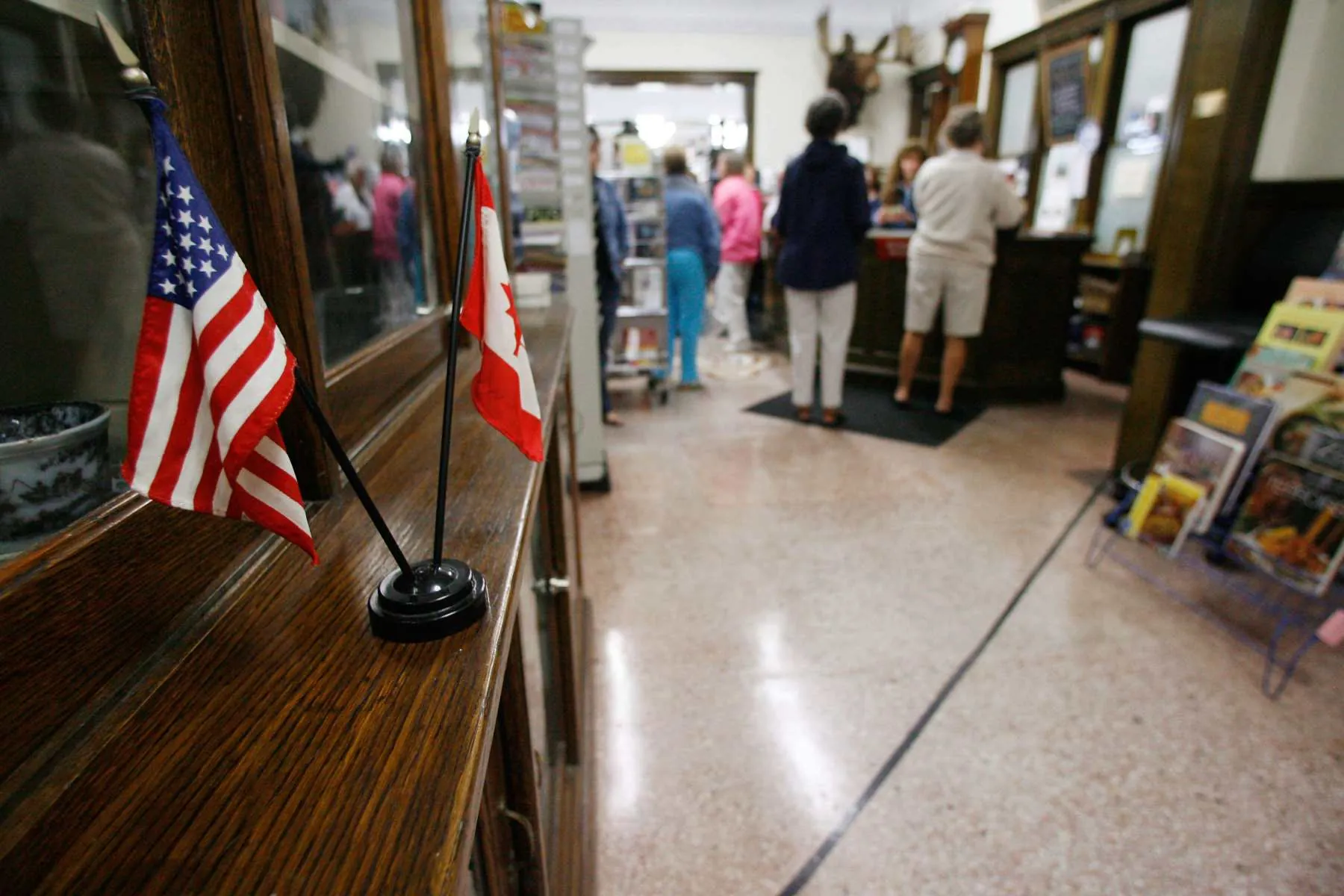
CBP’s stated rationale for the 2025 change was a “continued rise in illicit cross border activity.” American Libraries Magazine reported CBP figures of 147 apprehensions, one vehicle incursion, and four vehicle seizures around the library in fiscal year 2024.[8] Seven Days reported that more than 20 people had been apprehended near the Haskell in early 2025.[9] Those are different figures for different windows and should not be added together as if they measure one continuous count.
The Canadian entrance was built to preserve access without asking Canadian visitors to report first to the U.S. port of entry just to use a community library. CBC reported that the Church Street entrance was inaugurated on June 10, 2026, and described the cost as more than $500,000.[10] WPTZ/NBC5 described the project as costing nearly $700,000, with roughly $350,000 from donations and no government funding.[11] Those cost reports conflict in wording and scale, so the safer statement is that the project was a major privately supported build-out, not that one exact public number has been settled across reports.
The loss for local users is real: a building that long functioned as a shared civic room now asks visitors to think like border administrators before reaching the circulation desk. But the community function does not change the inspection obligation. Once CBP changed the U.S.-side access rule and the library opened a Canadian door with a same-door condition, the old shorthand — “just walk into the Haskell” — stopped being a safe instruction.
The practical boundary
A visitor may use the Haskell Free Library. A visitor may not treat it as a border crossing. Canadians using the U.S.-side Caswell Avenue door must first present at a designated port of entry unless a CBP-listed exception applies. Canadians using the Church Street door may enter for the library visit without a passport or visa under the library’s posted rule, but they must leave through that same Canadian door. Anyone uncertain about status, documents, or inspection obligations should use the current CBP and library instructions or consult qualified counsel, not nostalgia.
References
- “Visits” — Haskell Free Library and Opera House.
- “Locals decry plan to limit Canadian access to Haskell library on border” — Vermont Public, March 21, 2025.
- “8 U.S.C. § 1325 — Improper entry by alien” — U.S. House Office of the Law Revision Counsel.
- “Vermont U.S. Attorney’s Office Prosecutes 60 Defendants for Crimes Related to Unlawful Border Crossings” — U.S. Attorney’s Office for the District of Vermont.
- “Vermont border crossings at Haskell Library” — The Boston Globe, June 30, 2026.
- “Woman uses Haskell tickets to sneak into U.S.” — Barton Chronicle.
- “Visits — archived December 4, 2023” — Haskell Free Library and Opera House.
- “Feds Curb Canadian Access to Library on the Border” — American Libraries Magazine, April 14, 2025.
- “U.S. to Limit Canadian Access to Haskell Free Library” — Seven Days.
- “Haskell library inaugurates Canadian entrance” — CBC.
- “Haskell Free Library Canadian entrance” — WPTZ/NBC5.
Related records
Tool profile
How Meta's AI Spending Reshapes Law Firm ProfitabilityGoverning regulation
Browse the obligations tracker →Preventive workflow
Browse verification workflows →
Report a correction or tip
Spotted an outdated figure, a misstated fact, or a ruling this case record should reflect? Public comments are disabled for this content given the professional cost of a misreported case outcome, penalty amount, or rule text — use the structured correction channel instead.
Report a correction or tip for this record →