
US Iran sanctions name Hormuz insurers as blocked parties
OFAC's July 29, 2026 designations of Persian Gulf Marine Insurance and HormuzSafe turn Iran's Strait of Hormuz 'insurance' scheme into named blocked counterparties, converting a generalized warning into concrete blocking, strict-liability and secondary-sanctions exposure. Marine insurers, P&I clubs, brokers and reinsurers get a screening checklist for Persian Gulf Marine Insurance, HormuzSafe, PGSA and 50%-rule affiliates, and see where exposure begins before any payment moves.
- Jurisdiction
- US federal
- Court
- Office of Foreign Assets Control (OFAC)
- AI tool named
- No AI tool named
- Ruling date
- Jul 29, 2026
- Source document
- View primary court order ↗
- Last verified
- Aug 4, 2026
Lex Machina Review is an independent risk-tracking and reference resource. Nothing on this site is legal advice, and using it does not create an attorney-client relationship. Every record is reviewed against primary sources but may not reflect the most current status of a matter — always verify directly against the cited court order, rule text, or a licensed attorney before relying on it.
Companion explanation — secondary to the source document above
Current as of August 4, 2026, UTC. Last checked against the Treasury Department’s July 29 designation release and OFAC FAQ 1249. This is a sanctions-risk digest for compliance and legal teams, not legal advice.
In the US sanctions record, the legal risks around Hormuz insurers became administrable on July 29, 2026. OFAC named Persian Gulf Marine Insurance Company, or PGMIC, and HormuzSafe Marine Services Authority as blocked persons under Executive Order 13902 for operating in the financial sector of the Iranian economy. PGSA was already designated on May 27, 2026 under Executive Order 13224 for materially assisting the IRGC. Together, those names turn the Hormuz “insurance” scheme from a warning into a screening universe: PGMIC, HormuzSafe, PGSA, and any entities blocked under OFAC’s 50% rule.[1]
The immediate answer is narrow but severe. A US-person touchpoint with those blocked parties can create strict-liability civil-penalty exposure if it involves premiums, claims, broking, reinsurance, safe-passage services, vessel-data exchange, payment routing, or other prohibited services without OFAC authorization. US-owned or controlled foreign entities also have to account for the pre-designation prohibitions OFAC set out in FAQ 1249. Non-US persons are in a different lane: they are not subject to US-person blocking duties merely because they are non-US, but transactions involving designated persons can create secondary-sanctions exposure. Calling the transfer a premium, toll, fee, digital-asset payment, swap, or in-kind arrangement does not solve the OFAC problem.[1][2]

What OFAC named on July 29
Treasury described the July 29 action as a disruption of an Iranian Strait of Hormuz extortion network. The release says PGMIC and HormuzSafe were designated under EO 13902, and it ties the scheme to mandatory maritime “insurance” that vessels were allegedly forced to buy to transit the Strait. Treasury also said HormuzSafe advertised insurance, traffic-control, security, and emergency-response services; accepted Bitcoin and other digital assets; was promoted by sanctioned financier Babak Morteza Zanjani; and generated revenue on behalf of the IRGC.[1]
The same release matters for screening because it restates the consequences of designation. Property and interests in property of blocked persons that are in the United States or in the possession or control of US persons must be blocked and reported to OFAC. Entities owned, directly or indirectly, 50% or more by one or more blocked persons are also blocked, even if they do not appear by name on the SDN List. Treasury also repeats OFAC’s civil-enforcement position that civil penalties may be imposed on a strict-liability basis.[1]
Reuters’ account is useful for scope, not for the legal rule. It reported that the July 29 round covered 10 entities and eight additional tankers, with six of the entities China-based, and quoted Treasury as saying the designations targeted Iran’s effort to “monetize the Strait of Hormuz.”[3] The legal work still starts with the Treasury and OFAC materials.
What changed, and what did not
Before July 29, insurer-facing risk was already present. OFAC FAQ 1249, released April 28 and updated May 29, 2026, says payments to, or guarantees from, the Government of Iran or the IRGC for safe passage are not authorized for US persons or US-owned or controlled foreign entities. It also says US persons may not receive safe-passage services from Iran even where no payment is made. The FAQ further warns that non-US persons may face sanctions exposure for transactions involving designated persons, including under EO 13902, and identifies PGSA as the body Iran created to collect tolls.[2]
The July 29 action changed the counterparty problem. A warning about Iranian safe-passage demands became a named-party screen. PGMIC and HormuzSafe now sit beside PGSA in the file that claims handlers, brokers, reinsurers, P&I clubs, banks, and sanctions counsel actually use: the sanctions-screening result, the blocked-property hold, the refusal record, and the OFAC reporting trail.
| Point in time | Practical sanctions posture | Operational consequence |
|---|---|---|
| Before July 29, 2026 | FAQ 1249 already warned that US persons and US-owned or controlled foreign entities were not authorized to make or receive safe-passage-related payments, guarantees, or services involving Iran or the IRGC. | Compliance teams had to treat the scheme as prohibited where the facts tied the service or payment to Iran, the IRGC, PGSA, or another designated person. |
| After July 29, 2026 | PGMIC and HormuzSafe were designated, while PGSA was already designated. | Screening can now identify named blocked counterparties and 50%-rule affiliates; US-person property and interests in property must be blocked where they come within US jurisdiction. |
That distinction matters when an underwriter says the problem has not ripened because no invoice has been paid. The record OFAC built is not confined to payment. It reaches services, guarantees, and receipt of safe-passage benefits, and the July 29 designations make it harder to treat the insurer, traffic-control, or permit function as background noise.
Exposure can begin before the premium
The easiest compliance mistake is also the easiest one to miss: treating the payment instruction as the first sanctions event. In a Hormuz transit file, the chain can start earlier. A vessel operator may seek clearance. A broker may forward vessel particulars. A correspondent may ask whether a PGSA-approved policy is acceptable. A reinsurer may be asked whether a claim remains covered if the vessel accepted an Iranian safe-passage service. Counsel may be asked to bless a payment route that strips out the word “toll.”
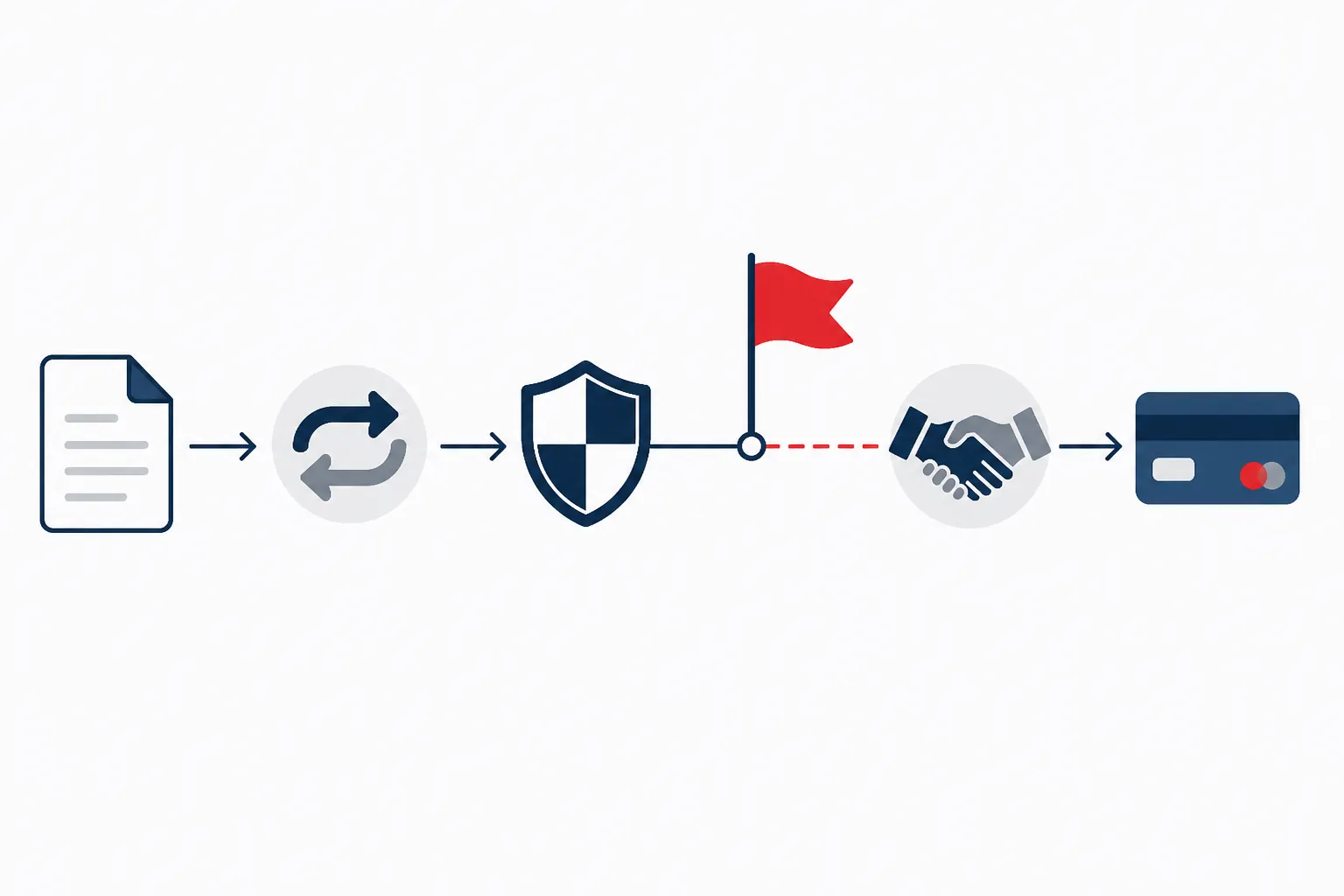
FAQ 1249 is the guardrail here. It says the prohibition is not limited to a completed payment: US persons may not receive safe-passage services from Iran even without payment, and payments or guarantees for safe passage to or from the Government of Iran or the IRGC are not authorized for US persons or US-owned or controlled foreign entities.[2] That is why the refusal record should capture the first engagement point, not just the blocked invoice.
Kpler’s analysis puts the same issue in operational terms: sanctions risk starts at engagement, and payment form is not the controlling fact. It treats cash, crypto, informal swaps, in-kind settlement, and “charitable” structuring as variations that do not avoid the sanctions concern if the underlying transaction involves the prohibited safe-passage scheme or designated persons.[5] That is an attributed risk analysis, not a substitute for an OFAC license determination, but it is consistent with the practical direction of FAQ 1249.
The label can still matter elsewhere. A hull clause may respond differently to a transit fee than to an ordinary premium. A claim file may turn on whether an exclusion was triggered. But that coverage analysis does not make a blocked counterparty unblocked, and it does not turn a prohibited US-person service into a permitted one.
Where the insurance market had already moved
The market was not waiting for July 29 to discover the issue. Insurance Business America reported that PGSA terms and conditions made PGSA-approved insurance mandatory for transit, named PGSA the “sole body responsible for processing transit applications and issuing permits,” confined passage to the Larak Island route, and reserved the right to introduce insurance fees after a 60-day MOU window. The MOU was signed June 17, 2026, putting that window into the mid-August renewal season.[4]
Market clauses were also moving ahead of the designation date. DWF and Grosswald both summarized LMA5708, dated July 23, 2026, as a Lloyd’s Market Association clause addressing Strait of Hormuz transit fees, denying indemnity for those fees and discharging insurer obligations on payment.[6][7] Because the underlying clause text was not part of the crawled record here, that is treated as market context rather than quoted clause law.
For compliance staff, the point is not that LMA5708 answers the OFAC question. It does not. The point is that the commercial file may already contain language requiring review when a transit-fee or mandatory-insurance request appears. That gives sanctions teams a second trigger to require escalation before a broker, claims handler, or underwriter treats the item as routine voyage administration.
The screening universe now
The immediate screening file should not be limited to exact-name SDN hits. Treasury’s release expressly repeats the 50% rule, so the exercise has to include ownership and control review where the file contains an affiliate, agent, local service company, payment intermediary, or newly formed permit platform connected to the designated parties.[1]
| Screen | Why it matters | Likely action if matched |
|---|---|---|
| Persian Gulf Marine Insurance Company / PGMIC | Designated July 29, 2026 under EO 13902 for operating in the financial sector of the Iranian economy. | Block where property or interests in property are in US jurisdiction or US-person possession/control; reject or escalate prohibited service requests; preserve the screening and refusal record. |
| HormuzSafe Marine Services Authority | Designated July 29, 2026 under EO 13902; Treasury described advertised insurance, traffic-control, security, emergency-response and digital-asset payment features. | Treat requests for policy approval, clearance, escort, emergency-response or payment routing as sanctions escalations, not merely operational transit steps. |
| PGSA | Designated May 27, 2026 under EO 13224 for materially assisting the IRGC; FAQ 1249 identifies it as Iran’s toll-collection body. | Screen permit, toll, guarantee and safe-passage correspondence; do not treat non-payment engagement as harmless. |
| 50%-rule affiliates | Entities owned 50% or more, directly or indirectly, by one or more blocked persons are blocked even if not separately listed. | Escalate ownership uncertainty; do not clear a near-name or affiliate hit solely because the exact entity is absent from the SDN List. |
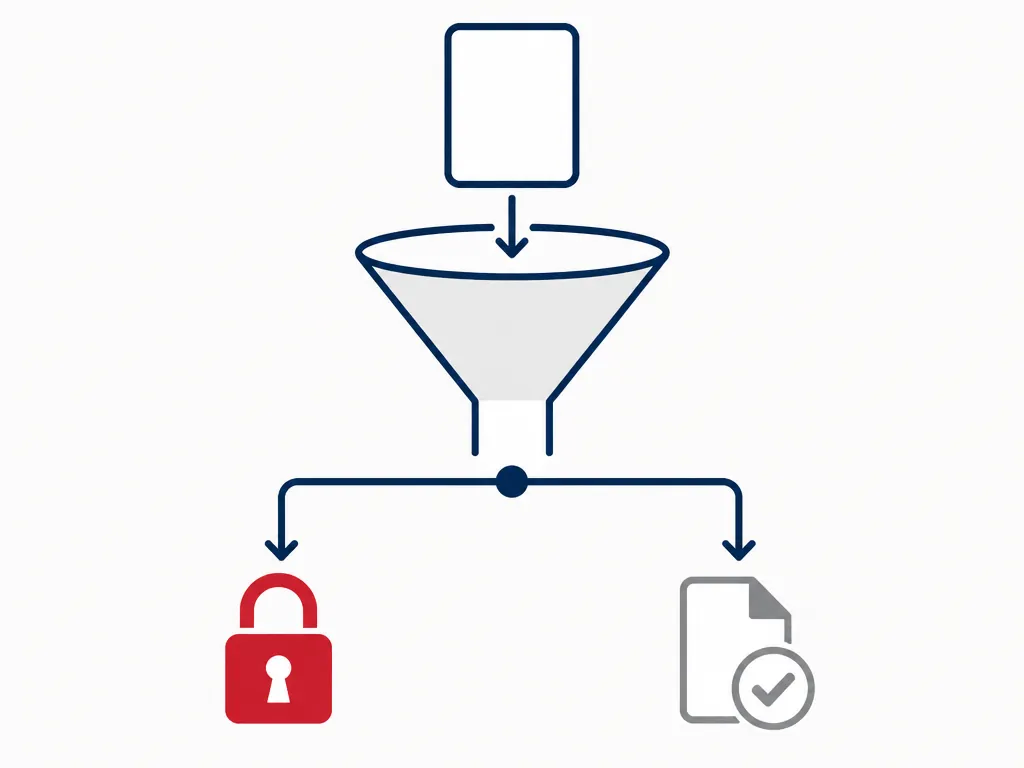
A useful decision path is simple enough to run before commercial pressure builds. First, screen the named parties and obvious aliases. Second, screen the payment recipient, policy issuer, permit issuer, local agent, traffic-control provider, and any digital-asset wallet or payment facilitator named in the file. Third, ask whether any entity in the chain is 50% or more owned by a blocked person. Fourth, separate US-person blocking duties from non-US secondary-sanctions analysis. Fifth, preserve the record showing what was refused, frozen, rejected, or escalated.
For insurers and P&I clubs
The claims workflow needs an early sanctions hold for Hormuz-related safe-passage facts. A claim involving detention, delay, escort, clearance, emergency response, or transit-fee reimbursement should not wait for accounts payable to find the problem. If a blocked party has an interest in the claim payment, premium refund, reimbursement, guarantee, or service benefit, the file needs blocking or rejection analysis before coverage analysis is treated as dispositive.
For brokers
The broker’s risk often sits in transmission. Forwarding vessel data, arranging a PGSA-approved policy, circulating payment instructions, or asking a market to confirm cover can be enough to create a US-person services issue if the broker is a US person or if US staff, US systems, or US-controlled entities touch the file. The refusal note should identify the request, the counterparty screen, the sanctions basis, and the instruction not to route around the block.
For reinsurers
Reinsurance files can receive the fact pattern late, after the assured or cedent has already engaged. That does not make the file clean. Treaty reporting, facultative placement, bordereaux review, loss advice, and claims reimbursement should be screened for PGMIC, HormuzSafe, PGSA, and affiliates. The review should also ask whether the cedent is seeking reimbursement for a payment or service that a US person could not lawfully provide without authorization.
For counsel
Counsel should keep the regimes separate in the advice memo. PGMIC and HormuzSafe were designated under EO 13902. PGSA was designated under EO 13224. US-person blocking and service prohibitions are not the same analysis as secondary-sanctions exposure for a non-US party. A board note that collapses all of this into “Iran risk” may be easy to read, but it is hard to operationalize when the next question is whether to freeze property, reject a transaction, report to OFAC, or seek a license.
Strict liability is not theoretical for insurers
There is no Hormuz-era insurer enforcement outcome in the record yet. The useful benchmark is therefore not a prediction; it is OFAC’s existing insurer enforcement record. On November 14, 2024, OFAC announced a $178,421 settlement with American Life Insurance Company for 2,331 apparent Iran-related violations, described as voluntarily self-disclosed and non-egregious.[8]
That settlement does not say what OFAC would do with a Hormuz insurance file. It does show why “no intent to violate sanctions” is an unsafe comfort line. OFAC’s July 29 release repeats that civil penalties can apply on a strict-liability basis, meaning a person subject to US jurisdiction may be held civilly liable even without knowing or having reason to know they were engaging in a prohibited transaction.[1]
For the person documenting the file, the practical defense is not clever wording around the payment. It is a contemporaneous record: the screened names, the ownership inquiry, the US-person touchpoints, the service requested, the reason for refusal or blocking, the commercial instruction given, and any decision to seek OFAC authorization before proceeding.
Do not re-fight the Strait in the sanctions file
There is a separate international-law dispute over Iran’s claimed authority to impose Hormuz transit conditions. That question belongs elsewhere; the site’s treatment of Iran’s persistent-objector claim to Hormuz fees under UNCLOS addresses that lane. The sanctions file now has a more immediate task. It has named blocked parties, a pre-payment services warning, a 50%-rule requirement, and separate US-person and non-US exposure paths.
The file should therefore close with an administrable answer. Screen PGMIC, HormuzSafe, PGSA, and 50%-rule affiliates. Treat vessel-data sharing, permit requests, safe-passage services, claims handling, broking, reinsurance, and payment routing as possible sanctions touchpoints. Freeze or reject where the regulations require it. Preserve the refusal record. Where the transaction cannot lawfully proceed without OFAC involvement, stop treating commercial urgency as a control and seek authorization.
References
- Treasury Disrupts Iranian Regime’s Strait of Hormuz Extortion Network, U.S. Department of the Treasury.
- OFAC FAQ 1249, Office of Foreign Assets Control, released April 28, updated May 29, 2026.
- US issues new Iran-related sanctions targeting insurers, more tankers, Reuters, July 29, 2026.
- Iran’s insurance gambit in the Strait of Hormuz is a claim waiting to happen, Insurance Business America.
- Hormuz sanctions risk starts before payment, Kpler.
- LMA’s new Strait of Hormuz clause closes Insurance Act gap, DWF, July 2026.
- Lloyd’s LMA Hormuz transit fee clause: hull cover ceases on Iran toll payment, Grosswald Dispatch.
- OFAC Settles with American Life Insurance Company for $178,421 Related to Apparent Violations of the Iranian Transactions and Sanctions Regulations, Office of Foreign Assets Control, November 14, 2024.
Related records
Tool profile
How Meta's AI Spending Reshapes Law Firm ProfitabilityGoverning regulation
Browse the obligations tracker →Preventive workflow
Browse verification workflows →
Report a correction or tip
Spotted an outdated figure, a misstated fact, or a ruling this case record should reflect? Public comments are disabled for this content given the professional cost of a misreported case outcome, penalty amount, or rule text — use the structured correction channel instead.
Report a correction or tip for this record →