
The Legal Implications of the Jason Arday Plagiarism Row
A risk analysis of the Jason Arday plagiarism row focusing on the Defamation Act 2013 burden-of-proof asymmetry and cost-risk dynamics that made the Carter-Ruck pre-publication letter the decisive legal event, rather than the underlying plagiarism allegations.
- Jurisdiction
- England and Wales
- Court
- High Court of England and Wales
- AI tool named
- No AI tool named
- Ruling date
- Jul 27, 2026
- Source document
- View primary court order ↗
- Last verified
- Aug 3, 2026
Lex Machina Review is an independent risk-tracking and reference resource. Nothing on this site is legal advice, and using it does not create an attorney-client relationship. Every record is reviewed against primary sources but may not reflect the most current status of a matter — always verify directly against the cited court order, rule text, or a licensed attorney before relying on it.
Companion explanation — secondary to the source document above
The legal implications of the Jason Arday plagiarism row begin with a document that was not filed in court. Retraction Watch reported that Times Higher Education had completed an investigation into plagiarism allegations against Arday, then did not publish it after receiving a pre-publication letter from Carter-Ruck, the London claimant firm acting for him. The same report identified three named sources, a 63-page dossier, and a later Substack publication by Nathan Cofnas as the channel through which the allegations reached a wider audience after THE stood down. [1]

That is the operative legal fact. Not because it proves or disproves the plagiarism claims. It does neither. It matters because it shows where English defamation risk bites first: at the publication decision, before pleadings, disclosure, trial, or judicial findings. As of Aug. 3, 2026, the public record reflected a pre-publication intervention, not a filed defamation writ by Arday. The exposure remains prospective, but the deterrent effect has already occurred.
The burden problem behind the Carter-Ruck letter
For a publisher deciding whether to run a misconduct investigation in England and Wales, confidence in the reporting is only the first question. The harder question is whether the publisher can afford to prove the relevant defamatory meaning if sued.
The Defamation Act 2013 requires a claimant to show that a statement has caused or is likely to cause serious harm to reputation, with additional requirements for bodies trading for profit. In the higher-education setting, Pinsent Masons’ OUT-LAW analysis emphasizes the same structural feature that matters here: once a claim gets past the threshold issues, the defendant-publisher carries the burden of proving the factual defence it relies on, including truth. [2]
The familiar statutory defences are real. Section 2 protects substantially true statements; section 3 protects honest opinion where the statutory conditions are met; section 4 protects publication on a matter of public interest where the defendant reasonably believed publication was in the public interest. [3] But those labels do not pay the lawyers, find the witnesses, preserve the documents, or price the risk of an adverse judgment.
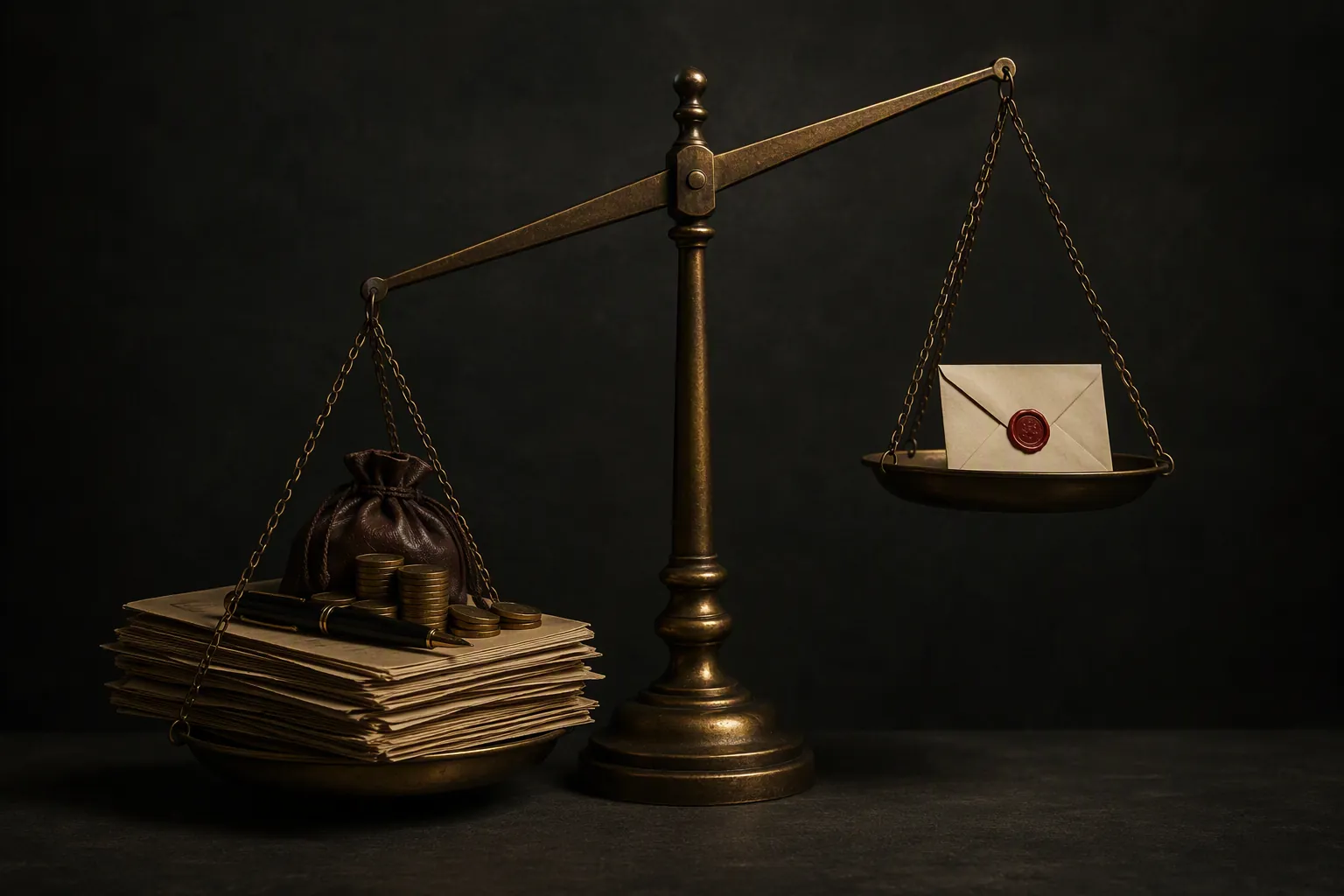
That is why the Carter-Ruck name changes the calculation before anything is issued. A Bureau of Investigative Journalism and Economist 1843 profile described Carter-Ruck as “the most feared claimant firm in the UK,” reported that libel defence costs routinely run to hundreds of thousands of pounds, and documented the practical pattern by which legal letters can cause publishers to amend, delay, or abandon publication. [4]
A pre-publication letter does not have to win at trial to work. It has to persuade the editor, general counsel, insurer, or university risk committee that winning would still be expensive, uncertain, and institutionally distracting. In that setting, a completed investigation can become commercially irrational to publish even if the reporting team believes it has a defensible story.
Why a truth defence can be available and still too costly to run
A plagiarism allegation is not one legal meaning. It may be pleaded as meaning actual academic dishonesty, reasonable grounds to suspect misconduct, failure of scholarly care, misleading publication practice, or something narrower. English defamation law’s Chase-level framework is commonly used to distinguish allegations of guilt from allegations of reasonable grounds and suspicion. [5]
That distinction is not semantic. If a publication is read as saying that Arday committed plagiarism, the defendant may have to prove substantial truth at that level. If it is read as saying that researchers raised documented concerns, or that there are grounds to investigate, the evidential burden may be different. Before publication, the lawyer’s task is to identify the highest defamatory meaning a claimant is likely to allege, not the meaning the newsroom hoped a careful reader would infer.
A 63-page dossier may be enough to justify editorial attention. It is not automatically enough to justify taking on a truth defence. A defendant would need to prove the sting of the pleaded meaning through admissible evidence. That can mean article-by-article comparison, expert evidence on academic conventions, testimony from authors and editors, journal correspondence, institutional documents, and a forensic account of attribution practices. The claimant’s letter can be sent before publication. The defendant’s proof exercise happens later, at scale.
Section 4 public interest may fit better for a responsible investigation into a public academic appointment, especially where the story is framed around questions raised and institutional handling rather than a finding of guilt. But section 4 also invites scrutiny of process: what was checked, what was put to the subject, what response was received, why publication was timely, and whether the publisher reasonably believed publication was in the public interest. The more serious the imputation, the more expensive that reasonableness record becomes to defend.
Honest opinion is usually less central in this dispute. It may protect evaluative commentary about whether passages look inadequately attributed or whether a university responded well. It is a poor fit for hard factual allegations that a named scholar copied work, fabricated biographical claims, threatened critics, or knowingly misled institutions. Those are the statements that create the largest damages and costs risk.
How the exposure changes by publisher
The legal posture is easiest to see if the actors are separated by what they actually publish or decline to publish. The same underlying controversy produces different risk for a Substack author, an academic journal, a newspaper, a university-linked outlet, and a book publisher.
| Actor | Most relevant exposure under England and Wales defamation law | Practical risk point |
|---|---|---|
| Nathan Cofnas / Substack publisher | Prospective libel exposure if posts assert defamatory factual meanings about Arday that cannot be defended as truth, honest opinion, or public interest. | Publishing outside institutional media avoids some gatekeeping but leaves the author-publisher carrying proof and cost risk. |
| Harris, if republishing or adopting the allegations | Exposure depends on whether the publication merely reports the dispute, comments on it, or adopts the factual sting as true. | Republication can create fresh liability if the defamatory meaning is repeated rather than carefully attributed. |
| Times Higher Education | External publication exposure was reduced by not running the completed investigation reported by Retraction Watch. [1] | The Carter-Ruck letter appears to have operated at the decision point where litigation economics were assessed. |
| The Telegraph or other newspapers | Exposure turns on headline meaning, attribution, balance, and whether the article reports allegations as allegations or asserts them as established fact. | Institutional publishers have more process and insurance, but also more to lose from a High Court libel fight. |
| Academic journals | Potentially relevant s.6 peer-reviewed-statement issues if the statement complained of appears in a scientific or academic journal and the statutory conditions are satisfied. [6] | The defence is directly relevant to scholarly publications but remains lightly tested at higher appellate level. |
| Publishers of Arday’s Aug. 27 memoir | Prospective exposure would depend on whether the book makes defamatory factual claims about critics, institutions, journalists, or alleged threats. | A memoir can create claimant-side reputational repair, but it can also create new publication risk. |
Cofnas and the move to Substack
The migration from THE to Substack is not incidental. It is what one would expect when a heavily lawyered institutional publication decides that the risk-adjusted cost of publication is too high. Retraction Watch reported that after THE did not publish, Cofnas put the material into a Substack post. [1]
That move lowers institutional friction. It does not lower the legal burden. If Cofnas is sued in England and Wales over a publication accessible there, the question would not be whether the controversy is important or whether academic readers should examine the dossier. The question would be what defamatory meaning the post bears and which defence can be proved. If the post says or implies actual plagiarism, the truth defence must meet that meaning. If it says there are grounds to investigate, the defence terrain may be narrower, but the pleadings fight becomes central.
That is the asymmetry. A university magazine, newspaper, or Substack writer may all believe the matter deserves public scrutiny. Only the defendant has to decide whether it can survive the cost of proving that scrutiny was legally defensible.
THE and the institutional publisher’s problem
THE’s reported decision not to publish is the cleanest example of pre-action deterrence. It does not show that Arday’s threatened claim would have succeeded. It does not show that THE’s reporting was wrong. It shows that a claimant-side pre-publication letter can move the economic decision from “Can we defend this?” to “Can we justify spending what defence would require?”
For a publisher-defendant, the cost center is not limited to damages. It includes solicitor and counsel time, editorial witness statements, document review, source protection questions, insurance issues, management time, and the reputational cost of litigating the accuracy of one’s own investigation. A publication that is legally defensible may still be an unattractive asset once those costs are priced in.
The Telegraph and other newspapers
For newspapers reporting on the row after the Substack and Retraction Watch coverage, the safest legally meaningful distinction is between reporting that allegations have been made and adopting those allegations. The former may still be defamatory if the repetition rule is engaged and the article conveys suspicion or grounds. The latter is much more dangerous if the sting becomes a statement of fact.
Headlines matter. So do captions, social posts, push alerts, and summaries. A careful article can be undone by a headline that compresses “is accused of plagiarism in a dossier disputed by his lawyers” into a stronger imputation. In this kind of case, the legal review should start with the most damaging standalone text, not with the most cautious paragraph.
Academic journals and the bounded role of section 6
Section 6 of the Defamation Act 2013 matters because it is aimed at peer-reviewed statements in scientific or academic journals. CMS’s 2024 update noted the first High Court consideration of the section 6 defence and explained the statutory focus on peer-reviewed material in academic or scientific journals. [6]
That defence is not a general academic-misconduct shield. It does not automatically protect a newspaper investigation, a Substack thread, a university press release, or a memoir. It may matter if a complained-of statement appears in a qualifying academic journal and meets the statutory conditions. It may also matter indirectly when the dispute concerns statements, corrections, or commentary around journal publications. But the defence has not yet been developed through extensive appellate authority, so any confident prediction would overstate the public record.
That narrowness is important. The academic setting does not itself transform a libel case into an academic-freedom case. It may supply public-interest context, specialist evidence, and section 6 issues for journal material. The claimant still sues over defamatory publication. The defendant still has to plead and prove the defence that fits the statement.
Memoir publishers face the mirror-image risk
The prospective risk around Arday’s memoir runs in the opposite direction. If a book publisher releases a memoir that addresses the controversy, it will not only be helping the subject answer reputational attack. It will be publishing new statements. If those statements identify critics, journalists, academics, institutions, or alleged threat actors and convey defamatory factual meanings, the publisher may face the same architecture it would prefer to see imposed on others.
That does not mean a memoir should avoid the controversy. It means legal review should treat rebuttal chapters as publication events. Assertions about motives, harassment, threats, racism, dishonesty, bad faith, academic fraud, or institutional misconduct require the same meaning-and-defence analysis as the accusations against Arday.
The Guardian material widens the risk zone without settling the facts
The Guardian’s Aug. 1, 2026 interactive investigation added a second danger area: disputed claims about threats, harassment, public biography, and corrections to previously circulated factual details. [7] For defamation purposes, that material is not useful because it lets an outside reader decide who is right. It is useful because it shows how many factual fronts a publisher can accidentally turn into a libel problem.
A publication that repeats an allegation of plagiarism carries one kind of risk. A publication that repeats claims about threats, harassment, fabricated life events, corrected athletic feats, fundraising totals, petition figures, or institutional findings carries others. Some of those statements may be true, some may be disputed, some may have been corrected, and some may depend heavily on attribution. The legal review cannot treat them as colorful background. Each can bear its own defamatory meaning.
That is also why precision matters when reporting “corrections.” Saying that a public biography was corrected is different from saying that the subject lied. Saying that a claim was disputed is different from saying it was false. Saying that a person reported threats is different from saying a named critic made threats. Each move changes who must prove what.
The US comparison is a warning, not a rule
US readers should not import First Amendment instincts into an England and Wales risk assessment. The Ohio litigation involving Mehta and Ohio University is useful only as a comparative warning: institutional investigation reports and academic-misconduct findings can generate defamation litigation when a scholar says the institution’s account damaged reputation. The Reporters Committee covered the reinstatement of Mehta’s libel suit against Ohio University, but that case operates under US law, not the Defamation Act 2013. [8]
The closer structural comparison is the Hattie/Vainker dispute reported by Retraction Watch, where an academic controversy over plagiarism allegations continued into litigation even after a university review cleared the researcher. [9] That comparison matters because it reminds publishers that institutional clearance does not necessarily end claimant appetite. It does not predict that Arday will sue, and it does not establish that any Arday claim would succeed.
The comparison also cuts both ways. A university finding, journal correction, or expert dossier may be central evidence. It is not a jurisdiction-free safe harbor. The operative question remains local: under the applicable law, what did the publication mean, what serious harm is alleged, and can the defendant afford to prove the defence?
Where the public record stands
Last verified Aug. 3, 2026, UTC: the public record described a Carter-Ruck pre-publication letter and THE’s reported decision not to publish a completed investigation; it did not show a filed defamation writ by Arday. Any analysis of an Arday claim is therefore prospective.
Limitation periods still matter. English defamation claims generally face a one-year limitation period from publication, subject to legal detail. [5] For online material, republication, edits, new posts, promotional extracts, and book publication can create fresh dates that deserve separate review. The calendar is not a substitute for liability analysis, but it is part of the risk map.
On the present record, the Carter-Ruck letter is the decisive legal event because it achieved what litigation often seeks to achieve only later: it changed publication behavior. The plagiarism allegations remain socially and institutionally important. Journals, universities, readers, and publishers still have reasons to examine them. But the row’s legal pressure point is narrower. In England and Wales, the party making the damaging publication must be ready to prove the defence, fund the fight, and live with the uncertainty. In this dispute, that pressure operated before a claim was filed.
References
- Cambridge’s Jason Arday faces plagiarism allegations; Times Higher Education spiked exclusive, Retraction Watch, July 27, 2026.
- Higher education, free speech and UK defamation laws, Pinsent Masons OUT-LAW, February 12, 2026.
- Defamation Defences, Carruthers Law.
- Carter-Ruck: Britain’s fiercest libel firm will pursue anyone, anywhere, for reputation, The Bureau of Investigative Journalism, December 1, 2023.
- English defamation law, Wikipedia.
- Defamation update: Part Two - High Court’s first consideration of s.6 Defamation Act 2013: Peer-reviewed statements in scientific or academic journals, CMS, August 21, 2024.
- Playbooks, plagiarism and pigs’ head: new claims surrounding Cambridge professor Jason Arday, The Guardian, August 1, 2026.
- Court reinstates professor’s libel suit against Ohio University, Reporters Committee for Freedom of the Press.
- John Hattie v Stephen Vainker, Retraction Watch, August 21, 2025.
Related records
Tool profile
How Meta's AI Spending Reshapes Law Firm ProfitabilityGoverning regulation
Browse the obligations tracker →Preventive workflow
Browse verification workflows →
Report a correction or tip
Spotted an outdated figure, a misstated fact, or a ruling this case record should reflect? Public comments are disabled for this content given the professional cost of a misreported case outcome, penalty amount, or rule text — use the structured correction channel instead.
Report a correction or tip for this record →