
Why Jeanine Pirro's Reflecting Pool Case Collapsed
The Reflecting Pool felony charge collapsed in 29 days because prosecutors filed on another agency's unverified account — a gap the government's own dismissal motion concedes. This briefing-ready post-mortem walks through the record and the verification checks that would have caught it before indictment.
- Jurisdiction
- US federal
- Court
- U.S. District Court for the District of Columbia
- Judge
- Todd Edelman
- AI tool named
- No AI tool implicated
- Ruling date
- Jul 31, 2026
- Source document
- View primary court order ↗
- Last verified
- Aug 4, 2026
Lex Machina Review is an independent risk-tracking and reference resource. Nothing on this site is legal advice, and using it does not create an attorney-client relationship. Every record is reviewed against primary sources but may not reflect the most current status of a matter — always verify directly against the cited court order, rule text, or a licensed attorney before relying on it.
Companion explanation — secondary to the source document above
Status, last verified Aug. 4, 2026: in the Jeanine Pirro Reflecting Pool case, the government has filed a July 31 motion to dismiss the indictment without prejudice; a formal dismissal order is still pending in the verified materials available for this article. The primary record is the government’s Hearn Motion to Dismiss 073126. This is a verification-failure case study, not a political recap and not an AI incident. [1]
The decisive contrast is not subtle. On July 2, at the indictment announcement, U.S. Attorney Jeanine Pirro said, “we can state and prove beyond a reasonable doubt that he caused damage and that damage is over $1,000.” [2] On July 31, the same prosecution team told the court that it “could only rely” on the Department of the Interior’s account and that, “had DOI been forthcoming with the information clearly in its possession, the government would not have sought a grand jury indictment.” [1]
That is the load-bearing record. The filing was not withdrawn because a court found that prosecutors used artificial intelligence, hallucinated citations, or invented law. No AI tool is implicated in the motion or in the sanctions warning. The professional failure mode is more ordinary and, for lawyers, more useful: a credible source agency supplied an account, the filing office treated that account as indictment-grade, and the underlying evidence was checked too late.
The 29-day record, read as handoffs
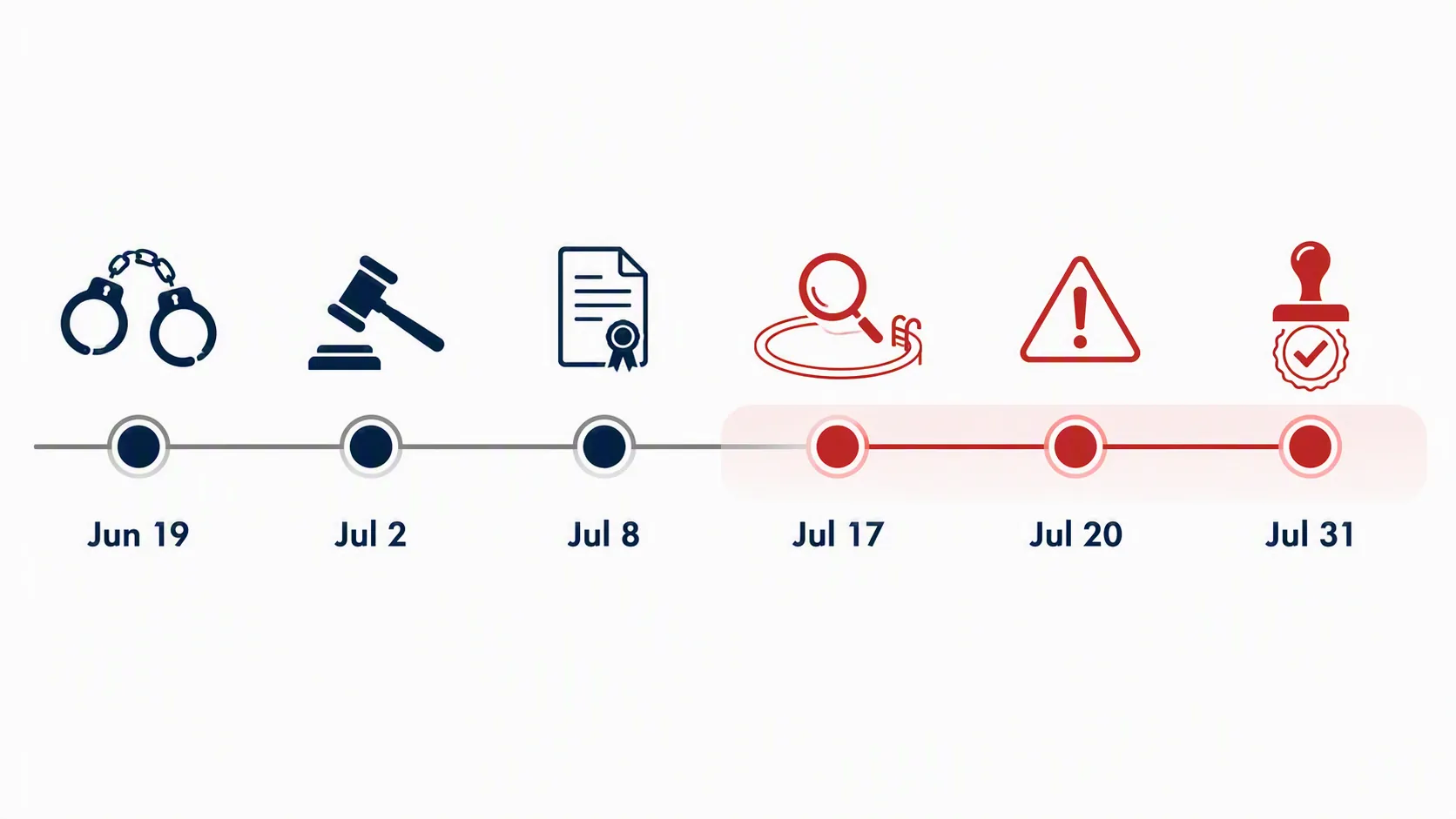
A normal news chronology would make this look like a fast-moving public controversy. For filing-control purposes, the better question is narrower: at each date, did the government have a chance to test the charging theory against primary evidence, and did that chance come before or after indictment?
| Date | Record event | Verification significance |
|---|---|---|
| June 19, 2026 | David Hearn was arrested in connection with alleged damage to the Lincoln Memorial Reflecting Pool. [1] | The investigation began with an agency account of damage and causation. |
| July 2, 2026 | The indictment was announced, with a public claim that the government could prove beyond a reasonable doubt that Hearn caused more than $1,000 in damage. [2] | The felony theory had already been converted into a charging document. |
| July 8, 2026 | The defense demanded preservation of the disputed evidence. [1] | A preservation problem was put squarely in front of the government after indictment. |
| July 17, 2026 | Prosecutors inspected the drained pool. [1] | The primary physical evidence was inspected after the indictment, not before. |
| July 20, 2026 | Judge Todd Edelman warned that continued work on the pool was “operating at its own peril” and could lead to sanctions. [3] | The court was being asked to police preservation while the prosecution was still working backward into the evidence. |
| July 31, 2026 | Pirro and AUSA Michael P. Spence filed a 20-page motion to dismiss without prejudice. [1] | The government conceded it would not have sought the indictment if DOI had disclosed what it possessed. |
The July 31 motion adds the procedural fact that should make every litigation-risk reviewer stop reading and open the attachments: the government says it received 695 MB of documents from DOI only after indictment. [1] It also says prosecutors did not inspect the drained pool until July 17. [1] Those are not cosmetic timing problems. They mark the difference between charging after verification and charging first, then learning what the source agency’s file actually contained.
What changed when the primary materials were reviewed
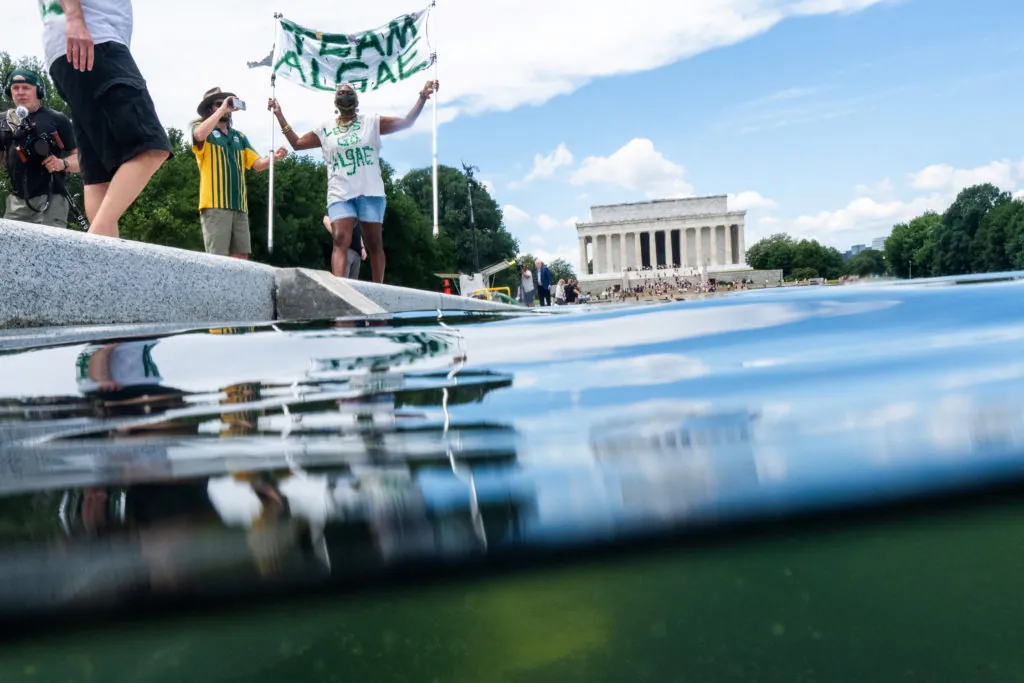
The government’s July 31 filing did not merely soften the original vandalism theory. It changed the source of the damage. The motion attributes the relevant condition of the pool surface to “flawed installation by the contractor, Atlantic Industrial Coatings” and to the rush to complete work for America 250, rather than to Hearn’s alleged conduct as the operative cause of felony-level loss. [1]
That is why the motion matters more than the public argument around it. The document says the prosecution’s charging theory depended on DOI/NPS representations that did not match the agency’s own underlying information once prosecutors obtained and reviewed it. [1] The office did not tell the court, in substance, that it had a hard case and chose to conserve resources. It told the court the indictment would not have been sought had the source agency disclosed what it had.
The grand-jury damages testimony narrowed the felony theory
The damage element mattered because the public claim was not just that Hearn touched or entered a restricted renovation site. The felony presentation required damages above a threshold. In the July 31 motion, the government described testimony from the sole grand-jury damages witness, an NPS official, that cut against the clean version of causation offered at the press conference. The witness conceded substantial pre-existing damage, loss attributable to Hearn that could not be quantified, and repairs in the range of $6,000 to $15,000 that would have been required regardless of Hearn’s conduct. [1]
That testimony did not need to prove Hearn’s innocence to undo the charge. It was enough that the indictment had been premised on a damages account the government later could not tie to him in the way the felony theory required. Once pre-existing installation problems, inevitable repair work, and unquantified incremental loss entered the record, the July 2 certainty could not survive as a filing position.
The disputed numbers were warning lights, not side issues
The public record around the pool carried several competing figures. Reports described the Atlantic Industrial Coatings contract as $14.7 million, while other coverage described the broader project at roughly $16 million. [4][3] Trump’s public dollar claim was different again, and Pirro later refuted his claim that the pool had been damaged by vandals. [5] Public descriptions of the alleged gash also shifted across accounts, from hundreds of feet to descriptions approaching 300 yards. [2][4]
The point is not to harmonize those figures here. A lawyer preparing a charging document should treat that kind of variance as a prompt to slow down, not as a public-relations inconvenience. Contract value, total project cost, alleged repair cost, and damage attributable to a particular defendant are different quantities. If the filing theory depends on one of them, the source document has to be opened.
Where the filing controls should have caught the problem
Only after the record failure is visible does the checklist become useful. The relevant controls are not exotic. They are the ordinary gates that keep agency summaries, client narratives, expert talking points, and litigation-database outputs from becoming signed court filings before anyone has tested them.
- Verify the source agency’s claim against the source agency’s own file before presenting the charge. A summary from DOI/NPS was not enough if DOI/NPS held documents cutting against causation or damages.
- Inspect the primary physical evidence before indictment when the alleged damage is visible, changing, or being repaired. Here, the government’s own motion places the drained-pool inspection on July 17, after the July 2 indictment. [1]
- Demand the document production before filing, not after the defense forces the preservation issue. The 695 MB production arriving post-indictment is the procedural fact that explains the collapse. [1]
- Reconcile witness testimony against the charging theory. A damages witness who acknowledges pre-existing damage, unquantified incremental loss, and repairs required regardless of the defendant’s conduct cannot be treated as support for a clean felony-loss narrative without further work. [1]
- Preserve disputed evidence before alteration continues. By July 20, the court was warning that continued pool work proceeded at the government’s peril. [3]
For firms and legal departments, this is the same kind of control sequence that belongs in any high-risk filing workflow: identify the evidentiary proposition, identify who supplied it, identify the primary record that proves or disproves it, and block signature until that record has been checked. Our companion status note on the Hearn Reflecting Pool Case Dismissed Without Prejudice tracks disposition posture. This piece is about the control failure that made that posture necessary.
The AI-hallucination parallel is limited, but useful
No court has characterized this prosecution as an AI hallucination case, and the July 31 motion does not suggest that any generative-AI system produced the indictment. The analogy is narrower: both failure modes begin when credible-looking information enters a legal filing without primary-source verification.
In AI-sanctions cases, the unchecked material may be a fabricated case citation or a distorted quotation. In this prosecution, it was an agency account of damage and causation that the filing office later said it could only rely on because DOI had not been forthcoming. The shared control is not “avoid technology.” It is verify the proposition against the primary record before a lawyer signs or presents it.
That is why this case belongs beside, rather than inside, the site’s AI materials. The professional-responsibility analysis in AI Hallucinations and Attorney Ethics and the workflow controls in The Double-Compliance Burden point to the same operational habit: do not let a plausible intermediary become the source of truth.
Operational judgment
The July 31 motion leaves the case in a narrow procedural posture: motion filed, without prejudice, formal order pending in the verified record as of Aug. 4. [1] It also leaves a clearer professional lesson than the surrounding politics can offer. The charge collapsed because the primary-source check came after indictment. The document that should have been opened before court was opened after the filing was already someone else’s problem.
References
- Hearn Motion to Dismiss 073126, DocumentCloud, July 31, 2026.
- U.S. Attorney Jeanine Pirro Announces Charges Related to Vandalism of Reflecting Pool, C-SPAN, July 2, 2026.
- Judge Warns Trump About Ongoing Reflecting Pool Work, Forbes, July 20, 2026.
- US drops case against man charged with damaging Reflecting Pool, AP.
- Trump blasts Pirro after she refutes his claim that Reflecting Pool was damaged by vandals, PBS NewsHour/AP.
Related records
Tool profile
How Meta's AI Spending Reshapes Law Firm ProfitabilityGoverning regulation
Browse the obligations tracker →Preventive workflow
Browse verification workflows →
Report a correction or tip
Spotted an outdated figure, a misstated fact, or a ruling this case record should reflect? Public comments are disabled for this content given the professional cost of a misreported case outcome, penalty amount, or rule text — use the structured correction channel instead.
Report a correction or tip for this record →