
Was the Johns Hopkins Researcher Detained as an Overstay?
A verified record of the July 2026 ICE detention of Johns Hopkins researcher Fatima Ameaka, presented as a contested status-transition dispute: J-1 entry plus a TPS grant and pending asylum versus DHS's overstay classification, and what her release into removal proceedings means for travelers with pending status applications.
- Jurisdiction
- United States
- Court
- U.S. Immigration Court
- AI tool named
- No AI tool implicated
- Ruling date
- Jul 28, 2026
- Source document
- View primary court order ↗
- Last verified
- Aug 4, 2026
Lex Machina Review is an independent risk-tracking and reference resource. Nothing on this site is legal advice, and using it does not create an attorney-client relationship. Every record is reviewed against primary sources but may not reflect the most current status of a matter — always verify directly against the cited court order, rule text, or a licensed attorney before relying on it.
Companion explanation — secondary to the source document above
Verified record frame
Last verified: August 4, 2026. This analysis treats the Fatima Ameaka matter as a single contested status-transition record, not as settled immigration law and not as a general airport-enforcement rule. Primary public sources used here are CBS Baltimore, ABC News, WBAL-TV, and CNN; CNN is used only for separate parallel airport-enforcement context, not as a source for DHS statements about Ameaka. [1][2][3][4]
This is not legal advice. It is a record-first review of public reporting. The key answer is narrow: DHS treated Ameaka as an overstay after a J-1 visa expiration; her attorney disputes that classification and says she lawfully transitioned through Temporary Protected Status, a pending asylum application, and valid employment authorization. The dispute has not been publicly adjudicated.
- Confirmed from public reporting: Ameaka, a Cameroonian national and Johns Hopkins public health researcher, entered the United States on June 27, 2023 on a J-1 visa valid to June 13, 2024; ICE arrested her at BWI Thurgood Marshall Airport on July 28, 2026 while she was boarding a domestic flight. [1][2][3]
- Reported and contested: DHS classified her as having overstayed that J-1 visa; attorney Benjamin Osorio says she had been granted TPS while still in valid J-1 status, later filed asylum, and held employment authorization. [1][2]
- Current posture: She was released from ICE custody after transfers through several facilities and is in removal proceedings. Release did not publicly resolve the underlying status classification. [2][3]

The case turns on classification, not biography
The headline version is easy to flatten: a Johns Hopkins researcher with work authorization was arrested at an airport. That version is emotionally accurate enough to explain why the case drew attention, but legally it skips the part that matters. The enforcement question was not whether Ameaka had a job, a research role, or sympathetic equities. It was whether the government’s record treated her as still protected by a lawful status path, or as someone whose J-1 visa had expired on June 13, 2024 and who had remained without a status DHS was prepared to recognize at the checkpoint. [1][2]
DHS’s position, as reported by ABC News, was blunt: she overstayed a visa that expired June 13, 2024, and initially “will remain in ICE custody pending removal proceedings.” ABC also reported that documents it obtained showed a pending asylum case and an employment authorization document valid to 2029. [2]
Osorio’s account is not just “she had an EAD.” His more important claim is sequencing. He told CBS Baltimore that Ameaka received TPS while she was still in valid J-1 status, later filed an asylum application that remains pending, and had “transitioned from one lawful status to another.” [1] If that sequence is accepted by the immigration judge or by DHS in a corrected record posture, the overstay label may not survive in the same way. If it is not accepted, the existence of later-filed applications and work authorization may not defeat the charge DHS chose to act on.
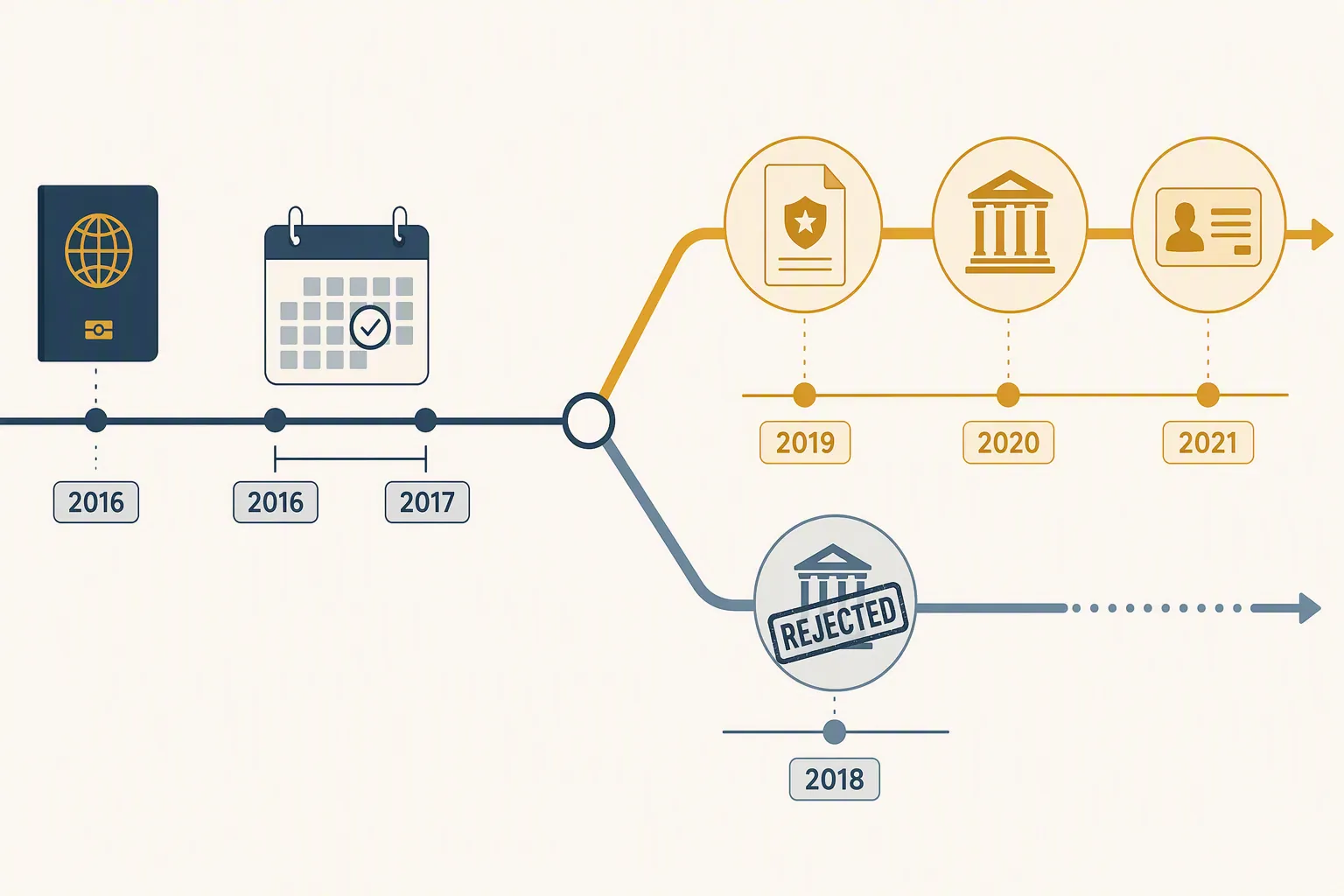
That is why the word “valid” needs care here. A valid employment authorization document can be real and still not answer every status question. A pending asylum case can be real and still not mean DHS agrees that the person is insulated from arrest. TPS, if granted at the time and in the way counsel describes, may be central to the defense theory; but the public record does not show that the status-transition claim has been adjudicated.
What happened in custody
The custody chain matters because it shows what the government actually did before any public resolution of the classification dispute. It does not need embellishment.
| Date or point in sequence | Reported event | Why it matters |
|---|---|---|
| June 27, 2023 | Ameaka entered the United States on a J-1 visa. [1][3] | This is the starting point for the status-history dispute. |
| June 13, 2024 | The J-1 visa was valid until this date, according to public reporting and DHS’s reported overstay theory. [1][2][3] | DHS’s classification depends on treating the later period as an overstay. |
| July 28, 2026 | ICE arrested Ameaka at BWI Thurgood Marshall Airport while she was boarding a domestic flight. [1][2][3] | The arrest occurred in domestic air travel, before any public adjudication of the defense’s status-transition account. |
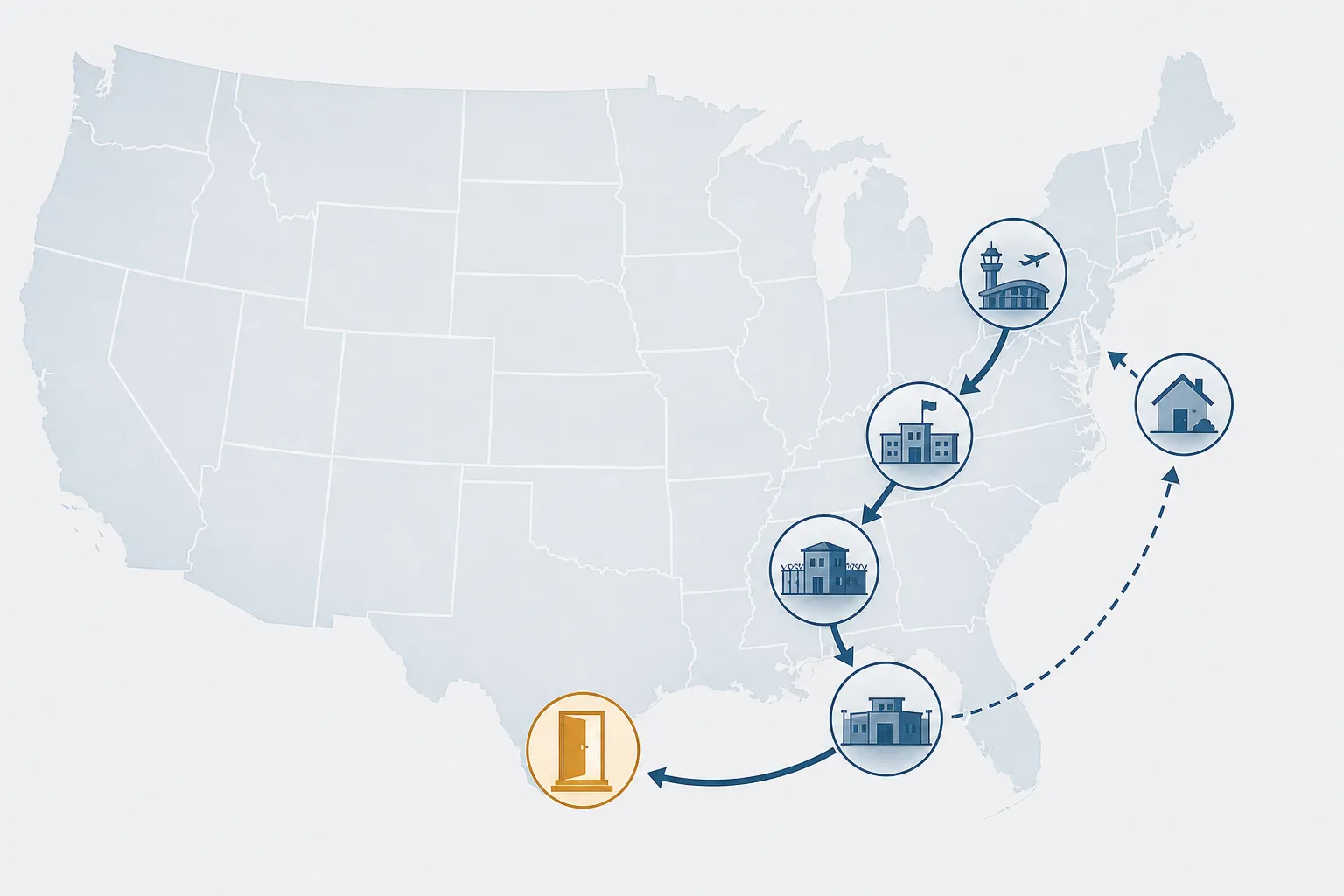
| After arrest | She was held in Virginia, then at the Alexandria Staging Facility in Louisiana, and then in Texas. [2] | The case moved quickly from an airport encounter into the ICE detention-transfer system. |
| Late July 31 / early August 1, 2026 | She was released from a Texas facility and returned to Maryland. [2][3] | Release changed custody status, not the underlying removal case. |
| As of August 4, 2026 | She is released and in removal proceedings. [2][3] | The disputed classification remains procedurally live. |
For a removal-defense file, the transfer path is not background color. It is the consequence of the government’s first classification decision. A person can be moved through facilities before counsel has had any meaningful chance to force the status-history dispute into the right procedural frame.
Release is not a status ruling
A late-Friday release from custody is significant for the person released. It is not the same thing as exoneration. In the public record available as of August 4, 2026, there is no reported immigration-court ruling that DHS’s overstay classification was wrong, no reported termination of proceedings, and no reported DHS withdrawal of the removability theory.
That distinction is not a technicality. If release is described as proof that Ameaka was “lawful all along,” the description outruns the record. If the arrest is described as proof that all TPS recipients, asylum applicants, or EAD holders can be treated as overstays in the same way, that also outruns the record. The public facts support a narrower, harder point: pending-status evidence did not prevent airport custody in this case.
For university counsel and research employers, that is the practice signal worth preserving. The documents that matter later in proceedings may not prevent the initial custody event. A compliance file that says “EAD valid to 2029” answers an employment question; it may not answer the status-classification question an officer or database flags during travel. [2]
The EAD shorthand hides the real dispute
The most tempting defense shorthand is that Ameaka had valid work authorization. It is true enough on the reported documents: ABC News said documents it obtained showed an EAD valid to 2029. [2] But the defense theory is stronger and more specific than that. Osorio’s account depends on TPS being granted while she was still in J-1 status, followed by a pending asylum application and work authorization. [1]
That sequence matters because “work authorization” and “lawful status” do different jobs. Work authorization can permit employment. A pending application can show that a person is inside an administrative process. Neither phrase, by itself, decides whether DHS may classify the person as removable on a particular theory at a particular moment. In Ameaka’s case, the contested bridge is the claimed lawful transition out of J-1 status, not the mere existence of an EAD.
CNN reported a separate airport case involving Chantal Morales Rojas in which DHS said that “a pending application and work authorization does NOT confer any type of legal status in the United States.” [4] That sentence should not be attributed to Ameaka’s case. It is useful only as parallel enforcement context: DHS is publicly drawing a hard line between pending applications or employment authorization and legal status in at least some airport-arrest disputes.
Airport screening context, kept narrow
The sources also describe practitioner concern about airport encounters becoming status audits. WBAL quoted immigration attorney Briana Arnold of Killian Law Group advising clients to avoid domestic travel without current lawful status because “ICE and TSA are information sharing more now than ever.” [3] ABC News quoted immigration attorney Rosanna Berardi saying routine air travel has “turned into a legal status audit” for foreign-national visa holders and green-card applicants. [2]
Those warnings help explain why the Ameaka arrest is being read beyond one traveler. They do not prove the legal theory of her case. The public record does not show the database hit, the exact DHS charging document, the officer’s sequence of checks, or the immigration-court file. It shows the result: a domestic airport arrest, detention transfers, release, and removal proceedings despite reported pending asylum and an unexpired EAD. [1][2][3]
What counsel can take from the record
The file lesson is not that TPS, asylum, or EAD evidence is useless. It may be decisive later. The lesson is that those documents may have to be litigated after custody has already begun.
- For removal-defense lawyers: the sequencing question should be separated from the EAD question. If the defense is a lawful transition from J-1 to TPS, the file needs the TPS grant timing, J-1 validity window, asylum filing record, and any DHS record inconsistencies organized before travel or custody.
- For university and employer counsel: employment eligibility records should not be treated as a complete travel-risk review. An I-9 or EAD file may answer whether the person can work; it does not necessarily predict how DHS will classify the person during an airport encounter.
- For risk and knowledge-management teams: record the case as an unresolved classification dispute. Do not convert it into a universal rule that all pending asylum applicants are unsafe to fly, and do not convert release into a finding that DHS conceded error.
As of the last verified date, Ameaka is released, back in Maryland, and in removal proceedings. The lawful-status-transition claim remains unresolved in the public record. That is the uncomfortable procedural posture: the status argument may still be available, but custody came first.
References
- Johns Hopkins public health researcher had valid work authorization when detained by ICE, attorney says, CBS Baltimore
- Johns Hopkins researcher released after being detained by ICE at Maryland airport, ABC News
- Johns Hopkins researcher detained by ICE after visa expiration, WBAL-TV
- ICE arrests at US airports are happening more frequently, attorneys say. Here's what we know, CNN
Related records
Tool profile
How Meta's AI Spending Reshapes Law Firm ProfitabilityGoverning regulation
Browse the obligations tracker →Preventive workflow
Browse verification workflows →
Report a correction or tip
Spotted an outdated figure, a misstated fact, or a ruling this case record should reflect? Public comments are disabled for this content given the professional cost of a misreported case outcome, penalty amount, or rule text — use the structured correction channel instead.
Report a correction or tip for this record →