
Karmelo Anthony Trial: AI Misinformation as a Novel Trial Risk
This Risk Digest entry documents how AI-generated racist imagery and videos saturated the information environment of the Karmelo Anthony murder trial, creating a novel extra-judicial prejudice risk that existing jury-instruction and gag-order frameworks do not address. The record links primary sources and notes that the defense's pending new-trial motion does not yet cite AI misinformation as a ground.
- Jurisdiction
- Texas, United States
- Court
- Collin County District Court
- Judge
- Judge Roach
- AI tool named
- Unspecified AI generator
- Ruling date
- Jun 1, 2026
- Source document
- View primary court order ↗
- Last verified
- Jul 25, 2026
Lex Machina Review is an independent risk-tracking and reference resource. Nothing on this site is legal advice, and using it does not create an attorney-client relationship. Every record is reviewed against primary sources but may not reflect the most current status of a matter — always verify directly against the cited court order, rule text, or a licensed attorney before relying on it.
Companion explanation — secondary to the source document above
Last verified July 25, 2026: Anthony’s post-verdict challenge is procedurally active, but narrower than much of the online discussion makes it sound. Recusal and new-trial hearings are scheduled for August 19 and August 20, 2026, and Anthony’s post-verdict team has challenged the conviction through a new-trial motion and appeal posture reported after the June 2026 verdict.[1] As of this date, no court has found that AI-generated content prejudiced the verdict, and the reported 63-page new-trial motion does not assert AI misinformation as a ground for relief.[2]
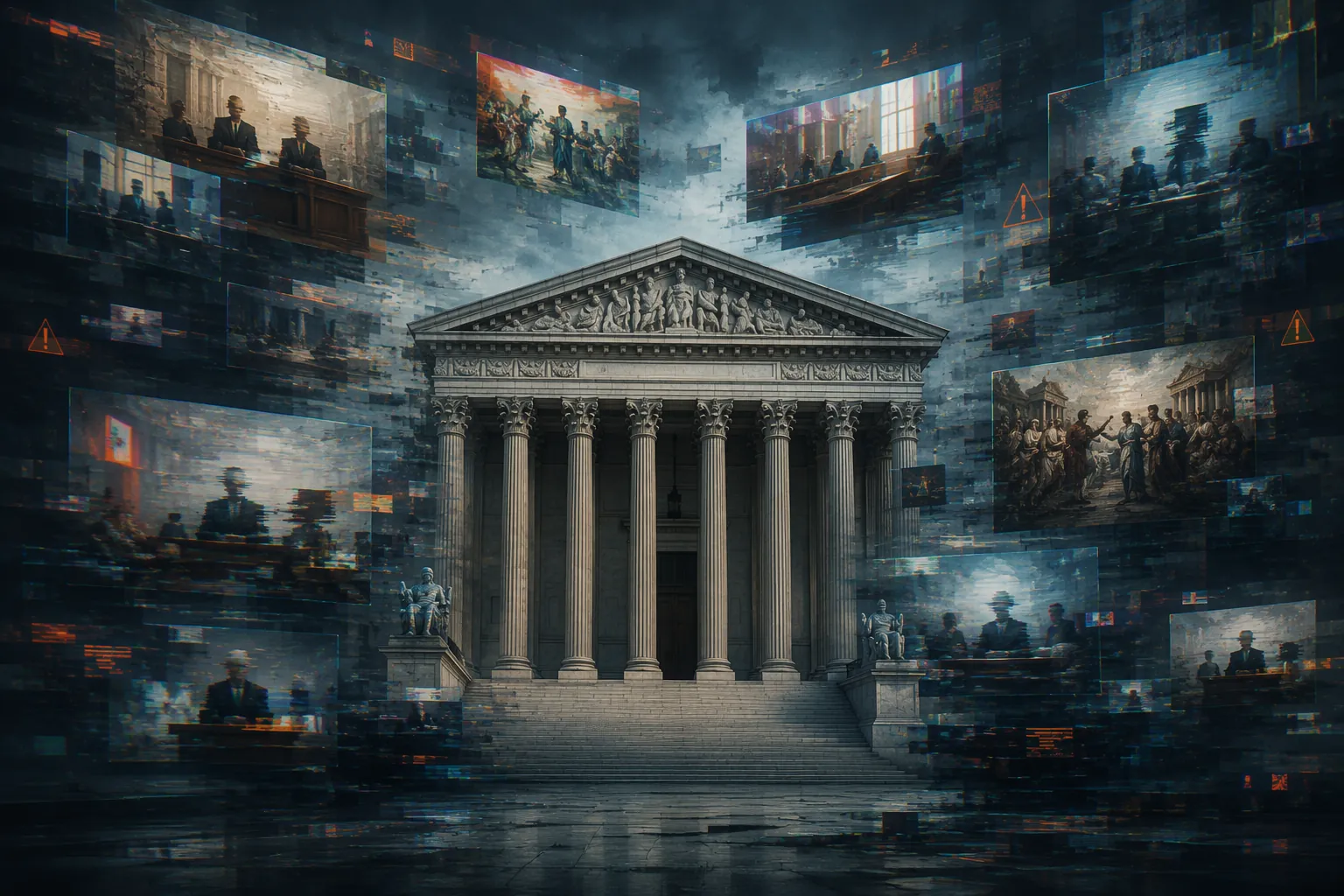
That caveat matters because the documented AI layer is real enough to be dangerous without yet being a legal claim. Rolling Stone’s July 7, 2026 investigation described a post-verdict social-media environment filled with fake courtroom images, racist AI depictions of Anthony, violent and sexualized AI-generated content, game-show-style videos, and confusion that at times misidentified the defendant as NBA player Carmelo Anthony.[3] CBS News Texas separately reported verification-expert warnings that unlabeled AI-generated images can be difficult for many viewers to distinguish from real photographs.[4]
What Is in the Record, and What Is Still Outside It
The criminal case record is not the same thing as the information environment around the case. The Collin County evidence release for cause number 296-83565-2025 anchors what the public can inspect from the trial materials.[5] Reporting on the post-verdict filings anchors what the defense is actually asking courts to do next. The AI material sits in a different place: documented by journalists, acknowledged publicly as a phenomenon, and potentially relevant to trial-integrity strategy, but not currently adjudicated as prejudice.
That distinction is not a technicality. If a lawyer later argues that online content affected jurors, the question will not be whether the internet was ugly. It will be what the judge knew, what counsel preserved, what jurors were instructed not to view, whether exposure can be shown, and whether the alleged contamination became part of the procedural record in time for review.
Judge Roach’s public acknowledgment that fake AI images were circulating during the trial is therefore significant, but it should not be inflated. Courthouse News reported on the judge’s post-verdict public comments and evidence release, including his statements endorsing the verdict.[6] A judge recognizing that fake AI content exists is not the same as a judge finding juror exposure, prejudice, or reversible error.
The AI Material Was Not Just Ambient Noise
Rolling Stone’s reporting is the load-bearing source for the AI misinformation record because it does not describe a single misleading image in isolation. It describes saturation: racist AI imagery, fake courtroom scenes, prison-violence fantasies, slavery scenarios, sexualized and violent AI content, and game-show-style edits pushed into the same attention stream as commentary about a live criminal case.[3]
The timing is part of the risk. The investigation described AI-generated material appearing within hours of the May 2026 verdict.[3] That matters for trial teams because remedial tools move more slowly than platform incentives. A motion takes drafting, filing, service, and a ruling. A misleading image can be generated, posted, monetized, copied, and recontextualized before anyone in the courthouse has agreed on what to call it.
The monetization detail is also not incidental. Rolling Stone reported that one creator said Twitter/X viewership revenue from the AI content paid their bills.[3] That converts the contamination problem from an ordinary rumor problem into something closer to a production pipeline. The incentive is not merely to persuade. It is to keep producing material that travels.
CBS News Texas’s verification reporting makes that production pipeline harder to dismiss as obvious parody. Its report warned that unlabeled AI content can be indistinguishable from real photographs for many viewers.[4] In a criminal trial, the relevant viewer is not an AI specialist pausing over image artifacts. It may be a neighbor, a family member, a potential witness, a juror’s spouse, or a juror who has been told not to research the case but still lives in the same feed environment as everyone else.
Why This Is Not Yet an AI Prejudice Claim
The defense’s reported new-trial issues are serious, but they are not framed around AI-generated misinformation. Fox News reported constitutional arguments involving restricted public seating, no cameras, a sealed court file, an alleged broken evidentiary agreement, a short window for Anthony’s testimonial decision, no Black jurors on the panel, judicial-bias arguments, and restrictive jury instructions.[2] Those issues go to public-trial rights, trial management, evidentiary expectations, jury composition, and the fairness of the defense presentation.
NewsNation’s reporting on the alleged broken “gentleman’s agreement” is especially important because it explains why the defense says Anthony did not testify: the defense claims the agreement broke in a way that affected the testimonial decision.[7] That is a conventional appellate problem in the best sense of the word. It has identifiable actors, a claimed agreement, a claimed reliance problem, and a concrete consequence for the defense case.
The AI misinformation layer is different. It is documented outside the pleadings described in current reporting. It may support future preservation arguments, juror-exposure inquiries, voir dire strategy, gag-order design, or motions addressing publicity in a future case. But as of July 25, 2026, the public materials do not support saying that AI misinformation is a pending appellate ground in Anthony’s case.
The Procedural Gap
Trial courts already have tools for publicity and juror exposure: voir dire, admonitions, sequestration in rare settings, contempt power, gag orders, camera restrictions, public-access rulings, and post-verdict juror inquiries under tight limits. Those tools assume that the relevant risk can be identified, described, and tied to the proceeding with enough specificity for a judge to act.
AI-generated social content strains that model. The same false image can appear as a joke, propaganda, rage bait, racial harassment, or pseudo-news. It can be reposted without the original label. It can be seen by someone who does not know the defendant’s name, then later attached to the case by another account. By the time counsel tries to preserve it, the post may be deleted, edited, buried, or copied into a version with a different caption.
That is why the absence of an AI claim in the current motion should not make risk managers relax. It should make them ask a more disciplined set of questions: when counsel first knew about the content, what was preserved, whether any juror-exposure issue was raised, whether the court’s instructions were specific enough for synthetic media, and whether platform records may become relevant before they disappear.
| Issue | Current Posture | Risk Significance |
|---|---|---|
| AI-generated racist and fake courtroom content | Documented by Rolling Stone and discussed in verification reporting | Shows a concrete extra-judicial misinformation environment, but not adjudicated prejudice |
| Defense new-trial motion | Reported as a 63-page motion without AI misinformation as a ground | Defines the current procedural boundary |
| Public seating, cameras, sealed-file concerns | Raised in reported constitutional arguments | Traditional trial-access and public-trial issues |
| Broken evidentiary agreement and testimonial decision | Reported as part of the defense challenge | Concrete appellate issue tied to defense strategy |
| Judge’s acknowledgment of fake AI images | Publicly reported, but not a prejudice finding | Useful for preservation analysis in future cases |
What Litigators Should Preserve Before It Becomes a Record Problem
The practical lesson is not that every high-profile case now has an AI appeal. The lesson is that synthetic publicity can become relevant before anyone knows whether it will be legally relevant. By the time prejudice is suspected, the cleanest preservation window may have closed.
- Capture the post, account name, URL, timestamp, visible engagement metrics, labels or lack of labels, and surrounding caption context.
- Separate content categories instead of calling everything “misinformation”: fake courtroom images, racialized depictions, impersonation or misidentification, threats, sexualized content, and purported evidence are different risks.
- Preserve the court-facing chronology: when counsel learned of the content, when the court was alerted, what instruction or remedy was requested, and what ruling followed.
- Avoid overstating platform virality unless the metrics are preserved and sourced; screenshots without dates and URLs are weak material for later motion practice.
- Draft jury admonitions with synthetic media in mind, not just “news reports” or “social media discussion.”
Those steps do not guarantee a remedy. They give the trial judge something reviewable to rule on and give appellate counsel something more than a generalized complaint about a poisoned feed. That difference is where many prejudice arguments live or die.
Where the Karmelo Anthony File Belongs
This case should not be filed with AI hallucinated-citation sanctions matters. It is not a story about a lawyer submitting fake cases to a court. It is also not an AI-evidence admissibility dispute, because the synthetic images described in the reporting were not presented as trial exhibits in the materials currently identified.
Its better classification is narrower and more useful: a foundational Risk Digest entry for AI-generated extra-judicial misinformation around a criminal proceeding. The verified materials show saturation, racialized synthetic imagery, misidentification, verification difficulty, and monetization incentives. The verified procedural posture shows no current judicial finding of AI prejudice and no AI-misinformation ground in the reported new-trial motion.
The next material update should come after the August 19 recusal hearing and August 20 new-trial hearing. If the court or defense formally brings the AI layer into the procedural record, the classification may change. Until then, the Anthony case is a warning record, not an appellate AI-prejudice holding.
References
- Notice of appeal and new pro bono team; high-profile attorneys added, NBC News, June 11, 2026 and June 24, 2026
- Defense constitutional arguments in Karmelo Anthony new-trial motion, Fox News, June 2026
- Karmelo Anthony Case: The Truth Is Lost in a Sea of Racist AI Slop, Rolling Stone, July 7, 2026
- AI-generated images fuel confusion during Karmelo Anthony trial, verification tips, CBS News Texas, July 2026
- Collin County evidence release, cause no. 296-83565-2025, Collin County
- Judge Roach releases grisly evidence; post-verdict interviews endorsing verdict, Courthouse News, July 2026
- Reporting on the broken “gentleman’s agreement” that prevented Anthony from testifying, NewsNation
Related records
Tool profile
How Meta's AI Spending Reshapes Law Firm ProfitabilityGoverning regulation
Browse the obligations tracker →Preventive workflow
Browse verification workflows →
Report a correction or tip
Spotted an outdated figure, a misstated fact, or a ruling this case record should reflect? Public comments are disabled for this content given the professional cost of a misreported case outcome, penalty amount, or rule text — use the structured correction channel instead.
Report a correction or tip for this record →