
What Drove Bryan Kohberger to Withdraw His Guilty Plea
Bryan Kohberger's attempt to withdraw his guilty plea exposes the fragility of high-stakes plea bargains when pre-plea expectations clash with prison realities. This case study examines the procedural barriers and strategic risks that criminal defense attorneys must consider in capital-eligible cases.
- Jurisdiction
- US-Idaho
- Court
- Idaho State District Court
- AI tool named
- No AI tool
- Ruling date
- Jul 28, 2026
- Source document
- View primary court order ↗
- Last verified
- Jul 30, 2026
Lex Machina Review is an independent risk-tracking and reference resource. Nothing on this site is legal advice, and using it does not create an attorney-client relationship. Every record is reviewed against primary sources but may not reflect the most current status of a matter — always verify directly against the cited court order, rule text, or a licensed attorney before relying on it.
Companion explanation — secondary to the source document above
The legal strategy behind Bryan Kohberger’s effort to withdraw his guilty plea begins with a contradiction that is procedural before it is dramatic. He accepted a deal in July 2025 that replaced death-penalty exposure with four consecutive life sentences, then later argued that the plea was distorted by alleged promises about prison conditions. The record the state will point to is colder: a nine-page plea questionnaire and a courtroom colloquy in which Kohberger reportedly told the judge that “no other promises” influenced his plea. [1]
That is the center of the withdrawal strategy. Not the notoriety of the case. Not the public’s appetite for another account of the killings. The question is whether a defendant can get back out of a capital-eligible bargain after sentencing by saying that the prison reality he encountered was not the prison reality he had been led to expect.
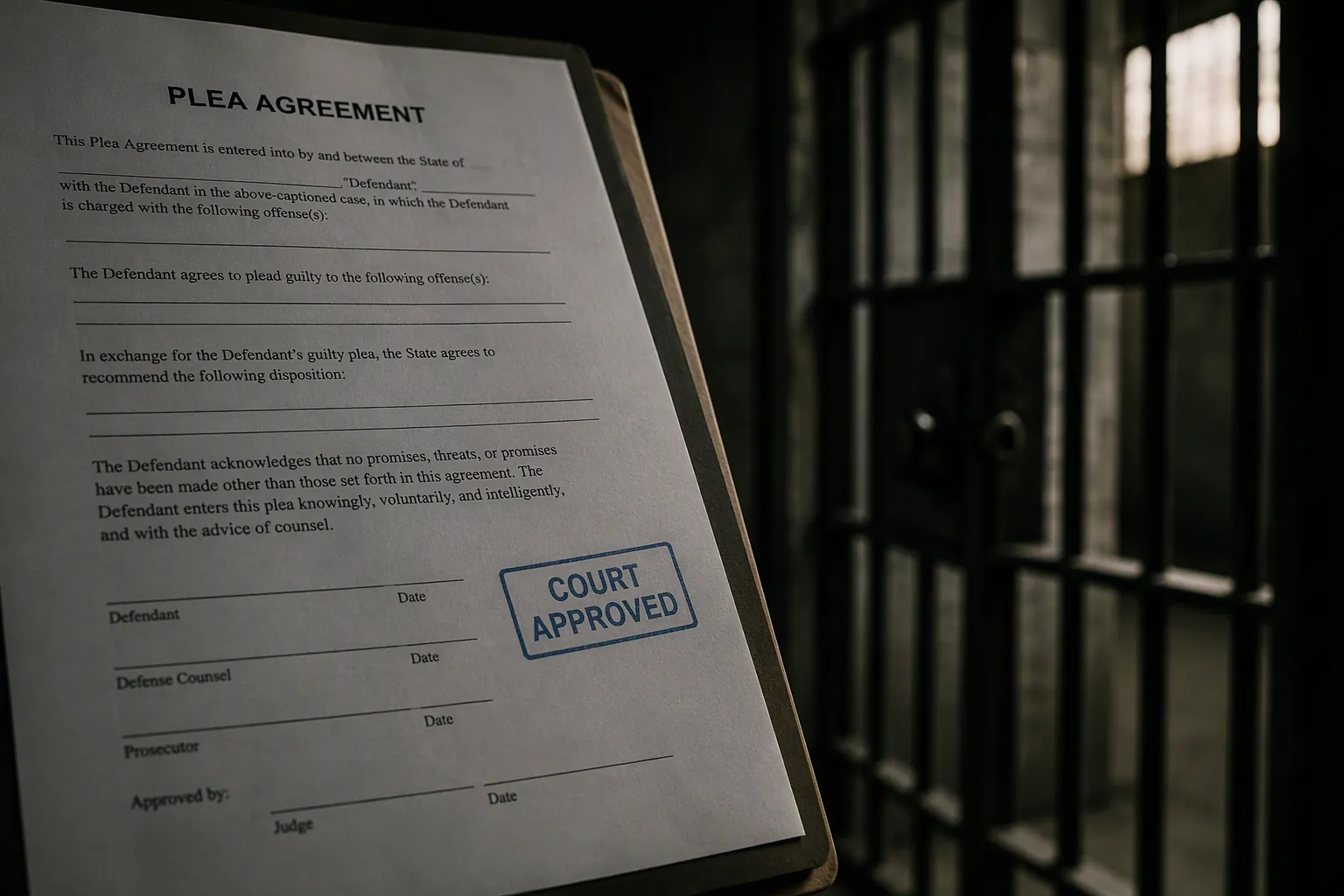
The bargain he now attacks is the bargain that kept death off the table
Kohberger’s current position is easier to understand as a post-sentencing recalculation than as a newly discovered legal escape hatch. The reported theory is that his lawyers promised or led him to expect specific prison privileges: contact visits, freedom of movement, and employment. After sentencing, he has been held at Idaho Maximum Security Institution and has complained about conditions including food quality and isolation. [1]

For defense lawyers, this is not an exotic complaint. Clients often hear a plea agreement through the filter of the consequence they most fear. In a death-eligible case, “life instead of death” can crowd out every practical question about where the sentence will be served, how movement will be controlled, whether contact visits will be available, and what daily isolation will feel like once the cameras are gone. Those issues may be collateral to the judgment, but they are not collateral to the defendant’s lived decision.
The legal problem is that expectations are not the same as enforceable terms. A plea record is built to force that distinction into the open. Judges ask whether anyone has made promises outside the agreement because later litigation often turns on exactly that answer. If the defendant says no, the answer is not a ceremonial detail. It becomes the state’s first exhibit against any later claim that the plea rested on undisclosed inducements.
The prison-condition theory collides with the plea record
The reported allegations about contact visits, movement, and work would matter if they were shown to be material promises that induced the plea. In plea practice, that kind of promise is dangerous precisely because it sits near the boundary between legal advice, prediction, and inducement. A lawyer can explain likely prison classifications. A lawyer can relay what counsel has been told. A lawyer can discuss what may be requested. But if a defendant later says those conversations became promises, the durability of the plea depends on what the written and oral record captured before judgment.
Kohberger’s record, as reported, is the kind prosecutors prefer to litigate from. The written questionnaire ran nine pages. The judge conducted an oral plea colloquy. Kohberger made sworn admissions. And when asked whether other promises influenced his decision, he reportedly answered that there were none. [1]
| Current claim | Record problem |
|---|---|
| He expected contact visits, freedom of movement, and employment. | The plea documents and colloquy reportedly required him to disclose promises outside the agreement. |
| His plea was induced by prison-condition assurances. | He reportedly told the court that “no other promises” influenced the plea. |
| His post-sentencing conditions show the bargain was broken. | Conditions experienced after incarceration may explain regret, but they do not automatically prove the plea was involuntary. |
| The plea should be undone after sentencing. | Post-sentencing withdrawal faces finality concerns and a sworn record designed to prevent later contradiction. |
That does not mean the prison-condition allegations are irrelevant. It means they must do more than describe disappointment. A defendant trying to undo a plea after sentencing has to explain why the court should credit a later account over the earlier sworn one. The harder the earlier record pressed on outside promises, the harder that task becomes.
There is also a sourcing limitation that should be kept visible. The full handwritten pro se petition has not been directly obtained here from the court docket. Descriptions of its contents rely on reporting by outlets including AP, CNN, NBC News, and The New York Times. [1][2] The Idaho Criminal Rules page was also inaccessible during preparation because of Cloudflare authentication, so this article does not purport to quote Idaho Rule 33(c) directly. The discussion of post-sentencing withdrawal is therefore framed through reported filings and secondary legal analysis, not independent rule-text verification.
“Broken Plea” explains the framing, not the legal showing
The phrase “Broken Plea” has become part of the public description of Kohberger’s argument because he used it in a statement to The New York Times, and because a book with that title had been published earlier in 2026. CNN reported that the book’s author confirmed he never spoke to Kohberger. [2]
That matters for a modest reason. The book should not be treated as an inside account of the plea negotiations if its author did not speak with Kohberger. Its relevance is narrower: it shows how Kohberger’s post-sentencing narrative has been packaged. The phrase is useful evidence of framing, not proof of inducement.
For lawyers evaluating plea durability, the distinction is familiar. A client’s later language can sharpen the theory, but it cannot replace the evidentiary burden. The court record will ask different questions: What exactly was promised? Who made the promise? Was it in the written plea agreement? Was it disclosed to the judge? Did the defendant deny any such promise under oath? Those are not literary questions. They are the questions that decide whether the plea record holds.
Why the move is strategically dangerous even if it is emotionally legible
The most severe risk in Kohberger’s strategy is not that he loses the motion. It is that winning could put him back where the plea saved him from being. A successful withdrawal would revive the death-penalty exposure that the guilty plea extinguished. The Goncalves family has publicly said it would welcome a trial, stating, “we are confident he will get the death penalty that he escaped by pleading guilty the first time around.” [2]
That statement is not just an expression of grief or anger. In strategic terms, it identifies the downside of the remedy Kohberger seeks. The plea gave him certainty: four consecutive life sentences rather than a capital trial. If the plea is undone, the certainty disappears. The state would not be required to recreate the defendant’s preferred version of the bargain; the case could return to a posture in which capital punishment is again available.
This is why post-sentencing plea withdrawal is a particularly unforgiving remedy in a capital-eligible case. The defendant is not merely asking for a sentencing adjustment or clarification of confinement expectations. He is attacking the judgment that locked in the non-death outcome. If the attack succeeds, the judgment’s protection may fall with it.
Former prosecutor David Gelman told CNN, “I’ve never seen it happen,” referring to the prospect of reversing a plea deal after sentencing. [2] That quote should not be made to carry more weight than it can bear. One practitioner’s experience is not a legal standard. But it does capture the practical landscape: after sentencing, courts are not dealing with an unfinished negotiation. They are dealing with a final judgment, sworn admissions, victims’ reliance, prosecutorial closure, and a record created to answer the very claims later being made.
The defense-risk lesson is in the paperwork
For criminal defense attorneys, the case is a warning about a narrow but recurring failure point: the space between what counsel can promise, what counsel can predict, and what the client believes will happen after the plea. Prison classification, housing, visitation, work assignments, and movement are often controlled by correctional authorities rather than by the prosecutor or sentencing judge. If those matters are discussed before a plea, the file has to show whether they were enforceable terms, nonbinding expectations, or subjects outside counsel’s control.
A careful plea file in a death-eligible case should make that boundary difficult to misunderstand. If no prison-condition promises are part of the agreement, the written plea documents should say so plainly. If counsel has discussed likely conditions, the advice should be documented as advice, not assurance. If the client is focused on contact visits, employment, or isolation, those topics should not be treated as side issues simply because the headline consequence is death versus life.
The judge’s questions matter for the same reason. A plea colloquy is not merely a constitutional checklist. It is a stress test for future litigation. The question about outside promises is designed to flush out precisely the kind of claim Kohberger is now reported to be making. A clear answer under oath does not prevent every later attack, but it gives the state a direct contradiction to use when the defendant says the real inducement was never written down.
There is a humane reason to take these issues seriously before the plea and a procedural reason courts resist them after the plea. Solitary confinement, lack of contact, and the daily conditions of maximum-security imprisonment can make an abstract life sentence concrete very quickly. But criminal procedure gives unusual force to the moment when the defendant, standing in court, says the plea is voluntary and no undisclosed promise induced it.
What drove the withdrawal attempt
The available record supports a restrained answer. Kohberger’s withdrawal bid appears driven by the gap between pre-plea expectations and post-sentencing prison reality: alleged assurances about visits, movement, and work on one side; confinement at Idaho Maximum Security Institution and complaints about food and isolation on the other. The “Broken Plea” framing gives that recalculation a name, but it does not by itself solve the contradiction created by the plea questionnaire and sworn colloquy.
That makes the strategy both understandable and perilous. Understandable because prison reality can expose the practical meaning of a bargain more brutally than any courtroom explanation. Perilous because the remedy he seeks would require him to overcome his own reported assurances to the court and could restore the capital exposure the plea avoided.
This case sits outside Lex Machina Review’s core AI-risk scope, but the transferable lesson is squarely about legal risk. High-stakes bargains are only as durable as the documented boundary between enforceable terms, client expectations, and prison realities.
References
Related records
Tool profile
How Meta's AI Spending Reshapes Law Firm ProfitabilityGoverning regulation
Browse the obligations tracker →Preventive workflow
Browse verification workflows →
Report a correction or tip
Spotted an outdated figure, a misstated fact, or a ruling this case record should reflect? Public comments are disabled for this content given the professional cost of a misreported case outcome, penalty amount, or rule text — use the structured correction channel instead.
Report a correction or tip for this record →