
What happens next in Kohberger's bid for a new trial?
A dated, rule-cited roadmap of Bryan Kohberger's Idaho post-conviction case, from the July 27, 2026 pro se petition through the state's 30-day response window or summary-disposition motion under ID Code § 19-4906, the evidentiary hearing, and the appeal path — with a new trial or new sentencing as the remedies that would restore death-penalty exposure.
- Jurisdiction
- Idaho, United States
- Court
- Idaho District Court
- Judge
- Steven Hippler
- AI tool named
- No AI tool named
- Ruling date
- Jul 30, 2026
- Source document
- View primary court order ↗
- Last verified
- Aug 1, 2026
Lex Machina Review is an independent risk-tracking and reference resource. Nothing on this site is legal advice, and using it does not create an attorney-client relationship. Every record is reviewed against primary sources but may not reflect the most current status of a matter — always verify directly against the cited court order, rule text, or a licensed attorney before relying on it.
Companion explanation — secondary to the source document above
The filing changed the track, not just the headline
The useful starting point for Bryan Kohberger’s guilty plea withdrawal and new trial bid is not a prediction about whether he will win. It is the procedural reset. His July 27, 2026 pro se filing is now being handled as an Idaho post-conviction matter, a separate civil proceeding governed by the Uniform Post-Conviction Procedure Act and Idaho Criminal Rule 39, rather than as a continuation of the original criminal case.[1]
| Date | Procedural event | Why it matters now |
|---|---|---|
| July 2, 2025 | Kohberger entered a guilty plea. | The current petition attacks the consequences of that concluded criminal judgment, rather than starting a new criminal trial calendar by itself.[1] |
| July 23, 2025 | Sentencing followed the plea. | The judgment and sentence supply the target of the post-conviction challenge.[1] |
| July 27, 2026 | Kohberger filed a pro se post-conviction petition. | That filing opened the post-conviction route under Idaho’s civil post-conviction procedure.[1] |
| July 30, 2026 | The court appointed the Idaho State Public Defender’s Office. | Counsel now has to make the post-conviction docket intelligible and litigable under the applicable rules.[1] |

That distinction does more work than the phrase “withdrawal of guilty plea” suggests. A post-conviction petition can seek relief that would undo or reopen parts of the criminal judgment, including a new trial or a new sentencing. But it does not simply place the case back on the pre-plea criminal docket the moment it is filed. The petition has to survive the civil post-conviction process first.
What the separate civil case changes
Idaho Criminal Rule 39 is the hinge. It routes post-conviction proceedings under Idaho’s Uniform Post-Conviction Procedure Act and treats the matter as a civil proceeding, even though the relief sought reaches back into a criminal conviction and sentence.[1]
Practically, that changes the vocabulary and the next filings. The court is not setting a criminal retrial because a pro se petition arrived. It is managing a collateral civil proceeding in which the state can respond, challenge the petition at the pleading-and-record stage, and force the petitioner to get past statutory screening before any live evidentiary hearing.
Judge Steven Hippler remains the judge assigned to preside under Idaho Criminal Rule 25(a)(9), which is a procedural assignment point, not a forecast about the petition’s merits.[1]
The next clock is the state’s response window
The next deadline worth watching is the state’s 30-day response window under Idaho Code § 19-4906, unless the court extends that time.[1]
That response does not have to take only one form. The state may answer the petition, but § 19-4906 also allows summary disposition practice. In plain terms, the state can ask the court to end the petition before an evidentiary hearing if the filings and record do not justify moving forward under the post-conviction statute.[1]
This is the phase most likely to be misstated in public shorthand. A post-conviction petition does not automatically produce witness testimony. A summary-disposition motion can create its own contested hearing first. Only if the petition survives that kind of challenge does the case move toward live proof.
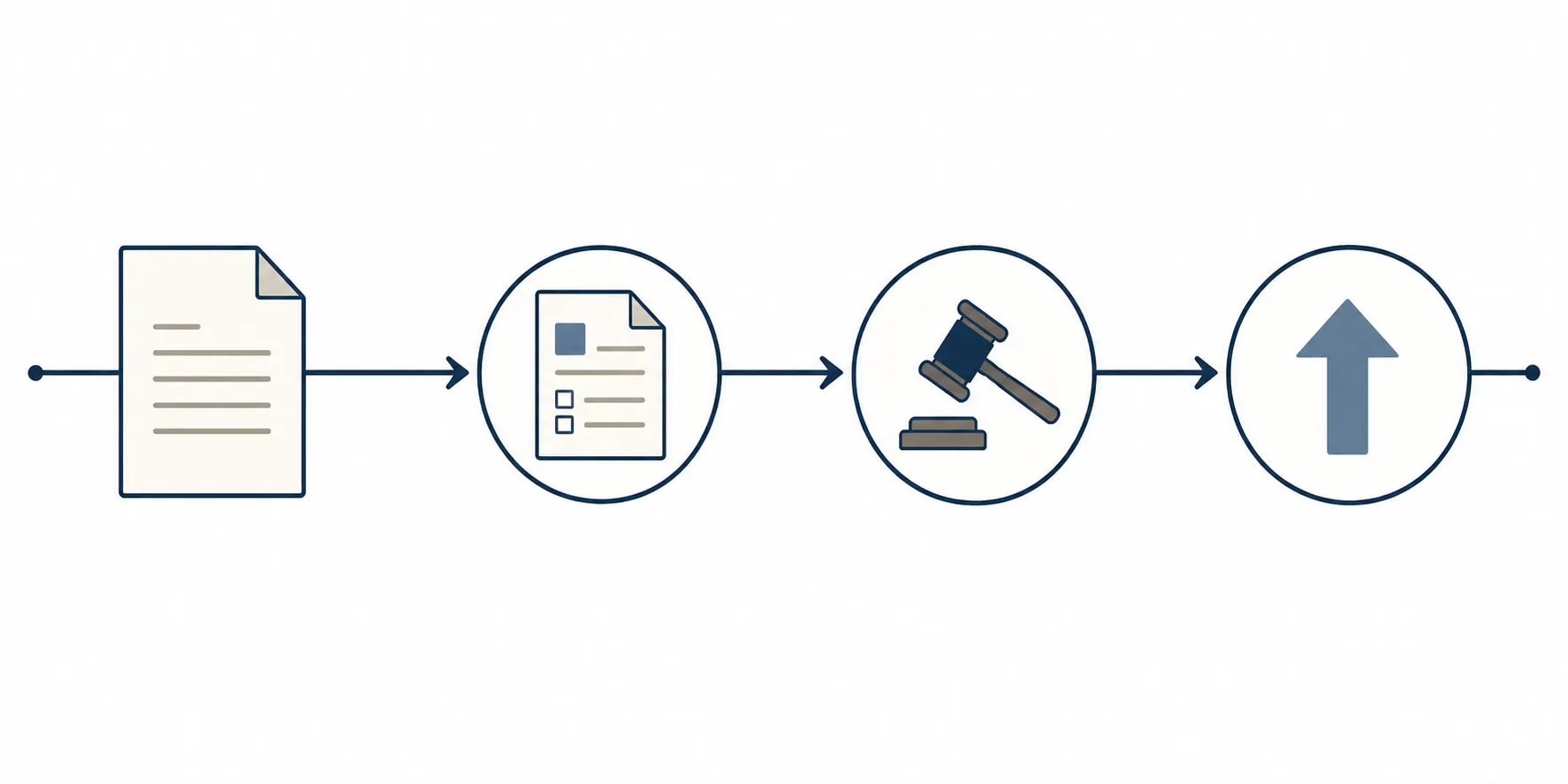
The likely sequence from here
- The state files a response within 30 days, unless Judge Hippler extends the deadline.[1]
- The state may also seek summary disposition under Idaho Code § 19-4906.[1]
- If summary disposition is pursued, the court can hold a hearing on that motion before any evidentiary hearing.[1]
- If the petition survives, the case can proceed to an evidentiary hearing.[1]
- If the court denies relief, an adverse ruling can be appealed to the Idaho Supreme Court.[1]
If the petition survives, the case becomes a proof problem
The evidentiary-hearing stage is where the case would begin to look more familiar to people expecting testimony. If Kohberger’s petition gets that far, his former defense attorneys could be called as witnesses.[1]
That possibility matters because challenges to a guilty plea often turn on what was said, advised, waived, understood, or omitted before the plea was entered. But the current procedural point is narrower: those questions do not become a live testimony hearing merely because the petition uses serious language. The statute gives the state a chance to test the petition before the case reaches that stage.
For docket watchers, the clean distinction is this: the summary-disposition phase asks whether the petition can go forward; the evidentiary-hearing phase asks what the proof shows if it does.
What a successful petition would reopen
The remedy question is where the criminal consequences return. If Kohberger succeeds in post-conviction proceedings, the available relief could include a new trial or a new sentencing.[1]
Either remedy would be consequential for a reason that should be stated carefully: a new trial or new sentencing would return death-penalty exposure to the table.[1] That does not mean the petition is likely to succeed, and it does not mean a particular penalty outcome would follow. It means the procedural relief sought would reopen the part of the case that the plea and sentencing had resolved.
That is also why “will he get out?” is the wrong organizing question at this stage. The live sequence is response, possible summary disposition, possible evidentiary hearing, ruling, and appeal. The remedy, if reached, is not immediate release as a default; it is reopening trial or sentencing in a case where the death penalty would again be available.
Where the record goes if relief is denied
After Judge Hippler rules, an adverse decision can be appealed to the Idaho Supreme Court.[1] That appeal route matters because post-conviction litigation builds a separate record: the petition, the state’s response or summary-disposition papers, any hearing transcript, any evidence admitted at an evidentiary hearing, and the district court’s order.
The calendar now has a different spine from the original criminal case. July 27, 2026 opened the post-conviction track; July 30 put appointed counsel into that track; the next pressure point is the state’s 30-day response window, unless extended. From there, the case turns on whether the petition survives civil post-conviction screening far enough to reopen trial or sentencing.
References
- How Bryan Kohberger's post-conviction legal process works — Idaho Statesman
Related records
Tool profile
How Meta's AI Spending Reshapes Law Firm ProfitabilityGoverning regulation
Browse the obligations tracker →Preventive workflow
Browse verification workflows →
Report a correction or tip
Spotted an outdated figure, a misstated fact, or a ruling this case record should reflect? Public comments are disabled for this content given the professional cost of a misreported case outcome, penalty amount, or rule text — use the structured correction channel instead.
Report a correction or tip for this record →