
Las Vegas defense attorney sanctioned for AI misuse
Clark County District Judge Monica Trujillo sanctioned Las Vegas defense attorney Dean Kajioka for AI misuse in a habeas reply citing a non-existent case, ordering $500 paid to the law library and striking the filing. The denial-to-concession sequence shows why unverified AI-assisted drafting now carries personal sanction risk for criminal defense attorneys.
- Jurisdiction
- Nevada
- Court
- Clark County District Court
- Judge
- Monica Trujillo
- AI tool named
- Unspecified
- Ruling date
- Jul 29, 2026
- Source document
- View primary court order ↗
- Last verified
- Aug 2, 2026
Lex Machina Review is an independent risk-tracking and reference resource. Nothing on this site is legal advice, and using it does not create an attorney-client relationship. Every record is reviewed against primary sources but may not reflect the most current status of a matter — always verify directly against the cited court order, rule text, or a licensed attorney before relying on it.
Companion explanation — secondary to the source document above
| Record field | Reported information |
|---|---|
| Jurisdiction and court | Nevada; Clark County District Court, reported-status record as of Aug. 2026 [1][2] |
| Judge | Clark County District Judge Monica Trujillo [1][2] |
| Attorney | Dean Kajioka, Las Vegas criminal-defense counsel, admitted in Nevada since 1993 [1][2] |
| Case | State of Nevada v. Robert Schwieger; docket number not confirmed from a crawlable primary order |
| Reported ruling date | Show-cause/sanctions hearing reported on or around July 29, 2026 [1][2] |
| Remedy and penalty | Habeas reply stricken; $500 ordered paid to the Clark County Law Library [1][2] |
| AI tool status | Unspecified. The available reports do not identify a product or model. |
| Source status | Based on LVRJ/GovTech reporting; primary court order text was not located in crawlable form for this entry [1][2][3] |
Las Vegas defense attorney Dean Kajioka was reportedly sanctioned for AI misuse by Clark County District Judge Monica Trujillo in State of Nevada v. Robert Schwieger after a habeas reply cited a nonexistent case. The court reportedly struck the reply and ordered Kajioka personally to pay $500 to the Clark County Law Library [1][2].
That makes the reported sanction worth tracking, but not because $500 is a large sanctions order. The point is the sequence: a criminal-defense filing, a formally plausible but nonexistent citation, a court hearing, and an explanation that reportedly moved from denial toward concession once the judge pressed the issue.
How the filing became sanctionable
| Date | Reported event |
|---|---|
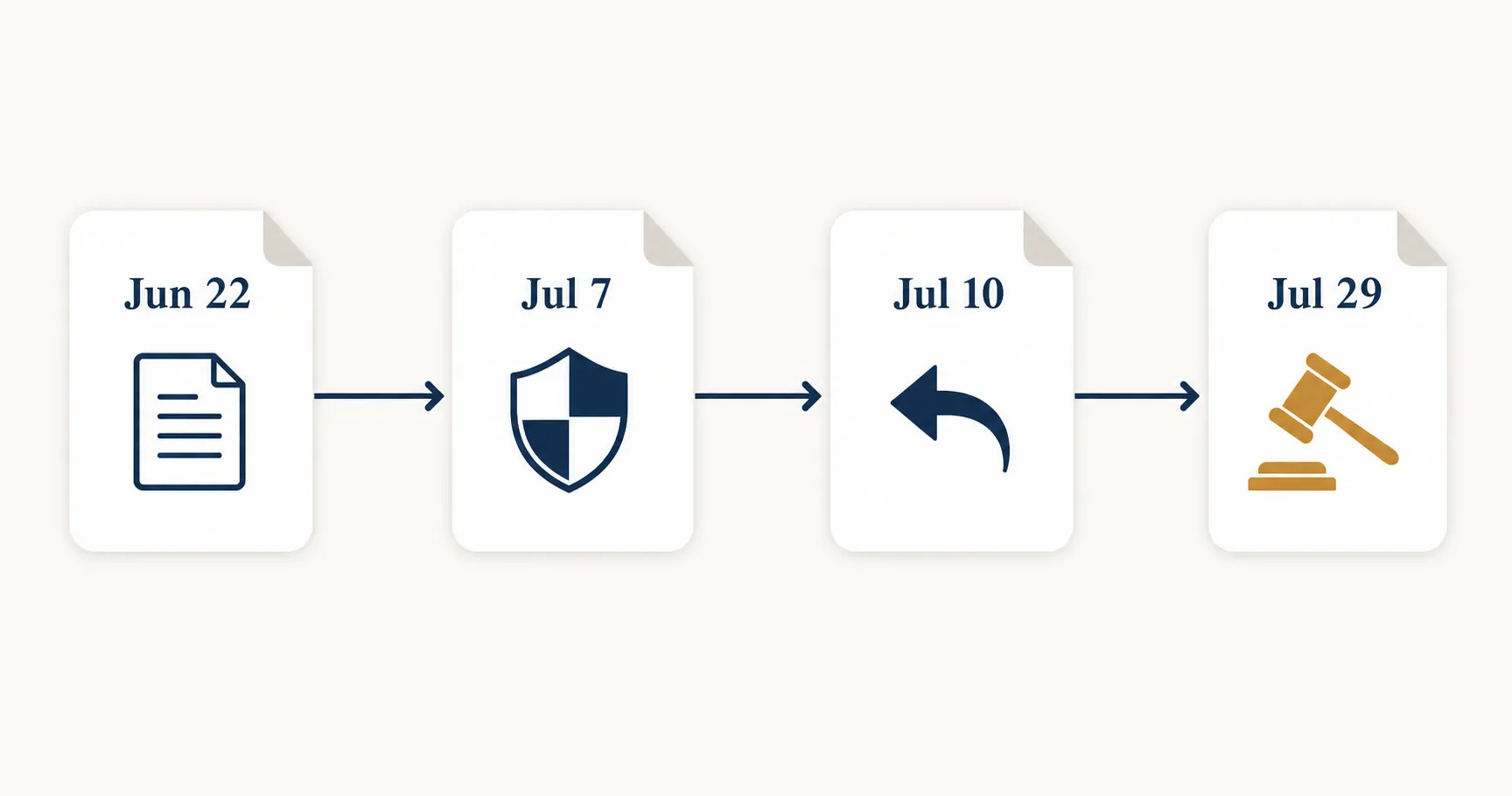
| June 22, 2026 | Kajioka filed the habeas petition [1][2]. |
| July 7, 2026 | The state filed its opposition [1][2]. |
| Around July 10, 2026 | Kajioka filed a reply of roughly 70 pages [1][2]. |
| July 29, 2026 | Judge Trujillo held a show-cause/sanctions hearing and reportedly struck the reply and imposed the $500 law-library payment [1][2]. |
The filing schedule matters because it takes this out of the easy category of one bad citation buried in a large brief. The reply arrived after the state had already answered the habeas petition. It was long enough to carry the appearance of a substantial merits filing, and the challenged authority was not presented as a loose aside or an informal research note. It appeared in a court-facing reply.
The available reports describe the hearing as turning on more than whether a single citation was wrong. Earlier, Kajioka reportedly denied using AI and characterized the problem as “just a typo” [3]. At the sanctions hearing, the record reportedly moved toward an acknowledgment that AI apparently had assisted in drafting and that staff were involved [1][2].
That denial-to-concession path is the part any criminal-defense office should notice. Judges tolerate corrected mistakes more readily than explanations that erode while everyone is still in the courtroom. If a lawyer’s name is on the reply, the court is not usually interested in a post hoc tour of who touched the draft unless that explanation also accounts for how the lawyer verified the authority before filing.
The Evans citation looked like law until someone checked it
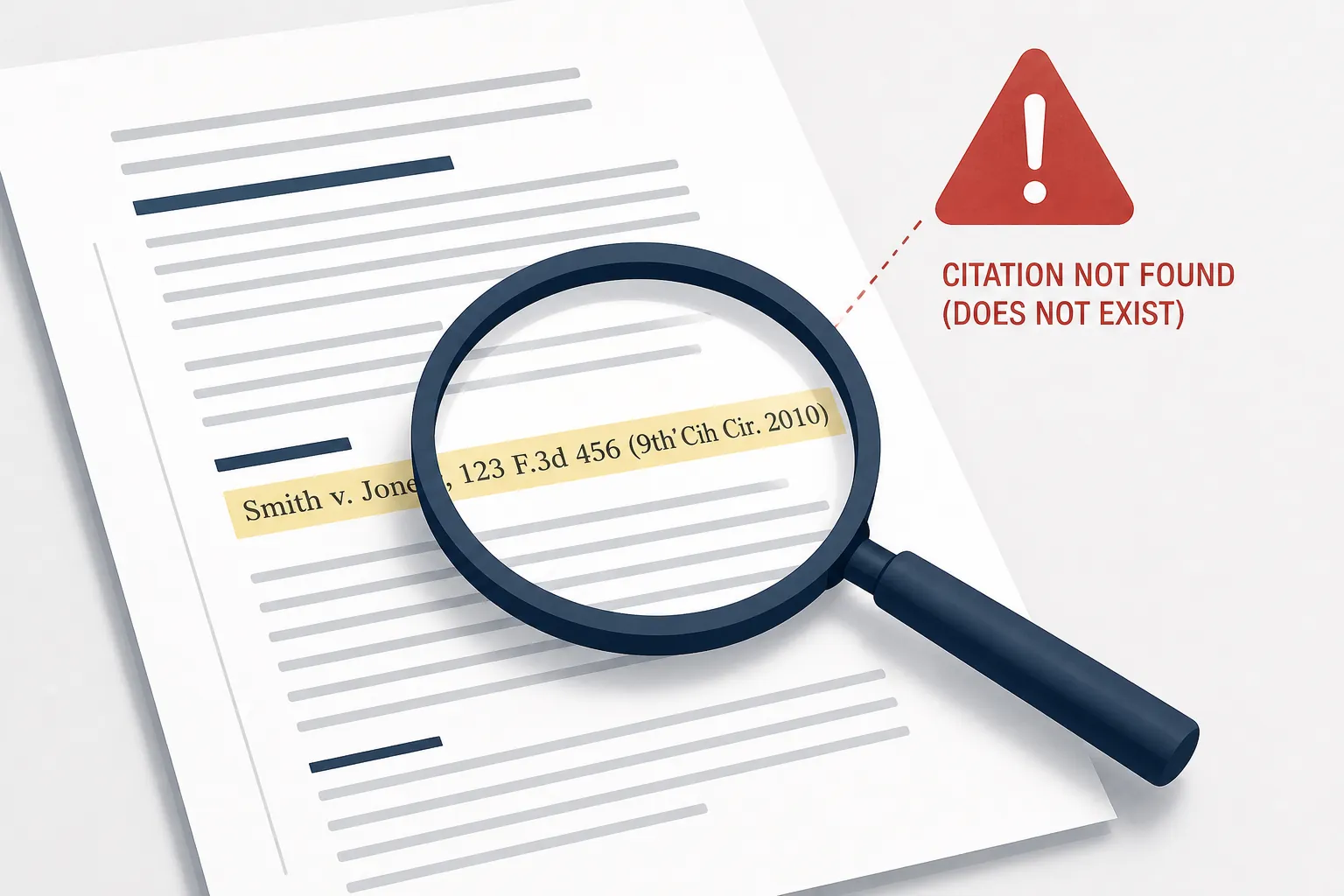
The cited authority was reported as Evans v. State, 123 Nev. 117, 159 P.3d 438 (2007). The problem was not merely that the pin cite was off. The reported citation was to a nonexistent case. The real Evans v. State identified in the coverage is Evans v. State, 944 P.2d 253 (1997) [1][2].
That is the kind of error that does real procedural damage because it borrows the shape of reliability. A caption, a Nevada reporter volume, a Pacific Reporter citation, and a year can make a fake authority look normal during a fast read. In a habeas reply, where the state and the court are already sorting claims against a criminal conviction or sentence, that surface plausibility is exactly why verification cannot be delegated to the document’s confidence.
The prosecution also reportedly argued that the reply did not read like Kajioka’s prior work. The state described the style as “completely alien” to him and pointed to a shift from inline citations to footnote “(GJT)” transcript citations as evidence that the filing had not been drafted in the attorney’s ordinary manner [1][2].
Style evidence is not the same thing as proof that a particular AI product generated a particular sentence. The available reporting does not identify a tool. Still, the state’s authorship argument shows how these disputes now get litigated: not only by checking whether a case exists, but by comparing the suspect filing against the lawyer’s prior citation habits, transcript references, and drafting patterns.
What the state argued, and what the court did
Chief Deputy District Attorney Eckley Keach reportedly framed the issue in broad terms, warning: “Unguarded use of AI is an existential threat to the practice of law” [1][2]. That is advocacy language, and it should be read as advocacy language. The narrower court-facing fact is enough: the state identified a nonexistent authority in a criminal defense reply and challenged both the citation and the apparent authorship of the document.
Judge Trujillo’s reported response was practical and immediate. The reply was stricken, and the sanction was imposed on Kajioka personally, with payment directed to the Clark County Law Library [1][2]. A stricken habeas reply is not a symbolic consequence for a criminal defendant’s lawyer. It removes the defense’s filed answer to the state’s opposition from the court’s consideration unless replacement relief is allowed through some later procedural route, which the available reports do not establish.
The sanction amount should stay in proportion. This is not evidence of a statewide escalation in penalty size, and the available record does not support that kind of trend claim. The meaningful part is that a state criminal court reportedly treated the unverified filing sequence as sanctionable even with a modest dollar figure attached.
Why this is not just another Mata comparison
Risk and knowledge-management teams will inevitably place this beside earlier fake-citation cases such as Mata v. Avianca. That comparison is useful only up to the point where it helps identify the category: AI-assisted drafting, nonexistent authority, court sanctions. After that, the Nevada record has its own reason to be briefed.
This was reported in a state criminal-court setting, with a criminal-defense lawyer, in a habeas filing. That posture matters. Criminal defense practice already runs on compressed time, thin staffing, and a duty to challenge the state’s case without letting the client’s liberty become collateral damage from office workflow. None of that excuses a false citation. It explains why the temptation to use drafting assistance is real and why the verification burden remains nondelegable.
For withdrawal and client-protection issues after an AI-tainted filing, see the separate workflow record on AI as a reason criminal defense attorneys withdraw. For the broader duties governing defense filings, including competence, confidentiality, candor, and supervision, see the ethics tracker on defense attorney AI court filings. This entry is narrower: it records the reported sanction event and the filing sequence that made it risky.
What remains unconfirmed
- The primary sanctions order was not located in crawlable form for this entry.
- The docket number is unconfirmed here.
- The reports do not identify a specific AI tool or model.
- The available record does not establish a general hallucination rate, a vendor-specific failure, or a trend in Nevada sanction amounts.
Those limits are not housekeeping trivia. They keep the risk signal in the right place. The record supports a concrete warning about unverified AI-assisted drafting in criminal defense filings. It does not support a product claim, a statistical claim, or a prediction that every similar error will receive the same remedy.
The bounded risk signal
Kajioka’s reported Nevada admission date makes the hearing harder to dismiss as a novice-lawyer problem. He has reportedly been admitted in Nevada since 1993 [1][2]. The court did not need a named chatbot or a large penalty to impose a personal consequence. It had a habeas reply, a nonexistent Evans citation, a prosecution challenge to style and authorship, and an explanation that reportedly did not hold its original line.
The case matters because a criminal-defense attorney faced a personal sanction and a stricken filing after an unverified AI-assisted draft allegedly produced a plausible-looking nonexistent citation and an unreliable explanation to the court. Reported status, unspecified tool, modest penalty; meaningful state criminal-court sanction risk.
References
Related records
Tool profile
Browse tool evaluations →Governing regulation
Browse the obligations tracker →Preventive workflow
Browse verification workflows →
Report a correction or tip
Spotted an outdated figure, a misstated fact, or a ruling this case record should reflect? Public comments are disabled for this content given the professional cost of a misreported case outcome, penalty amount, or rule text — use the structured correction channel instead.
Report a correction or tip for this record →